Night in Paradise (낙원의 밤, Park Hoon-jung, 2020)

Sometimes being too good at your job can be a definite liability. So it is for the hero of Park Hoon-jung’s melancholy gangster noir, Night in Paradise (낙원의 밤, Nagwonui bam). Park’s worldview is often nihilistic and sometimes downright unpleasant, though it’s a sense of fatalistic sadness that dominates this otherwise over familiar tale of a noble gangster cruelly misused by those who choose not to obey their shared code and thereafter finding himself on a dark path towards if not exactly redemption then at least an inevitable ending. 

Rising foot soldier Tae-gu (Uhm Tae-goo) has found himself in the middle of an old-fashioned gang war, serving an ambitious boss, Yang (Park Ho-san), who has unwisely decided to press into territory operated by the well established Bukseong gang. Getting some of his guys back after being kidnapped by Bukseong and held in an apartment block where the community is currently protesting the take over and demolition by gangster redevelopers, Tae-gu is told by his opposing number that Yang is a crazy upstart who would be a nobody without him and that he made a mistake turning down a job offer from Bukseong boss Doh. Tae-gu is however an old school mobster loyal to his gang which is why he doesn’t stop to think things through when someone close to him is killed in a car accident in which he assumes he was the intended target, believing Doh is striking a low blow. Encouraged by Yang, he meets with Doh in person and daringly knocks him off at a swimming pool sauna escaping through a window in the nude. Yang arranges to send him to Jeju Island to lay low before moving on possibly to Russia, but Yang has also been engaging in a failed pincer movement which left them all in hot water after failing to take out Doh’s no. 2, Ma. 

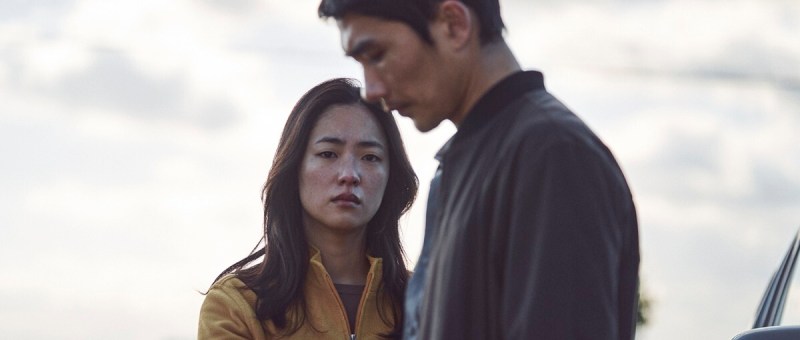
As the title might hint, even the island “paradise” of Jeju is not free of death and crime as Tae-gu discovers after bonding with their contact, Kuto (Lee Ki-young), a fixer smuggling guns from Russian mobsters hidden inside consignments of fish. Like Tae-gu’s sister, Kuto’s niece Jae-yeon (Jeon Yeo-been) is suffering from an undisclosed terminal illness that seems to have few obvious symptoms but has left her with suicidal tendencies. Kuto’s decision to take Tae-gu in is motivated by his desire for money to take Jae-yeon to America for treatment though she and Tae-gu are also much the same both having lost people close to them because of their proximity to the gangster world while he and Kuto search for ways to make up for the harm their lives of violence has caused. 

Jae-yeon is quick to remind Tae-gu that she will soon be dead and that therefore nothing really matters and her life has no meaning while he perhaps as a gangster feels something similar that his life ended the day he first picked up a gun yet there are also ways in which he must act in satisfaction of his code. His tragedy is that he’s operating under a misapprehension, blindly trusting in the wrong people when the truth is painfully obvious to all but him.

Park inserts a series of ironic pillow shots of the idyllic Jeju night scene with comforting lights swinging from tropical trees and gentle waves rolling on the horizon, before closing with a series of eerie daytime shots of familiar locations now devoid of people as if this were a hell our heroes had recently been haunting, ghosts of a violent landscape. His fight scenes are visceral yet also occasionally cartoonish, several taking place in the confined space of a car expertly framed by Park as the heroes fight desperately for life while constrained by their environment. A high octane chase through an airport with its ubiquitous escalators soon gives way to an impressive motorway-bound set piece with an unexpected resolution, the gangsters later scattering on hearing far off police sirens though as we also realise police collusion is an inescapable factor in the fragile equilibrium of the underworld even if it might not stretch all the way to idyllic Jeju. “Don’t waste your tears” Tae-gu unironically offers in weary resignation to his fate, a noble gangster to the last too good to survive in a world of nihilistic futility. 


International trailer (English subtitles)
Warriors of the Dawn (대립군, Jeong Yoon-chul, 2017)

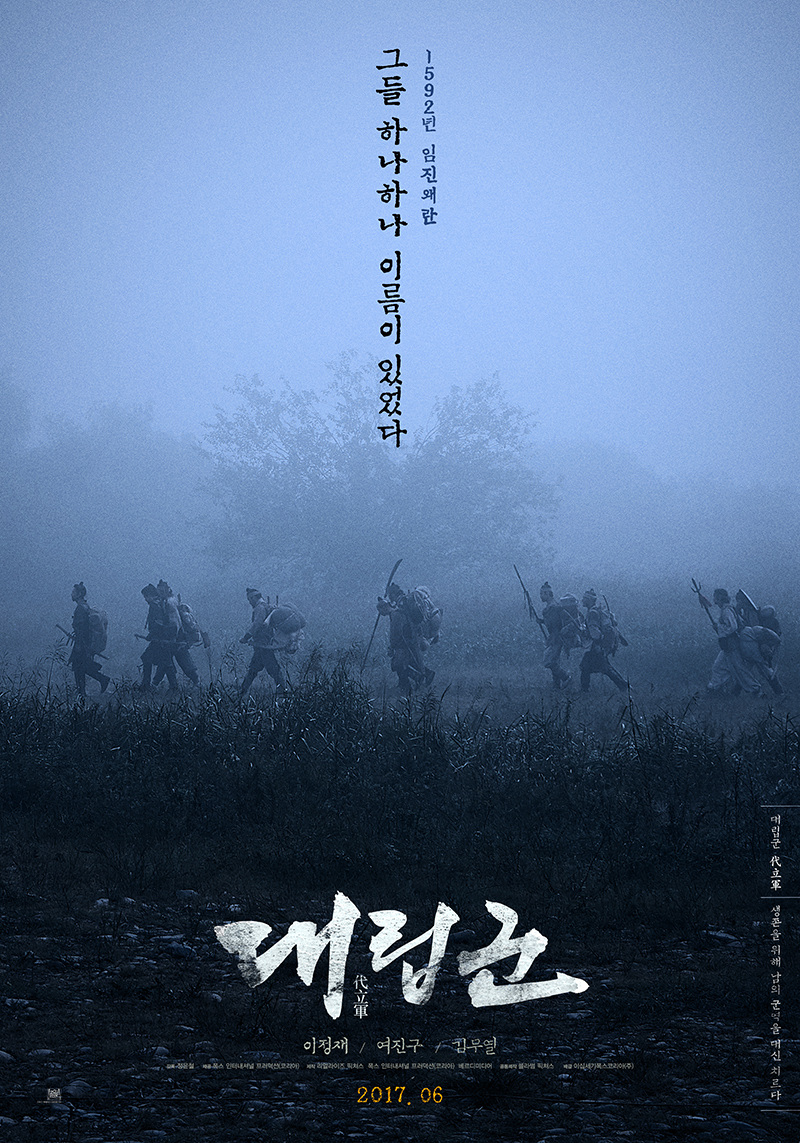
Warriors of the Dawn posterSome might say a king is the slave of his people, but then again he is a very well kept slave even if he is no more free than a serf at the mercy of a feudal lord. Warriors of the Dawn (대립군, Daeribgoon), set in 1592 during the short-lived Japanese invasion, takes this idea to its heart in playing up the inherent similarities between the oppressed poor who are forced to impersonate the sons of wealthy men too grand for the battlefield, and the Crown Prince unwillingly forced to impersonate the King who has abandoned his people and run away to China to save his own skin. Though the Prince is young and afraid, with the help of his resentful mercenary brethren he begins to find the majesty buried inside himself all along but crucially never forgets what is like to feel oppressed so that he might rule nobly and fairly, unlike his more selfish father.

The tale begins with Tow (Lee Jung-Jae) – a “Proxy Soldier”, one of many from the Northern borderlands where the living is hard. Sons of feudal lords need not risk their lives on the battlefields while there is money to spend and so they buy the service of young men from poor families to stand in for them. The men take the name of the man they’re supposed to be but if they die, their family must send a replacement to serve out the remaining time or pay back the money that was given to them. At this point Tow’s main problem is the Jurchen rebels who’ve decided to live life their own way outside of the system of class hierarchy currently in place in feudal Korea.

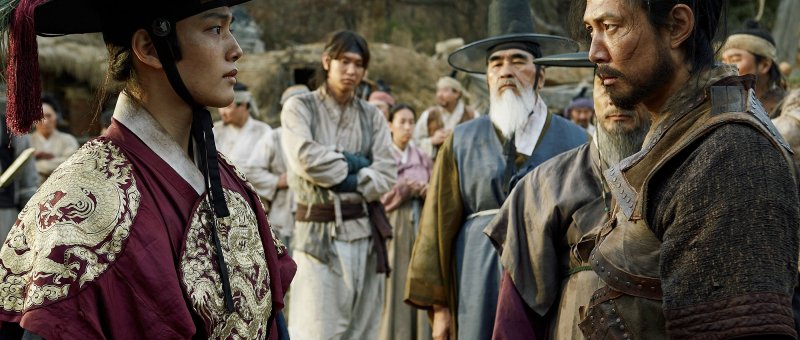
The Japanese, however, are pressing on and making gains towards the capital. The King decides to flee, hoping to reach China where the Ming Emperor may be minded to help them. He cannot, however, simply abandon ship and decides to divide the court with the left behind contingent headed by his son, Crown Prince Gwang-hae (Yeo Jin-goo). Gwang-hae is young and inexperienced. Not having had a good relationship with his father, he’s mystified as to why he’s suddenly been given this “honour” but together with a selection of advisors he’s sent on a journey to found a second court at Gonggye, picking up scattered forces along the way. This brings him into contact with Tow and his contingent who become his main defenders.

Having lived a life inside the palace walls, Gwang-hae knows nothing of war or fighting and has brought a selection of books with him hoping to learn on the job. His ineptitude is likened to that of a young recruit to the band of Proxy Soldiers who has been forced to join on the death of his father but has no training and is too squeamish to kill, requiring Tow to come to his rescue as he later does for Gwang-hae. Tow is a born soldier yet reluctant, fully aware that he no longer exists and should he die another man with no name will step into his place with nary a pause. He continues to fight because he has no choice but he also feels an intense bond of brotherhood to his fellow men, something which later extends to Gwang-hae once his latent nobility begins to emerge.

Gwang-hae’s central conflict is between his advisors who council him towards austerity, and his deeper feelings which encourage him to sympathise with the ordinary people he meets along the way whose lives are being ruined thanks to the government’s failure to protect them. As it turns out, Gwang-hae is also low-born, in a sense, and therefore has inherited something of the common touch which separates him from the aloofness of his father. Though he is constantly told to make the “rational” choice he refuses – ordering troops to stop when they attempt to extort food from starving peasants, insisting on evacuating a village to safer ground, and then finally becoming a warrior himself in order to defend his people when no one else would.

Gwang-hae is, perhaps, a warrior for a new dawn and a flag that men like Tow can follow in the quest for a better world in which each man can keep his own name and fight for his own cause rather than that laid down for them by men with money or power. Despite the potential for a more urgent argument, Jeong mostly falls back on standard period aesthetics with overly familiar narrative beats heavily signposted by a subpar script. Warriors of the Dawn cannot decide whether it’s a film about catching the conscience of a king or the noble sacrifice of would be revolutionaries, failing to lend the essential weight to its duel arcs of rebirth and coming of age all of which makes for a long, hard march towards an inevitable conclusion.


Screened at the London Korean Film Festival 2017.

International trilogy (English subtitles)