YMCA Baseball Team (YMCA 야구단, Kim Hyun-seok, 2002)

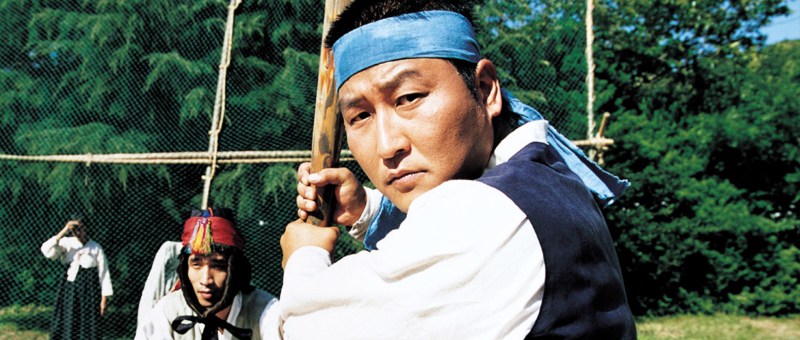
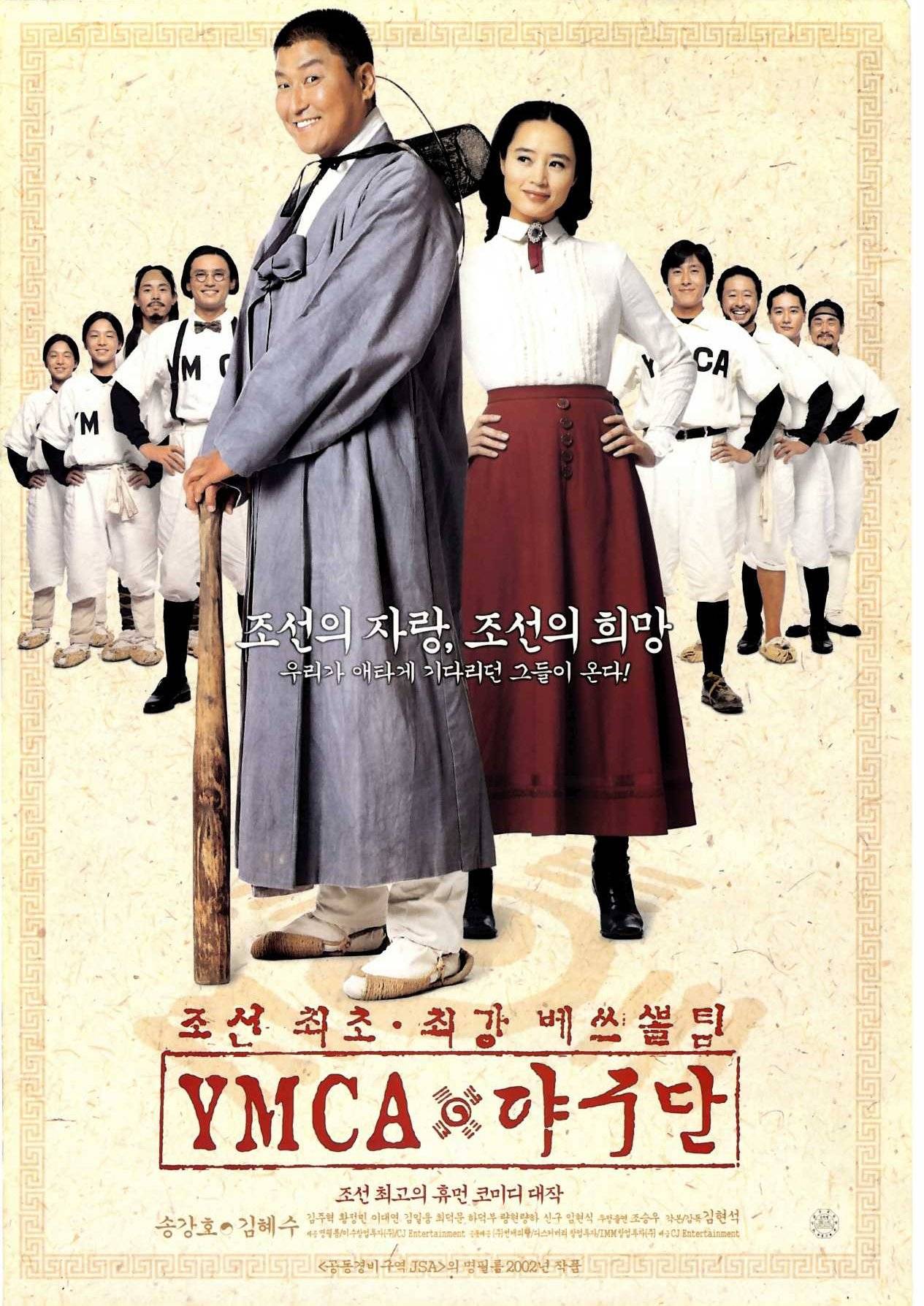
Kim Hyun-seok’s sporting comedy YMCA Baseball Team (YMCA 야구단, YMCA Yagudan) opens with sepia-tinted scenes of Korea in 1905 in which most people still wear hanbok and live little differently than their distant ancestors. Modernity is, however, coming as evidenced by the streetcar that runs through the centre of town even if it’s surrounded on both sides by unpaved ground. Reluctant scholar Hochang’s (Song Kang-ho) father (Shin Goo) complains that the cranes no longer stop in Seoul. Too many scholars have picked the wrong side, he says, but Hochcang counters him that these days you can get to Incheon in hour by train. Maybe the cranes are saying there’s no need to emulate them anymore. 

Hochang doesn’t want to be a scholar or take over his father’s school. His father wanted his brother to do that anyway, but he’s run off and joined the resistance to the Japanese. Just as Hochang discovers the new sport of baseball thanks to a pair of American missionaries and the pretty daughter of a diplomat, the Japanese further increase their dominance over Korea by forcing it to sign the Eulsa Treaty in which they effetively ceded their sovereignty and gave additional provisions for Japanese troops to remain in their nation.

Hochang had been playing football alone as his friend practised reading English before he kicked a ball into Jungrim’s (Kim Hye-soo) garden and found a baseball instead. The early scenes see the local population adopting this Western game in makeshift fashion, using paddles and tools as bats while putting festival masks on their faces in weaponising their culture to make this sport their own. In baseball, Hochung finds the vocation he hasn’t found in scholarship or anywhere else. As a child, he wanted to be a King’s Emissary, but the Korean Empire is drawing to a close and the position no longer exists. His battle is in part to be able to live the life he chooses rather than simply continue these ancestral traditions and be a teacher like his father. In a cute public event unveiling the team, children sing a song in which little boys sing about how they don’t want to be an admiral as their fathers wanted them to be but want be something else, while the girls don’t want to marry a powerful man as their mother’s advised, but would rather marry someone else. The joke is that they both want to be or be with the YMCA Baseball Team, which has, in its way come, to represent a new modernising Korea that is keeping itself alive by embracing the new.

To that extent, Jongrim herself comes to represent “Korea” in that Hochang uses his scholarly skills to write her a love scroll in beautiful calligraphy, but it somehow gets mistaken for her father’s will and read out at his funeral after he takes his own life to protest the Eulsa Treaty. Hochang’s heart felt and rather florid poem is then reinterpreted to reflect her father’s “love” for Korea which has been stolen from him by the Japanese. Jungrim and her Japanese-educated friend Daehyun (Kim Joo-hyuk) are secretly in the Resistance and later forced into hiding when Hochung’s friend Kwangtae (Hwang Jung-min) figures out that it was Daehyun who attacked his politician father for betraying the nation by letting the Eulsa treaty pass. 

The baseball team becomes another resistance activity, with Jongrim admitting that the people “became one and felt proud” every time the team won. When they discover that their training ground has been commandeered by Japanese troops, they end up agreeing to play them to reclaim their lost territory. But the Japanese still have superiority over an underdeveloped Korea as seen in the opening footage as they started playing baseball 30 years earlier. Just as Hochang didn’t want to be a scholar, general’s son Hideo (Kazuma Suzuki) didn’t want to be a soldier either, but in a world of rising militarism he had little choice. His father thinks baseball’s a silly waste of time too, and like Hochang’s father is secretly proud of his son when he’s doing well, but is very clear that this game cannot be lost because the great Japanese Empire cannot be seen to lose to the nation it is currently in the process of subjugating. The day is saved, ironically, by Hochang’s royal seal, given to him by Jongrim, who seems to have returned his affections even if she had a greater cause. The baseball team even allows a snooty former nobleman to accept that class divisions no longer exist and he can in fact be friends with a peasant, especially when they’re uniting in a common goal like kicking out the Japanese. Sadly, the Japanese turned out to be not such good sportsmen after all, and predictably sore losers, but Hochang has at least found a way to resist and fight for a Korea that is free of both onerous tradition and colonial oppression.


YMCA Baseball Team screened as part of this year’s London Korean Film Festival.

Wanee & Junah (와니와 준하, Kim Yong-gyun, 2001)

What marks adulthood more than giving up on idealised first love? For the heroine of Wanee & Junah (와니와 준하) the time has come to grow up but the choice she faces is more complicated than that between the emotional safety of an unrealisable attachment and the risk of real connection because her love comes bundled with guilt tied to its potential inappropriateness and a traumatic loss which was its result. Yet Kim’s film, gloriously forgiving and open hearted, is less about the breaking of a taboo than it is an acceptance that choosing to move on is not a betrayal of romantic idealism but a very necessary path towards maturity.

26-year-old animator Wanee (Kim Hee-sun) has been in a relationship with 27-year-old aspiring screenwriter Junah (Joo Jin-mo) for the past year but though the pair live together and are happy enough, something seems to be missing. A phone call from Wanee’s mother begins to poke at what that might be when she reveals that Wanee’s step-brother, Young-min (Cho Seung-woo), is about to return (temporarily) from an extended stay in Europe where he has been studying abroad.

The news of Young-min’s possible return comes as something of a shock to Wanee, who perhaps feels she has betrayed him by beginning a relationship with Junah. As inappropriate as some may feel it to be, Wanee remains unable to let go of her love for her step-brother who returned her feelings and asked her to run away with him only to leave alone. Confessing her feelings to a third party, however, turned out to have terrible consequences which have surely made their love an impossibility no matter what barriers may have already been in place against it.

Meanwhile, the past is further resurrected by the return of Wanee’s high school best friend, So-yang (Choi Kang-hee), who is also still harbouring feelings for the absent Young-min. As teens, the three were always together and happy in each other’s company, seemingly not allowing possible romantic drama to ruin their easy connection though So-yang seems to have known that Young-min had someone else in his heart even if she doesn’t quite want to spell it out. She tries to warn Junah not to get too attached, that he clearly loves Wanee much more than she loves him and that Wanee may not find that an attractive quality. Wanee, indeed, does not – snapping at Junah when he buys a TV without discussing it with her not only for the usual reasons that he’s spent a lot of money on something frivolous rather than something he actually needs for his work, but because she thinks he probably bought it “for” her as a kind of comfort.

Junah, himself a little lost and lingering at a crossroads, “wavering between love and separation” like the hero of his “uncommercial” screenplay, seems to make these kinds of thoughtful gestures often, later reprogramming the TV to come on in time for Wanee to come home so that it won’t be dark and scary if there’s no one there. Wanee may originally find his solicitous attention claustrophobic, but eventually begins to see it for what it is while dwelling on the continued absence of Young-min. So-yang’s arrival completes the triangular symmetry of both relationships, signalling the distances travelled and not from their carefree youth.

While So-yang claims to have hit a period of insecurity in her chosen career as a photographer, Junah vacillates in defending his artistic integrity and Wanee repeatedly refuses a promotion, claiming to be just fine where she is. There is something about Wanee which is always waiting, arrested in that youthful summer longing for Young-min’s return. If she wants to move on, she’ll have to make a choice. Kim’s vistas are however broad and forgiving, he doesn’t condemn Wanee for an attachment which may be confused or misplaced and which others would brand inappropriate, only for her failure to embrace present love rather than past longing. Meanwhile he shows us other instances of successful barrier crossing love aside from the still unusual co-habitation of Wanee and Junah that sees So-yang brand her friend as “brave” in Wanee’s boss and his policeman boyfriend, and the easy camaraderie of the office where sign language is a fully integrated part of everyday life. A beautifully mature romance and an ode to letting go of old love, Wanee & Junah is a surprisingly affecting slow burn coming-of-age story in which two lost youngsters find themselves in finding each other in a mutual process of self actualisation.


Singapore release trailer (English/Chinese subtitles)

Fengshui (명당, Park Hee-gon, 2018)

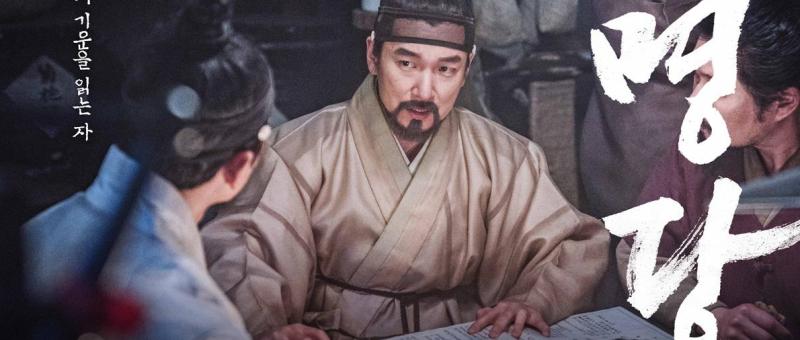
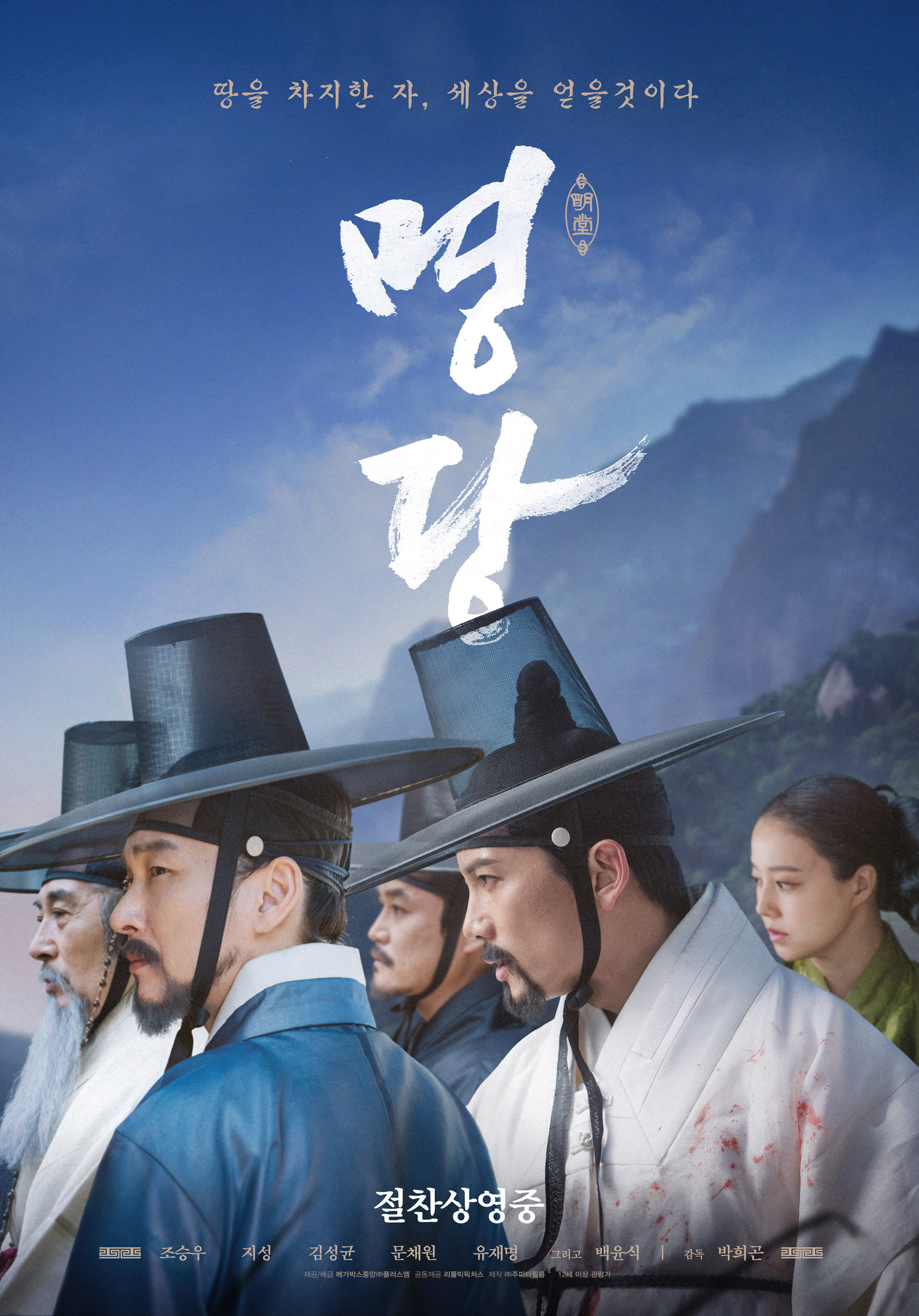
FengShui poster 1A would-be-dynast gets overly involved with a weird spiritualist and almost (?) ruins the nation. Does that sound a little familiar? As metaphors go, it might be a stretch but then so much of Park Hee-gon’s Fengshui (명당, Myeong-dang) is just that. Set in the late 19th century, Park’s film is the third in a loose trilogy themed around Korean fortune telling traditions (following The Face Reader, and The Princess and the Matchmaker), but rather than questioning the efficacy of its art asks a series of questions about its application and the internecine lengths those who lust for power or otherwise feel themselves unfairly oppressed will go to to reclaim their rightful position.

Our hero, unwisely honest fengshui master Jae-sang (Cho Seung-woo), is the only one brave enough to point out that the site chosen for the burial of the late king is cursed, but inevitably he is ignored. He is of course right, which means he must be eliminated which is why a troop of soldiers working for the nefarious Kim clan show up and burn his house down, executing his wife and child by the sword when they manage to escape. 13 years later, he finds his expertise called on again when the weak and inexperienced king begins to suspect the Kim clan is plotting against him and that their shenanigans over his father’s grave may have something to do with it.

Like any typical Korean period drama, Fengshui is chiefly concerned with palace intrigue, only this intrigue is stranger than most in its bizarre obsession with the possibilities of manipulating spiritual power through acquiring “auspicious” land for whichever purpose one might wish from conceiving an heir to making sure your line holds power. The Kims are convinced they can win the throne (if by proxy) through digging up their ancestors and replanting them in more advantageous places only to discover that the grass is (literally) always greener. Still, they will stop at nothing from outright murder to psychological game playing in order to manipulate the teenage king into acting as their puppet.

One might ask themselves what the point is, what’s so great about being king anyway? The actual king might say not much, as he discovers himself a humiliated, hollow figure who wields no real power seeing as his soldiers seem set to side with Kim. Heungseon (Ji Sung), however, his “cheerful” uncle might feel differently after experiencing a lifetime of just the same. Forced to prance about doing party tricks for the Kims, barking and eating scraps from the floor like a mangy dog, he might say that being king is the only way to reclaim your self-respect and ensure you will never be at the mercy of ruthless men ever again.

The real key, however, is presented at the end when Jae-sang and his money loving friend Yong-shik (Yoo Jae-myung) are visited some years later by two men in suits who want to know the best place to start a military school to train Independence fighters. Jae-sang, having vowed to stop looking for places to bury people so he can find one to save them, is only too happy to oblige and even comes up with the name “Shinheung Military Academy” (a real school which is also, quite bizarrely, the subject of a smash hit musical). The point is further brought home with Kim’s descendent standing next to a family grave and lamenting that it can’t have been auspicious enough because they’ve lost all their power since the Japanese arrived. The subtext seems to be that feudal corruption and a subversion of traditional values such as ancestor worship and filial piety contributed to the gradual weakening of the Korean state which was plagued by insecure kings and political finagling until finally “sold” to foreign powers in the early 20th century.

Indeed, the ambitious usurpers eventually burn the soul of Korea in order to ensure their own, or rather their children’s, futures even at the expense of their nation’s. Literally fighting over a grave, the elites waste their time on pointless, internecine dynastic squabbling while ordinary people continue to suffer. Jae-sang, having given up on his own petty quest for revenge, comes to the conclusion that all this looking back is a waste of time when what they should be thinking about is the future – not burying things, but planting them. It is a good lesson, but, Park seems to suggest, perhaps one that has not yet been fully learned.


Screened as the latest teaser for the upcoming London Korean Film Festival. The next teaser screening, Zhang Lu’s Ode to the Goose, takes place on 19th August at Picturehouse Central.

International trailer (English subtitles)