YMCA Baseball Team (YMCA 야구단, Kim Hyun-seok, 2002)

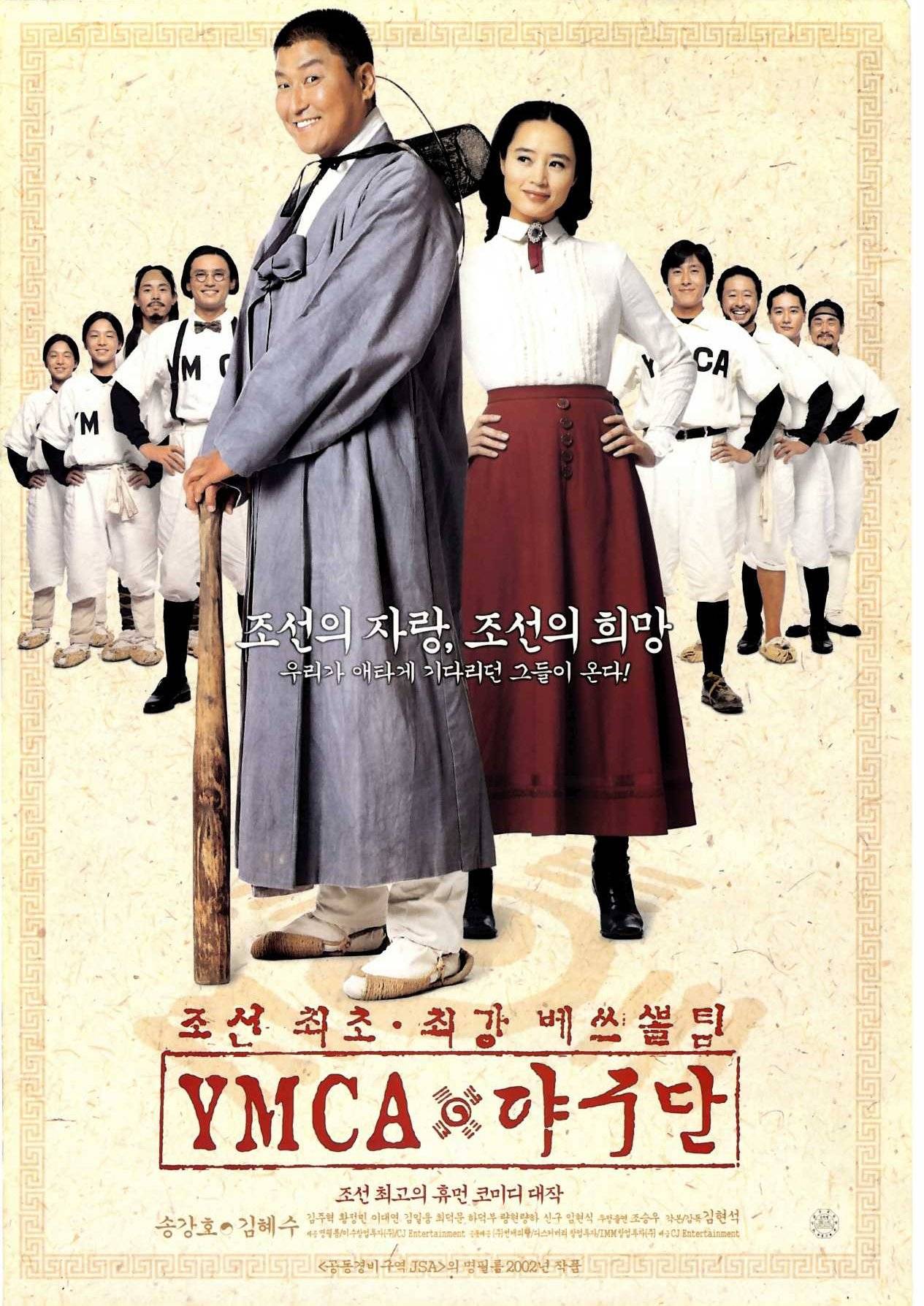
Kim Hyun-seok’s sporting comedy YMCA Baseball Team (YMCA 야구단, YMCA Yagudan) opens with sepia-tinted scenes of Korea in 1905 in which most people still wear hanbok and live little differently than their distant ancestors. Modernity is, however, coming as evidenced by the streetcar that runs through the centre of town even if it’s surrounded on both sides by unpaved ground. Reluctant scholar Hochang’s (Song Kang-ho) father (Shin Goo) complains that the cranes no longer stop in Seoul. Too many scholars have picked the wrong side, he says, but Hochcang counters him that these days you can get to Incheon in hour by train. Maybe the cranes are saying there’s no need to emulate them anymore. 

Hochang doesn’t want to be a scholar or take over his father’s school. His father wanted his brother to do that anyway, but he’s run off and joined the resistance to the Japanese. Just as Hochang discovers the new sport of baseball thanks to a pair of American missionaries and the pretty daughter of a diplomat, the Japanese further increase their dominance over Korea by forcing it to sign the Eulsa Treaty in which they effetively ceded their sovereignty and gave additional provisions for Japanese troops to remain in their nation.

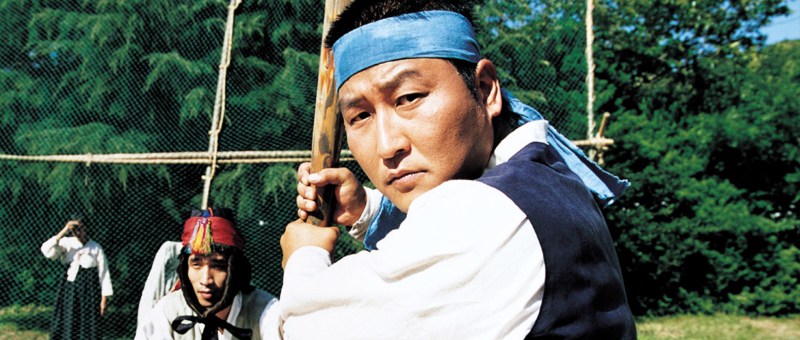
Hochang had been playing football alone as his friend practised reading English before he kicked a ball into Jungrim’s (Kim Hye-soo) garden and found a baseball instead. The early scenes see the local population adopting this Western game in makeshift fashion, using paddles and tools as bats while putting festival masks on their faces in weaponising their culture to make this sport their own. In baseball, Hochung finds the vocation he hasn’t found in scholarship or anywhere else. As a child, he wanted to be a King’s Emissary, but the Korean Empire is drawing to a close and the position no longer exists. His battle is in part to be able to live the life he chooses rather than simply continue these ancestral traditions and be a teacher like his father. In a cute public event unveiling the team, children sing a song in which little boys sing about how they don’t want to be an admiral as their fathers wanted them to be but want be something else, while the girls don’t want to marry a powerful man as their mother’s advised, but would rather marry someone else. The joke is that they both want to be or be with the YMCA Baseball Team, which has, in its way come, to represent a new modernising Korea that is keeping itself alive by embracing the new.

To that extent, Jongrim herself comes to represent “Korea” in that Hochang uses his scholarly skills to write her a love scroll in beautiful calligraphy, but it somehow gets mistaken for her father’s will and read out at his funeral after he takes his own life to protest the Eulsa Treaty. Hochang’s heart felt and rather florid poem is then reinterpreted to reflect her father’s “love” for Korea which has been stolen from him by the Japanese. Jungrim and her Japanese-educated friend Daehyun (Kim Joo-hyuk) are secretly in the Resistance and later forced into hiding when Hochung’s friend Kwangtae (Hwang Jung-min) figures out that it was Daehyun who attacked his politician father for betraying the nation by letting the Eulsa treaty pass. 

The baseball team becomes another resistance activity, with Jongrim admitting that the people “became one and felt proud” every time the team won. When they discover that their training ground has been commandeered by Japanese troops, they end up agreeing to play them to reclaim their lost territory. But the Japanese still have superiority over an underdeveloped Korea as seen in the opening footage as they started playing baseball 30 years earlier. Just as Hochang didn’t want to be a scholar, general’s son Hideo (Kazuma Suzuki) didn’t want to be a soldier either, but in a world of rising militarism he had little choice. His father thinks baseball’s a silly waste of time too, and like Hochang’s father is secretly proud of his son when he’s doing well, but is very clear that this game cannot be lost because the great Japanese Empire cannot be seen to lose to the nation it is currently in the process of subjugating. The day is saved, ironically, by Hochang’s royal seal, given to him by Jongrim, who seems to have returned his affections even if she had a greater cause. The baseball team even allows a snooty former nobleman to accept that class divisions no longer exist and he can in fact be friends with a peasant, especially when they’re uniting in a common goal like kicking out the Japanese. Sadly, the Japanese turned out to be not such good sportsmen after all, and predictably sore losers, but Hochang has at least found a way to resist and fight for a Korea that is free of both onerous tradition and colonial oppression.


YMCA Baseball Team screened as part of this year’s London Korean Film Festival.
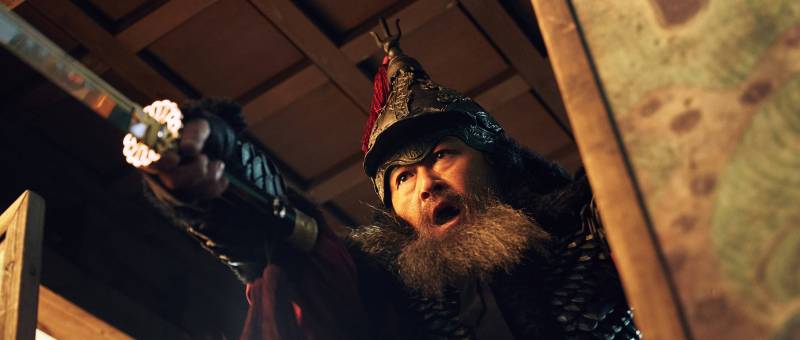
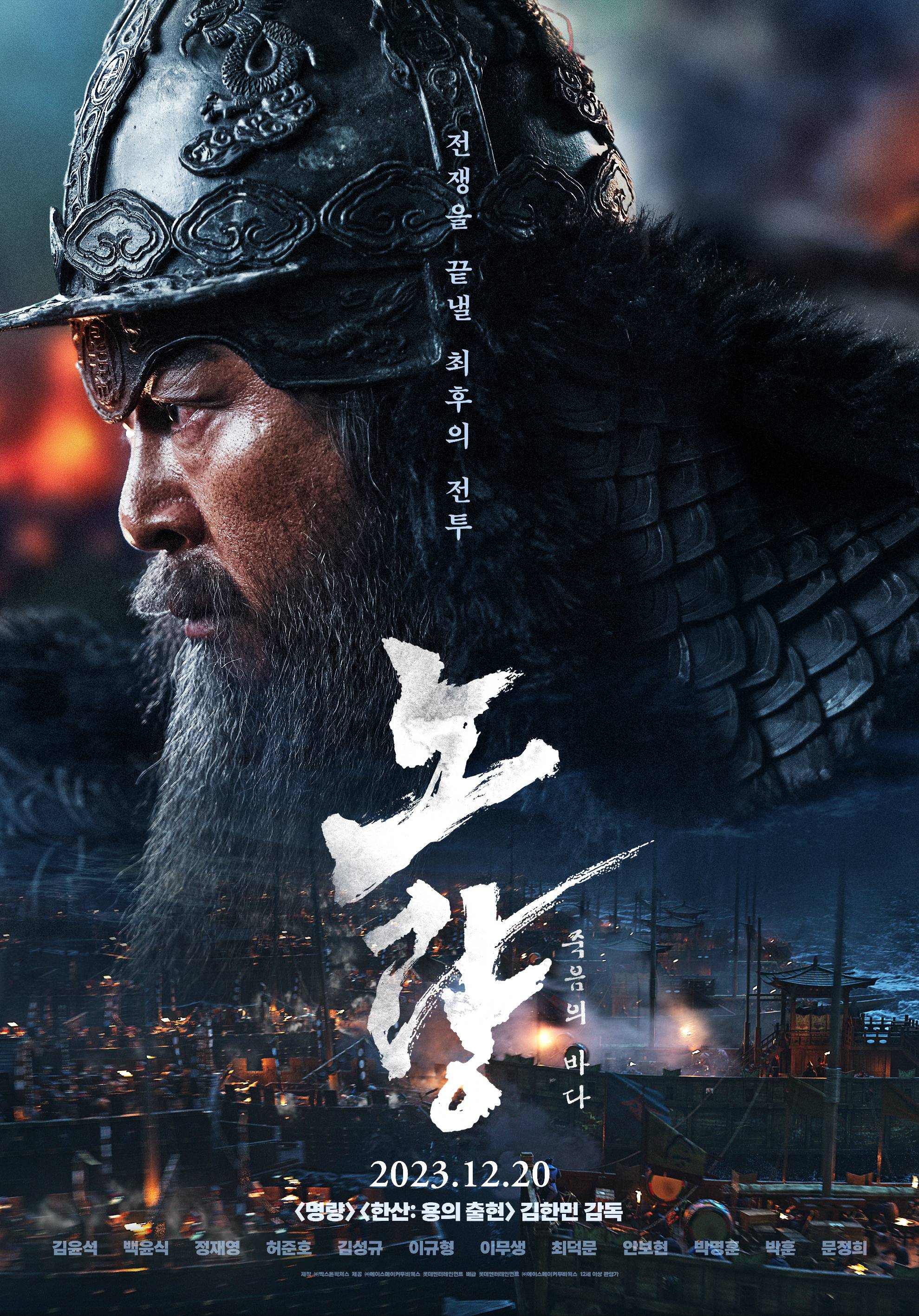
Noryang: Deadly Sea (노량: 죽음의 바다, Kim Han-min, 2023)

The strange thing about Noryang: The Deadly Sea (노량: 죽음의 바다, Noryang: Jugeumui Bada), the third and final instalment in Kim Han-min’s trilogy about 16th century admiral Yi Sun-sin is that everyone wants to end the war but they all want to end it definitively and so are unable to simply let it run its course. Then again, there is a little more complexity involved in the depiction of Yi in asking whether his desire to repel the Japanese once and for all is really about the national good or personal vengeance for the death of one of his sons at the hands of Japanese raiders.

The opening scenes taking place in 1598 witness the death of Toyotomi Hideyoshi who had launched two invasions of Korea in the previous decade which were in themselves precursors to an invasion of Ming China in an attempt to disrupt the Chinese Tributary System that prevented Japan from trading with China without agreeing to pay them taxes and recognise their political superiority. In the film at least, his deathbed order is to withdraw troops from Korea where they had been unsuccessfully fighting for the previous year. The leader of the Japanese forces, Konishi Yukinaga (Lee Kyu-hyung), is however prevented from leaving by a naval blockade placed by Admiral Yi around their fort on Suncheon Island. With Hideyoshi dead, Yukinaga is keen to return to Japan as quickly as possible in order to defend Hideyoshi’s young son, Hideyori, from Tokugawa Ieyasu who makes a very sinister appearance at Hideyoshi’s deathbed.

One might wonder why Yi does not allow Yukinaga to simply leave and return to Japan now that the war is technically over yet he insists that without a full surrender nothing is guaranteed and the Japanese may simply regroup and return as they had done before. Then again, he’s haunted by nightmares of his son’s death in which he witnesses him cut down by Japanese pirates while unable to intervene dragged back by shadowy figures rising from the water. Yi also later makes clear that his motivation is coloured by a desire for revenge to the extent that he is willing to sacrifice his life for it, which is one thing but it also necessarily means he’s willing to risk the lives of his men over what is partly a personal vendetta. 

Yukinaga, meanwhile, and the Japanese in general are depicted as cruel, ruthless, and cowardly. Shimazu (Baek Yoon-sik), the admiral leading the reinforcements sent to help spring Yukinaga, wilfully fires on his own men in order to cut his way through to the enemy and then threatens to execute sailors who tried to desert. In the end Yukinaga breaks his promise and declines to come to the assistance of Shimazu’s fleet as arranged, turning away and sailing back to Japan (he is subsequently beheaded after being on the losing side of the battle of Sekigahara as he was unable to commit ritual suicide because he was a Christian). They had originally been let down by a Chinese general they’d bribed to assist them but had decided not to turn up given the war was already over, making a secondary agreement with Admiral Chen (Jung Jae-young) who also desires a peaceful end to the disruption but vacillates between each side while not really wanting to get involved before making a fairly disastrous intervention in the final battle. 

There is something a little a uncomfortable in the film’s framing and most particularly in its post-credits scene which reinforces Yi’s conviction that the war isn’t really over without a complete surrender from Japan. In any case, Yi becomes a literal beating heart of the battle banging the drums of war to encourage weary fighters that it isn’t over yet and to keep going to the last man buoyed by the spirits who appear to him of his son and allies who lost their lives fighting similar battles in the previous films. That aside, Deadly Sea is mostly standalone though some knowledge of Japanese and Korean history in the late 16th century is undoubtedly helpful. Kim devotes the second half of the film to a lengthy series of naval battles as Yi tries to lure Shimazu to a vulnerable position, eventually shooting a harrowing long take from the perspective of an ordinary sailor trying to cut his way through after boarding a series of enemy boats. The senseless futility of the violence is the point, but it’s one that’s continually lost on Yi who continues to insist that this war will never really be over until they chase the invaders all the way back to their own islands and into total capitulation even as his quarry sails away towards his own unhappy destiny in an equally turbulent Japan.


International trailer (English subtitles)

The Drug King (麻藥王 / 마약왕, Woo Min-ho, 2018)

Drug King posterKorean cinema has been in a reflective mood of late, keen to re-examine the turbulent post-war era in the wake of a second wave of democratic protest and political turmoil. Even so, dealing with the difficult Park Chung-hee era has remained sensitive with the legacy of life under a repressive regime apparently very much still felt. Woo Min-ho’s Drug King (麻藥王 / 마약왕, Mayakwang) is first and foremost a crime doesn’t pay story, but it’s also a subtle condemnation of authoritarianism and the corruption and cronyism that goes along with it. Painting its hero’s rise as a consequence of the society in which he lives, it perhaps implies the new wind of egalitarian democracy made such amoral venality a thing of the past but then again is at pains to show that nothing really changes when it comes to greed and resentment.

Our hero, Lee Doo-sam (Song Kang-ho), starts out as a jeweller dabbling in smuggling in Busan in 1972. Just as the smuggling business starts to take off, Doo-sam’s boss falls out with his friends in high places and decides to throw him to the wolves while he escapes abroad to safety. Doo-sam, not one to be beaten, starts coming up with ideas. Mobilising his wife (Kim So-jin) to get him out of jail through a combination of bribery and blackmail, he teams up with the area’s smuggling king to act on a tip-off he got from a Korean-Japanese yakuza and begins producing popular drug Crank for export to Japan.

As the opening voice over explains, Crank is a dangerous stimulant developed by the Japanese during the war and given to factory workers and kamikaze pilots because of its ability to eliminate both fear and fatigue. It is also highly addictive and provides an extreme high which have made it a popular recreational drug but, crucially, the real value is economic. The rising Japan is keen to make use of foreign labour, and Korea is keen to up its export capability. This, coupled with poor regulation of the workforce, has led to extreme exploitation in which factory workers are encouraged to hop themselves up on stimulants to keep working overtime for the sake of economic expansion. Thus, the influx of Crank is, in many ways, simply another facet of ongoing Japanese imperialism.

Not that Lee Doo-Sam cares very much about that. An honest prosecutor later puts it to him that he’s contributing to the exploitation of ordinary workers who might earn a few pennies extra for working a few more hours but at the cost of their health and wellbeing, while he gets filthy rich off the back of their misery. Doo-sam is, however, unrepentant. In the beginning he just wanted to provide for his wife, children, and unmarried sisters, but perhaps he also wanted to kick back against his reduced circumstances and he certainly did enjoy playing the big man. In any case, it has paid off. Doo-sam too has friends in high places and they won’t want to let him sit in a police cell for long in case he starts feeling chatty.

Times change, however, and whatever standing and influence Doo-sam thought he’d accrued his life is built on sand. When Park is assassinated by a member of his own security team, all those contacts are pretty much useless because the cronies are now out in the cold. There are protests in the streets and the wind of a new era is already blowing through even if it is still a fair few years away. That bold new era will, it hopes, do away with men like Doo-sam and their way of thinking, eradicating corruption and backhanders in favour of honest meritocracy. Naive, perhaps, and idealistic but it is true enough that Doo-sam is a man whose era has passed him by while he, arrogantly, burned all his bridges and gleefully sacrificed love and friendship on the altar of greed and empty ambition.

Hubris is Doo-sam’s fatal flaw, but he remains a weasel to the end only too keen to sell out his associates in order to save his own skin. He may claim he was only trying to live a “decent” life, but his definition of “decent” may differ wildly from the norm. Nevertheless, perhaps he was just like many scrappy young men of post-war years, desperate, hungry, and left with few honest options to feed his family if one who later found himself corrupted by backstreet “success” and the dubious morals of the world in which he lived which encouraged him to disregard conventional morality in favour of personal gain. Much more about life in Korea in the authoritarian ‘70s than it is about crime, The Drug King is nevertheless an ironic tragedy in which its drug peddling hero eventually enables the birth of a dedicated narcotics squad and helps to dismantle system which allowed him to prosper all while grinning wildly and, presumably, planning his next move.


Currently available to stream online via Netflix in the UK and possibly other territories.

International trailer (English subtitles)

Key tracks from the (fantastic) soundtrack:

Jung Hoon-Hee – Flower Road

Kim Jung Mi – Wind

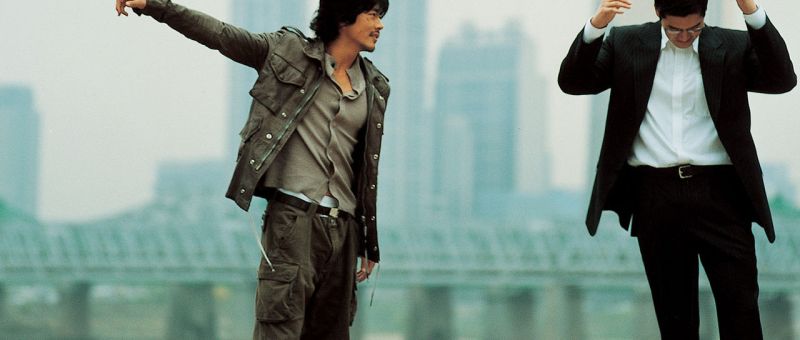
Running Wild (야수, Kim Sung-soo, 2006)

Running wild posterHeroic bloodshed meets corruption drama in the retro debut feature from Kim Sung-soo (b. 1971 – not to be confused with the director of Beat/Asura), Running Wild (야수, Yasu). Over the top macho action mingles with saccharine family drama as two seemingly very different law enforcement officials realise they aren’t that different after all as their relentless pursuit of a mob boss turned “legitimate businessman” with political aspirations becomes increasingly intense. Filled with typically 70s touches from split screens to zooms and descents into ridiculous displays of male aggression set against the pounding rhythms of an action score, Running Wild is a story of the law on fire but one which never quite knows which side it’s on.

Straight-laced prosecutor Oh (Yoo Ji-tae) has been slumming it in the boonies for the last few years after his attempt to bring down top gangster Yoo Kang-jin (Son Byong-ho) was derailed because of the dirt Yoo has on a selection of important people. Stopping only to take out a local big wig mobster, Oh is finally on his way back to Seoul with settling scores firmly on his mind. Meanwhile, maverick cop Jang (Kwon Sang-woo) collects his younger half-brother from jail and takes him to see their seriously ill mother in hospital. While Jang is busy meticulously filling in a lottery ticket, Dong-jik (Lee Joong-moon) is knifed by his old buddies and so Jang now has his own score to settle with the Dokang family.

Eventually teaming up to take down their common enemy, Jang and Oh have very different approaches to law enforcement. Oh hates the likes of Yoo because they break the social order while Yoo is a bully who profits from the suffering of others and laughs at the likes of Oh while he does it. Oh believes in the supremacy of the law, that the law is his greatest weapon and the one unassailable force that even men like Yoo will eventually have to submit to. Yoo feels differently. For Yoo the law is an irrelevance or even a symbol of other men’s naivety; he will overcome it and live outside of its control.

While Oh pins his hopes on the proper operation of the law, Jang pins his on his fists. Flailing wildly, Jang is more thug than cop – urging Oh to abandon his ridiculous righteousness and do what it takes to take the bad guys down even if that means planting evidence and beating information out of suspects. He is a classic angry man, frustrated by his powerlessness in the face of his mother’s illness and his inability to protect his makeshift family. Blaming himself for Dong-jik’s death and for failing to prevent his flirtation with criminality, Jang spars with his step-sister, half rejecting her role as primary care-giver to the mother he can’t save and part longing to see her as a true and permanent member of the family which constantly eludes him.

Family becomes a recurrent theme as both Jang and Oh ruin their respective relationships through their unconventional working lives. Despite finally getting back to Seoul, Oh’s wife plans to leave the husband whose obsession with his work, or more particularly his vendetta with Yoo, has consumed him while Jang’s family life remains a total mess. Yoo, by contrast, now a legitimised CEO playing golf with the rich and famous, enjoys lovely family meals with his elegantly dressed wife and cute little children who seem to adore him.

The law, it seems, is not robust enough to withstand the finagling of the corrupt criminal class who ride the waves of their power and influence all the way to the top. Oh steps further towards the edges of his noble goal, at which point he has to admit his quest is also one of personal revenge more than of truth or justice. Both men ruin themselves in stupid acts of self destruction, turning themselves into grenades thrown against a regime content to protect its inherent injustices. Running Wild, the pair fight fire with fire but also become victims of the system which oppresses them. Kim piles on the retro style but lets the old fashioned heroics run away from him abetted by the bombastic Kenji Kawai score. Nevertheless, Running Wild is a stylish enough calling card even if its aesthetics trump its sincerity.


Currently streaming on Netflix UK (and possibly other territories)

Original trailer (English subtitles)