The Hitman: Blood Smells Like Roses (ザ・ヒットマン 血はバラの匂い, Teruo Ishii, 1991)

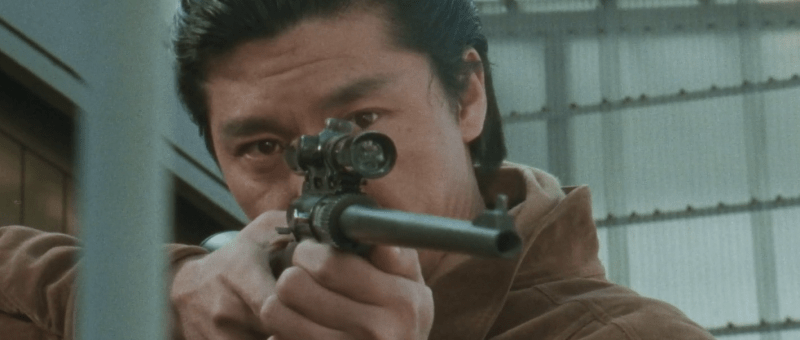
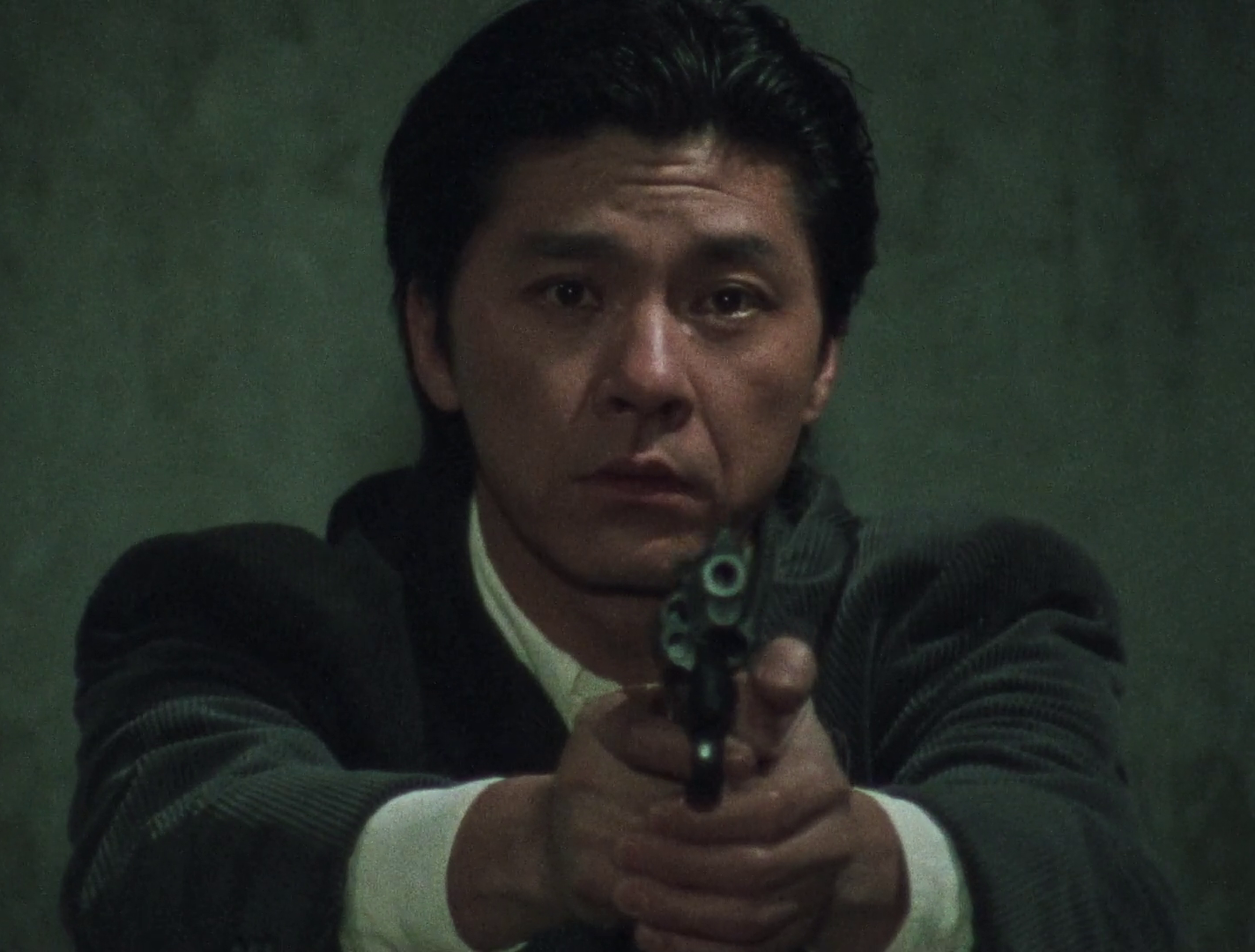
After his fiancée is killed during a yakuza shootout in a restaurant, a former spy in training plots revenge in Teruo Ishii’s Hitman: Blood Smells Like Roses (ザ・ヒットマン 血はバラの匂い, The Hitman: Chi wa Bara no Nioi). Ishii has been in retirement for 12 years before making the film but steps right into the zeitgeist with his bubble-era nightclub opening in which a yakuza goon pretends to be the son of a stockbroker to seduce a young woman he intends to press into prostitution, while looking back to classic noir and the borderless action past.

The young woman is rescued, though not soon enough to escape harm, by the titular hitman, Takanashi (Hideki Saijo), though he does not intervene to save her, only to take out the trio of yakuza who were one side of the gun battle in which his fiancée Reiko (Mikiko Ozawa) was killed. Reiko’s innocence is emphasised by her position as a teacher at a Christian school which is directly contrasted with the sleazy world of contemporary Shinjuku in which Takanashi becomes involved with a series of women. The Asia Town that he strays into is another international space with its samba bars and Filipina hostesses, while Takanashi is later sent to track a boat coming in from the Philippines which is thought to be smuggling guns. 

That’s a tip off he receives from Nakatsuka (Kiyoshi Nakajo), an old mentor from the defence academy who now works for the Cabinet Intelligence and Research Office, the nation’s primary intelligence authority. Nakatsuka is also seen meeting with the police chief who tells him that the yakuza have been complaining that police are encouraging the gang war rather than trying to stop it. So much the better, Nakatsuka says, let them massacre each other then take them all out right before the election to manipulate public opinion. If the election goes their way, the police chief will have additional budget to hire more policemen. Thus Takanashi also becomes a kind of pawn in cynical political machinations conducted by Nakatsuka and CIRO who are helping him both out of friendship and sympathy and because it is useful for him to make use of Takanashi and his desire for revenge. Only veteran policeman Uchino (Tetsuro Tanba) smells a rat, but even he later lets Takanashi go after making a moral judgement that justice has been served and Takanashi hasn’t really done anything wrong.

And so Takanashi tries to avenge Reiko by setting the gangs against each other in a recreation of the original gang war. He’s first frustrated and then aided by Shinjuku party girl Rumi (Natsumi Nanase) who steals his briefcase and gives it to the yakuza, and also be her friend Hisako (Yuki Semba) whom he meets after ducking into a soapland to escape the police. Hisako’s apartment is well furnished with even the modern convenience of an exercise bike, while Rumi’s feels empty, like a hideout with its bare floors and sparse decor. The walls are decorated with posters for Casablanca and Bonnie and Clyde that bring home and older noir past that Takanashi is echoing in his quest to avenge Reiko’s death at the hands of a crime-ridden society. We’re told that he gave up his place at the defence academy and became a truck driver when his parents objected to their marriage, but now fulfils his destiny in tackling the yakuza threat head on.

Meanwhile, as a kind of counter to Rumi, Hisako, and Yasuda’s girlfriend, Kumasa’s woman Beniko (Kimiko Yo) who is very much involved in policy decisions and actively fights back in defence of Kumasa who is otherwise a bit useless. The film is sleazy from its opening rape sequence to the soapland escapade and inexplicable closing credits which consist of a number of raunchy gravure shots backed by a power ballad that otherwise have little to do with the rest of the film, but is perhaps less cynical that it appears or at least seems to edge away from nihilism towards something that appreciates that a more emotional, poetic kind of justice is possible and valid. Takanashi is allowed to complete his quest, though it incurs additional casualties, and then leave the scene having achieved a kind of closure and brought the cycle to an end leaving the rest to Nakatsuka and Uchino who now seems to have crossed over to Nakatsuka’s side if perhaps lamenting that he may be working far too hard to a achieve a justice that now seems surprisingly easy to enact.
Bad City (バッド・シティ, Kensuke Sonomura, 2022)

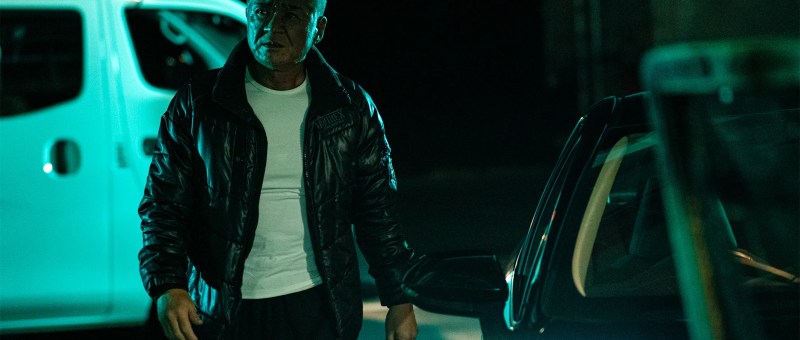
V-Cinema legend Hitoshi Ozawa returns in a tale of big city corruption helmed by Hydra’s Kensuke Sonomura. Scripted by Ozawa himself and apparently created in part as a celebration of his 60th birthday, Bad City (バッド・シティ) is a clear homage to the classic yakuza dramas of the early ’90s while boasting some of the best action choreography in recent Japanese cinema performed by the likes of Tak Sakaguchi along with Ozawa himself who performs all of his own stunts. 

According to dodgy CEO Gojo (Lily Franky) who has just inexplicably been acquitted of extortion and colluding with the yakuza, Kaiko City is riddled with crime and violence which is why he’s announcing his candidacy for mayor. Meanwhile, behind the scenes, a mysterious assassin (Tak Sakaguchi) is cutting swathes through the Sakurada gang who dominate the city’s western district which Gojo has earmarked for a redevelopment project he claims will improve the lives of citizens but is in reality just an excuse to build a massive casino complex intended to enrich himself and his company. The previous mayor had won a landslide victory thanks to his opposition to the redevelopment plan which enjoys little support from the local population but Gojo isn’t exactly interested in winning hearts and minds in the community. 

Really just another gangster himself, Gojo’s machinations are also destabilising the existing underworld equilibrium in seducing treacherous minions from other gangs including vicious Korean gangster Kim Seung-gi whose loyalty to ageing gang boss Madam Kim is clearly waning. Then again, an enemy’s enemy is a friend allowing unexpected alliances to emerge between previously warring factions especially given that the sudden offing of a high status gang boss is frowned upon in the gangster play book. 

With police and judicial collusion the only possible explanation for Gojo’s miraculous escape from justice, an earnest prosecutor sets up a secret task force under the command of Public Security agent Koizumi (Mitsu Dan) and led by veteran officer Torada (Hitoshi Ozawa) who is currently in prison awaiting trial on suspicion of offing Mrs Kim’s only son, Tae-gyun. Torada is an unreconstructed violent cop operating under the philosophy that if you beat up a good guy that’s violence but if he’s bad then it’s justice. He has perhaps learned to see the world as morally grey, not believing himself to be necessarily on the side of right so much as resisting the forces of darkness by doing whatever it takes to survive in this city which is indeed already quite corrupt. Partnered up with two veterans and a junior female officer from violent crimes who were assigned to investigate the Sakurada boss’ murder, the gang do their best to trap Gojo legally by uncovering incontrovertible evidence of his dodgy dealings they can use to nail him in court, or failing that the court of public opinion, that cannot be swept aside by his friends in high places. 

Sonomura opens as he means to go on with a series of bloody assassinations culminating the massacre of the Sakurada gang in a bathhouse, while building towards the final mass confrontation in which Ozawa and his team face off against hordes of foot soldiers trying to fight their way towards a confrontation with Kim Seung-gi. Dynamically choreographed, the action sequences are surprisingly bloody and heavy on knife action but crucially also displaying a high level of characterisation and dramatic sensibility as the earnest cops square off against amoral gangsters willing even to sacrifice their own. 

Though there might be something uncomfortable in setting up the major villain as a rogue Korean gangster, the film paints his defection in part as a reaction to Mrs Kim’s initial loathing of the Japanese while in the end allowing a kind of cross-cultural solidarity to emerge as the Sakurada gang become accidental allies and Mrs Kim receives a lost letter from her son that allows her to change her way of thinking while helping to take down the destabilising force of Gojo, restoring a kind of order at least to the streets of Bad City Kaiko. Ozawa may be an equally dangerous extra-judicial force, but at least for the moment he’s standing in the light where everyone can see him taking out the trash and leaving those like Gojo no quarter in an admittedly violent place.


Bad City screened as part of this year’s Camera Japan.

Original trailer (dialogue free)

Big Man Japan (大日本人, Hitoshi Matsumoto, 2007)

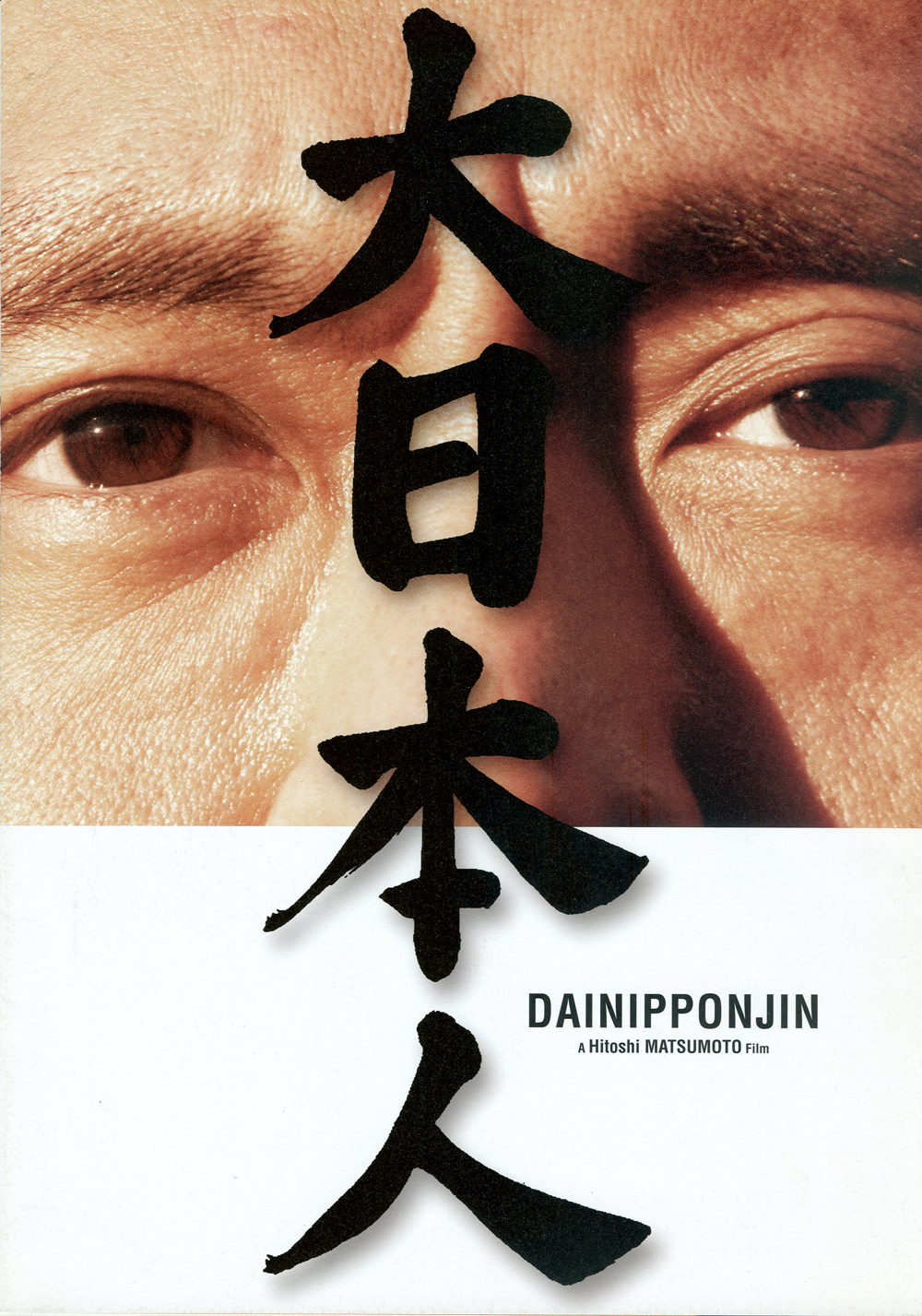
big man Japan posterBeing a superhero is not all it’s cracked up to be. After all, with great power comes great responsibility and responsibility, well, it’s kind of a drag. The debut feature from comedian Hitoshi Matsumoto, Big Man Japan (大日本人, Dai Nipponjin) is the story of a modern day gladiator – a slave and a prisoner, forced into an arena to fight “monsters” intent on causing widespread destruction, but usually being the cause of that destruction himself. Poor old Daisato (Hitoshi Matsumoto) is not much of anything at all, but bears all of his respective burdens with stoic resignation.

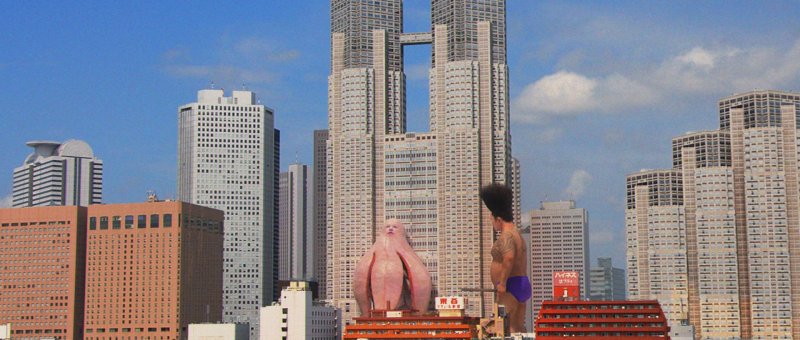
Shot in mock-documentary style, the film keys us in to Daisato’s predicament slowly as he lovingly looks at an umbrella or a packet of dried seaweed before adding that he likes them because they “only get big when you want them to”. The fact is, Daisato is the sixth in a line of superheroes known as Big Man Japan. Every time disaster strikes and there’s a scary looking monster about to pound Tokyo, Daisato has to hightail it to the nearest power station, undergo a lengthy, bizarre, and completely pointless ritual before jumping into a giant pair of purple pants and being pumped full of electricity which eventually causes him to grow to colossal size.

Yet unlike Batman, or even the obvious point of inspiration, Ultraman, Daisato is not particularly public minded and submits himself to this unpleasant treatment out of a sense of duty and tradition. Daisato’s grandfather, the Fourth, was the kind of superhero everybody loves – strong, clever, dependable, but more than that he was a fun guy to be around. Under the Fourth, superheroing was a laugh and a mini industry all at once. Asked why they bother with the strange ritual before Daisato transforms (given that they’re pushed for time), the old timer looks wistful and remarks that everything was much better when Four ran the show.

These days Four (Taichi Yazaki) is a doddery old man with dementia whom Daisato leaves in an old people’s home whilst feeling guilty about not being able to look after him. Occasionally Four goes rogue and causes havoc by beating up innocent buildings and generally destroying things that don’t need to be destroyed. Daisato maybe a monster fighting superhero but he’s no match for Japan’s ageing population and the increasing demands of elderly care.

Daisato bears his responsibilities with resignation rather enthusiasm. His father, unlike Four, had a lust for fame, repeatedly zapping himself to try and be bigger and stronger but eventually just zapping himself to death. Yet even whilst unhappy about being forced into his life of mercenary monster hunting, Daisato still wanted his kid to take over the Big Man Japan name – only his kid’s a girl who doesn’t actually like her dad very much and gets picked on at school for being the daughter of Japan’s most rubbish reality TV star. Daisato’s superpowers have led to the breakdown of his marriage as his wife has left him, unwilling to allow her child to be zapped with electricity and sucked into Daisato’s abnormal world. She’s moving on, going with the mainstream and looking to hook up with a decent, reliable sort of guy.

Even the documentary maker occasionally seems exasperated at Daisato’s passivity and general malaise. The monster hunting battles are not just in service of protecting the people of Japan but also a major TV event, though it has to be said that Daisato is not very popular and the few people who like him do so precisely because of his perseverance in the face of constant failure. Daisato has a manager of sorts, who drives expensive looking cars, has two expensive looking dogs named “simplicity” and “delicacy”, and is intent on selling each and every spot in Daisato’s giant torso to advertising sponsors landing him with tattoos advertising fresh goods right on his chest and back. Eventually Daisato ends up angering the public still further when he kills an incredibly cute, apparently harmless monster in a moment of panic.

Daisato is, in many ways, a victim of his culture as he feels compelled to put up with constant mistreatment in service of duty and tradition, seeing himself as the last in a long chain of ancestors he’s never been able to live up to and whose powers he will probably not be able to pass down to a successor of his own. In one particularly worrying episode, the mysterious forces which control Daisato do not even bother to contact him but break into his house for a spot of non-consensual zapping which destroys Daisato’s entire home leaving him with nothing. Being big in Japan is actually being very, very small. Poor old Daisato can’t seem to catch a break, but maybe there is one just waiting to catch him.


Original trailer (English subtitles)