If Only I Could Hibernate (Баавгай болохсон, Zoljargal Purevdash, 2023)

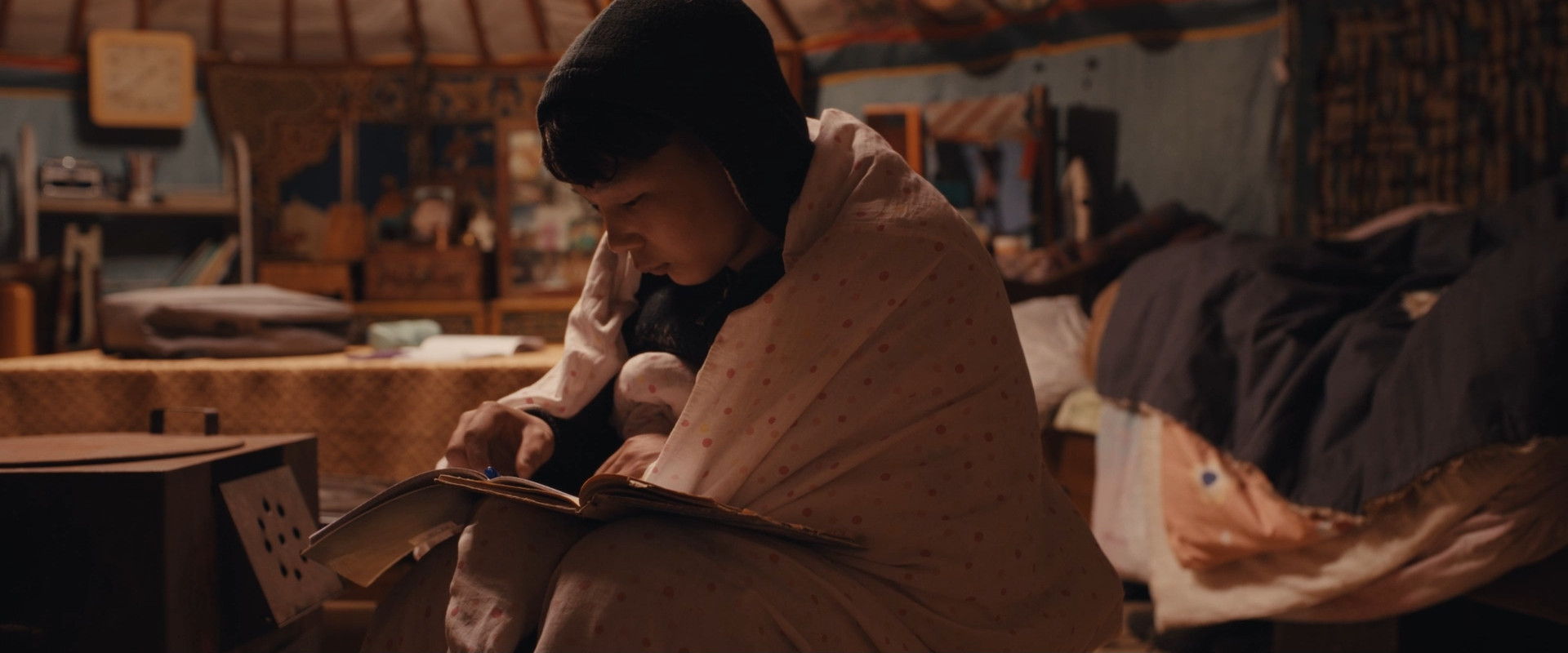
A teenage boy finds himself torn between his dreams for the future and the responsibility he bears towards his family in Zoljargal Purevdash’s gentle coming of age drama, If Only I could Hibernate (Баавгай болохсон). Spoken by the hero’s younger brother, the title lays bare the children’s sense of despair as they gaze up at the giant hole around the chimney in their yurt longing for an escape from the cold while Ulzii (Battsooj Uurtsaikh) longs for an escape from this life by winning himself a place to study overseas. 

After his father’s death two year’s previously, Ulzii and his family moved to the city but still live in a yurt on its outskirts. Ulzii’s mother is recovering from a period of alcohol abuse and struggles to hold down a job while Ulzii has become responsible for his younger siblings. A new teacher (Batzorig Sukhbaatar) at his school notices that he is bright and has an aptitude for science, advising him to take special classes and enter local competitions with the aim of winning the national one which comes with a scholarship to an elite private school.

The sense of possibility begins to bring new light and focus into Ulzii’s life, but his hopes are quickly shot down by his mother who has decided to move back to the country. He wins the right to stay behind with two of his siblings but soon finds himself alone and desperate, unable to buy coal or food while his mother fails to send money. Earlier his mother had berated him for buying an expensive pair of trainers only for him to counter that he saved up for ages and bought them with his money from a part time job the rest of which he’d given to her. Ulzii spends anything he gets on coal for the family, taking very little for himself while trying to protect his siblings.

Some might find his dream naive, that his conviction that he can study his way out of poverty is unrealistic while his resentment also has a degree of of pettiness in his refusal to become what he describes as a “weak beggar”. In the yurt district people are always keen to help each other, but Ulzii is proud and finds help difficult to accept while he also feels belittled by his wealthy, apartment-dwelling aunt who soon turns nasty when he refuses to surrender a keepsake from his father. He is also at times cruel to his mother, insensitively revealing her illiteracy to his younger brother in an attempt to get him to stay in the city and go to school so he doesn’t end up like her. 

Ulzii’s mother is not someone suited to city life, though as it turns out the country doesn’t suit her so well either. Ulzii finds himself having to skip classes and take part in illegal logging to help support the family while his friends ask him to join them in committing a burglary on the home of rich friend of their father’s. Driving into the city to help an old man sell the last of his lamb, Ulzii is surrounded by protestors complaining about the air quality and suggesting perhaps that this kind of urbanity is literally wounding the land in contrast with the symbiotic lifestyles of the nomads like Ulzii and his family. Ulzii’s younger brother eventually becomes ill because of their inability to heat the yurt along with the poor air quality in the village while Ulzii cannot afford the money for his medicine. 

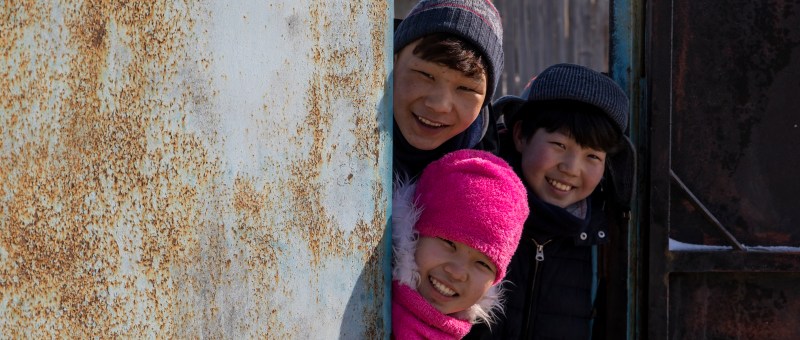
The kids just want an end to the winter and for their mother to come back so everything can go back to normal, but instead find themselves embracing a new family while trying to find signs of positivity for the future. Ulzii ends up rediscovering aspects of his culture in opening himself to the community and learning that it isn’t “weak” to accept help when you need it or to give it in return. There are no easy answers, and learning to forgive his mother for what he sees as her fecklessness may take a little longer but the siblings have at least begun to discover new ways to survive the winter that are filled with laugher and warmth rather than the coldness of resentment and futility.


If Only I Could Hibernate screened as part of this year’s BFI London Film Festival.

Original trailer (English subtitles)
Harvest Moon (Эргэж ирэхгүй намар, Amarsaikhan Baljinnyam, 2022)

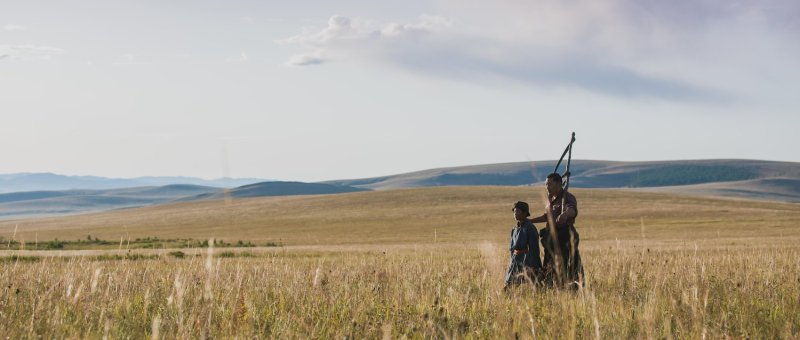
A young man who left for the city is forced to reckon with his childhood self and the nature of paternity when called back to his rural home in Amarsaikhan Baljinnyam’s touching directorial debut Harvest Moon (Эргэж ирэхгүй намар). The melancholy title may hint at the short-lived nature of the central relationship but also reflects the slowly disappearing traditional culture of the Mongolian Steppe and the loneliness of those who find themselves in one way or another orphaned amid its vast and empty landscapes.

Tulgaa’s (Amarsaikhan Baljinnyam) dilemma is that he’s just received a voice message from a woman he’s been seeing explaining that she has a son she had not previously disclosed and wants to know if it’s a dealbreaker before the relationship becomes more serious. Meanwhile, he receives a call from his home village letting him know that the man who raised him, but was not actually his biological father, has been taken ill and may be close to death. Though reluctant, Tulgaa begins the long journey to say goodbye and then finds himself agreeing to stay a little longer to finish his father’s last harvest. 

While there, he meets a little boy, Tuntuulei (Tenuun-Erdene Garamkhand), who is like he was a child without a father though currently living with elderly grandparents while his mother works in the city. Older than his years, Tuntuulei too is bullied and ostracised by the other villagers who gossip and disapprove of the manner of his birth which apparently occurred after a one night stand. Neither Tulgaa nor Tuntuulei ever knew their biological fathers and are each looking for something to soothe their loneliness, eventually developing paternal relationship even in the knowledge that Tulgaa will return to the city once the harvest is done whether or not he eventually decides to accept becoming a father to his girlfriend’s son. 

In many ways Tulgaa is bonding with his childhood self and processing his paternal anxieties through the lonely, abandoned child he once was which is perhaps a little unfair given that he essentially taking a test run with Tuntuulei in preparation for becoming another boy’s father. Tuntuulei’s grandparents meanwhile contemplate sending him to the city to be with his mother, conscious that he’s bored with only the elderly couple for company and takes no interest in schooling. Tulgaa’s discovery that the boy cannot read provokes a rift between them in his insensitive reaction though Tuntuulei has already taught him a series of essential life skills for living on the Steppe from fishing to how to salve the blisters on his hands from cutting grass with a scythe. Tulgaa’s father had finally accepted that there was nothing he could have done to prevent him from leaving, but Tuntuulei seems so perfectly in tune with this landscape that it may not be possible for him to find happiness in the city even as this way of life continues to decline with other youngsters increasingly choosing urban civility over nomadic freedom.

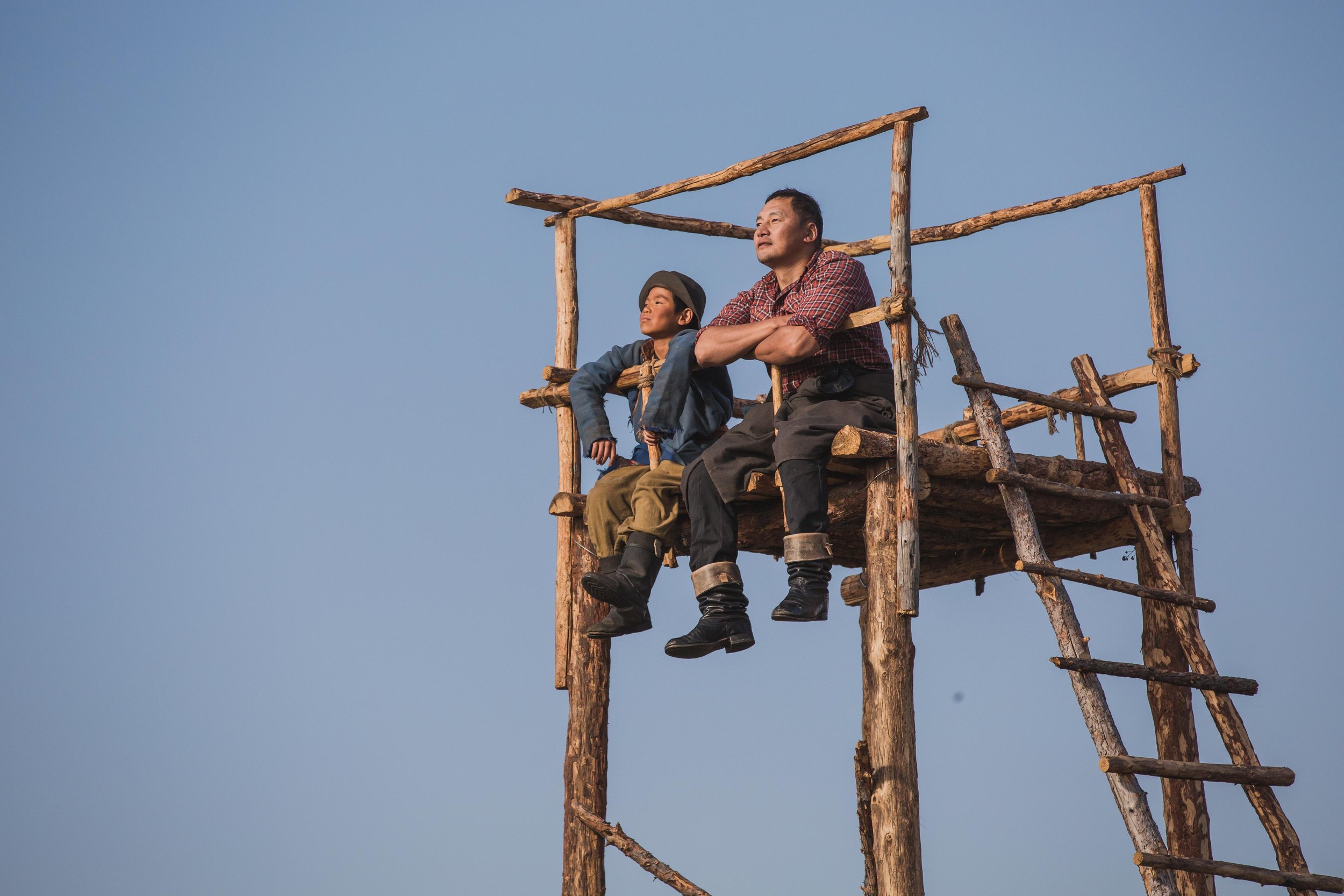
As Tulgaa is eventually told, the age of harvesting by hand may be over as his stay in the village is quite literally cut short leaving Tuntuulei all alone a tiny figure amid heaps of drying grass. The once verdant field now seems sad and empty, a sign that autumn has arrived and not only for the two men but for the village as a whole. The film had opened with a group of men desperately trying to get a phone signal by attaching a mobile to a pole and standing on a horse, shouting up at the receiver and barely able to understand the reply. Tuntuulei suggests building tower so people could climb up and make a call whenever they want which in part symbolises his own desire for connection along with the community’s isolation from the outside world. But when he tries to use it himself he discovers only disappointment. After all this effort, his mother is too busy to speak to him and blithely asks that he call back later cruelly crushing his fantasy of being able to contact someone any time he wants and reinforcing his sense of aloneness. Even so through his relationship with Tulgaa who is after all an older version of himself he is able to find another connection which may endure even in its absence. Beautifully lensed to take advantage of the majesty of the Mongolian landscape, Amarsaikhan Baljinnyam’s poetic debut is a quietly affecting affair in its own way melancholy but also filled with warmth and a sense of future possibility.


Harvest Moon screens in Chicago Sept. 23 as part of the 17th season of Asian Pop-Up Cinema where Pinnacle Career Achievement honouree Amarsaikhan Baljinnyam is scheduled to attend the award ceremony before the film and Q&A after.  

Original trailer (English subtitles)