Last Child (살아남은 아이, Shin Dong-seok, 2017)

Last Child posterPeople grieve in different ways. Some stop altogether, lost in a fog of confusion and regret, while others try to keep themselves busy or at least feel as if they are doing “something” to try and find whatever positivity they can in the midst of such terrible tragedy. The parents at the centre of Shin Dong-seok’s extraordinarily accomplished debut feature Last Child (살아남은 아이, Salanameun Ayi) find themselves on opposite sides of a grief divide after their son is killed trying to save another boy from drowning. While the mother is angry and resentful, the father finds strength in pride for his son’s act of heroism, nominating him for a local heroes award and donating the compensation money they have been awarded to their son’s school to fund a new scholarship place in his name.

Eunchan, the teenage son of Misook (Kim Yeo-jin) and Sungcheol (Choi Moo-seong), passed away some months ago leaving his parents numb and grief stricken. As far as they’re aware, Eunchan lost his life while valiantly trying to save that of another boy – Kihyun (Seong Yu-bin). Asking after the boy whom his son sacrificed his life to save, Sungcheol is dismayed to learn that he’s dropped out of school, possibly as a consequence of bullying and social stigma because of the well publicised incident he has been involved in.

Spotting Kihyun around town riding his delivery scooter, Sungcheol later decides to intervene when he catches sight of some other boys harassing him. Sungcheol buys the boy dinner and tells him to call if he ever needs anything. Kihyun, despite his obvious discomfort calls when the manager of the fast food restaurant he had been delivering for accuses him of lying about his bike being stolen. As Kihyun is a minor, he needs a responsible adult to talk to the police but his mother abandoned him years ago and though his father used to send money for his upkeep, he has now remarried and severed all connection with his son. Feeling sorry for the boy and not wanting Eunchan’s sacrifice to go to “waste”, Sungcheol offers Kihyun a job in his interior construction company as a trainee apprentice.

Though originally shy and afraid, Kihyun begins to blossom under the gentle, positive parental input of Sungcheol as he picks up the paternal reins, not only teaching him a trade but investing in him the confidence to succeed. Misook, horrified at first by her husband’s decision, begins to come around to this wounded young man who perhaps reminds her a little of her own son. Despite his lingering feelings of shame and guilt in accepting such kindness from the people he feels may continue to suffer solely because of his continued existence, Kihyun slowly starts to look on Misook and Sungcheol  as surrogate parents as they provide the love and care he has never really known from Sungcheol’s down to earth fatherly pep talks to Misook’s home cooked dinners.

Kihyun does, however, have a secret he has been withholding from Misook and Sungcheol which becomes increasingly difficult for him to keep the nicer they are to him and the more he comes to respect them. Though he might have been able to push it to the back of his mind, an unexpected meeting with another friend of Eunchan’s who was also there that fateful day convinces him he has to speak the truth no matter how much more pain it may to cause to all concerned (including himself).

Sungcheol had invested heavily in the heroic nature of his son’s death and finding out it might not have been quite so straightforwardly noble as originally described is a crushing blow for him. The reopening of a wound which had begun to scar pushes Misook and Sungcheol back into their respective corners as they each attempt to process the situation in their own particular way, beginning to mildly resent each other in the process. Meanwhile, having considered the matter closed, there is little appetite to reopen the investigation into Eunchan’s death. The other parents club together to keep their kids out of it while the school sends a polite message asking Misook and Sungcheol to leave it alone to avoid damaging the school’s reputation. Sungcheol, filled with a righteous anger and a need to find out what really happened to his son, is advised to drop the matter, that it’s better to be remembered as a “hero” rather than a “victim”, implying that Sungcheol ’s quest for “truth” is in someway sullying his son’s memory.

Kihyun, meanwhile, is a mess of conflicted emotions. Grieving himself for the family he’d begun to form with Misook and Sungcheol , he tries to move on with his life whilst hoping to somehow repair what has been broken. Kihyun is not a bad kid at heart, whether changed by his experiences or simply freed from a destructive environment, but he has done bad things which fill him with guilt and remorse compounded by the faith and kindness Misook and Sungcheol have tried to show him.

Yet good as they are, the intensity of their rage and pain threatens to consume the bereaved parents who begin to turn their thoughts towards poetic justice and exacting their own revenge even if they also know it will only bring them more suffering. Isolated by their grief, ostracised for the need for truth, and torn apart by their ambivalent emotions towards each other, the trio walk headlong into a spiralling abyss of nihilistic violence and despair, rejecting the idea of a future in which the concept of family continues to exist. Shin’s drama is bleak in the extreme but strangely hopeful in its clear hearted determination to believe in human goodness which just might be the only way back from the brink.


Screened at the 20th Udine Far East Film Festival.

Original trailer (English subtitles)

Interview with director Shin Dong-seok from the 2017 Busan International Film Festival. (scenes from the film not subtitled, interview subtitled in English)

The Catcher on the Shore (やぎの冒険, Ryugo Nakamura, 2011)

catcherMaking a coming of age film when you’re only 14 is, in many ways, quite a strange idea but this debut feature from Ryugo Nakamura was indeed directed by a 14 year old boy. Focussing on a protagonist not much younger than himself and set in his native Okinawa, Catcher on the Shore (やぎの冒険, Yagi no Boken) is the familiar tale of a city boy at odds with his rural roots and the somewhat cosy, romantic relationship people from the town often have with matters of the countryside.
Hiroto is a young boy living with his single mother in the city. He’s supposed to spend the winter holidays with his grandparents in his mother’s home town and feels very grown up making the trip all by himself. He’s obviously spent quite a lot of time with his grandparents on earlier occasions and is eager to visit their two “pet” goats who live in “goathouses” (dog kennels) in the garden. However, it’s traditional in Okinawa to make goat soup at times of celebration and Hiroto’s family are raising the goats for their meat, much as they may seem like pets. Unfortunately, Hiroto wasn’t aware of this and is very distressed when he realises what’s happened to one of his “friends”. From this point on he becomes despondent and withdrawn though also committed to the idea of saving the other goat from the fate that befell its mate.

The divides between town and country prove stark here as Hiroto views the goats as domestic pets, never equating the living animal with the life sustaining meat on the dinner table. Though the other children might be able to tuck into goat soup one minute and marvel at the animal’s cuteness the next, Hiroto’s family have not fully considered that a boy from the city will have significantly different ways of looking at things. Seeing as no one thought it necessary to explain something so commonplace to him, Hiroto is shocked and left feeling as if he’s lodging with a gang of heartless murderers. Not only that, he’s now forced to consider his own place in this – his complicity in the death of other creatures as they become the means which sustains his life in the sacrifice of their own.

To begin with it’s all idyllic country scenes of children playing in lakes though perhaps it’s just different kinds of exploitation as Hiroto has also bought a tank along which is soon enough occupied by a shrimp freshly plucked from the river. It might not be a dinner plate, but even Hiroto’s well meaning desire to look after his new shrimp friend is quite a selfish one – especially as he ends up not being the best guardian, abandoning shrimpy to run off after a goat in danger.

This is a place where the old things are still important and there’s a very specific meaning to being a man. Men kill things. Women and cry babies run away. After Hiroto runs from an unexpectedly violent scene, his former friend brands him a “little girl” for lacking the courage to do something as vital as taking the life of an animal. Leaving aside the obvious sexism inherent in both his statement and the rural world (who do you think is going to deal with all those goat carcasses anyway), Hiroto and the local boy challenge each other’s manliness in the traditional way – with a fight! Which neither of them really win, though they do go on to have more of an in depth dialogue whilst marooned for a long dark night of the soul during their very differently motivated goat related quests.

Nakamura’s achievement shows remarkable assuredness for someone his age. That said, this is hardly a back bedroom affair and he’s had quite a lot of help from more experienced professionals to give him a slick, polished finish that eludes many older or even more established indie directors. Any lack of finesse can be excused by his youth but even so Nakamura’s grasp of quite complex themes is especially nuanced from someone who is still technically coming of age himself. Performances are also strong across the board but particularly from the younger members of cast and Nakamura doesn’t even shy away from Okinawa’s chief political concern as a local parliamentary candidate becomes a brief figure of fun whilst calling out for a military base to be built in the area in the hope of creating jobs and boosting the population. Imperfect, yet impressive, Catcher on the Shore is an interesting and undoubtedly well crafted debut which marks the young Nakamura as an intriguing voice that will hopefully have much to offer in years to come.


English subtitled trailer:

Weekend Blues (ウィーク エンド ブルース, Kenji Uchida, 2001)

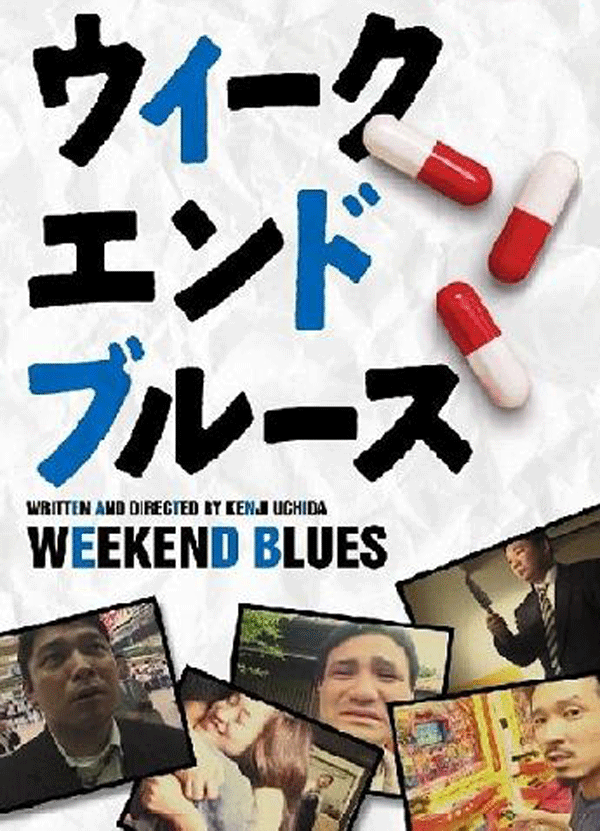
weekend bluesKenji Uchida travelled to America’s San Fransisco State University to study filmmaking before returning to Japan and making this, his debut film, Weekend Blues (ウィーク エンド ブルース) which later went on to claim two awards at the prestigious Pia Film Festival for independent films earning him the scholarship which enabled his next film, A Stranger of Mine. However, Uchida’s film, though resolutely his own, individual creation, plays much more like the Japanese indie movies of the time and particularly those of the similarly considered, if drier, Nobuhiro Yamashita than it does to late 20th century American indie or the mumble core movement.

As in his later work, Uchida builds around a finely constructed farce only this time the central conceit is a bout of amnesia suffered by the central character, Kensuke, who is a depressed salaryman still reeling from his ex-fiancé’s sudden exit from his life. He takes solace in his one solid relationship – that with his committed slacker friend, the similarly named Kenji. However, on visiting Kenji’s apartment one Friday night he discovers Kenji has gone and got himself a girlfriend. Kensuke gets extremely drunk and also tries some of the weird drugs that Kenji has got from somewhere or other before accompanying Kenji’s new squeeze, Ayumi, on her way home.

That’s the last thing Kensuke remembers before waking up in a faraway town. On returning to Kenji’s flat he’s shocked to learn it’s actually Sunday already and he has absolutely no idea what’s been going on for the past 48 hours.

Jumping to the natural conclusion that the drugs are to blame, the two Kens descend on the dealer who seems to be some kind of man scientist researching a formula to give the “wimpy” men of today some of their caveman swagger back. Ironically named “samurai” the drugs themselves are more of a Mcguffin but provide a key into this world of nervous, unambitious, soon to be middle-aged men who’ve each had their girlfriends poached from under their noses by the more socially successful. A parade of jilted lovers passes by until we reach the more psychotic set who’ve decided to embrace some decidedly dodgy methods in order to ensure they won’t be humiliated and run out on ever again.

Uchida also adds another level to the amnesia based shenanigans with a sideline in internet dating where everybody is lying to everyone and presenting version of themselves that’s very much idealised. Kenji has told his prospective girlfriend that he’s a successful high earner despite the fact he doesn’t actually have a job at all, but at least his interest in the new woman has persuaded him to try and get back into the employment market so his full scale frauds can be demoted to gentle half-truths before things (hopefully) start to get more serious. In turn, his new lady love, Ayumi, may not be all she seems either.

Kensuke’s larger philosophy lies in a need to be needed. Now that his fiancée has left him, discovers he was no longer necessary to her anymore, Kenji feels himself a man without purpose and the prospect of simply continuing like this for another fifty years is beginning to frighten him. Again there’s a wider question here about interconnectedness (which is also the heart of any farce) in the supposedly “connected” world in which you can pick up a true love fantasy by lying about yourself on the internet – even if the mutual misrepresentations end up spinning their own pretty web of deceit in their own sweet time

Uchida’s first film is a necessarily low budget, indie effort but makes no apologies for itself or claims of being anything more than it is. That said, the performances are universally strong and the direction often interesting even given the obvious budgetary constraints. A very modern kind of farce which also looks back the salaryman comedies of the ‘60s, Weekend Blues is a good indication of Uchida’s future direction whilst also succeeding as an enjoyably off the wall comedy in its own right.


Attack! Hakata Street Gang (突撃!博多愚連隊, Sogo Ishii, 1978)

hakataSogo Ishii (now Gakuryu Ishii) was one of the foremost filmmakers in Japan’s punk movement of the late ‘70s and ‘80s though his later work drifted further away from his youthful subculture roots. Perhaps best known for his absurdist look at modern middle class society in The Crazy Family or his noisy musical epics Crazy Thunder Road and Burst City, Ishii’s first feature length film is a quieter, if no less energetic, effort.
Like his other films from the period, Attack! Hakata Street Gang (突撃!博多愚連隊, Totsugeki! Hakata Gurentai) is fairly light on actual plot but broadly follows a group of low level street punks who get themselves into trouble after accidentally shooting the son of a yakuza boss in the leg and leaving him to bleed to death. In trouble with both the law and the gangs the guys find themselves in the midst of a turf war they are ill equipped to handle.

Very clearly an early effort, Attack! Hakata Street Gang is an ultra low budget production filmed on the real streets starring Ishii’s friends rather than professional actors. It can’t claim to any level of aesthetic beauty and, in truth, is not particularly interesting in terms of look or style but is filled with Ishii’s characteristic energy and runs fast even given its brief 67 minute run time.

Generally, Ishii sticks to a naturalistic representation of the street punk world. Taking his cue from the realistic action genre pioneered by Fukasaku et al not long before the film’s release, Ishii employs a similar approach to the fight scenes shooting from the middle of the action and often from low angles. Full of handheld camera and shakey, unfocused shots Attack! Hakata Street Gang is filled with the kind of youthful freshness that was very in vogue at the time.

Ishii does not appear to want to offer any kind of critique of this extremely masculine, violent world but solely to capture it on film. The street punks themselves are not particularly well drawn but there is a notably strange set of characters including an ultranationalist and his younger brother with learning difficulties who wears an SS helmet and rides around on a pushbike with a large nazi flag flying on the back. Nicknamed “manji” (the word for the Japanese “swastika”) the boy is obsessed with warfare and dangerously gets hold of one of the guns his older brother has adapted from a toy to be able to fire real bullets. He’s more of a plot point than anything else but still offers a convincingly weird sample of modern street life.

Also in keeping with the recent brand of cool action dramas, the film has an energetic score which is perhaps more jazz fusion or blues rock than outright punk which gives it more of a nihilistic, sophisticated tone than the full on noise explosion of some of Ishii’s later efforts. By the time the guys have taken their final stand by capturing hostages and occupying the local kindergarten (literally kids with guns) it’s pretty clear that there is no way back for this collection of down and out street rats.

Perhaps more interesting as an early work of a master than in its own right, Attack! Hakata Street Gang is an energetic and youthful exploration of a little seen late 1970s subculture. Literally playing fast and loose, Ishii’s debut is in many ways a statement of intent and none the worse for it.


Trailer for the Sogo Ishii The Punk Years 1976 – 1983 box which includes this film (though unfortunatly does not include any subtitles).


Han Gong-ju (한공주, Lee Su-Jin, 2014)

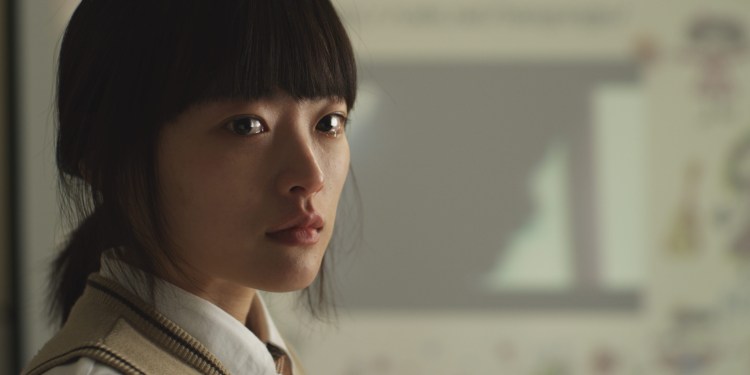
Photo 1Review of this complex Korean social drama up at UK Anime Network. Went a bit intense with this one….


Hot on the heels of A Girl at My Door, we’re confronted with another impressive debut film from a Korean director which once again deals with a series of important, if unpleasant, often over looked social phenomenons. It’s difficult to review Han Gong-ju without revealing the mysterious events at its centre yet much of the film’s impact is bound up with the slow drip of its structural dissection of its raw and painful wounds. Based on a real life case from 2004, Hang Gong-ju is a harrowing tale of victim shaming, social injustice and ingrained systems of corruption which will shock even the most cynical Korean cinema fan.

At the beginning of the film, Hang Gong-ju is being a little less than sensitively dealt with by her school teacher who hands her a new mobile phone and instructs her not to call anyone she knows, not even her father, and only to accept calls from his own phone. She’ll be transferring to a new school and staying with her teacher’s mother until other suitable accommodation can be arranged. We don’t know why any of this is happening but the teacher seems put out, less than willing to help Gong-ju – almost as if he finds her existence a little embarrassing. At her new school she keeps herself to herself, making sure to remain distant from her fellow pupils. However, a group of singers finds out that Gong-ju has musical talents and becomes intent on adding her to their group. Though fearful and unwilling, Gong-ju gradually becomes closer to them. The reason for her aloofness leads back to the very reason she’s been exiled from her hometown and is a secret Gong-ju is terrified will eventually be revealed. Following a possibly well meaning (or maybe a little less so) action by her new group of friends, the true reasons for her being forced into hiding are thrown into the light and Gong-ju once again becomes the centre of a storm composed of a complex system of societal repercussions.

Without giving too much away, nothing that happens to Han Gong-ju is her fault yet she’s the one sent away from her home, from her friends and family, and forced to feel ashamed for having undergone a terrifying ordeal. She’s just a normal teenage girl, but there’s no one to stand with her or for her – she is left totally alone in the home of a stranger with no one to talk to or be comforted by. Those that are responsible, the guilty parties, who were able to act in such a morally repugnant way thanks to their connections, social standing and the arrogance the combination of those things afforded them seem to have largely escaped the shame and ignominy which has continued to dog Gong-ju who is still subject to physical manifestations of their actions – let alone the mental scarring. Not only that, Gong-ju is also pursued by the families of those that have caused her harm who seem to want her to change her statement of events in favour of their children. The father of one whom she had been close to even wants her to sign a petition to say that his child was “forced” into these heinous acts. Perhaps even, in a sense, he was though it’s hard to see how any rational person could ever see that as a mitigating factor in the events which did actually take place.

It’s not only Gong-ju who’s found herself at the mercy of rigid social codes. Her hard nosed and originally reluctant landlady-cum-responsible-adult Mrs. Lee has also had her fair share of disapproval from the local housewives thanks to her relationship with the town’s police chief. Her middle aged romance also causes a degree of resentment from her horrified son who doesn’t seem to care very much about his mother’s actual feelings or those of Gong-ju whom he deposited at his mother’s house like an inconvenient suitcase in the hope of making a good impression with his boss. Although originally put out by the sudden arrival of a teenage house guest who may even be some sort of delinquent, Mrs. Lee comes to a grudging admiration for this obviously damaged girl and is close to being her only real supporter (though perhaps only up to a point). Gong-ju’s growing closeness with Mrs. Lee is even more valuable as her relationship with her own mother was fractured even before the events that have befallen her and leave her unable even to count on her mother’s love and support during such a difficult time.

Told with remarkable assurance by Lee Su-jin who opts for a complex, non linear structure Han Gong-ju is frankly more harrowing than any horror film as the demons which plague the central character (and actually, many of the other women in the film) are all too real – manmade by a rigidly conformist, conservative society riddled with corruption and all too quick to point the finger of blame at those incorrectly positioned within its complex network of social hierarchies no matter what the facts of the matter may be. Shocking, even if sadly somewhat unsurprising, Han Gong-ju dares to shine a bright light on this dark corner of human suffering and by telling the sad story of this one lonely, victimised girl who nevertheless tries to live her life in spite of her difficult circumstances may help others finally wake-up to the kind of injustices we allow to take place in the world which we, daily, create.


Out today on DVD & blu-ray from Third Window Films