Eat Bitter (Pascale Appora-Gnekindy & Sun Ningyi, 2023)

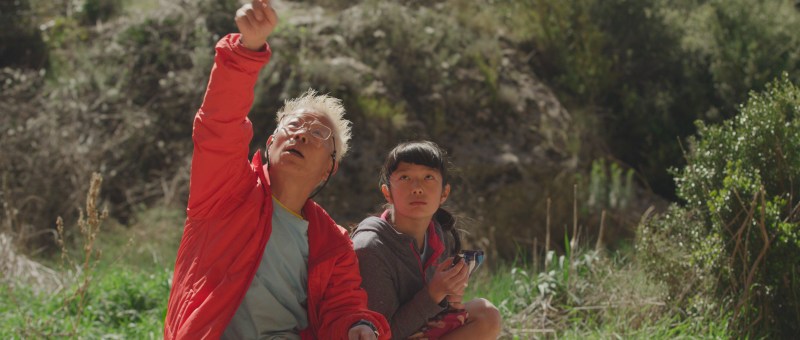
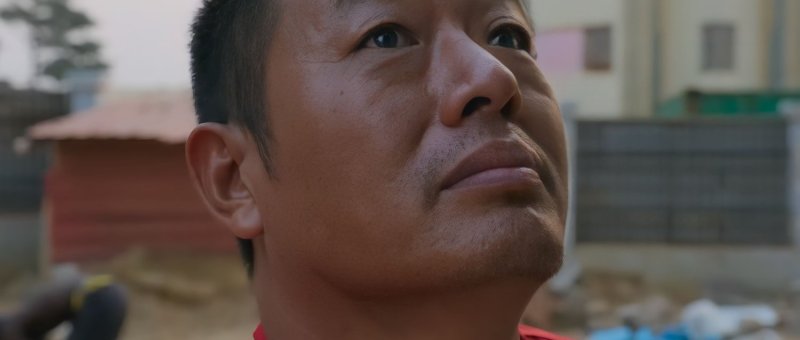
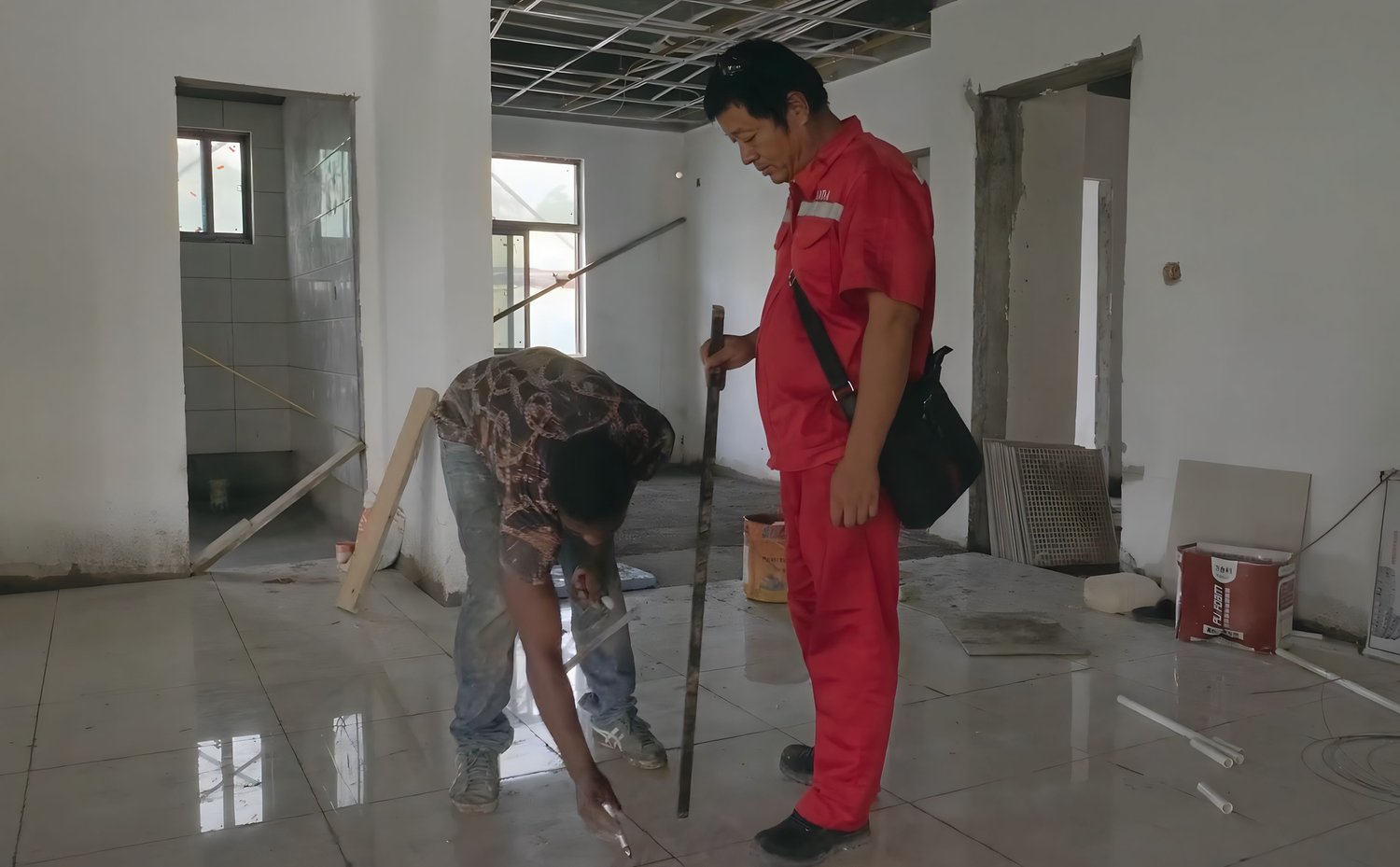
“Happiness is not about what you eat or what you wear but mutual understanding” according to Luan, a Chinese construction manager, in Pascale Appora-Gnekindy & Sun Ningyi’s documentary Eat Bitter. Mutual understanding is perhaps something he’s striving for in his working life in the Central African Republic which is as the opening titles state one of the poorest places on Earth. As China deepens its economic investment in Africa, Luan is one of many who’ve travelled overseas in search of higher salaries to provide better lives for their families.

His struggles are mirrored in those of Boa, a local man who works a sand diver gathering the raw materials that Luan needs for his construction work. Boa’s wife has recently left him with their two children whom he can barely support, though as it later turns out that may partly be because he had conceived a child with another woman whom he subsequently tries to marry only to see the relationship fail when she regards him as unkind and can no longer live with him. Luan’s status as a migrant worker has also placed a strain on his family life. Having left when his son was a teenager, he worries that he wasn’t there to effectively parent him at an important age which has contributed to the difficulties his wife is currently facing in her relationship with him. Luan and Yuzhen talk every day on the phone and she generally seems upbeat but later makes an attempt on her life in the depths of her loneliness being separated from her husband and estranged from her son. 

The film’s title comes from a phrase that Luan utters close to its conclusion that one must eat bitter before tasting sweet, meaning that in order to find happiness one must endure hardship. But then the hardships that he and Boa are facing are obviously very different. Luan is here to build to a bank, a slick and modern building that symbolises a new future for an otherwise impoverished country which might be one reason the president wants to come in person to inaugurate it with an election looming along with the rise of a new militia threatening civil war. While working on the project, Luan complains that the local workers are slow in comparison to the speed and efficiency common in China while it’s clear that health and safety concerns are almost non-existent. A large group of men standing on a skinny girder joke that they’ll die if they fall but no one is wearing helmets or other safety gear. At one point it’s suggested that they were provided but the workers opted not to use them. In any case, a local worker is eventually killed due to a fall on site causing Luan to reflect that he should have made helmets mandatory and has perhaps failed in his duty of care to the casual workers he employs. 

Boa says his job is dangerous too and that he’s caused himself injury due to being preoccupied with his complicated domestic situation. His dream is to buy a canoe and go into business for himself, something which his current boss supports and even offers to help him with even if the sand diving business appears to be semi-legal and precarious. The authorities soon close down the site where Boa and the other men were gathering sand and gravel stating that they want to redevelop it but when the boss returns sometime later he discovers that nothing has been done and wonders why they had to be moved on. 

Later Luan and his wife attend the opening of a new apartment building for a banquet hosted by his hitherto unseen boss Madame He but it seems unlikely that many of the local residents would be able to afford to live in a place like this even if like the bank it is intended as symbol of what the Central African Republic could become rather than what it is now. Asked for his opinion on the Chinese, Boa states that he feels they’ve got a raw deal. The Chinese are just like white people, he remarks, they say they’ve come to help but they earn a lot more money and the terms of the deal are disadvantageous to men like him. Perhaps this is an ironic inversion of the mutual understanding Luan was talking about though admittedly more in reference to his now much happier relationship with his wife who has finally agreed to relocate in order to be with him. In any case, it’s true that both men are intent on building a mutually beneficial future even if it’s one where the scales are very much tipped. 


Eat Bitter screened as part of this year’s DOC NYC.

Original trailer (English subtitles)
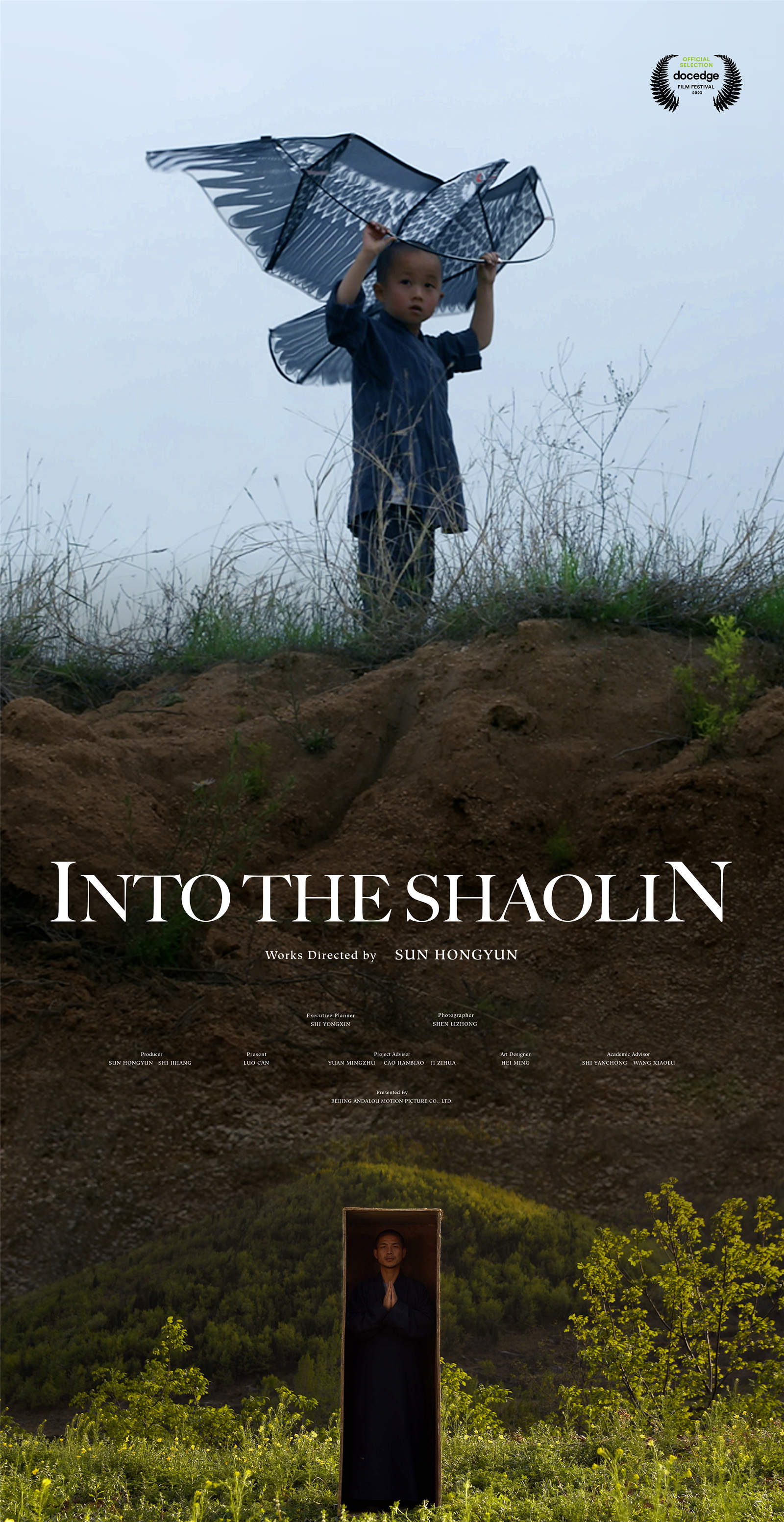
Into the Shaolin (在少林, Sun Hongyun, 2023)

Like many of the monks at the centre of Sun Hongyun’s documentary Into the Shaolin (在少林
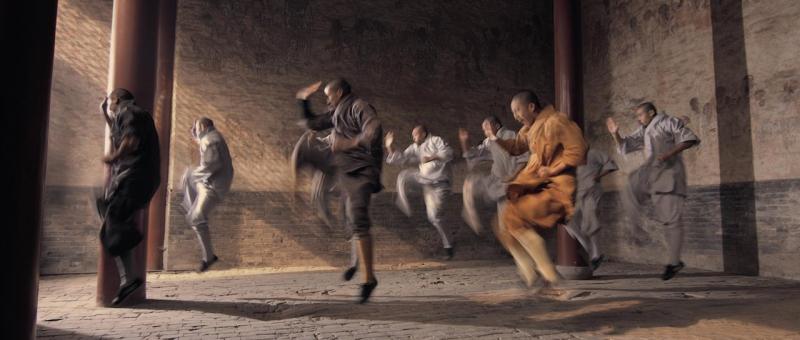
zài Shàolín), our associations with the name are almost exclusively tied up with martial arts movies. Yet as they discovered on entering the temple, it’s not all about kung fu which to some at least came as a disappointment when they were still novices tasked with performing ordinary chores. Then again, many of them do not necessarily anticipate being monks all their lives and so long spent in contemplation leaves them with few other ways to support themselves in the secular world other than through leveraging their martial arts training.

As we can see, many monks come to the temple in childhood often to escape poverty or because they were thought to be troublemakers at home. Sun follows the little monks with empathy, capturing both their mastery over the craft at such a young age and the pain and difficulty it often causes them raising series ethical issues over whether it is right and fair to expect so much from small children who often cry in pain or frustration. Others also remark that they miss their parents having essentially been sent away though one boy explains that his mother managed to get a job nearby so that she can still spend time with him and observe his training.

It’s these familial ties that present the strongest contradictions to the monks and bind them more fully to the secular world. One young man who came to the temple for lack of other options contemplates remaining there for the rest of his life and is a little resentful that even at 18 he still has to get the permission of the grandparents who raised him to go on a mountain retreat. The grandparents, who lost their son, his father, in a workplace accident they believe caused by overwork, want nothing more than for him to get married and start a business and so they flatly refuse to allow him to go on being a monk forever instructing him not to bother contacting them again if that’s what he plans to do. 

But then as others have said, being a shaolin monk doesn’t teach you how to live in the secular world and gives you few transferable skills that would allow you to support yourself. An older monk explains that most of the monks who came to the temple at the same time as him have left but almost all still work with martial arts in some capacity as there’s nothing else for them to do. Even so, the little monks talk of doing other things with their lives once they grow up one hoping to become a soldier defending China and another a movie star. Many came to the temple specifically because of their love of kung fu films starring Jet Li, Donnie Yen, or Wang Baoqiang who himself trained in Shaolin martial arts. 

Others meanwhile have found serenity in the rhythms of the temple and may no longer be suited to living outside of it. The show the boys are preparing utilises a series of boxes of the kind they usually sleep in which as one monk admits to the untrained eye closely resemble coffins but as he puts it no one really needs much more space than their body naturally occupies and it doesn’t really matter where they sleep. Of course, to those in the secular world those things mean a great deal and there’s probably a big difference between a box at the temple and one on the street. Another monk reflects on the shaolin name which means “few trees” though at the temple few is a lot and less is more. He thinks that it’s a fallacy to consider a “return” to the secular world because the true “return” is to your true self which you only discover by leaving home. 

That might be a sentiment shared by a Serbian doctoral student staying at the temple while researching her thesis and in particular the concept of “Chan”. Offering her own insights as a foreigner living at the temple she reflects on the differing attitudes to nature found in China while she seems to be the only woman currently in training. She remarks that it might be odd to call a temple home but that’s what it’s been to here even as she prepares to leave it. Sun’s documentary has an ambivalence to it, at once admiring of the monks in their asceticism, but also somewhat sad not only for their inability to escape their suffering, merely exchange one kind for another, but also for the predicament they my find themselves in should the time come to leave the temple whether by their own will or otherwise.


Into the Shaolin screened as part of this year’s DOC NYC and is available to stream in the US until Nov. 26.

Trailer (English subtitles)

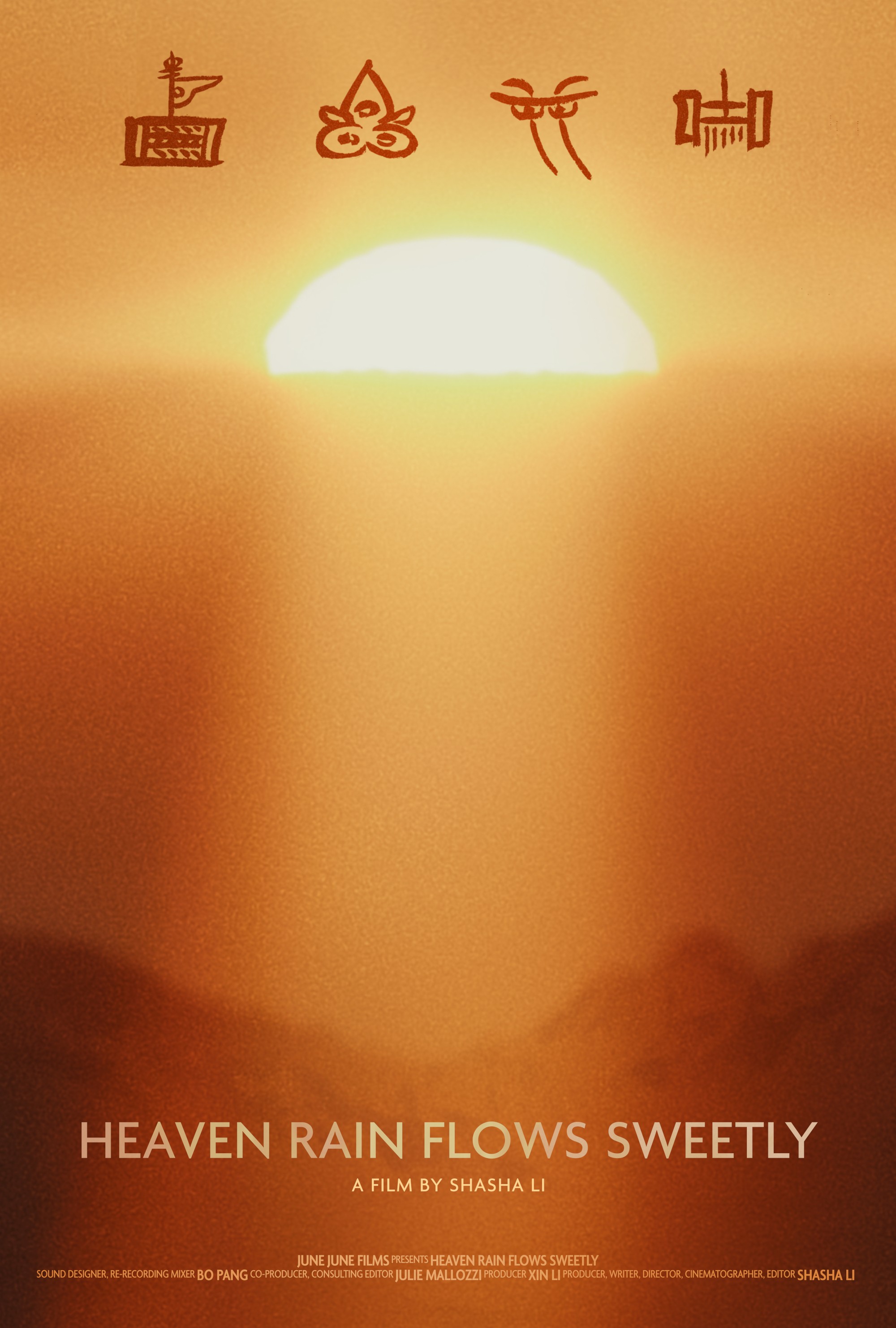
Heaven Rain Flows Sweetly (Li Shasha, 2023)

In her personal essay film Heaven Rain Flows Sweetly, Li Shasha finds herself meditating on her rootless life and traditional attitudes to the natural world when confronted firstly by ecological disaster and then by global pandemic. In the traditional culture of the Nakhi People among whom Li grew up in the remote landscape of the Himalayas, they say there was once a war between humanity and the spirits because humanity took too much from the Earth and gave nothing in return. As wildfires rip through Oregon where she handled settled and begun a garden, she wonders if we haven’t reneged on our bargain and are paying for our lack of regard for nature.

On a return to the US, it suddenly seems odd to her that grasshoppers and frogs appear only as motifs on shop window displays amid the grey concrete of the cities. As child, she had taken part in rituals honouring fire but now sees its terrifying potential as the world around her is reduced to ashes. In the wake of disaster, she pays a visit home to see the grandmother who raised her while her her own mother studied abroad but encounters a different kind of destruction as the village she once new has become a living museum. Now designated a UNESCO World Cultural Heritage Site, most of the original residents have moved away and rent their traditional-style homes out to the throngs of tourists which now descend on the region. Wandering around the town she sees a bustling night life scene in which the traditional dance of Nakhi People has been repurposed as entertainment for outsiders drinking in the many bars.

In order to rediscover Nakhi culture she must head further into the mountains, but also observes that this way of life has also been disrupted by encroaching modernity. She finds a little girl who, as she once was, is being cared for by grandparents while her brother and mother work in the city. Her cousin has returned from university for the summer and remarks how much more difficult it is to readjust to rural life than it is become used to urban living. It seems much hotter here than he remembered, he’d never have thought to bring a hat, and given the ongoing drought they now farm corn rather than rice. The young man asks if America is more ecologically friendly than China, which seems like an ironic question but prompts Li into a reconsideration of her own relationship with the natural world along with the uncomfortable reminder that as she walks through America she treads on the land of another displaced indigenous people. 

Li celebrates Lunar New Year with the villagers and only hears of an imminent lockdown and a mysterious new disease that seems again like a kind of rebuke for the way mankind has treated the Earth. Presented with a choice, she can’t decide whether to stay or go and reflects that far from uniting us the pandemic has presented only more division. But then even on her return to the US she finds new ways of being and echoes of a more traditional culture in a local community garden that reminds of the way the villagers live tending to the earth with togetherness and replacing what one takes in a gentle symbiosis with nature. 

Using mainly English when talking about her life in America and Mandarin for that in China, Li laments she knows no Nakhi and has lost touch with her culture which seems to be retreating even further in the face of encroaching modernity. Even so, she begins to reevaluate the balance of her life while asking if it’s already too late or if we, like her ancestors, can find new ways to repair our relationship with nature and learn to live in harmony with it once again. Li’s poetic voiceover lends a touch of melancholy to her exploration of all we’ve all lost in a bid for modernity but also perhaps a note of hope that scorched earth can still be replanted though it may take many hands to do so. 


Heaven Rain Flows Sweetly screened as part of this year’s DOC NYC and is available to stream in the US until Nov. 26.

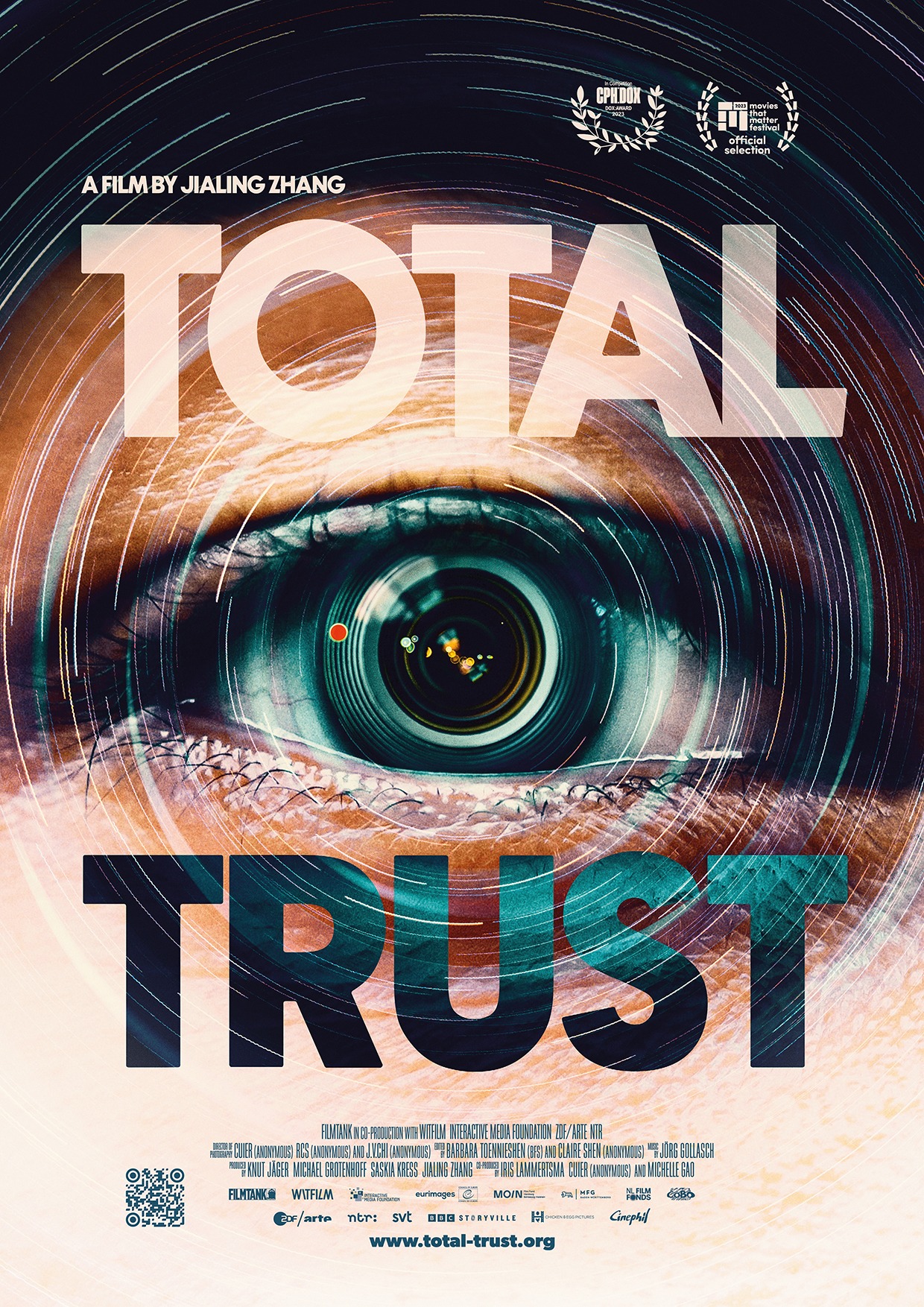
Total Trust (Zhang Jialing, 2023)

“The government strives to provide a stable society, fair legal system, and quality services to ensure the fulfilment, happiness, and security of its people,” according to a news reader at the beginning of Zhang Jialing’s documentary exploring the contemporary surveillance state of the modern China, Total Trust. In recent mainstream narrative cinema, there has a been a clear message that the Chinese citizen is safe nowhere other than at home, but here other voices tell us that threat comes not only from abroad but from within and the co-operation of all citizens is necessary to ensure the nation’s security. 

Early scenes see what others may regard as busybodies enforcing public order by picking up rubbish or monitoring minor parking infractions, but it’s precisely this sense of oppressive community pressure that “social management” systems are designed to create. Utilising cutting edge technology, the authorities harvest big data to assess the “trustworthiness” of the ordinary citizen and accord them a rank which then affects all aspects of their lives from their ability to gain or maintain employment to the right to use public transport. Social responsibility is rewarded with points for the above mentioned activities but also for keeping an eye on your neighbours and ensuring they aren’t planning to do anything “subversive” while your neighbours also watch you. 

But this trustworthiness is not so much towards the society as it is towards the Party. Many of Zhang’s protagonists are lawyers and their families who were targeted during a recent crackdown and charged with subverting state power because they defended those who claimed they’d been falsely convicted of crimes which is problematic because the Party cannot be wrong and it doesn’t make mistakes. Chang Weiping was arrested in 2020 and sent back to his hometown for house arrest leaving him separated from his wife and son. He recounts frequent torture which caused him permanent physical damage while his wife has also found herself targeted by the surveillance state after protesting his imprisonment. 

Other families report similar harassment. Wenzu Li’s husband Quanzhang Wang was imprisoned because of his championing of human rights and though he’s since been released the couple have effectively been banned from social media with any photos featuring their faces automatically removed by AI technology and the accounts that posted them limited. They are constantly watched while the police have also motivated their neighbours to monitor and shun them. After being invited to speak at an international conference, their door is blocked by mysterious mask-wearing neighbours who physically prevent them from leaving (they later appear at the conference via Zoom). Their son has also had to change schools almost every term because of the persistent harassment and their own low social credit ranking.

As another persecuted journalist, Sophia, points out after generations of censorship, a degree of censure has become internalised and in general people tend to self-censor without necessarily regarding it as an infringement on their freedom. Many people welcome this kind of oppressive “security” because it makes them feel safe while others are too afraid of the potential consequences to resist. Weiping’s wife takes his father to task for giving up on the campaign against his imprisonment as he remains reluctant to challenge the Party of which he has been a lifelong member, while he agrees that he is simply old and frightened and doesn’t want to be subjected to state harassment himself. 

Weiping’s wife eventually decides to emigrate to the US believing there is no future for her son in China while Weiping himself remains imprisoned. The journalist makes plans to study abroad in the UK, which might in itself be ironic given the increasing authoritarianism of the British government. The UK is already one of the most surveilled places in the world and similar kinds of AI-based facial recognition technology are already being employed in law enforcement. In any case, she is arrested at the airport and prevented from the leaving the country before being detained and charged with the same “subverting government power” line as the lawyers. According to the closing titles, she remains in prison. Emergency powers introduced during the pandemic have only enabled a wider authoritarian power grab with authorities now able to manipulate “health ratings” to silent protest or otherwise make lives unliveable by simply switching the reading to red meaning that the target can be arrested simply for leaving their home. Citizens may need to reevaluate the “trustworthiness” of the government but are of course prevented from doing so in a society in which their every movement is already closely controlled.


Total Trust screened as part of this year’s DOC NYC.

Trailer (English subtitles)

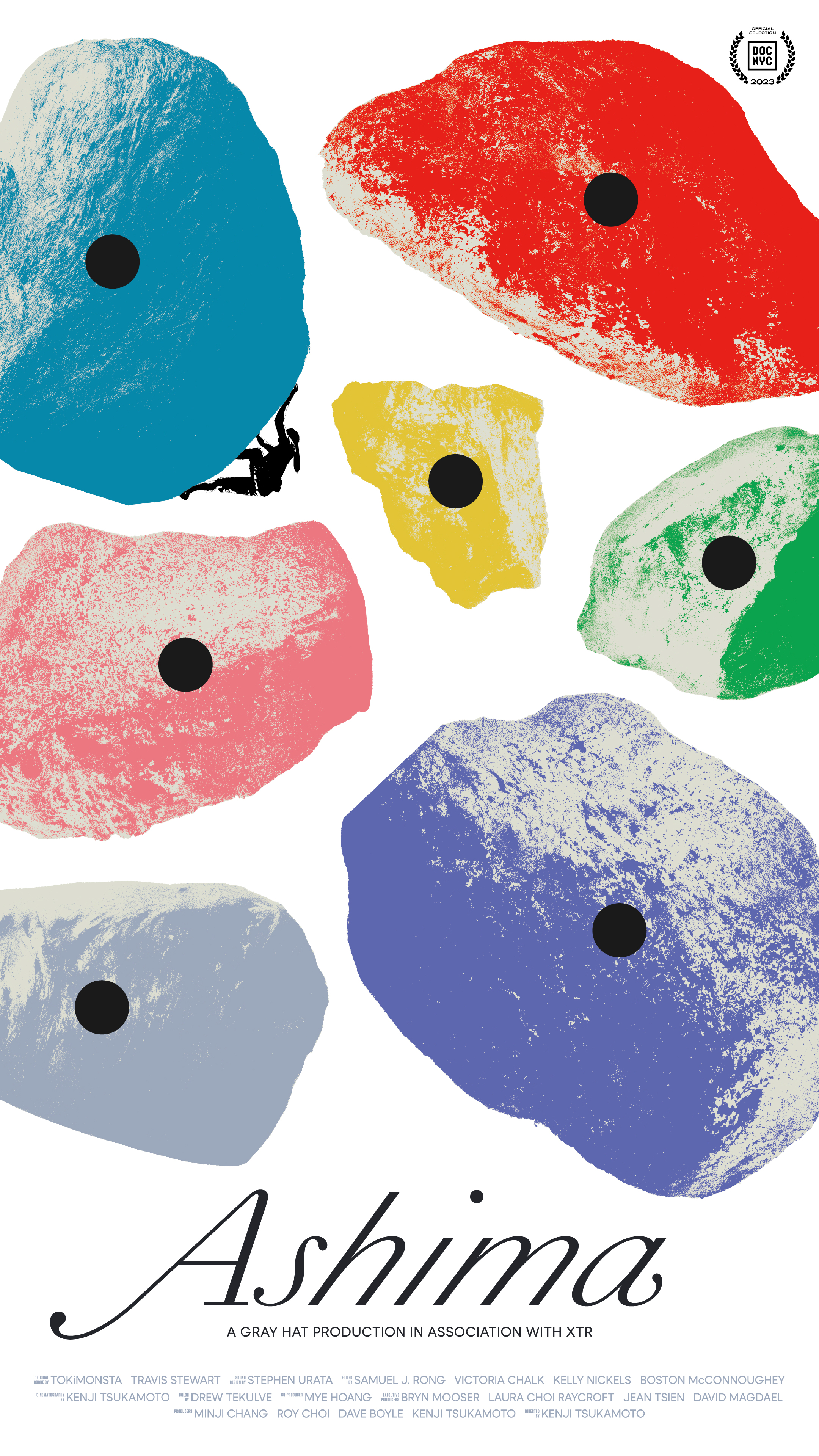
Ashima (Kenji Tsukamoto, 2023)

A teenage rock climber wrestles with the pressures of parental expectation and early fame in Kenji Tsukamoto’s probing documentary, Ashima. A champion of bouldering, the titular Ashima is climbing prodigy who has her eyes set on being the youngest person to complete a V14 climb, a feat only one woman has ever completed before and even veterans take years to conquer. But then she herself and the documentary seem to ask at what cost her victories may be coming when she’s so busy looking up she doesn’t have much time for what’s around her.

As Ashima sadly points out, at times it feels as if her father, Poppo, a retired butoh dancer now living in New York, is her only friend. Her love of climbing leaves her little time to interact with children her own age and she can’t really make friends with other climbers either given the competitiveness of the environment. It’s also an unavoidable fact that at her level most of the competitors are adult men with whom she obviously can’t have a lot of meaningful conversation. At one point, we see her paint her nails like any other teenage girl though they’ll be chipped soon enough when she needs them again for climbing and she seemingly has little social outlet outside of sports. Her parents reassure her that friends can be fickle and family is forever but however well-meaning there’s no denying that the phrase has uncomfortably possessive overtones.

That maybe something further echoed in her relationship with Poppo who acts as her climbing coach and mentor admitting that his teaching methods are rooted in his experiences as a butoh dancer and necessarily strict. Even Ashima later reflects that having her father as a coach can be frustrating as she feels as if he doesn’t listen to her or make an effort to see things from her point of view. He often gives her harsh advice about mental toughness and fortitude insisting that if she feels cold it’s only proof that she isn’t sufficiently focussed while allowing a sense of failure to mess with her head after repeatedly falling while trying to plan a difficult climb. Ashima reflects that sometimes it’s like he’s her best friend, but also a worst enemy who knows how to push her buttons and has no qualms about doing so. 

Ashima seems to feel her responsibility to her parents keenly, not least as Poppo has encouraged to her meditate on the disappointment her mother and sponsors would feel if she did not complete her climb. Her mother meanwhile recalls that she wanted her to be a person who inspires the world which is quite a heavy burden for young girl to bear adding to the sense of pressure and isolation Ashima seems to feel even while adding that climbing is also her dream too. Ashima is an only child of older parents who underwent infertility treatment for several years before she was born and is obviously a deeply treasured daughter though one who also knows that and feels acutely guilty while reaching the age which she might wish to have more independence. 

In any case, a journey to South Africa with her father develops into a spiritual confrontation both with herself and with him as she contemplates the V-14 climb and is forced to face her self-consciousness and insecurity in order to literally climb the mountain. Tsukamoto intercuts footage of her seemingly easy victories at indoor competitions with her lowest moments as her wounded confidence begins to eat away at her quite literally preventing her from getting a purchase on the rock. In an ironic touch, the chalk covering her hands echoes the white makeup worn by butoh dancers, the strange chanting and yelling rituals apparently aiding a breakthrough that allows Ashima to rediscover her self-confidence and complete the climb. Speaking at a Ted Talk, she reflects that climbing is mostly finding an accommodation with failure and falling is a normal part of the climb not something to be feared or ashamed of. As Poppo later concedes, it’s Ashima’s life to explore even if she rolls her eyes slightly to hear her parents cheerfully discussing the possibility of attempting a V15 having discovered at least a path that’s her own as much as it is anyone else’s.


Ashima screened as part of this year’s DOC NYC.