
An influencer enters into a mutually exploitative relationship with a vulnerable musician only to find herself falling for him for real, or perhaps not, in John Rogers’ non-rom-com As if It’s True. Taking aim at the wilful inauthenticity of influencer culture, Rogers explores the ways in which romance is really just performance while mutually beneficial relationships can nevertheless contain a power imbalance that adds to their emotional volatility.
It could be said that Gem (Ashley Ortega) is permanently on the rebound. A subject of a viral meme after an ex filmed her having a mental breakdown after being fired from her job, Gem went on to harness her fame becoming a popular YouTube vlogger. But then fame seems to have got the better of her. Gem’s girlfriend Yara left amid rumours of her toxic behaviour and her feeds are now full of trolls berating her. Hoping to recapture the magic, Gem recruits Anthony to be her “boyfriend” though he soon tires of the arrangement, taking up with Gem’s friend Cielo.
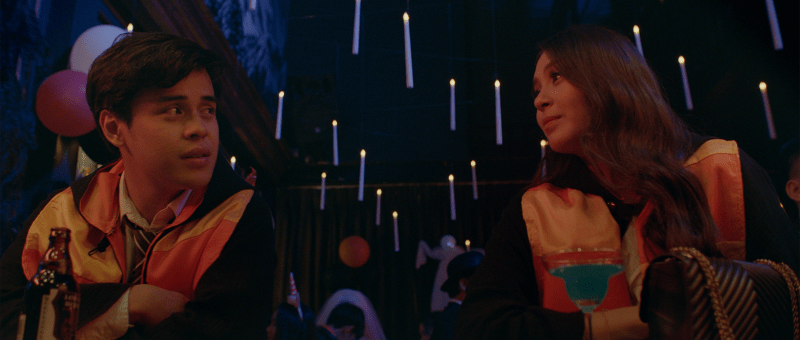
Anthony resents the limitations placed on his romantic freedom by his empty relationship with Gem, though it seems that she may at least have harboured some “genuine” feelings for him. At a Halloween party, Gem meets melancholy musician James (Khalil Ramos) who is wearing the same Harry Potter costume as she is and undergoes a moment of romance that is equal parts flirtation and role play. A photographer asks them if they’re a couple and they don’t quite know how to respond but then each accept the label. It’s here that things start to get weird as Gem asks James to punch Anthony. He jokingly agrees but didn’t think she was serious, until she offered to compensate him for his efforts.
The original meeting is then consumed in confusion and contradiction in which neither party is entirely sure what was really going on between them aside from a genuine sense of attraction. Gem wants James to get back at Anthony and also boost her ratings, while James seems like he’s interested in a more genuine romance but captivated by Gem’s wealth and illusionary power. The pair find themselves playacting romance for the cameras, coming up with a fake story of how they met while filming a series of couples moments to prove how in love they are.
But the flaw in the plan is that the fans don’t take to James, seeing him as bland and taking an instant dislike to his coffee-shop style music. James begins to worry that Gem won’t like him if the fans don’t, while she becomes fed up with what she sees as his lack of drive. A climactic dinner tables fight provokes a series of harsh words on both sides as James complains he’s nothing but a pawn in Gem’s game and she accuses him of being a golddigger yet the rawness of the fight suggests two people who can’t be honest with themselves about how they feel let alone with each other.
Rogers plays with our own ability to discern the reality, leaving us unsure which scenes might be “real” and which are simply part of the skit. Trapped in Gem’s confusing world of inauthenticity, James begins to lose grip on himself, lost in a kind of dream world while Gem exploits his insecurity to prank him by suggesting she may leave him for another woman. They each at times claim that the relationship is now “real” and they’ve developed genuine feelings for each other but seemingly can’t quite accept them or escape from the performative quality of their romance.
As much becomes plain when Anthony and Ceilo get engaged, Cielo looking a little sheepish showing off the ring while implying that James must have something up his sleeve to one-up Anthony in the romance stakes, further fuelling his sense of jealous resentment and fragile masculinity. Even a “real” relationship is also performative in its empty gestures such as random flowers and cheerful selfies. Gem puts on act to meet James’ mother, but then who isn’t on their best behaviour to meet a potential in-law? She ends up liking her, finding something in her that her own parental figures may have lacked in the childhood trauma she shares only with James (or so she claims) that explains why she is the way she is.
James has also had his fair share of mental health issues, something Gem recklessly exploits in getting him to make a video in which he “opens up”, while otherwise growing tired of feeling like Gem’s pet just trotted out to look cute on the internet while his attempts to use her to further his music career largely flounder. Then again, we have to wonder about the authenticity of what we’re seeing as Gem once again seems primed to put something together in the great highlight real of their “relationship”. Perhaps this is all a bit too, Gem “coming clean” about her real fake romance with James seemingly nowhere to be seen. Raw and embittered, Rogers’ anti-rom-com resents the digitalisation of love in which romance has become a public act defined by deed rather than feeling and the fake affirmation of social media clout has itself begun to trump human connection.
As If It’s True screens Nov. 3 as part of this year’s San Diego Asian Film Festival.
Original trailer (English subtitles)


 Windows on Worlds