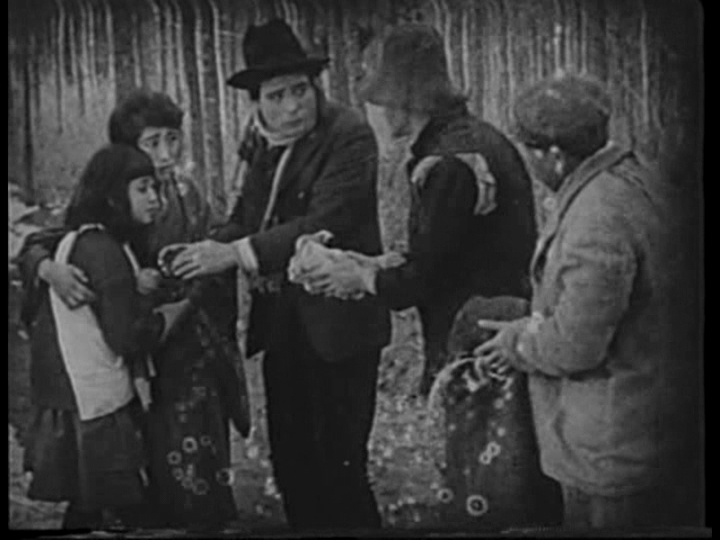
Terrifying Girls’ High School: Women’s Violent Classroom (恐怖女子高校 女暴力教室, Norifumi Suzuki, 1972)

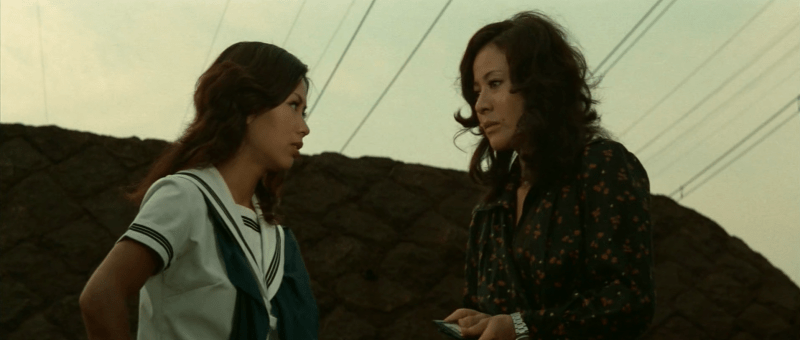
“Society fucking sucks” according to the delinquent teens at the centre of Terrifying Girls’ High School: Women’s Violent Classroom (恐怖女子高校 女暴力教室, Kyofu joshikoko: Onna boryoku kyoshitsu). The first of four in a Toei pinky violence series, the film presents a feminine rebellion against the societal tenets of womanhood, if doing so largely within the realms of male fantasy, but nevertheless kicks back against the corruption and hypocrisy of the older generation otherwise hellbent on controlling them.

Seiko Girls’ High School is, we’re told, both a private institution and a “trash bin” established to handle the “trash” transferred from “normal” schools. Nevertheless, the sign which hangs outside proclaims conservative values playing on the “good wife, wise mother” truism of traditional femininity in insisting the girls must become wise wives and kind mothers. Needless to say, most of the young women are quite uninterested in becoming any such thing. The unruliness of the school is signalled in the opening sequence as an older male teacher gives a boring lesson about curves while the girls all ignore him. Some are putting on makeup, others are eating or talking amongst themselves. After all, what’s the point of their education if the expectation is they’ll all become obedient housewives dependent on their husbands for support and allowed little in the way of free thought or interest?

A teacher later ironically suggests that the school’s reputation will later reflect badly on them when it comes to getting jobs or getting married only for one of the girls to snap back no one here is going to university and their reputations are all ruined anyway. It might be tempting to assume the problem is mostly generational, but the arrival of a young male teacher who has himself been transferred for violent conduct suggests a kind of backlash to the increasing freedoms of the contemporary society. He tells the girls that he won’t be soft on enforcing his three rules for education which are surprisingly gentle, being friendship, companionship, and harmony, but they simply laugh at him. Not only do they pelt the new teacher with pants and condoms but insist that it they who make the rules here and he will have to follow them. 

Then again there don’t seem to be any rules of any sort other than the absurdity of social hierarchy as they girls square off in various factions vying for dominance of the school, The implication is that gang leader Michiko (Miki Sugimoto) turned rebellious after being raped by strangers on her way home and witnessing her father, a politician, actively cover it up while she continues to feel shamed by her family. Another girl, Yoko (Natsuko Miura), otherwise not involved in the school violence, is working as a hostess to support herself as an orphan living with her grandmother but is lusted after by lecherous teacher who eventually forces her into a sexual relationship and then drops her when she becomes pregnant despite giving the implication he would marry her. Takeo tries to force her to have an abortion though she is determined to have the child despite the scandal causing him to hire another delinquent faction to beat her into a miscarriage. When she takes her own life, the school is most concerned about its reputation despite having done nothing when it was discovered the headmistress’ own daughter, the leader of the other gang, was also engaging in sex work. 

Takeo is also the target of a revenge plot at the hands of mysterious transfer student Yuki who avoids taking any categorical side until pulled into the conflict because of her friendship with Yoko and the growing sense of solidarity between the young women oppressed by a corrupt social system that uses shame to control them. “The rapists win in our society,” one sighs in an oddly contemporary moment. To celebrate their liberation, they burn their sailor suits having stripped and bound their teachers before posing before a sign announcing that they have enacted justice on the “three pigs” who financially exploited them through abusing the educational system. Full of ironic details such as the girls introducing themselves through the classic gambler’s pose, Suzuki films with a punkish irony quite clearly fetishising female violence yet also poking fun at lecherous middle-aged men, youthful hard cases, and matronly older women while in the end handing agency back to the girls even if society continues to suck. 
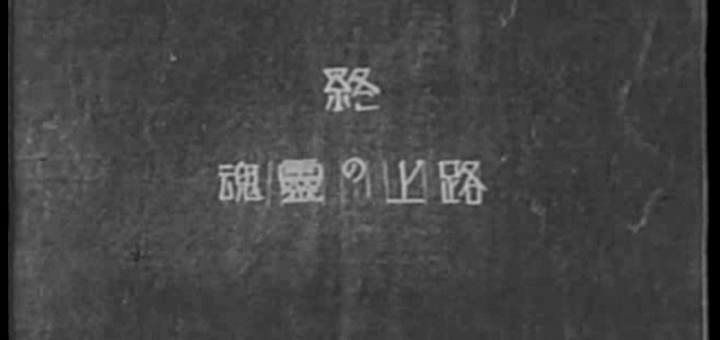

Souls on the Road (路上の霊魂, Minoru Murata, 1921)

vlcsnap-2017-12-09-00h26m35s417Minoru Murata was one of the most important figures in early Japanese cinema but as the majority of his 36 films are lost and he sadly died at the young age of 43 in 1937, his work has largely been over looked outside of scholarly circles. Starting his career as an actor in the “shingeki” movement which aimed to bring modern, naturalist theatre to Japanese stages, Murata first performed in Norimasa Kaeriyama’s “Pure Films” in 1918 before joining Shochiku’s acting school on the recommendation of playwright Kaoru Osanai. The “Pure Film” movement, like the Shingeki movement in theatre, sought to create a new more modern Japanese cinema as opposed to the overly theatrical, kubuki influenced productions of the time. Souls on the Road (路上の霊魂, Rojo no Reikon), an early directorial effort for Murata in which he also stars, was made for Shochiku and is very much influenced by the Pure Film Movement as well as foreign cinema from Europe and America.

The narrative of Souls on the Road is adapted from two foreign literature sources – Gorky’s play The Lower Depths and the German novel Mutter Landstrasse, das Ende einer Jugend by Wilhelm August Schmidtbonn. Influenced by the work of D.W. Griffith, Murata cuts between the stories of four interconnected groups of people – a failed violinist who returns home to his family with a wife and daughter in tow, two escaped convicts hiding out in the woods, the local master and his servants including a young woodcutter played by the director, and a wealthy young girl.

The central drama revolves around the musician who left home under a cloud to become a concert violinist in Tokyo but failed to make a success of himself. Despite having a fiancée at home, Koichiro (Denmei Suzuki) has married a Tokyo woman (Haruko Sawamura) and has a young daughter. Desperate and starving, the trio have made the snowbound journey back to Koichiro’s Hokkaido village largely on foot but Koichiro’s father (Kaoru Osanai) who is the master of a large estate refuses to help him. The former fiancée, Mitsuko (Ryuko Date), who is also Koichiro’s cousin, still lives with the master and is distressed by Koichiro’s return. Battling her own emotional pain, she wants to help Koichiro’s wife and daughter who are obviously in a bad way, but is also conditioned by the need to obey the master’s instructions even when they seem cruel and immoral.

Murata bookends the film with direct quotes – firstly from Gorky’s play and then from the Bible emphasising the need for human compassion. The master’s refusal to help his son is directly contrasted with the fate of the two convicts who cross Koichiro’s path in the forest. The two men originally try to rob Koichiro, but seeing that they too have nothing and the little girl is close to starving, the convicts give up their own food to help them. When they chance upon house they remain conflicted about trying to rob it – they don’t want to end up back in prison and they don’t want to steal but they are also starving and have no other options. The custodian of the house catches them in the act and enacts a sadistic punishment but later changes his mind and decides to help them.

Meanwhile, one of the master’s servants, a boy named Taro (played by director Minoru Murata), runs into the rebellious young mistress of a local estate (Yuriko Hanabusa) who dresses in a sailor suit and gleefully shoots her minder with an air gun to avoid having to go home. The young mistress strikes up a cross class friendship with Taro and invites him to the Christmas party she is organising at her mansion to which pretty much everyone is invited regardless of class origins or backgrounds. The young mistress’ “Christmas Party” might seem incongruous for a rural town in the Japan of 1921 and does indeed take on the trappings of Russian literature with the mummers and balalaika players replaced with traditional Yagibashi dancers, but the party itself seems to have no particular religious dimension as the young mistress dreams of being visited by Santa and a small shot of Mitsuko seeming to pray as Koichiro’s wife and daughter lie freezing in a barn is the only hint of a real presence of Christian thought outside of the overt references in the framing sequences and overall Christianising morality of the film as a whole.

Murata’s signature approach mixes an entrenched naturalism of location shooting and realistic performances with expressionistic techniques. Literally “souls” on the road, Murata introduces as series of ghosts using dissolves and superimpositions as the protagonists are haunted by alternate pasts and futures or even by themselves as Koichiro finds himself interrogated by the hopeful violinist who left with big dreams but has brought his wife and child to the brink of starvation and death from cold in a barn steps away from his childhood home. Somewhat heavy handed in its closing moments as Taro wonders what might have been if the master had been more forgiving and welcomed his son home instead of punishing him for leaving, and the young mistress wonders what might have happened to the convicts if the custodian had not taken pity on them, Souls on the Road is an early visionary masterpiece far ahead of its time which looks forward to a new kind of Japanese cinema.