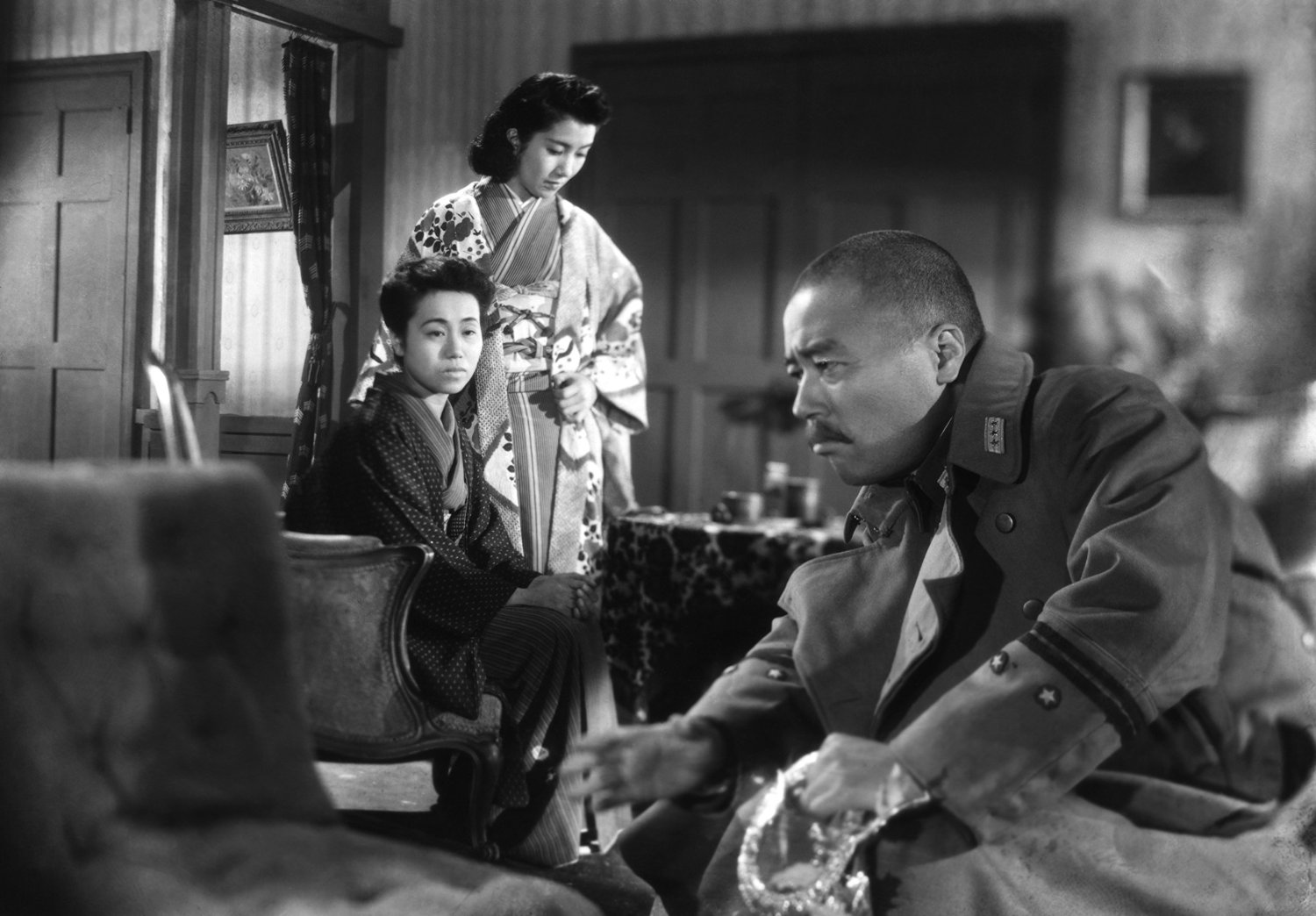
 So, after making the subtly subversive Army, Kinoshita found himself persona non grata but all that changed with Japan’s final surrender and the coming of the Americans. You might think that means an end to the system of censorship and a greater freedom of expression but the truth is one master had simply been swapped for another. The Americans now imposed their own censor’s office and banned the depiction of various dangerous or inconvenient ideas including anything xenophobic, militaristic or anti-democratic. In short, the complete reverse of before but perhaps no less restrictive. However, the new requirements were undeniably closer to Kinoshita’s true feelings so there were fewer problems when it came to getting a film made. Accordingly Kinoshita began working on Morning for the Osone Family soon after the surrender and the film was released in 1946. Extremely raw and probing, the film deals with the effects of the war on a well to do, liberal intellectual family but turns their plight into a metaphor for the country as a whole.
The film begins in the Christmas of 1943 as the Osones gather together around the piano for a rendition of Silent Night as they prepare to say goodbye to the daughter’s fiancé who’s been drafted and will shortly be leaving for the war. The celebration is short lived as their peace is shattered by an ominous knock at the door. Oldest son Ichiro is carted off by military police for having written a mildly subversive essay in a newspaper. Whilst all this is going on Yuko’s fiancé, Akira, takes his leave handing her a letter to say she needn’t wait for him with the future so uncertain. It’s at this point that meddling fascist uncle first appears to reveal he has written to Akira’s family to break off the engagement because they are of a high status and with Yuko’s brother’s arrest he feels it’s inappropriate to bring them shame. As the war drags on, Uncle Issei comes to have more and more control over their lives but will the progressive atmosphere of the Osone household ever be able to withstand the bluster of Uncle Issei’s militaristic fervour?
Made immediately after the war, Morning for the Osone Family is filled with the bitterness and anger of disillusionment. Coloured by the knowledge of Japan’s impending defeat, the events can’t help but take on a portentous air and it’s pretty obvious the Osone family will never be able to return to that final Christmas in 1943 before everything was taken away from them. The obnoxious Uncle Issei becomes a metaphor for Japanese fascism as a whole with his heartless militarism and personal corruption. During one telling episode, Yuko remarks that the more they simply obey him the worse he’ll get and that they should stand up to him every now and then. The mother, Fusako, agrees but thinks it’s impossible. Later, in a last impassioned speech, she laments that she should have done more, said no earlier, but she tried to do what was expected of her. Fusako voices the rage and disappointment of the masses of ordinary people who went along with things they didn’t agree with because they felt it was the proper thing to do. Now she sees no need for the pretence, in this brave new world it’s time for the younger generation to do as they see fit without feeling beholden to these corrupt ideas peddled by those who claim to speak for everyone but have only ever been speaking for themselves.
Oddly, Morning for the Osone Family may have the most overtly propagandistic feeling of any of the films in Criterion’s Kinoshita and World War II boxset. Though it ends on an undeniably powerful declaration of hope for renewal and rebirth, its epilogue feels like a step too far – both hollow and needlessly over the top. Apparently this final scene was added at the behest of the Americans who wanted more deliberately democratic sentiments which may explain its on the nose tone though it isn’t entirely out of keeping with the rest of the film and most likely represents Kinoshita’s real feelings. Morning has arrived after a long night filled with pain and sorrow, all that remains now is to banish the darkness and welcome in the light.

 Windows on Worlds