I Love You, Beksman (Mahal Kita, Beksman, Percival M. Intalan, 2022)

“What is the essence of being a real man?” The hero of Percival M. Intalan’s reverse coming out drama I Love You, Beksman (Mahal Kita, Beksman) finds himself questioning his own identity when confronted with the weight of social expectation and prejudice yet discovering that the question is meaningless when the key to happiness lies in self-acceptance and authenticity. Scripted by Fatrick Tabada (Chedeng and Apple), the film tears apart conventional notions of gender and sexuality in a hyper-masculine patriarchal culture while allowing its hero to gain the courage to define himself in order to chase his romantic destiny. 

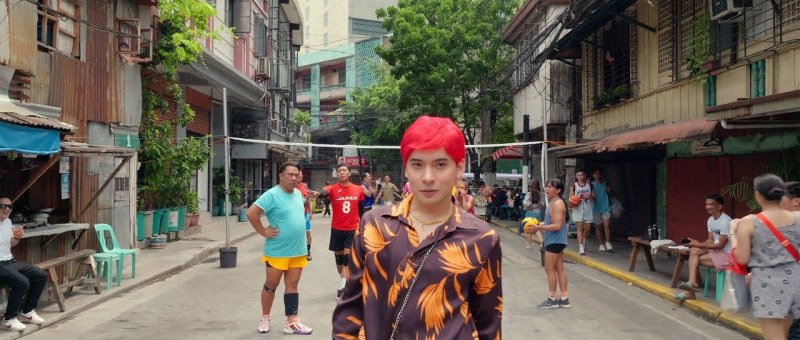
Everyone just assumes flamboyant hairdresser Dali (Christian Bables) is gay. He dyes his hair red, dresses in a less masculine fashion than other men his age, and has an effeminate manner. Yet Dali has a secret he doesn’t even really realise is one in that he is actually straight as he is forced to reveal after falling for beauty queen Angel (Iana Bernardez) at a pageant. The more he tries to explain to people that he isn’t gay and is serious about romantically pursuing Angel, the less they seem to understand him. It simply doesn’t make sense that someone so “obviously” gay could be attracted to women. They ask him if he’s sure or if it might be a phase or if he’s developed some kind of internalised homophobia but never really consider that it’s a possible for a man to be both effeminate and exclusively attracted to women. 

Even Dali begins to subconsciously change himself in order to better conform to their expectations. Having lost her mother at a young age, Angel is surrounded by hyper-masculine men in her father and brothers who all rather hilariously have the same moustache and enjoy manly pursuits such as weightlifting and basketball. Dali, meanwhile, was surrounded by queerness all his life, raised in the salon by a father who now lives openly as a gay man in a platonic marriage with his mother. Despite having seemingly been very happy as a part of a big gay family who all just assumed him to be gay too, Dali begins to reject his father and his own femininity in believing that he must adopt a more stereotypical masculinity in order to convince Angel of his heterosexuality and eventually win her heart (along with those of her conservative father and brothers). 

It might be true to say that Dali’s original presentation as a flamboyant hairstylist and fashion designer is also a kind of performance and an attempt to conform to parental expectation just as his rejection of it is an attempt to conform to the demands of a hyper-masculine society, but only by embracing both extremes can he learn to define himself outside of the images others project onto him. In adopting the traits of traditional masculinity, he becomes boorish and insensitive asking his father to hide his “gayness” to avoid embarrassing him in front of Angel’s dad while later becoming jealous and violent after seeing Angel hanging out with an ex. He can’t see that his adopted persona makes it even harder to form a genuine romantic connection with Angel, not just because he’s actively erasing the sides of himself she first became attracted to in his skill in makeup and fashion but because as she eventually tells him it’s difficult to trust someone who is being dishonest with themselves. 

The realisation he comes to is that he has to be “himself” rather than being what other people expect him to be while those around him come to understand that outdated ideas of stereotypical gender presentation are harmful to everyone. A gentle tale of broadening horizons and mutual acceptance, Intalan’s ironic comedy neatly subverts the coming out trope while situating itself in a world of relative safety in which Dali is free to explore his own identity and means of self-expression encountering opposition only from those who fear he is not being true to himself. The reality may not be so kind as the classic rom-com conclusion may suggest but the film nevertheless neatly takes aim at the ridiculousness of conventional ideas of “masculinity” in a hyper-masculine and patriarchal culture in making a heartfelt advocation for the right to just be oneself.


I Love You, Beksman screens at the BFI Southbank on 18th April as the opening night gala of this year’s Queer East.

Original trailer (English subtitles)
Son of the Macho Dancer (Anak ng macho dancer, Joel Lamangan, 2021)

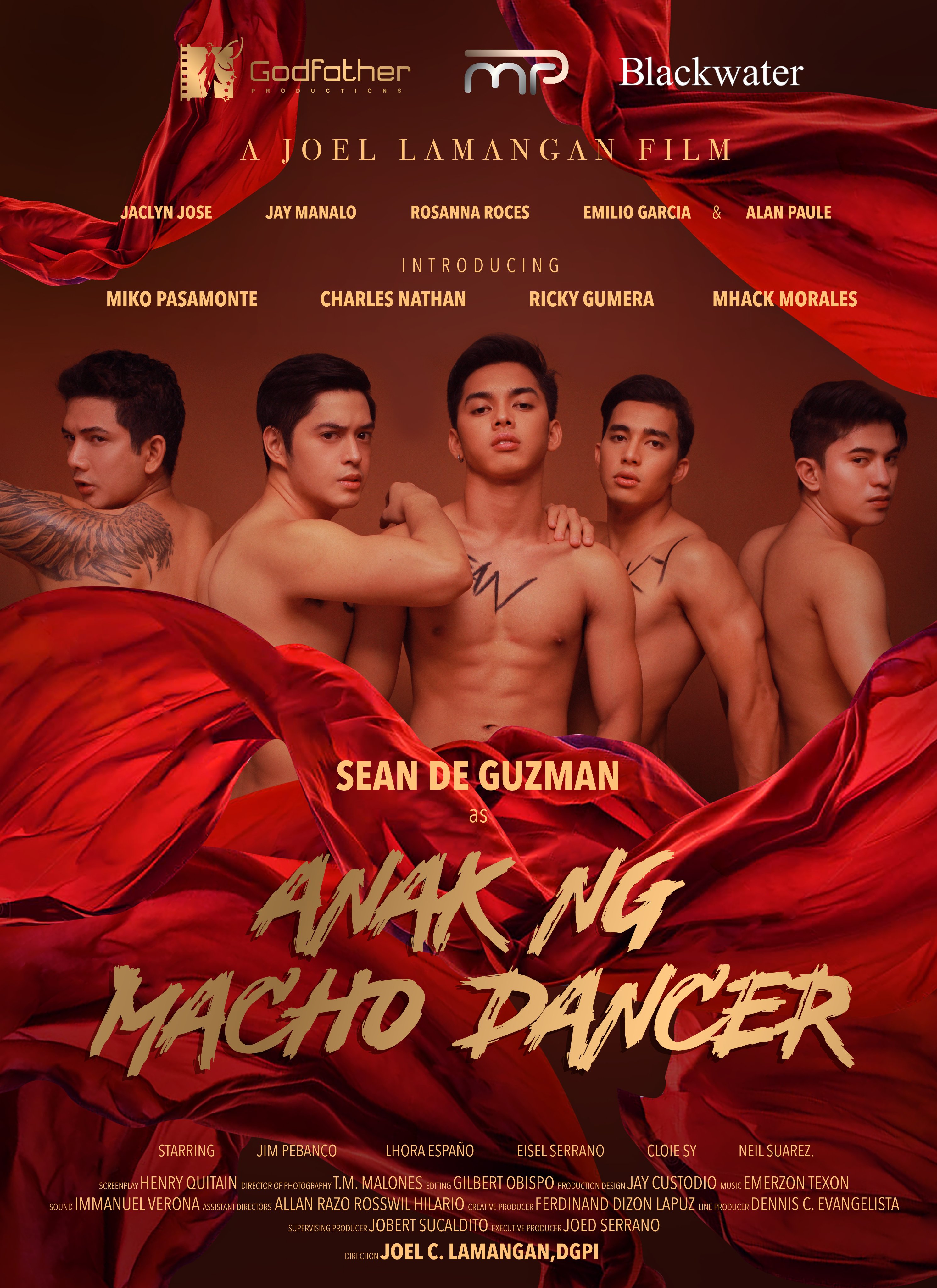
“How many have you buried? Why?!” asks the hero of Joel Lamangan’s Son of the Macho Dancer (Anak ng macho dancer), a quasi sequel to the 1988 Lino Brocka classic. Set during the early days of the pandemic, Lamangan’s salty drama hints at the radiating effects of an authoritarian culture for those living on the margins of the contemporary society but does so with a dose of trashy telenovela camp in its eventually redemptive tale of frustrated futures, sexual exploitation, drugs and murder in a time of increasing sickness. 

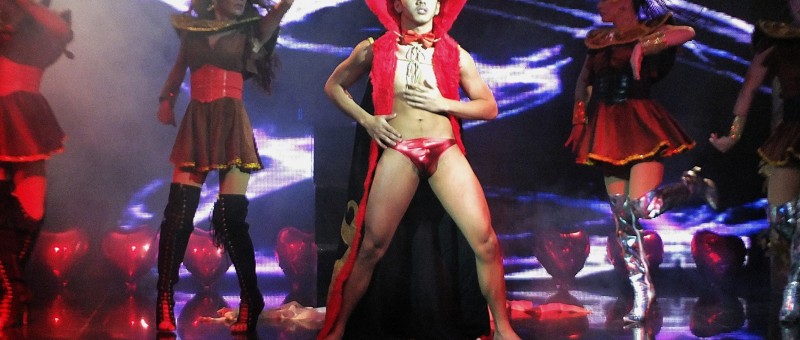
19-year-old Inno (Sean De Guzman) is in a casual relationship with a woman whose tendency to refer to herself as his girlfriend clearly irritates him, especially as their sex life seems to be frustrated by her fear of his apparently giant penis. When his father Pol (Allan Paule) who has become addicted to drugs after a car accident is arrested by the police and he needs money to bail him out, Inno’s mother (Rosanna Roces) seizes on his oversize appendage as a means of saving the family by dragging him straight to a local gay club to become a go-go dancer. While reluctant at first, Inno soon takes to his new life and decides to milk it for all its worth, latching on to VIP procurer Bambi (Jaclyn Jose) and her sidekick Roldan (Emilio Garcia) in the hope of being invited to one of their elite parties all of which later drags him into the orbit of sadistic gay drug dealer Jun (Jay Manalo). 

All the while, we see Duterte on TV giving updates in the corona virus crisis and the various measures to mitigate it which threaten the survival of gay bar Mankind as well as the illicit business enterprises operated by Jun, Bambi, and Roldan. A police officer reconfirms his warning to drug dealers that they shouldn’t expect an easy ride during the pandemic because they will “destroy all of you”. The police force is shown to be resolutely corrupt, firstly in its refusal to investigate the causes of the car crash which caused Pol’s descent into addiction because, he believes, the driver was a judge and the cops have been paid off, and lastly in its complicity with criminal activity as evidenced in their cooperation with Roldan to cover up his crimes. 

Obsessed with social media clout, Inno constantly documents and uploads his existence online marvelling at his new circumstances as a kept man of Jun only latterly reflecting on the ironies of his life in discovering that his father was once also a “macho dancer” while his mother was forced to turn to sex work to feed the family after Pol’s accident. Seduced by the lifestyle of the rich and powerful that Jun can give him he doesn’t stop to consider its wider implications even when warned by predecessor Kyle (Ricky Gumera) of the dangerously oppressive regime within the house. It’s not until he finds himself burying the body of a friend murdered by Jun after unwittingly failing to play along with his voyeuristic sexual fantasies that he begins to ask why, not only why he’s living this life but why Bambi has been living it all this time enabling Jun’s predatory violence in burying the bodies of unlucky young men who fell foul of his sadistic desires. 

For Kyle at least the answer may be a lifetime of violent abuse which which has left him too traumatised to believe escape is possible. Inno vacillates between resentment towards his father for his irresponsible drug use and mistreatment of his long-suffering mother, and the filial desire to protect him which led him to become a macho dancer in the first place. Bambi and Pol, meanwhile, the heroes of Brocka’s film have been consistently brutalised by an oppressive society apparently only awakened to the possibility of changing course by Inno’s corrective questioning. 

In any case, there’s a minor irony even in the wilful subversion of positioning the young hero as a sex object valued only for the size of his penis while the frequent full frontal male nudity often feels gratuitous and the final swing towards heteronormativity can’t help but align homosexuality with the psychopathic cruelty of Jun as something dark and perverse even while ending on a joyous if tempered moment of resilience in returning to Mankind with the house full of masked clubbers continuing to shove their notes into the dancers’ briefs. Though the final resolution may in a sense be too neat, a family restoring or remaking itself in the wake of trauma, Lamangan allows the sense of unease to continue in the callback to societal corruption as the ongoing pandemic seems to stand in for other kinds of increasing sickness. 


Son of the Macho Dancer streams worldwide until 2nd July as part of this year’s hybrid edition Udine Far East Film Festival.

Original trailer (English subtitles)