Geran (Areel Abu Bakar, 2019)

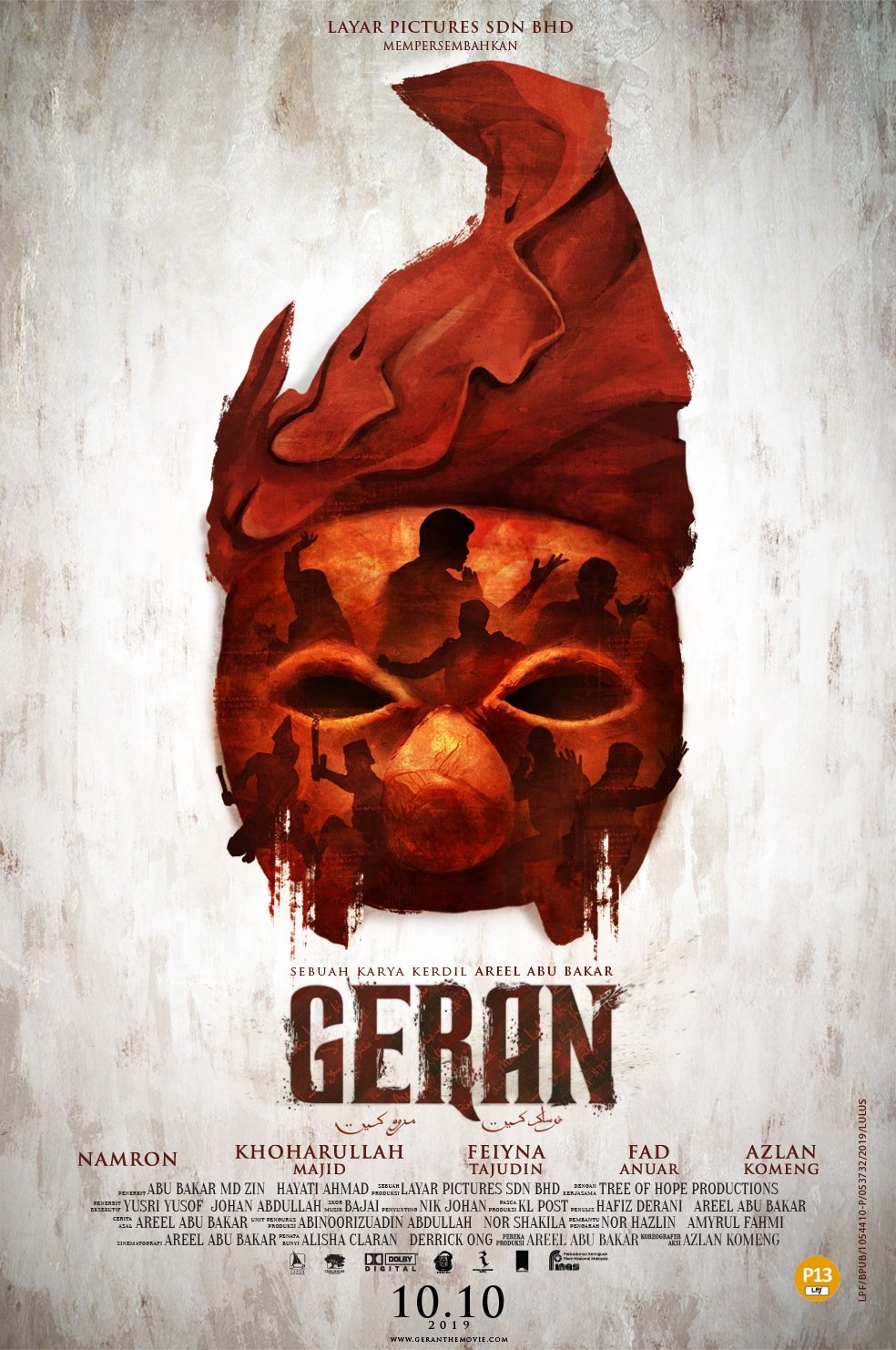
“Our family is not merely living for the love of wealth, but for love of a family” according to the late matriarch of the family at the centre of Areel Abu Bakar’s spiritually imbued martial arts film, Geran. Showcasing the Malaysian art of silat, Geran finds the family at the mercy of an increasingly corrupt and selfish society, stoically maintaining their “heritage and dignity” in the face of constant encroachment by the destabilising forces of evil in the form of violent and greedy gangsters.

All the trouble starts early one morning when sister Fatimah (Feiyna Tajudin) discovers that the deed to the family home is missing and concludes that her delinquent younger brother Mat Arip (Fad Anuar) who has not yet returned has most likely taken it as collateral for his gambling debts. Patriarch Pak Nayan (Namron) is not too worried, after all there’s nothing they can do with a deed that’s in his name and would need his permission to transfer, but soon enough the goons turn up only to get a rude awakening, quite literally kicked out by Fatimah who is more than capable of defending herself. They won’t stay away for long, however, because Mat Arip has played right into the hands of arch gangster Haji Daud who has unfinished business with Pak Nayan and an insatiable need to acquire all the land in town. 

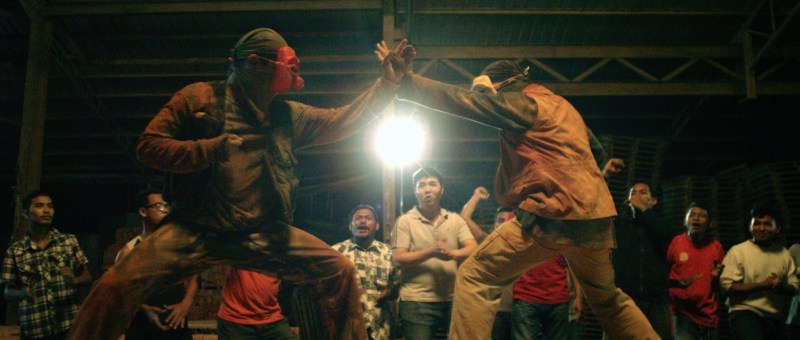
The family’s prowess with silat is in many ways presented as an extension of their Islamic faith, a deeply spiritual act which connects them to their land and their culture. There’s not a little irony involved in the juxtaposition of older brother Ali (Khoharullah Majid) training with his mentor and Mat Arip gurning frantically on the fringes of a street fight, a sordid bastardisation of their noble art further sullied by the fact Mat Arip has placed a bet on the match’s outcome (which as we later discover is also rigged). Ali meanwhile remains pure hearted, sure that justice will triumph in the end while determined to defend himself and his family from the corrupting forces which surround them. 

As we discover, Haji Daud’s venality is a direct mirror of Pak Nayan’s goodness, a revenge quest born of his own dark heart and insecurity. Yet he remains a shadowy figure, hiding in back rooms while sending his minions to fight on his behalf. Mat Arip is reminded that debts must be paid, something his spiritually minded family probably agree with even as they continue to forgive him while hoping he’ll be able to free himself of his appetite for self-destruction though it does not appear there is much else out there for him other than his life of vicarious thrills. Unfortunately for him, he’s mired in a macho posing contest with Haji Daud’s equally bored, though presumably better resourced, nephew following a drag racing altercation that eventually gives him pause for thought in robbing him of his car. 

“God’s law is inescapable” Ali echoes, assured that Haji Daud’s crimes cannot go unpunished in a cosmic if not an earthly sense and he will someday pay for his deliberate exploitation of the miseries of the poor. Targeted by goons, the siblings get ample opportunity to show off their silat skills, Fatimah chased through a marketplace, eventually assisted by friendly stall owners shocked at her near lapse in taking a cleaver to one of the gangsters, while Ali goes on-on-one with Daud’s chief minion before going on all out assault to rescue Mat Arip realising that he too has probably fallen victim to attack.

The voice of Ali’s mother eventually reminds him that his successes come not only through his own action but through the prayers of those who love him, reinforcing the importance of familial solidarity as the siblings commit themselves to rescuing Mat Arip while forcing the gangsters into retreat. A worthy showcase for the art of silat with its high impact, innovatively choreographed action scenes, Geran is also a potent spiritual drama in which the family does its best to save itself as a means of saving others, holding the line against the Haji Daud’s of the world with little more than bare fists and incorruptible integrity. 


Geran streams in Poland until 6th December as part of the 14th Five Flavours Film Festival.

Original trailer (English subtitles)
Dukun (Dain Iskandar Said, 2018)

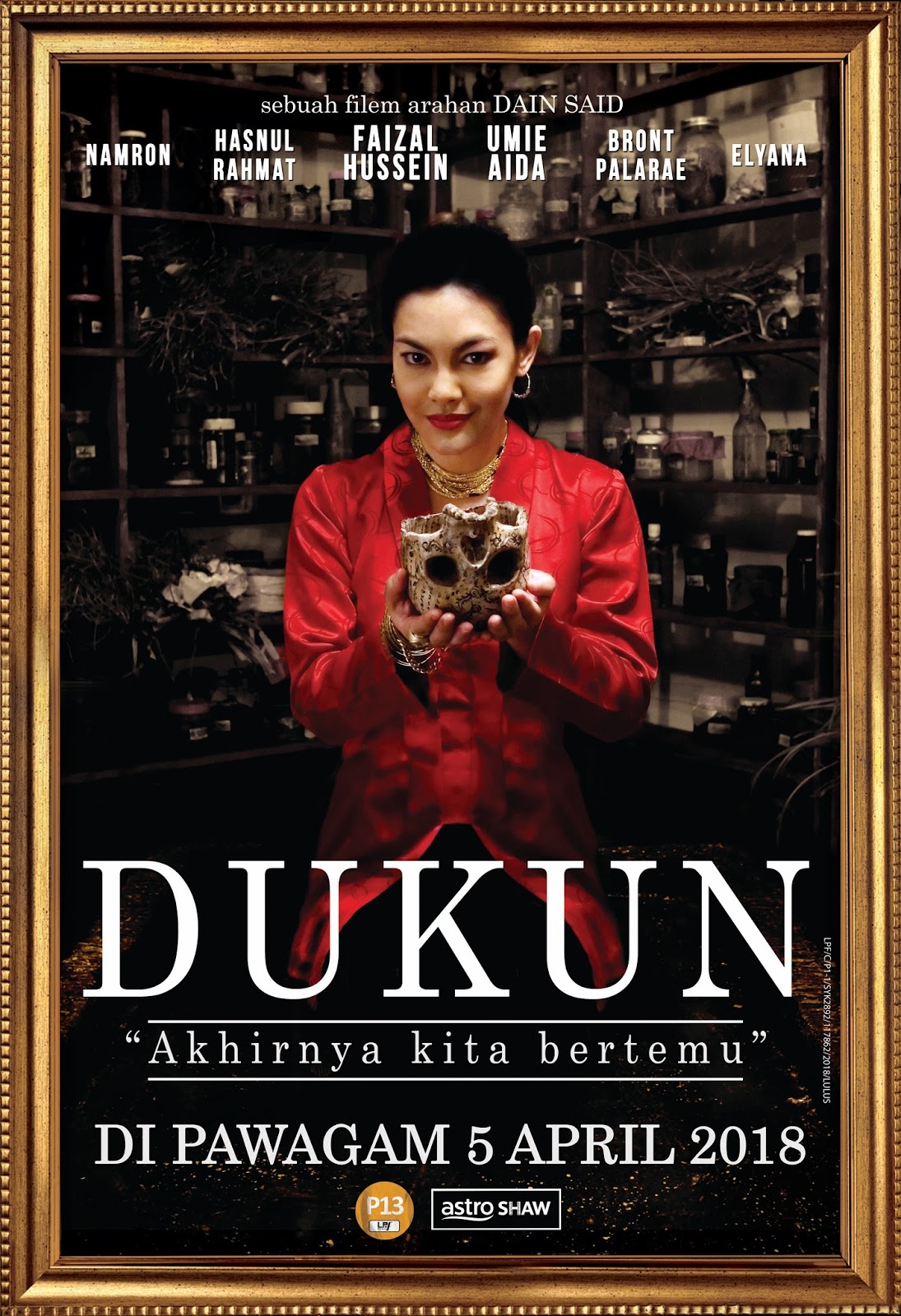
Dukun posterInspired by a notorious real life crime, Dain Iskandar Said’s Dukun proved too controversial Malaysia’s censors and is only now reaching cinema screens after languishing on a studio shelf for the last twelve years. It arrives, however, alongside a number of similarly themed East Asian horror films which pit ancient “superstitions” against “respectable” religions and, unlike many, broadly comes down on the side of Islam which perhaps makes the fact that it was banned a little surprising. Then again, as a lawyer points out midway through the unconventional femme fatale’s murder trial, there are many who believe in “black magic” and perhaps faith is not enough to hold off the overwhelming supernatural dread of incomprehensible otherworldly forces.

Said opens with the conclusion as Diana (Umie Aida), the “gifted” shamaness and glamorous nightclub singer, dolls up in a beautiful ballgown to be sure of making an impression at her own hanging. Dialling back a little, the dismembered body of a businessman is discovered with evidence that suggests a ritualised killing. Meanwhile, veteran lawyer Karim (Faizal Hussein) is desperately searching for his 17-year-old daughter Nadia (Elyana) who ran away from home after an argument. Fearing Nadia has gotten herself mixed up with drugs, Karim hopes to get an old police contact to help him keep tabs on new arrests but in return he finds himself agreeing to defend a difficult client who has already rejected all 23 public defenders put in front of her. Diana argues that the businessman died as a result of a ritual intended to make him invincible because he didn’t listen to her instructions and the spells didn’t work – his death, therefore, is not her “fault” but the unfortunate consequence of improper respect for shamanistic practices.

Dukun’s banning is apparently not so much down to a direct confrontation of Islam and shamanism, but the sensitivity surrounding the real life case which inspired it. In 1993, former pop-singer Mona Fandey, who had rebranded herself as a top shaman catering to the rich and famous, was arrested for the murder of a politician whose dismembered body was eventually discovered in her storehouse. As the investigation progressed, more bodies were discovered as was a lengthly paper trail detailing a shopping spree which even included a face lift. Unsurprisingly given all the grizzly details and celebrity connections, the trial was a media sensation which Fandey milked for all it was worth.

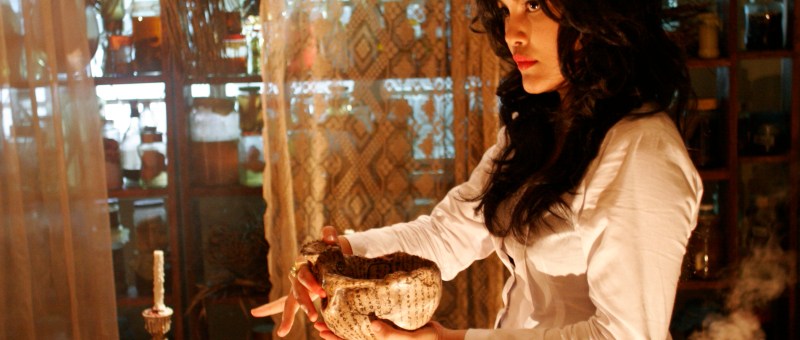
Though the narrative and facts of the case have obviously been fictionalised, the comparisons are obvious – the accused shamanesss is even called “Diana” which was the title of one of Fandey’s unsuccessful albums. Actress Umie Aida perfectly mimics Fandey’s deluded fame hungry creepiness but also adds the oddly alluring quality of a film noir femme fatale as she shifts between elegant nightclub singer and all powerful practitioner of black magic. Diana plays to the gallery, attempts to charm the court, and acts as if her trial is just another show conducted in front of her adoring fans while preparing herself for the grand “finale” which, unbeknownst to the legal system, may all be a part of her greatest work of ritual magic.

Meanwhile, Karim attempts to defend her with a keen application of the law, pitting “irrational” ritual against state sponsored logic which itself is perhaps largely under the sway of conventionally religious thinking. Karim’s wife disappeared ten years previously, leaving him to raise his daughter alone only to have her disappear too. Diana seems oddly familiar with Karim’s difficult family circumstances and offers to “help” him in return for delivering makeup and a mysterious object from her apartment. Karim is desperate enough to accept, but in accepting may have already betrayed himself even if he’s careful to also consult his local Imam as to the best course of action.

As in the all best supernatural noir, darkness is coming for Karim. Engulfed in an inescapable spiral of dread and despair, Karim finds himself sinking ever deeper in his quest to rescue his daughter little knowing that they are all involved in an ancient conspiracy over which they have little or no control. You can’t play around with the supernatural, Diana counsels, but the supernatural may very well play around with you.


Dukun screens as part of the New York Asian Film Festival 2018 on 13th July 6.15pm

Official trailer (English subtitles for dialogue, contains disturbing imagery)