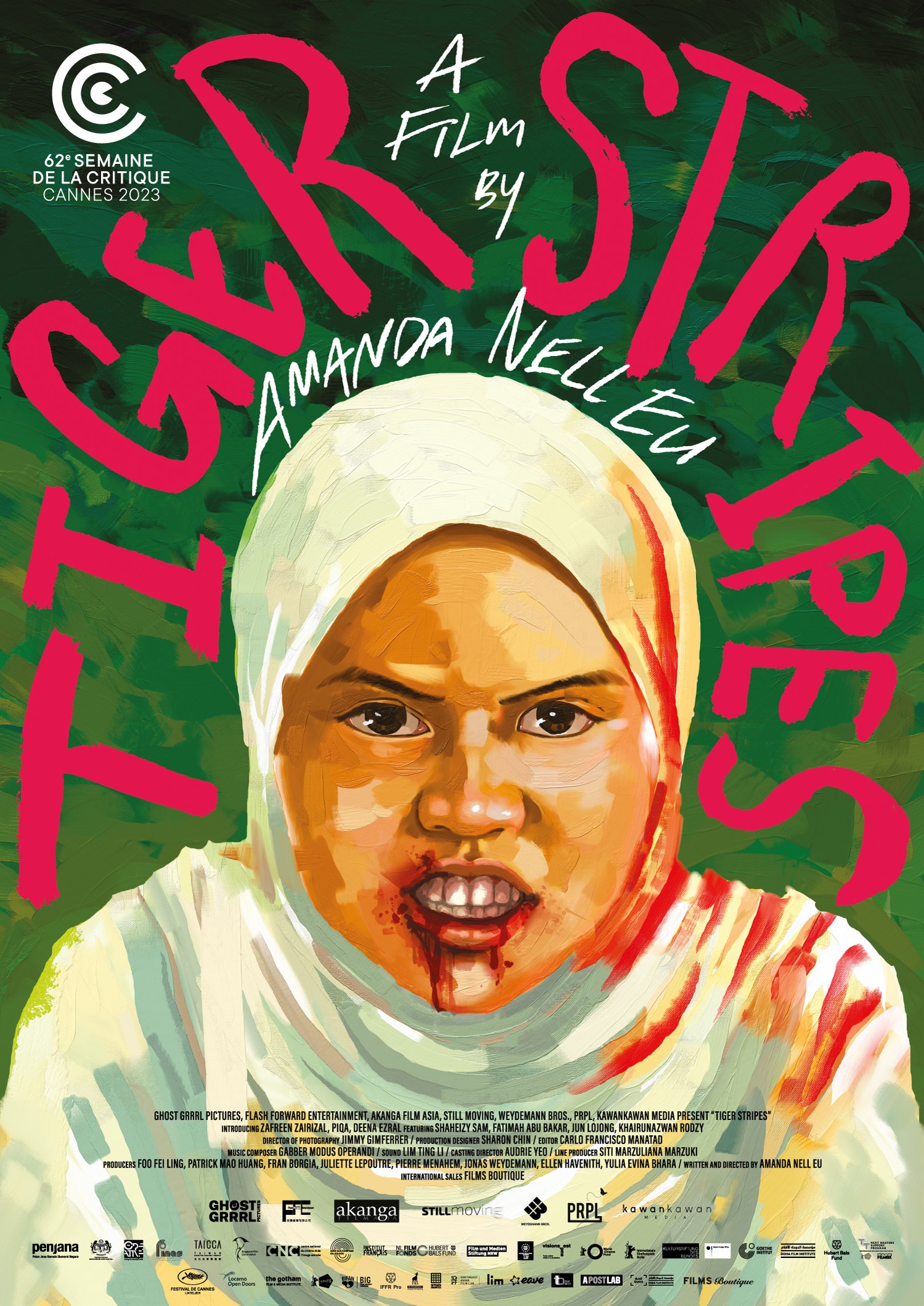
Tiger Stripes (Amanda Nell Eu, 2023)

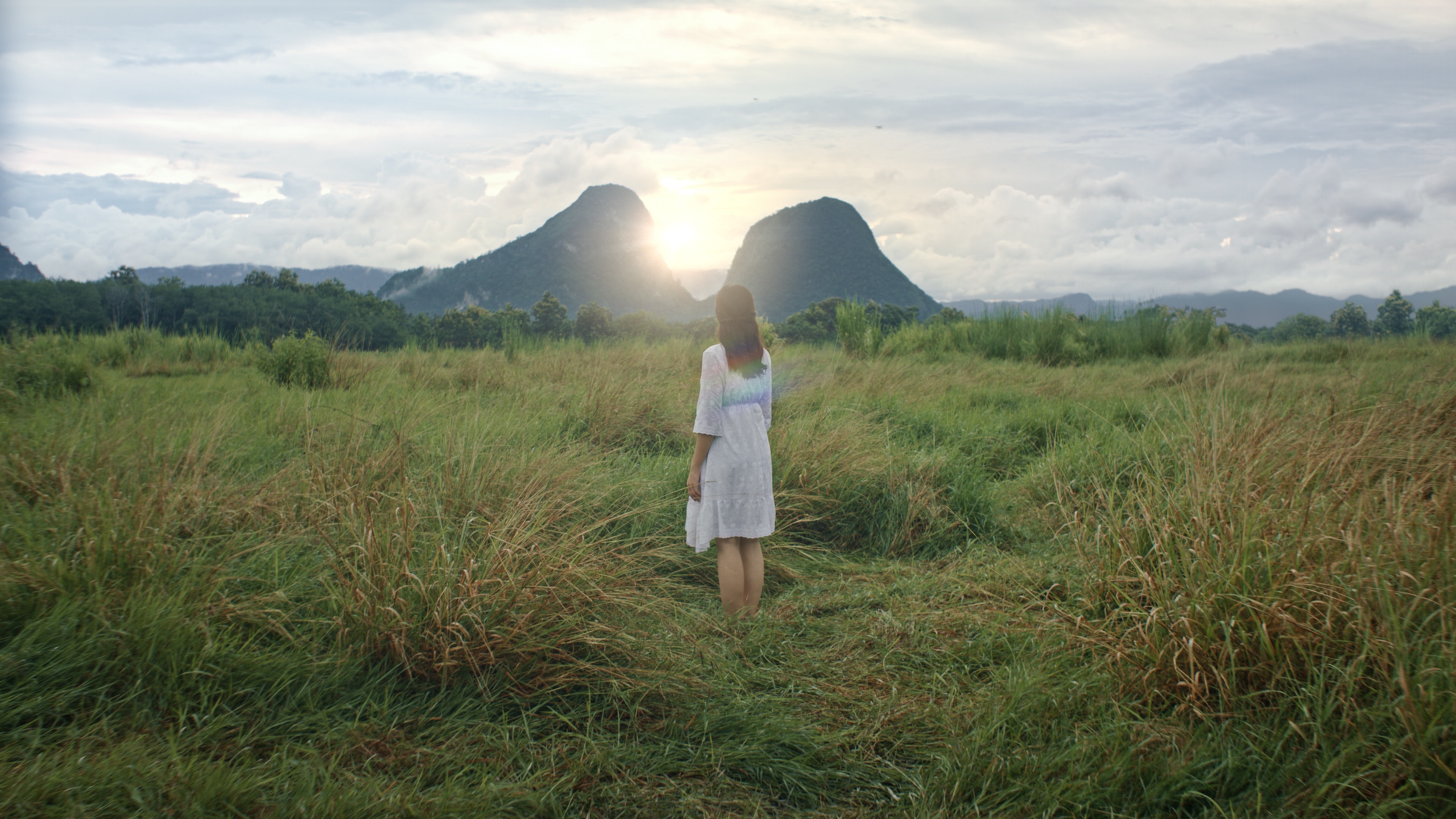
There’s a moment in Amanda Nell Eu’s Tiger Stripes in which a teacher writes a sentence in English on the board for the students to fill in the blanks. “The father ___ to work,” one reads. Another, “The mother ___ at home.” It’s within these blanks that the girls live their lives, contained by rigidly held patriarchal norms supported by a religious environment that turns resistance into heresy, something demonic and evil that must be rooted out so the afflicted individual can be returned to society without their parents being ostracised.

A bright and talented student, Zaffan (Zafreen Zairizal) is shown to flaunt these rules by wearing a bra and commandeering the toilets to record tiktok dance videos with the help of her friends Mariam (Piqa) and the more conservative Farah (Deena Ezral). Perhaps the most transgressive thing about them is that she’s removed her hijab and in fact much of her clothing, defiantly assuring herself with a cheekiness that seems almost naive. After getting her school uniform wet in a local pond, she cheerfully runs home hair exposed in only her smalls. Her father barely bats an eyelid, but her mother is incensed. Somewhat counter productively, she drags her outside and shouts at her in front of all the neighbours about bringing shame on their family. 

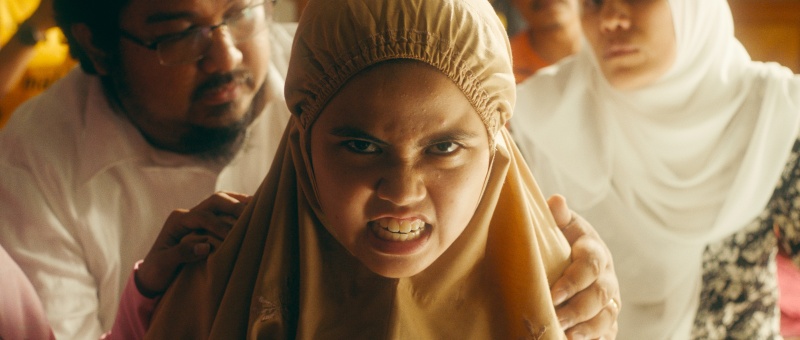
Time and again, it’s other women that cause Zaffan the most trouble. After her classmates discover that she’s got her period and is therefore a woman, they beat her up and call her names suggesting that she’s unclean and no longer wanting to associate with her. It doesn’t help that her new status is known to all because girls on their period cannot participate in some of the religious practices at the school which similarly reinforce the idea that menstruation is a pollutant and womanhood itself is toxic. It’s indeed womanhood which been activated in Zaffan along with a natural desire to resist her oppression and be who she is. She begins to undergo a transformation that even she barely understands, snapping and snarling those who challenge her while otherwise catching and eating wild animals which she tears apart with her teeth. 

The girls tell each other a story of a woman, Ina, who apparently went feral and escaped to live in the forest. They tell it as a cautionary tale, but Zaffan begins to see and identify with Ina who has found a kind of natural freedom outside of the oppressive patriarchal social codes of the contemporary society. Yet it’s precisely this freedom that must tempered ad women kept in their place. The school later calls in some kind of spiritualist, Dr. Rahim (Shaheizy Sam ), who pedals snake oil treatments and claims to be able to exorcise the young women who have similarly come down with shakes and shivers in the wake of Zaffan’s metamorphosis. Earlier on, Zaffan had seen a wild tiger filmed by a man who walked slowly behind it, menacing but unwilling to engage. Her friends tell her they probably mean to kill it, but there’s also an ineffectuality in this male timidity that is essentially afraid of an independent woman. Having transformed herself into a tigress, Zaffan too is followed by a crowd of men but all they do is stare at her back.

Meanwhile, in the background her teachers make ironic comics that the students won’t amount to anything while the Malay pupils seemingly trail behind their Chinese classmates. Zaffan becomes the embodiment of monstrous femininity, a dangerous and transgressive womanhood that rejects all of the constraints placed upon it. Though she does not understand what is happening to her and is hurt that her former friends, still on the other side of adolescence, now view her as something other and unpleasant, Zaffan longs for the freedom of the forest and to dance to her heart’s content no longer willing to submit herself to the strictures of the patriarchal society. Her rebellion earns its followers among girls of her age, themselves longing for freedom but too afraid to ask for it. Tinged with supernatural dread, the film nevertheless presents Zaffan’s progress as a gradual liberation found in the natural world, nature red in tooth and claw but alive and unconstrained as free as a tigress in a world without man.


Tiger Stripes is in UK cinemas now courtesy of Modern Films.

UK trailer (English subtitles)
Imaginur (Nik Amir Mustapha, 2022)

“It’s a pickle, isn’t it? Trying to remember what you don’t know you’ve forgotten.” So says the father of the hero of Nik Amir Mustapha’s touching sci-fi romance, Imaginur. It is however his son who’s trying to piece things back together while seemingly stuck in a maddening time loop chasing the ghost of lost love and searching for his “happy place”, the safest place he can imagine that will reconnect him with who he really is. 

Zahul seems to be haunted by fleeting glimpses of a woman whose face is hidden. After being involved in a traffic accident, he fetches up at the hospital but is there with his elderly father who is living with dementia. An elderly lady gives him a card for a special service called Hypnotica run by a mad scientist named Ramil who claims he can use hypnosis to cure Zahul’s panic attacks the most recent of which caused him to abandon his father in a supermarket after an awkward interaction with his ex. Ramil tells him that they’re simply going to revisist old memories with a new perspective to solve the cause of his anxiety but we can’t be sure when or if Zahul has actually left the state of hypnosis. Unable to remember or get a firm grasp on his reality he becomes panicked and short tempered, eventually paranoid and rambling about people trying to steal his brain.

Even so as someone puts it, his quest for Nur, a woman he meets at a burger stand, is also a quest for light and the path back towards himself in reclaiming his past even if it comes with the pain of loss on waking up to the reality. “This is what becomes of our lives” the sympathetic elderly woman laments of Zahul’s father, only for Zahul to reply that there’s no point resisting, but resisting is in a sense what he’s been doing trying to push through to a more concrete reality unwilling to accept the first or even second iteration of a moment in time but looking for the essential truth of it. 

What his father tells him is that the answer is what we feel in out hearts, that there’s nothing so important as feeling except perhaps the memory of it. That is in a sense what Zahul is chasing, trying to reorient himself through emotional logic while simultaneously reluctant as if avoiding something he doesn’t know that he’s forgotten. Meanwhile, he becomes increasingly paranoid about the shadiness of Ramli’s operation which even he calls a “pseudoscience” wondering if he’s caught up in some kind of conspiracy while convinced they’re trying to steal his brain or at least mess with it to drive him out of his mind. 

Yet it all seems to come back to a choice he didn’t and didn’t make watching the mysterious woman head towards a station with a suitcase but getting hit by a car before reaching her. “Remember me” she plaintively asks in the shared space of his mindscape, perhaps a phantom of his imagination but also a real woman he didn’t know he’d forgotten who holds the key to everything he is. “You live inside your head a little too much” Nur tells him, and she’s absolutely right while ironically advising him to find his happy place little knowing that perhaps he has and they’re already in it. 

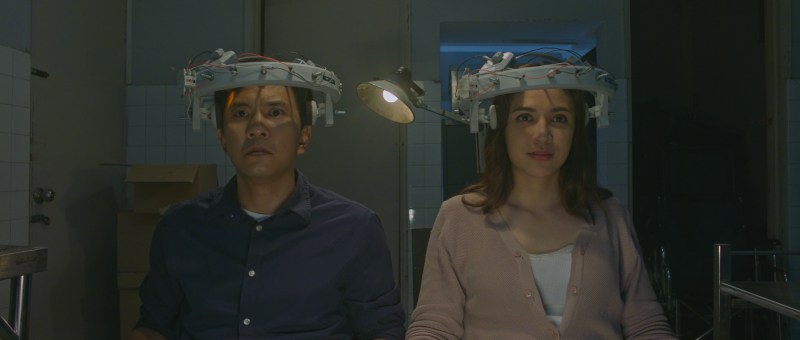
Oneiric and elliptical, the film’s fragmentary dream logic in which Zahul is forced to relive a series of moments from getting a parking ticket to being at the hospital eventually builds towards a moving moment of cohesion as Zahul manages to find himself again accepting both love and loss along with memory in all of its emotional intensity. Opening with a classic hypnotic spiral, there’s a kind of charm in Nik Amir Mustapha’s retro production design in the lo-fi hypnotism headsets Ramil alarmingly claims turn off part of the brain along with the softened colour palate that lends a note of nostalgia to what we assume to be the present day. In any case there is something genuinely touching in Zahul’s determination to reclaim himself through remembering lost love and discovering the eternal in transient moments of happiness.  


Imaginur screened as part of this year’s New York Asian Film Festival.

Teaser trailer (English subtitles)

Images: © 2022 Lumatic Films.

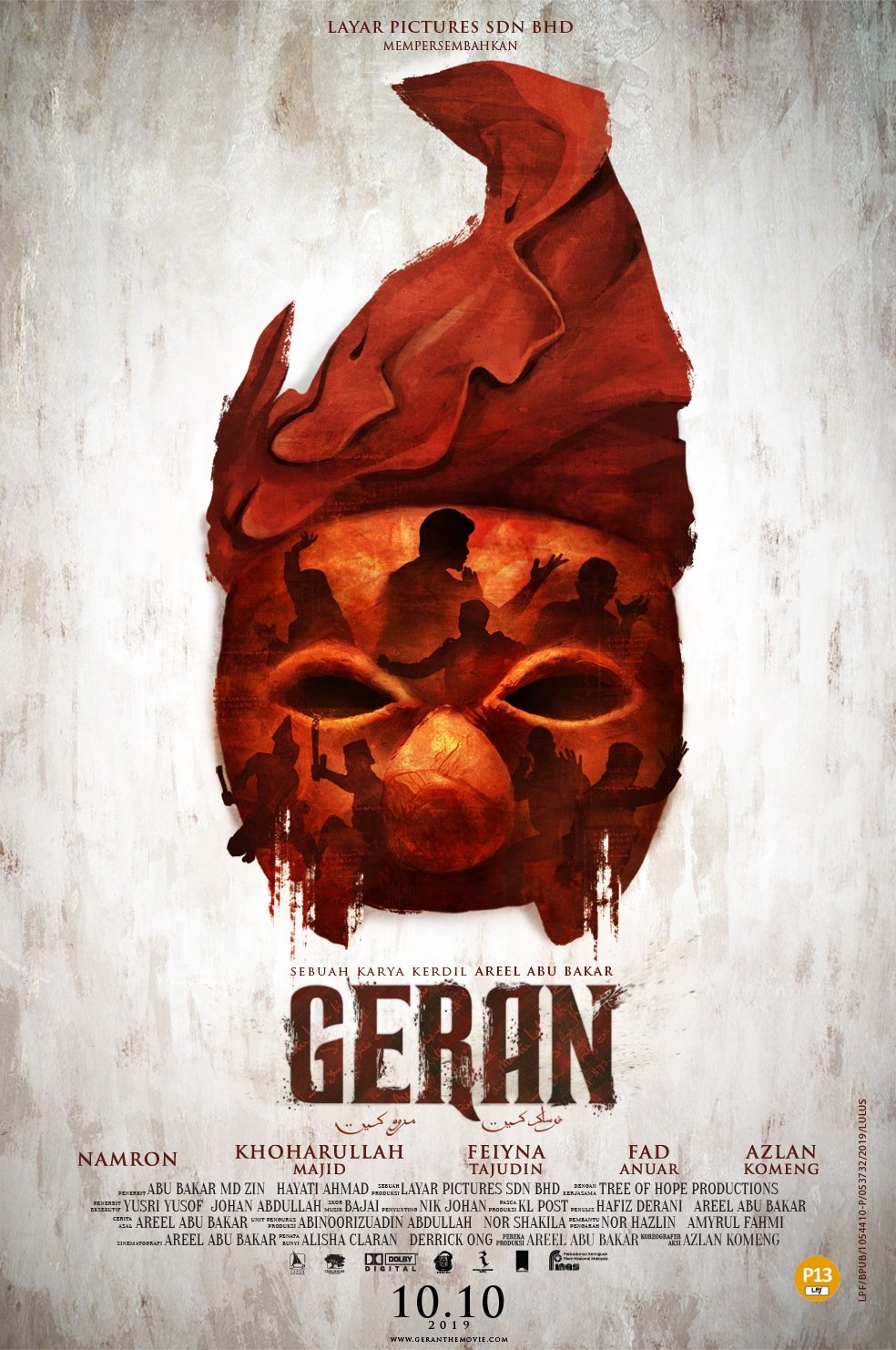
Geran (Areel Abu Bakar, 2019)

“Our family is not merely living for the love of wealth, but for love of a family” according to the late matriarch of the family at the centre of Areel Abu Bakar’s spiritually imbued martial arts film, Geran. Showcasing the Malaysian art of silat, Geran finds the family at the mercy of an increasingly corrupt and selfish society, stoically maintaining their “heritage and dignity” in the face of constant encroachment by the destabilising forces of evil in the form of violent and greedy gangsters.

All the trouble starts early one morning when sister Fatimah (Feiyna Tajudin) discovers that the deed to the family home is missing and concludes that her delinquent younger brother Mat Arip (Fad Anuar) who has not yet returned has most likely taken it as collateral for his gambling debts. Patriarch Pak Nayan (Namron) is not too worried, after all there’s nothing they can do with a deed that’s in his name and would need his permission to transfer, but soon enough the goons turn up only to get a rude awakening, quite literally kicked out by Fatimah who is more than capable of defending herself. They won’t stay away for long, however, because Mat Arip has played right into the hands of arch gangster Haji Daud who has unfinished business with Pak Nayan and an insatiable need to acquire all the land in town. 

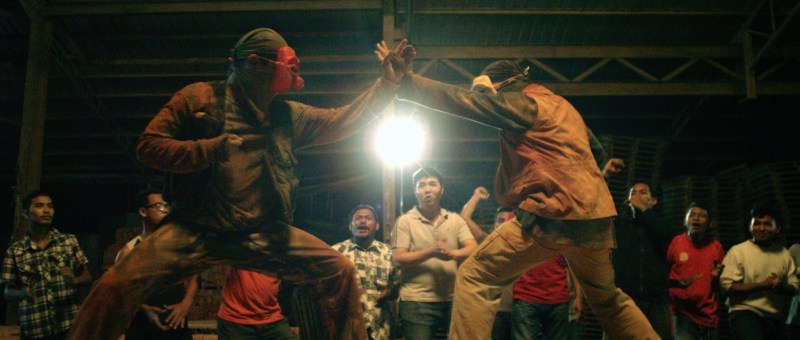
The family’s prowess with silat is in many ways presented as an extension of their Islamic faith, a deeply spiritual act which connects them to their land and their culture. There’s not a little irony involved in the juxtaposition of older brother Ali (Khoharullah Majid) training with his mentor and Mat Arip gurning frantically on the fringes of a street fight, a sordid bastardisation of their noble art further sullied by the fact Mat Arip has placed a bet on the match’s outcome (which as we later discover is also rigged). Ali meanwhile remains pure hearted, sure that justice will triumph in the end while determined to defend himself and his family from the corrupting forces which surround them. 

As we discover, Haji Daud’s venality is a direct mirror of Pak Nayan’s goodness, a revenge quest born of his own dark heart and insecurity. Yet he remains a shadowy figure, hiding in back rooms while sending his minions to fight on his behalf. Mat Arip is reminded that debts must be paid, something his spiritually minded family probably agree with even as they continue to forgive him while hoping he’ll be able to free himself of his appetite for self-destruction though it does not appear there is much else out there for him other than his life of vicarious thrills. Unfortunately for him, he’s mired in a macho posing contest with Haji Daud’s equally bored, though presumably better resourced, nephew following a drag racing altercation that eventually gives him pause for thought in robbing him of his car. 

“God’s law is inescapable” Ali echoes, assured that Haji Daud’s crimes cannot go unpunished in a cosmic if not an earthly sense and he will someday pay for his deliberate exploitation of the miseries of the poor. Targeted by goons, the siblings get ample opportunity to show off their silat skills, Fatimah chased through a marketplace, eventually assisted by friendly stall owners shocked at her near lapse in taking a cleaver to one of the gangsters, while Ali goes on-on-one with Daud’s chief minion before going on all out assault to rescue Mat Arip realising that he too has probably fallen victim to attack.

The voice of Ali’s mother eventually reminds him that his successes come not only through his own action but through the prayers of those who love him, reinforcing the importance of familial solidarity as the siblings commit themselves to rescuing Mat Arip while forcing the gangsters into retreat. A worthy showcase for the art of silat with its high impact, innovatively choreographed action scenes, Geran is also a potent spiritual drama in which the family does its best to save itself as a means of saving others, holding the line against the Haji Daud’s of the world with little more than bare fists and incorruptible integrity. 


Geran streams in Poland until 6th December as part of the 14th Five Flavours Film Festival.

Original trailer (English subtitles)