
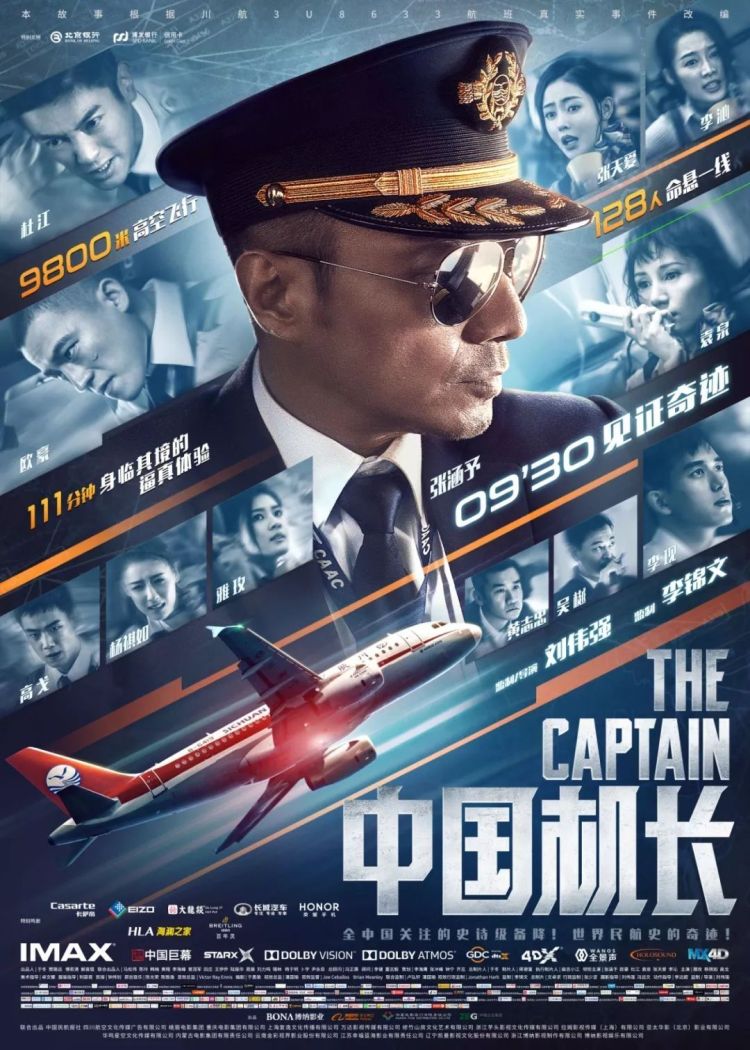
 Chinese cinema loves the miraculous, but it loves stories of ordinary heroism even more. Inspired by real events which occurred on 14th May 2018, not quite 18 months before the film’s release, The Captain (中国机长, Zhōngguó Jīzhǎng), is a classic story of everything going right after everything goes wrong. Implicitly praising the efficacy of a system which values military precision over individualistic handwringing, Lau’s dramatisation reserves its admiration for those who keep their cool and follow the rules in the midst of extremely difficult circumstances.
Beginning in true disaster movie fashion, Lau opens with a brief yet humanising sequence which sees the otherwise austere pilot Captain Liu (Zhang Hanyu) say goodbye to his little girl, promising he’ll be back in time for her birthday party that very evening. Thereafter, everything is super normal. The pilots and cabin crew arrive at the airport, get to know each other if they haven’t flown together before, and run through their drills. The cabin crew laugh through the “we’re professionally trained and are confident we can ensure your safety” mantra rehearsed in case of emergency hoping they’ll never actually have to say it, but disaster strikes a little way into the flight when the windscreen cracks, eventually shattering and sucking rookie co-pilot Liang Peng (Oho Ou) halfway out.
Of course, the story is already very well known so we can be sure that the plane will land safely with no one (seriously) hurt, but it’s still an incredibly tense time for all. As Liu explains to Liang Peng, everything in the cockpit must be done with the upmost precision. It’s when you get complacent that things will start to go wrong. A former air force pilot, Liu is not the most personable of captains with his permanently furrowed brow and serious demeanour, but he’s exactly the sort of person you need in a crisis, calmly and coolly making rational decisions under intense pressure. While he’s doing his best at the controls, the entirety of the Chinese air aviation authorities are springing into action to try and ensure the plane’s safe landing – airspace is cleared, the military monitor the situation, and the fire and ambulance services are already on standby in the hope that Liu can safely land at Chengdu airport.
Keeping the tension high, Lau resists the temptation to sink into melodrama, more or less abandoning a hinted at subplot about stoical cabin supervisor Nan’s (Quan Yuan) possibly unhappy home life while introducing a fairly random diversion in a group of aircraft enthusiasts furiously tracking the plane’s trajectory online and then heading out to the airport in the hope of witnessing a miracle. Before the potential catastrophe takes hold, the crew have to deal with unpleasant passengers intent on throwing their weight around, nervous flyers, and people travelling with small children, but do their best to provide service with a smile even in the most trying of circumstances. They are frightened too, but have to muster all of their professionalism in order to be strong for the passengers, keeping them calm and preventing them from creating additional problems while the guys in the cockpit try to find a solution that keeps everyone safe.
Released for National Day, The Captain’s brand of propagandistic patriotism is of the more subtle kind, only really rearing its head during the final moments during which awkward captain Liu suddenly starts singing a folksong in praise of the motherland while celebrating their lucky escape on its one year anniversary in the time honoured fashion of a group hot pot. Nevertheless, the point it’s making is in the virtues that Liu states after landing, valuing life and duty. Liu landed the plane because he followed procedure perfectly, kept his head, and made well-informed decisions. A master of understatement, his speech on landing is simply an apology to his passengers that he wasn’t able to take them safely to Lhasa. After waiting for the investigators, he thinks the passengers are hanging round outside the plane because they’re angry and want an explanation, little realising they are just overjoyed to be alive and wish to thank him for saving all their lives. A tense tale of selfless heroism aided by good training and immense professionalism, The Captain is a subtle endorsement of an authoritarian system but also of the importance of keeping cool in a crisis as the best weapon against catastrophe.
The Captain is currently on limited release in UK cinemas courtesy of Cine Asia, and in the US from Well Go USA.
Original trailer (English subtitles)

 Windows on Worlds