Asakusa Kid (浅草キッド, Gekidan Hitori, 2021)

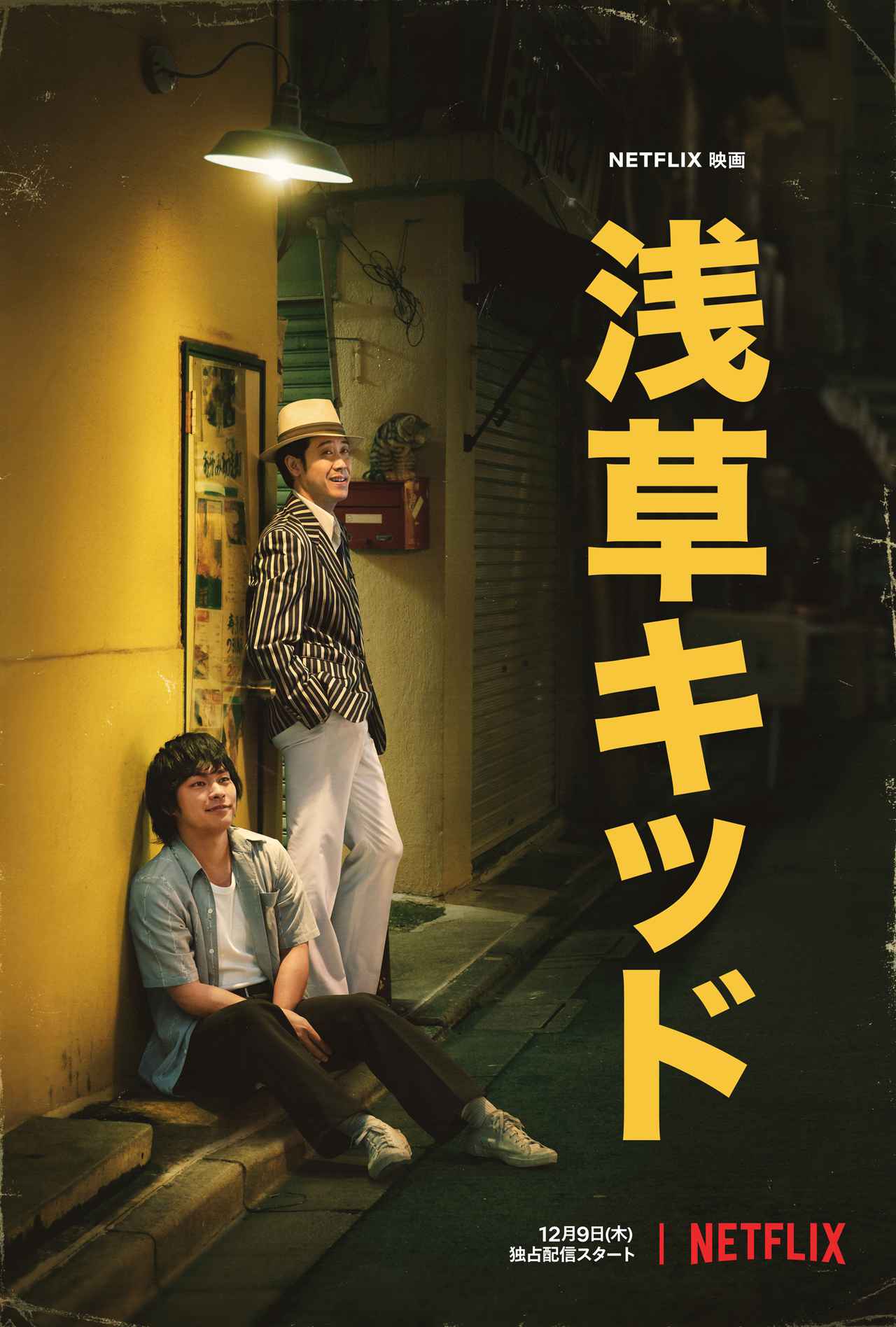
To international audiences, Takeshi Kitano has a very specific profile associated most closely with arthouse drama and violent gangster movies yet in Japan he’s best known as a comedian and TV personality. Inspired by Kitano’s memoir, Asakusa Kid (浅草キッド) charts his earliest days from entertainment district elevator boy to manzai star while lionising his earnest mentor Sozaburo Fukami (Yo Oizumi). Yet it’s also a nostalgic look back to a late Showa pre-bubble Japan as Kitano’s idol finds himself falling foul of a changing entertainment industry. 

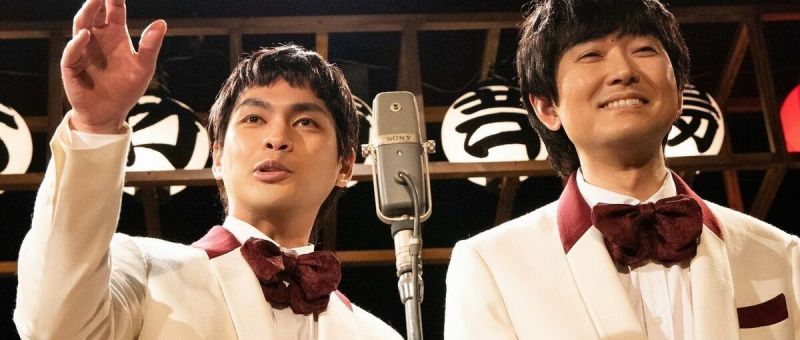
As the film opens in 1974, “Take” (Yuya Yagira) is one half of a struggling manzai comedy double act touring the country in various variety and cabaret establishments fearing his career may die out on the road before beginning to edge towards success and a high profile TV gig. Two years earlier, however, he’s an awkward college dropout working as an elevator boy at France-za comedy bar burlesque theatre. A local boy, Take has chosen France-za because of his admiration for “Fukami of Asakusa”, longing to make his way into the entertainment world while captivated by Fukami’s cool style, even copying his trademark tap dancing. Fukami soon sees talent in Take and tries to nurture it, but as the pair of them are repeatedly reminded, this kind of comedy is already old-fashioned. Audience numbers at France-za continue to decline while as one of the other girls later reminds him the men who come to these shows are there to see women take their clothes off, not random skits or singing. 

This is brought home to Take when he tries to encourage one of the strippers, Chiharu (Mugi Kadowaki ), to chase her dreams of becoming a singer by convincing Fukami to allow her to fill a 15-minute spot. As Fukami had attempted to warn him, the men appear to enjoy her song and offer rapturous applause but think it’s part of her act and soon resort to catcalls expecting her to take her clothes off. Take’s well-meaning gesture backfires, convincing Chiharu her dreams of singing are over, while Take is also poked into action by the other stripper’s retort that the comedy is only really “filler” between the burlesque acts which is what the customers have come to see. 

Even so, there’s less drama than one might expect in Take’s eventual decision to betray his mentor by choosing manzai and its opportunities for TV success over his by then old-fashioned sketch comedy. The father/son relationship somewhat falls by the wayside as even as a triumphant Take later returns “home” to present Fukami with the prize money for a TV award like a child with a report card full of As, while he gracefully accepts it but is privately filled both with a sense of pride and personal disappointment in being forced to accept that the heyday of Asakusa is over and there is no future in his vaudeville-style comedy acts. Nevertheless, Take appears to attribute much of his success to things he learnt from Fukami from his tap-dancing to his uncompromising attitude. “Don’t be laughed at, make them laugh,” he recalls Fukami telling him, “don’t suck up to the audience, tell them what’s funny,” later refusing to soften his inappropriate jokes about ugly girls and suicide for a more conservative TV audience and finding his edgy comedy an irreverent hit. 

Then again, not everyone is able to achieve their dreams from Fukami who lost the fingers on one hand in the war and finds himself forced off the stage, to Chiharu apparently a regular housewife with showbiz regrets, and Fukami’s wife Mari (Honami Suzuki) exhausting herself trying to help him save his dream of Asakusa. As much as Take might have admired Fukami, others too describing him as a father of contemporary entertainment, he can’t get away from the fact the press is only interested in his funeral if Take attends it. Filled with the nostalgia, the ethereal one shot closing sequence in which the older Take returns to Asakusa and to the past surrounded by the friends of his youth is genuinely poignant in the sudden juxtaposition of a lost world with the contemporary present but perhaps elegises nothing so much as nostalgia in its lament for late Showa breeziness. 


Original trailer (English subtitles)

Miracle: Devil Claus’ Love and Magic (MIRACLE デビクロくんの恋と魔法, Isshin Inudo, 2014)

Miarcle devil claus posterChristmas is a time for romance, at least in Japan, but thanks to the magic of the season it can also be confusing. For one nerdy aspiring mangaka at the centre of Isshin Inudo’s Miracle: Devil Claus’ Love and Magic (MIRACLE デビクロくんの恋と魔法, Miracle Devil Claus-kun no Koi to Maho) it’s about to become very confusing indeed as he becomes convinced a prophecy he himself made up when he was a child is actually coming true. Cross-cultural love, lifelong longing, frustrated dreams, and misconstrued realities threaten to derail fated romance but never fear – it is Christmas after all, and even evil Santa has his heart in the right in place as long as anyone is prepared to really listen to him.

Hikaru (Masaki Aiba) and Anna (Nana Eikura) have lived across the street from one another all their lives and been friends as long as either of them can remember. These days, Hikaru is chasing dreams of manga success while working in a bookstore, and Anna is an aspiring artist specialising in large scale metal work. 20 years ago, Hikaru made up the figure of Devil Claus who is the embodiment of Santa’s emotional pain on being forgotten and abandoned for 364 days of the year. Seeing as no darkness can be permitted in the heart of Santa, Devil Claus evolved into his own pixie-like creature and now mostly stars in the cute, inspirational posters Hikaru illegally pastes all over town.

Devil Claus is also a big part of a prophecy Hikaru revealed to himself in which he believed Devil Claus would eventually lead him to the “Goddess of Destiny” who will appear dressed in red with the moon at her back, carrying knowledge of the future and accompanied by a leopard! It is quite a list and so when Hikaru bumps into an extraordinarily beautiful woman wearing a red coat, carrying a wooden leopard in one hand, and a collection of books about “the future” in the other, he comes to the obvious conclusion. In a coincidence worthy of the movies, it just so happens that the woman is Seo-yon (Han Hyo-Joo), a Korean artist in charge of organising a large scale Christmas display which is also the project Anna has been working on.

Predictably enough, Anna has long been in love with the completely clueless yet pure hearted Hikaru. Ironically, Hikaru thinks of Anna as a big sister who has always protected him when he is so obviously unable to stand up for himself, but though she berates him for his lack of backbone she is the one too embarrassed to confess her real feelings and has been patiently waiting for him to finally notice her all her life.

Nevertheless, this particular plot strand takes a strange turn when Anna figures out that Hikaru’s “Goddess of Destiny” is almost certainly Seo-yon. Despite her own feelings she does her best to fulfil Hikaru’s dreams but Inudo frames her behaviour strangely – Anna acts coldly towards Hikaru, while gazing somewhat longingly at Seo-yon who seems to literally sparkle as the sun shines ever behind her. It would be easy to come to the seemingly obvious conclusion that Anna has a different reason for being irritated with Hikaru and his current romantic pre-occupation (why exactly does she already have the book Seo-yon has been wanting before she decides to give it Hikaru to give her?), but the dilemma is later reframed as an inner conflict about her lack of traditional femininity. Yes, Anna’s “manly” dungarees and love of welding might easily play into a stereotype supporting the first conclusion but are actually offered as reasons for feeling underconfident in romance. Just as Hikaru thinks he isn’t good enough for someone so glamorous and accomplished, Anna thinks she isn’t good enough for Hikaru because she can’t measure up to a woman like Seo-yon.

All of that aside, the refreshing message behind Devil Claus is less one of conforming to a social ideal than of learning to regain your self confidence in order to open yourself up to the vulnerability of exposing your true feelings. Hikaru’s romantic and professional rival (not that Hikaru would ever really think of anyone else as an enemy), Kitayama (Toma Ikuta), was one a top rated city trader and now apparently successful mangaka but in a depressive slump over a conflict of artistic integrity. Only by remembering the importance of sincerity and emotional connection can he unlock his creative block by remembering what it is that’s really important. Frothy fun and proud of it, Devil Claus mixes infinitely cute if slightly subversive animation with innocent and pure hearted romance in which the main messages are embracing your authentic self and accepting other people’s. In other words, a perfect Christmas story.


Original trailer (no subtitles)