Amazon Bullseye (아마존 활명수, Kim Chang-ju, 2024)

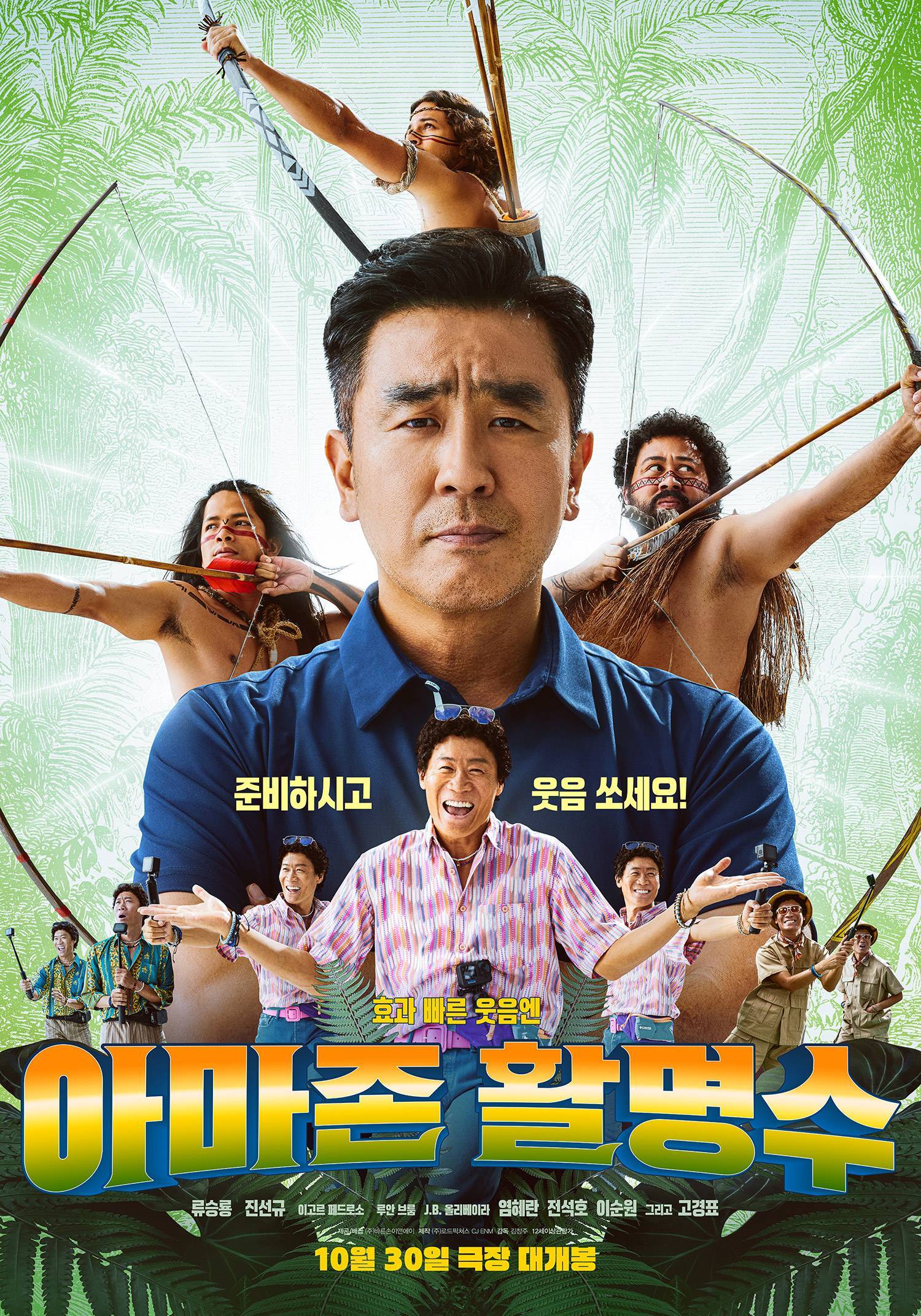
A harried Korean executive finds common ground with a trio of men from an Amazonian indigenous community while training them to win a medal in an international archery competition in Kim Chang-ju’s genial comedy, Amazon Bullseye (아마존 활명수, Amazon Hwalmyeongsu). Though mostly avoiding the obvious pitfalls of its subject matter and taking extreme care to be respectful to the indigenous people of the Amazon, it has to be said that the film otherwise has some rather outdated humour. Nevertheless, it does have some secondary points to make about exploitative businesses practices in Korea and abroad along with the destruction of natural world that goes hand in hand with capitalist expansion.

Jin-bong (Ryu Seung-ryong) once won a gold medal for archery, but is now a middle-aged office worker whose career is on the skids. After chewing him out for failing to make any significant deals, his boss, Park (Jeon Seok-ho), has a new proposition for him. He wants Jin-bong to go to the Amazonian nation of Boledor and close a deal to allow them to open a gold mine or else face compulsory redundancy. He’s supposed to do this by coaching their national archery team to win a medal in the upcoming championships. Unfortunately, the helicopter he’s travelling on is struck by lightning and he’s marooned in the jungle only to be rescued by an indigenous community who then conclude he’s an emissary from the Boledor authorities and has come to destroy the village in which case he must die. 

But Jin-bong finds unexpected connection with Walbu (J.B. Oliveira) who is also a father of three children and is later welcomed after saving his daughter from a wolf attack. As the young men communicate with the animal and try to convince it to return to the forest, it becomes obvious that they have a respect for the land that an urban man like Jin-bong does not. Unbeknownst to him, they have already refused permission to open the goldmine and are fiercely opposed to any encroachment on their land or traditional way of life. After seeing just how bad the national team is, Jin-bong has the idea of asking the men from the indigenous community to compete instead but is only able to persuade them by convincing the president to legally sign the land over so it can’t ever be redeveloped and they’ll never be moved on. 

Of course, that wasn’t quite what his boss had in mind so even though Jin-bong is protective of the Tagauri, it’s clear his company always meant to exploit them and doesn’t care about the environment or the preservation of traditional culture. Jin-bong too is oppressed by this system and only participates in the first place because he fears losing his job not least because it’s so unlikely he’d be able to find another at his age. Jin-bong has three children and a feisty wife (Yeom Hye-ran ) who complains that she’s already had to sell some of their possessions because they can’t afford all the bills on their poky flat. He may then envy the apparent simplicity of life in the forest. On returning home the three men remark on how silly everyone is in Korea suffering all month long for something called “money” they use to buy tasteless “dead meat” rather than going into the forest and getting some like a normal person. But they also point out that they aren’t really all that different seeing as people still love their children and fathers work hard to support and protect them. 

Nevertheless, there are perhaps a few too many jokes about Jin-bong’s “scary” nagging wife and his position as a henpecked husband. It may also go too far in exploring cultural difference as the trio is arrested for doing things like carrying their bows and arrows around and using them to shoot fish in the river that runs through the middle of Seoul. They also start a campfire in Jin-bong’s apartment to make a traditional smoked chicken dish and are confused by Jin-bong’s reaction to this well-meaning attempt to share their culture with him. While they’re in Korea, they start to become a little more Korean with chieftain’s son Eba (Luan Brum) even developing an appreciation for super spicy kimchi. But they also observe the high rise buildings and constant construction as echoes of the fate that may soon befall the village if the Bolderan government and Jin-bong’s company get their way. Through their sporting pursuit, the men discover a way to take back control, tell the world about the Tagauri, and mobilise public opinion against the faceless corporation to ensure that they can protect their land and way of life from the ravages of chaebol culture.


Trailer (Korean subtitles only)
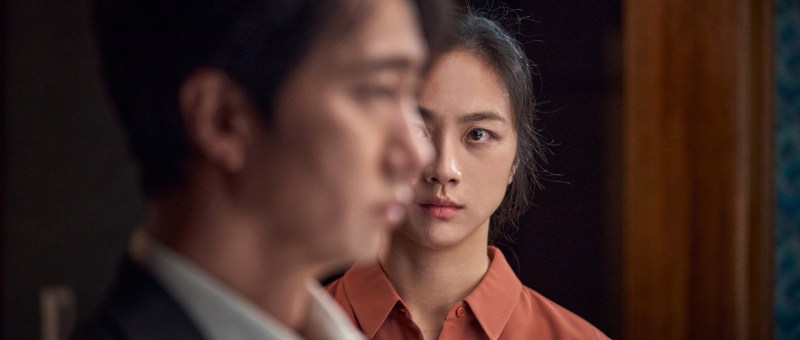
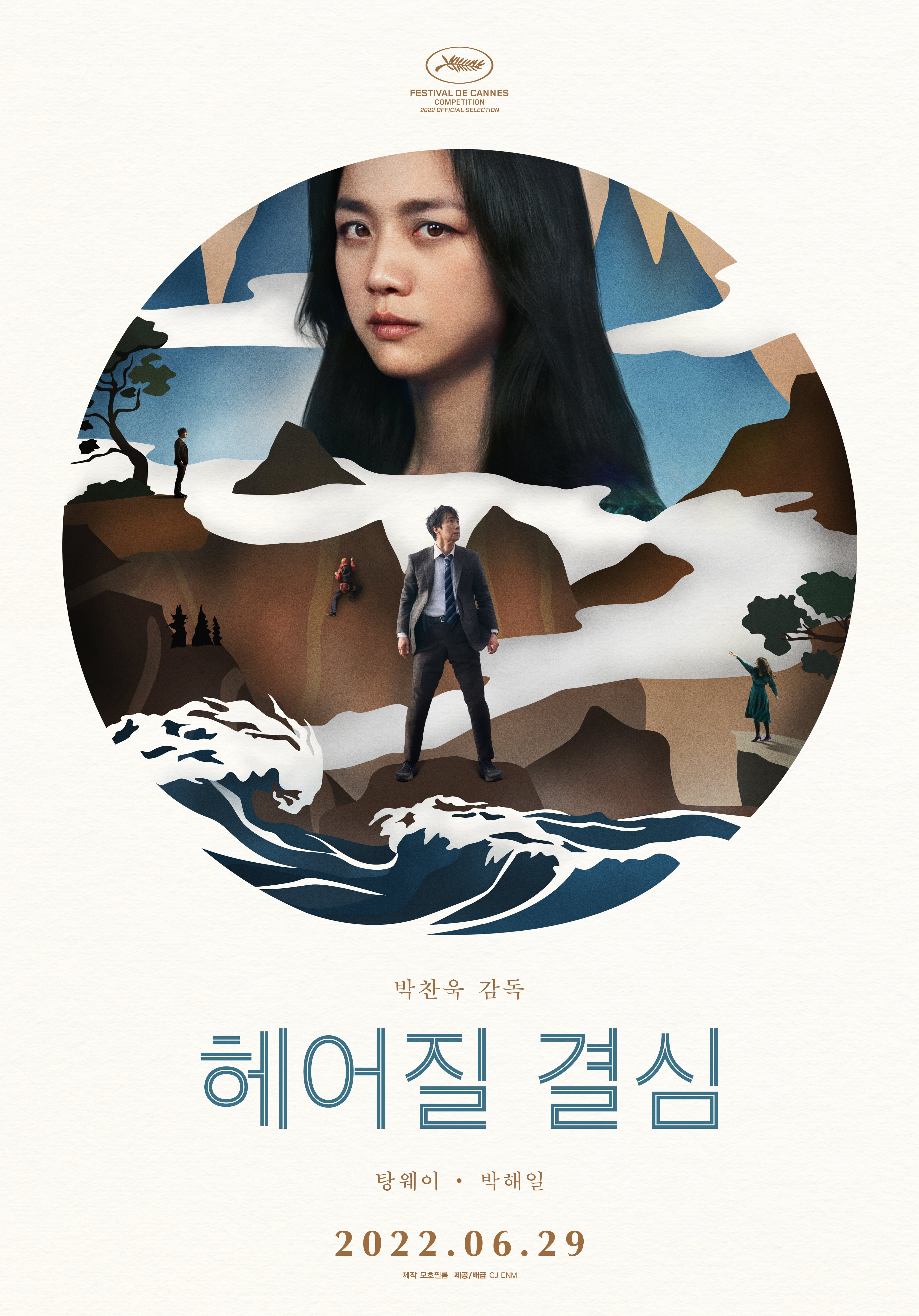
Decision to Leave (헤어질 결심, Park Chan-wook, 2022)

“I went through hell for you but without you my life would be empty” a fugitive murderer asks an insomniac detective to tell the woman he loves, making his own Decision to Leave (헤어질 결심, Heojil kyolshim) which will in fact be one of many in Park Chan-wook’s achingly romantic noir. Tinged with fatalism, the pursuit of love is also one of death and leads inevitably to a kind of haunting from which there is no real escape though you wouldn’t really want one anyway. 

In any case, the detective Park Hae-joon’s (Park Hae-il) sense of reality is already fracturing under the strain of his incurable insomnia. As he tells his partner, it’s not that he can’t sleep because of his obsessive stakeouts, it’s that he goes on stakeouts because he cannot sleep. Unfortunately for him, there have been relatively few murders lately. He wonders if it’s because of the nice weather, as if homicidal rage were being held in check by the gentle art of picnicking which it has to be said has a strange logic to it. Living apart from his wife who is a nuclear engineer in provincial Ipo, Hae-joon prides himself on being a good policeman and is preoccupied by his failure to catch two suspects currently on the run for a vicious murder. When he’s called to the scene of a dead body lying below a cliff, most are ready to rule it a tragic accident or perhaps a suicide but Hae-joon isn’t so sure especially given the unusual behaviour of the man’s much younger widow, Seo-rae (Tang Wei), who appears almost indifferent to her husband’s death and giggles to herself during an interrogation a habit she later claims is born of nervousness and a lack of confidence in her ability to speak Korean having migrated from China. 

Seo-rae’s Korean is perhaps a little better than she makes out, but still we see her repeating lines from romantic dramas on television, lines she later repeats to Hae-joon, while he wonders if her taste for historical romance has lent her Korean its archaic quality. They are each in a way out of time, she remarking that he strikes her as “dignified” to a degree she didn’t expect in a “modern” man while he ironically tells her that he was drawn to her because like him she liked to look at things directly. Yet there’s nothing at all direct about the mysterious Seo-rae whom he suspects of murdering her husband, and though there might be something unspoken directly understood between them their attempts at communication are always frustrated. Not only is there an ever shifting language barrier, but a mediation through text message and voice note or else through the act of being observed at a distance. As they grow closer, Hae-joon allows Seo-rae to listen to his surveillance tapes recorded as he voyeuristically watched her apartment from the rooftop opposite. She immediately deletes them but later does something similar herself, and is finally undone by her inability to delete a potentially incriminating recording because it has come to mean too much to her. 

The pair are in a sense perfectly matched. Hae-joon’s melancholy wife finally exclaims that he needs murder and violence in order to be happy, while Seo-rae admits that she ends up with terrible men like husband because it would take something extreme such as a murder for a good man like Hae-joon to take notice of her. As the couple dance around each other, Park colours their non-romance with shades of the gothic in the repeated motif of the crow feathers each of them find as they work their way towards the apotheosis of their love. As they say every love story is a ghost story and what is love if not an unsolvable mystery? Hae-joon’s sense of reality is forever in flux, Park playfully dressing Hae-joon’s new team and his old team in similar outfits as he segues between fantasy, reality, and memory while trying to parse out an objective truth. Hae-joon’s tragedy may be that he discovers more than he ought to know but not enough to solve the mystery, destined to be haunted by his unresolved cases and the elusive silhouette of lost love lingering silently in the mists of memory. 


Decision to Leave screened as part of this year’s BFI London Film Festival and is now on general release in US & UK cinemas courtesy of MUBI.

International trailer (English subtitles)

Angae (Mist) by Jung Hoon-hee (1967) which is also the title song for Kim Soo-yong’s 1967 film of the same name.

Seven Years of Night (7년의 밤, Choo Chang-min, 2018)

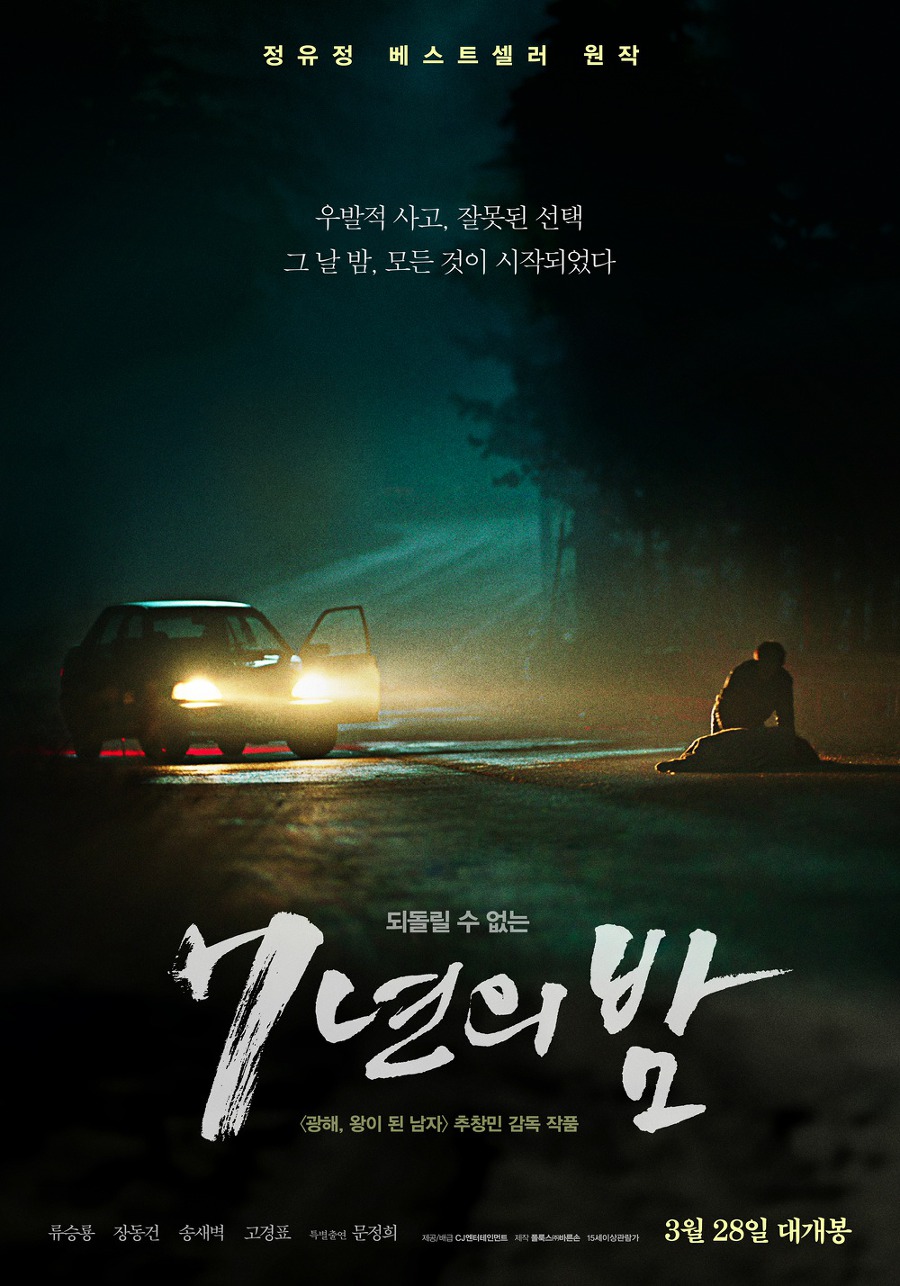
Seven Years of Night posterThe sins of the father are visited upon the son. Cycles of abuse and fatalistic retribution are a persistent theme in Korean cinema but Choo Chang-min plunges them to new depths of tragic inevitability in his adaptation of the best selling novel by Jeong You-jeong. The biblically titled Seven Years of Night (7년의 밤, 7 Nyeonui Bam) pits two visions of failed fatherhood against each other as two broken men attempt to restore order to their lives but damn their children in the process through their own refusal to engage with past trauma.

In 2004, security guard Hyun-su (Ryu Seung-ryong) buys an apartment he can’t afford in order to placate his wife who is in constant worry over their precarious financial circumstances. Hyun-su can’t really manage the interest payments on the mortgage so the family will be renting out the fancy apartment and moving to a remote house provided by his new employers at a hydroelectric dam. On the day that he was supposed to go and check over his new accommodation, Hyun-su partied hard with his former colleagues and set off drunk, getting into an altercation with another driver on the way. Lost in a thick fog and fuzzy from the drink, he hits a little girl who ran out in the middle of the road, panics and hides her body, planning to forget any of this ever really happened.

Forgetting is not, however, something anyone is permitted to do in Choo’s world of elemental retribution in which the buried past is always destined to make its way to the surface sooner or later. The lake around the dam was once home to a village which was sunk, intact, to make way for its construction. Locals fear the water with superstitious dread, believing the lake sucks the souls of men and is polluted with something darker and older than industrial corruption. Attempting to drown the inconvenient may have its appeal, but nothing stays underwater for long and the harder you try to push it down, the faster it will rise.

Unfortunately for Hyun-su, the father of the girl he has killed, known to all as Dr. Oh (Jang Dong-gun), is not a man to be messed with. Dr. Oh, apparently an upscale dentist in the city, rules over all with a tyrannical authority and, as he owns almost all the land around here, enjoys a near feudal level of deference from the villagers. Violent and controlling, Oh’s wife, who describes him as the Devil incarnate, has recently escaped and gone into hiding leaving their small daughter Se-ryung (whose name is coincidentally the same as that of the sunken village) alone to face his wrath. Doubtless, Dr. Oh was raised with an authoritarian father of his own and is unable to see beyond himself and understand that his reign of terror prevents him from achieving the very thing he craves – the love of his wife and daughter.

Desperate for revenge, needing to prove that this is all someone else’s fault to avoid admitting that his own violence drove his wife from him and his daughter into the path of another violent man, Dr. Oh vows poetic retribution by targeting the life of Hyun-su’s innocent son, Seo-won (Go Kyung-pyo). Increasingly disturbed by his crime, Hyun-su dreams of his own father – a violent drunk with PTSD from a pointless war whose death he longed for and who he swore never to become, only to be confronted with a vision of himself as a small boy in the face of his own son watching his father strike his mother in anger. Hyun-su sees. He sees what his father passed to him and what he fears he will pass to his own son. He wants to break the curse, but doesn’t know how. 

Still, Hyun-su would drown the world to save his son even if he hates him for it. Seo-won, left with a series of dubious legacies, struggles to emerge from the shadow of his father’s crimes, is disowned by his family as the son of a murderer and cast out from regular society as one polluted by murderous blood but eventually saves himself through skills learned from a second father, himself hoping to atone for a selfish decision that led only to tragedy. Deliberately disjointed and self-reflexive, Seven Years of Night is a dark tale of supernatural dread masking a horror all too real in the impossible task of exorcising the living ghost of defeated male pride.


Seven Years of Night was screened as part of the 2018 London Korean Film Festival.

International teaser trailer (English subtitles)