Concerning My Daughter (딸에 대하여, Lee Mi-rang, 2023)

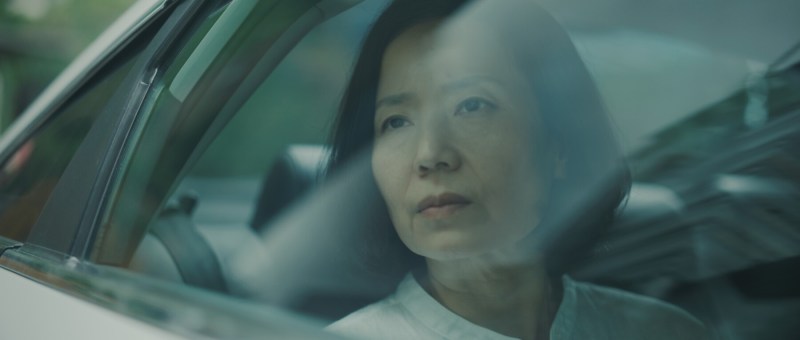
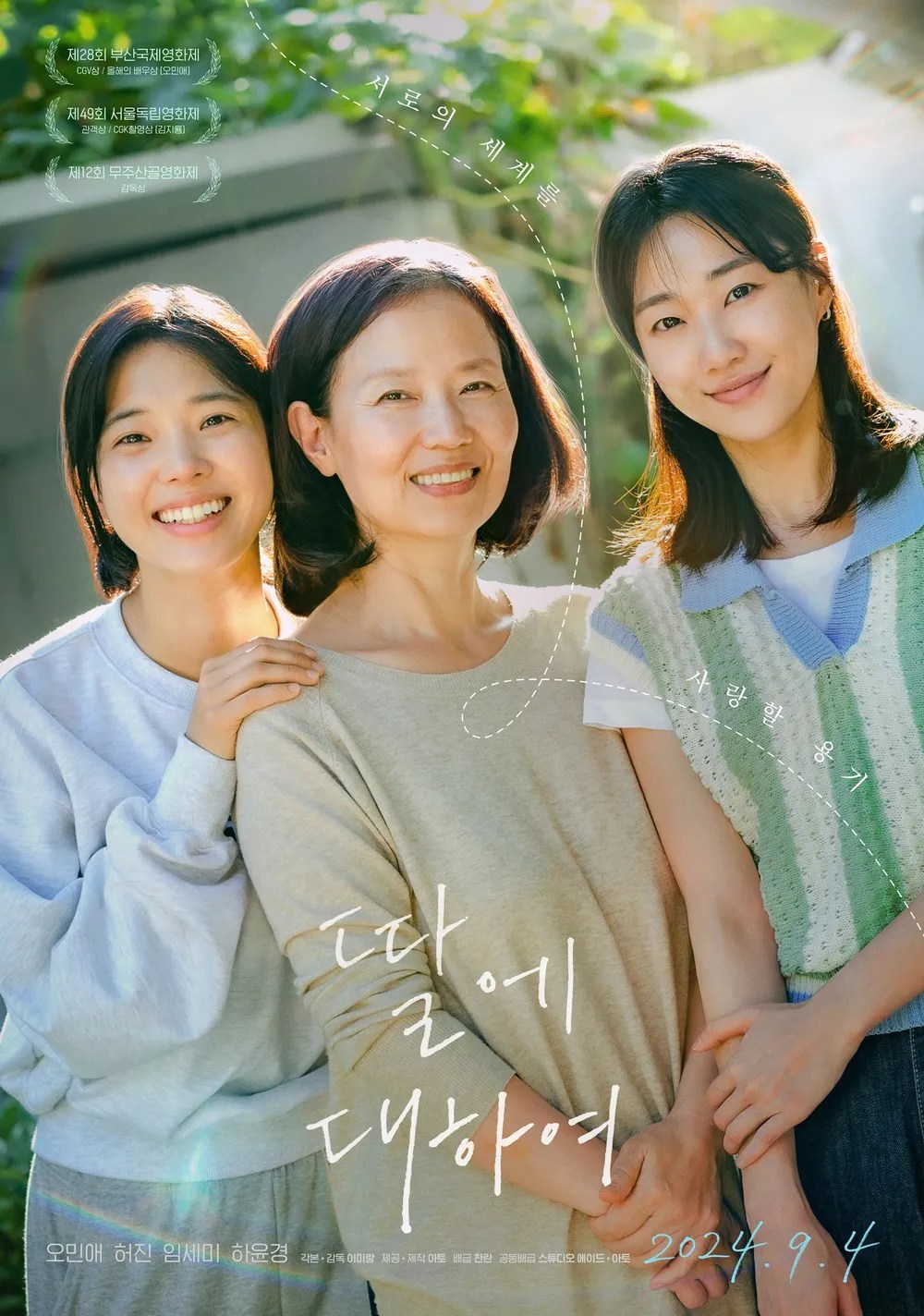
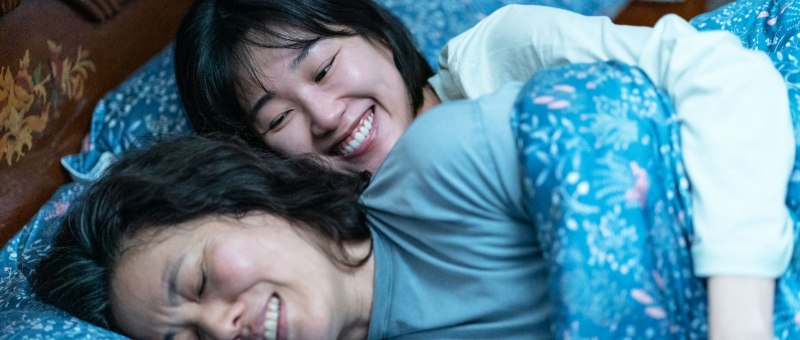
The unnamed mother (Oh Min-ae) at the centre of Lee Mi-rang’s Concerning My Daughter (딸에 대하여) has only one wish, that her daughter will find a nice man to marry and have a few grandchildren. But Green (Im Se-mi) is gay and has been in a relationship with her partner Rain (Ha Yoon-kyung) for the last seven years though her mother doesn’t seem to accept that what they have together is “real” believing it to be some kind of delusion that’s holding Green back from her happy maternal future. 

When she suggests Green move back in with her after her attempt to secure a loan to help her out with the rising cost of housing is denied, it doesn’t seem to have occurred to her that Rain would be coming too while it perhaps seemed so natural to Green that it didn’t occur to spell it out. Green can at times be obtuse and insensitive, unfair both to her mother and to Rain who bears the unpleasant atmosphere with grace and tries her best to get along with her new mother-in-law who is openly hostile towards her and makes no secret of the fact she would prefer her to leave. Of course, some of these issues may be the same were it a heterosexual relationship as the mother-in-law struggles to accept the presence of the new spouse in the family home and the changing dynamics that involves, but Green’s mother’s resentment is so acute precisely because her daughter’s partner is a woman. She cannot understand the nature of their relationship because it will produce no children and to her therefore seems pointless. 

While her attitude is in part determined by prejudice and a sense of embarrassment that her daughter is different, it’s the question of children which seems to be foremost in her mind. Another woman of a similar age at her job at a care home remarks on her maternal success having raised her daughter to become a professor, but she also says that only by leaving children and grandchildren behind you can die with honour. Green’s mother is the primary carer for an elderly lady, Mrs Lee (Heo Jin), who had no children of her own though sponsored several orphans none of whom appear to have remained in touch with her. Now ironically orphaned herself in her old age, Green’s mother is the only one who cares for her while the manager berates her for using too many resources and eventually degrades Mrs Lee’s access to care Green’s mother suspects precisely because she has no family and therefore no one to advocate for her. 

It’s this fate that she fears for her daughter, that without biological children she will become a kind of non-person whose existence is rendered meaningless. Of course, it’s also a fear that she has for herself and her tenderness towards Mrs Lee is also a salve for her own loneliness and increasing awareness of mortality. Green is her only child, and she may also fear that she will not want to look after her as she might traditionally be expected to because her life is so much more modern as exemplified by the bread and pasta the girls bring into her otherwise fairly traditional Korean-style home. On some level she is probably aware that if she continues to pressure Green to accept a traditional marriage they may end up becoming estranged and she will be in the same position as Mrs Lee, wilfully misused by a cost-cutting care industry because they know there’s no one to kick up a fuss about her standard of care.

Even so, it doesn’t seem to occur to her that Rain could care for her daughter into their old age. Resentfully asking her why they “have to” to live together, Rain patiently explains that in a society which rejects their existence, in which they are unable to marry or adopt children, togetherness is all that they have. Green is currently engaged in a battle with her institution which has fired her colleague on spurious grounds but really because of her sexuality with claims that some students are “uncomfortable” with her classes. The violence with which the women are attacked is emblematic of that they endure from their society while even colleagues interviewing her invalidate Green’s concerns because she too is “one of them,” in their prejudicial way of speaking. 

Green’s mother had also, rather oddly, said that her daughter wasn’t like that when Rain reluctantly explained her difficulties at work and again resents that she’s making waves rather than keeping her head down and getting on with her career. Her decision to jump in a car with boxes of biscuits intending to smooth things over with Green’s boss by apologising on her behalf bares out her old-fashioned attitudes, though she too is shocked by the violence directed at Green and her colleague. When her lodgers ask about Rain, she tells them she’s her daughter’s friend, while she avoids the question when her colleagues ask, still embarrassed that her daughter has not followed the conventional path as if it reflected badly on her parenting. 

Yet through her experiences with Mrs Lee and Rain’s constant, caring patience she perhaps comes to understand that her daughter won’t be alone when she’s old and that she too does not need to be so lonely now. There’s something a little a sad in the various ways Green’s mother is told that her attachment to Mrs Lee is somehow inappropriate as if taking an interest in the lives of those not related to us by blood were taboo even if it’s also sadly true that it’s also in Mrs Lee’s best interests to ask those questions to protect her from those who might not have her best interests at heart. What the film seems to say in the end is that we should all take better care of each other, something which Green’s mother too may come to realise in coming to a gradual, belated acceptance of her daughter-in-law if in part through recognising that they aren’t alone and that it’s a blessing that her daughter is loved and will be cared for until the end of her days.


Concerning My Daughter screened as part of this year’s London Korean Film Festival.

Trailer (English subtitles)
Gyeong-ah’s Daughter (경아의 딸, Kim Jung-eun, 2022)

“It’s not your fault. And it’s not mine either.” a young woman declares, finally freeing herself of internalised shame while trying to live under the oppressively patriarchal social codes of contemporary Korea in Kim Jung-eun’s quietly enraged drama, Gyeong-ah’s Daughter (경아의 딸, Gyeongaheui Ddal). As the title implies, the film is as much about parents and children and the various ways the older generation unwittingly fail the younger in mistakingly clinging to the conservative ideas that defined their own youth but bring nothing but misery to all as it is about the pervasive misogyny of the modern society. 

Pushed to the edge, Yeon-su (Ha Yoon-Kyung) exclaims that she cannot bear being Gyeong-ah’s (Kim Jung-Young) daughter sick of her overly possessive, controlling parenting along with her initial failure to support her during one of the most miserable moments of her life. As the film opens, Gyeong-ah facetimes her daughter and the pair chat cheerfully for a while even though Gyeong-ah criticises Yeon-su’s new haircut as she shows her around her new apartment showing off the cheerful lights she’s stringed above her bed. But then, the conversation takes a turn for the strange with Gyeong-ah suddenly insisting that Yeon-su prove she is alone, taking the phone to the bathroom to show her there’s no one hiding in there and then even out in the hall in the event that she knew her mother might ask. We can well understand why Yeon-su, who is a grown woman about to start her first job as a high school teacher, might prefer to keep her mother at arm’s length unwilling to take the trouble of sharing her private life with her.  

It’s this sense of distance that informs Gyeong-ah’s reaction when she suddenly receives a strange video from an unknown number and realises that it is a sex tape featuring her daughter. First of all she feels betrayed that Gyeong-ah lied to her when she repeatedly, and invasively, asked if she had a boyfriend while otherwise badgering her about not being married. But then she also feels ashamed, horrified, to see her daughter engage in behaviour that she views as somehow sordid. When Gyeong-ah confronts Yeon-su she blames her, disgusted that her adult daughter was sexually active in the first place but doubly so that she allowed herself to be filmed while doing it. 

The fact that Yeon-su knew her boyfriend, Sang-hyun (Kim Woo-Kyum), was filming and did not stop him is brought up repeatedly as if this is all her fault for being so stupid or perhaps perverse to have agreed to it. As we discover, Yeon-su broke up with Sang-hyun because he was possessive and controlling a fact he proved by continuing to harass her with relentless text messages and phone calls to which she did not respond. Eventually he turns up at her place of work with flowers and does not take well to Yeon-su’s attempt to explain that his actions are not “romantic” but have actively frightened her. As she gets into a taxi to leave, he further threatens her by giving the cab driver her address reminding her that he knows where she lives while making it clear to him that she’s his woman. “What a reliable boyfriend” the driver quips, chuckling that he probably suspects he might kidnap her. Yeon-su wisely decides to go to her mother’s instead, only to get another earful about the dangers of staying out too late alone. 

Sang-hyun’s decision to send the sex tape to all of Yeon-su’s close contacts including Gyeong-ah is another attempt to exercise control over her life as act of revenge in being scorned. A sense of patriarchal entitlement seems to surround her. When a (negative) pregnancy test is found at the school, the principal mutters about conducting some kind of witch hunt on the look out for teenage lovers adding that “girls today are shameless” as if the boy bears no responsibility or else is simply led astray by a “bad” girl who should be taught a lesson in feminine purity. Later in a cafe, Gyeong-ah hears a man remark that he’s “popular with women at work”, when he makes a move they can’t resist him. Unable to cope with rejection, Sang-hyun destroys Yeon-su’s life yet faces no consequences of his own. She can no longer bear to be looked at, distancing herself from her friends and taking a leave of absence from her job barely leaving a tiny one-room apartment and forced to pay exorbitant sums to a data security company to try and erase the video from the internet knowing it will never really be “over” because someone could always just reupload it. 

On going to the police she’s again asked if she consented to the video being filmed and told that in practice no one really gets convicted for these crimes because they just say their phone was stolen or that they were hacked. Even Yeon-su’s lawyer later pressures her to settle out of court while she’s further harassed by Sang-hyun’s otherwise well-meaning mother who is forced to realise that she’s raised such a fragile boy. Gyeong-ah in turn is forced to reckon with her maternal failures, that though Yeon-su had supported her through her abusive marriage she was not there when she needed her and in fact tried to reinforce the same oppressive social codes that caused her nothing but misery all through her life. When the report of a woman who had killed her husband after long years abuse being sentenced to a lengthy prison term plays on the television in a cafe, even Gyeong-ah’s best friend exclaims that a woman should stick with her husband no matter what unable to understand what might have motivated the woman’s actions. 

Yet Gyeong-ah continues to ask her daughter why she’s not married, forcing her into this selfsame cycle of abuse and control. The old man that Gyeong-ah looks after has several sons, yet they’ve hired a middle-aged woman to look after him while his daughter, a successful lawyer, looks in occasionally and beats herself up that she’s somehow failing in her duty of care. She explains that she didn’t want to get married, but might have liked to have children, eventually sympathising with Gyeong-ah’s dilemma and offering some free life and legal advice to an increasingly depressed Yeon-su, though Gyeong-ah had perhaps judged her implying that she was wrong to choose a career over becoming a wife and mother. Gyeong-ah is beginning to realise the mistake in her complicity, but as Yeon-su says it’s not her fault and nothing good will come of it until each of them learns to stop blaming themselves so they can move on with their lives. When Gyeong-ah finally removes the family portrait from her wall and leaves it out for the bin men, just as Yeon-su had tried to do with the remnants of her relationship with Sang-hyun, it’s as if she’s freeing herself from the outdated patriarchal social codes that convinced her she had no right to resist or claim her own agency over her life. Yeon-su has perhaps taught her a valuable lesson while rediscovering her self-confidence and fighting back against the sheer entitlement of the fragile men that thought it was their right to ruin her life by shaming her into submission. 


Gyeong-ah’s Daughter screened as part of this year’s San Diego Asian Film Festival.

International trailer (English subtitles)

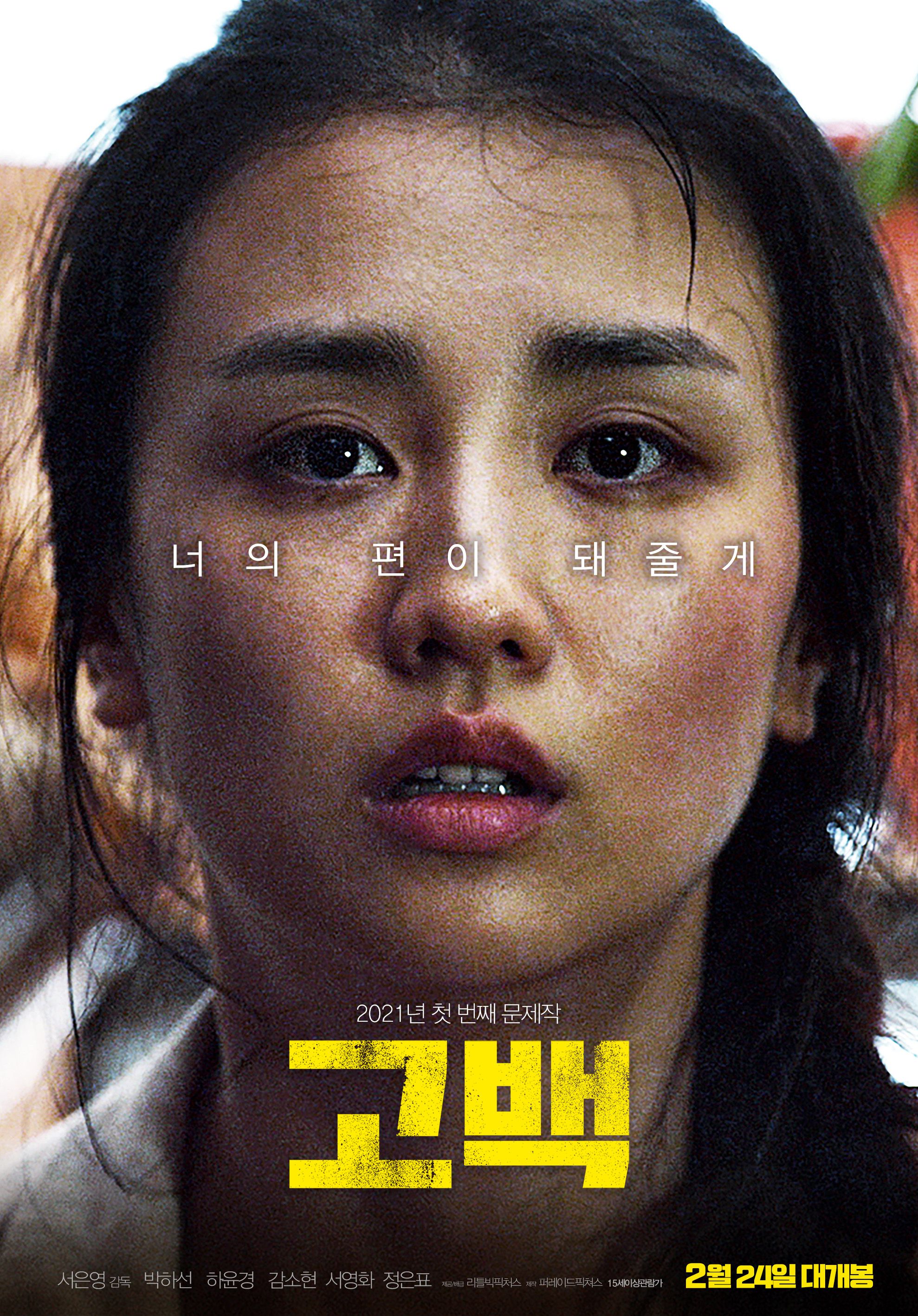
Go Back (고백, Seo Eun-young, 2020)

“I guess bruises disappear because they sink deep inside of you” a traumatised woman explains in Seo Eun-young’s emotionally complex social drama, Go Back (고백, Gobaek). Literally translating as “confession” the film’s title hints at a neater conclusion than is ultimately offered in this complicated web of trauma, abuse, and patriarchal violence. While perhaps making an awkward defence of law enforcement through its idealistic if sometimes authoritarian heroine, Seo never shies away from suggesting that women suffer disproportionately in a society which often refuses to take their safety seriously. 

This message is brought home in the opening sequence in which rookie policewoman Ji-won (Ha Yoon-kyung) is out jogging while a news item plays on a large screen reporting on the investigation into the murder of a female tourist which the police have apparently bungled. Shortly after she runs into another woman who seems troubled with stains around the rolled sleeves of her shirt which look like they could be blood. The woman recognises Ji-won as a policewoman, though she can’t remember having met her before, but refuses her offer of help before leaving with a little girl. When a ransom note is sent to the media asking everyone in the country to donate a token amount of money to save a kidnapped child, Ji-won can’t shake the idea that the woman is somehow involved. 

The woman, O-sun (Park Ha-sun), is a social worker at a nearby welfare centre where she has acquired a reputation for being somewhat volatile, on one occasion having been arrested for grabbing the father of one her clients around the neck. O-sun and her boss Mi-yeon (Seo Young-hwa) are worried that a local girl, Bo-ra (Gam So-Hyun), is being physically abused by her father who has an alcohol dependency problem but are apparently powerless to do much about it despite the fact that their apartment is filthy and Bo-ra often misses school. Their problem is that many people still believe that physical punishment is an appropriate method of discipline and so it’s easy for abusers to insist they have done nothing wrong even when it’s clear there is an abusive pattern of behaviour in play, while knocks and bruises are often written off as the result of horseplay. Even a doctor’s evidence is apparently not enough to have a child removed from an abusive environment, another client of theirs hospitalised and needing cranial surgery yet likely to be returned to his parents against medical advice insisting his injuries can only be the result of longterm abuse. 

This attitude contributes to a claim made by both Ji-won and O-sun that people are often too afraid to ask for help from the authorities, the tacit explanation being that they don’t believe the authorities can help them or may in fact make the situation worse. Ji-won’s theory is that victims don’t report crime because they fear reprisals from their aggressors, something later born out by her attempt to help a young woman after spotting a suspicious man lurking outside her house while off duty. Ji-won flashes her badge and scares him off, but the man comes back later and this time he doesn’t wait outside. The woman had been reluctant to accept her help fearful that just that sort of thing might happen if he saw her talking to the police. Meanwhile she finds herself subject to low level sexist micro aggressions at work where they make her the literal poster girl for community policing while refusing to let her go on night patrol. Like O-sun she’s accused of caring too much and failing to regulate her emotions, but is also patronised by a male detective pissed off after she solves cases he couldn’t be bothered to investigate properly seemingly wounding his male pride and undercutting his authority by overstepping her responsibility as a uniformed officer. 

Nevertheless, despite the incompetence and disinterest exhibited by her male colleagues, Ji-won’s shining idealism becomes an awkward defence of law enforcement which skews accidentally authoritarian in her fierce love of justice. Brought in to discuss policing as a career, she advises a class of primary school children to snitch on their friends if they spot them doing something “suspicious” like harming animals or starting fires which might seem fair enough but also insists that lack of eye contact indicates guilt which might further discourage shy or traumatised kids from asking for help. She criticises the male officers for being too concerned with punishing criminals and not enough with protecting the innocent, but also insists on retribution rather than appreciating that keeping people safe is a more complex matter than simply locking “bad people” away.

Acutely aware of the legacy of her own trauma, O-sun is desperate to save Bo-ra from the same fate but is at a loss as to how given the resources available to her under the law. Bo-ra meanwhile worries about all the other disadvantaged children and hopes someone’s going to do something to help them too. All is not quite as it seems, but Ji-won and O-sun ultimately discover a sense of solidarity in their mutual desire for equality in justice while uniting to protect Bo-ra from the legacy of trauma. Tightly plotted, Seo’s mystery drama casts a patriarchal and indifferent society as its primary villain but also makes heroes of those who try, however imperfectly, to help those who need it no matter what society might say.


Go Back screens in Chicago on Sept. 24 as part of the 13th season of Asian Pop-Up Cinema 

International trailer (English subtitles)