Shadow of Fire (ほかげ, Shinya Tsukamoto, 2023)

The ruins of a firebombed city become a purgatorial space haunted by tortured souls who cannot escape the traumatic wartime past in Shinya Tsukamoto’s eerie voyage through post-war Japan, Shadow of Fire (ほかげ, Hokage). Even the small boy (Ouga Tsukao) who desperately looks for a place to belong is plagued by nightmares of the flames that took his home and family while it otherwise seems that those around him live their lives in the shadow of a war which for many is still far from over. 

This state of ruination is immediately brought home to us by the heightened presence of sound. Not only do the cicadas buzz amid the scorching heat of an oppressive summer, but we constantly hear the sound of people walking over rubble or the clinking of broken glass. The unnamed woman we first meet (Shuri) lives in a room behind a small bar which appears to have scorch marks across the fusuma, a dank and dingy place filled with hopelessness and despair. The woman herself has a vacant look, a little dead behind the eyes either numbed with the sake a neighbourhood man brings her as pretext for extracting sexual favours or simply too tired of life to think much about it. Though she technically runs a bar, it’s more of a front for her only means of supporting herself, casual sex work, though as later becomes apparent she too may have been slow poisoned not only by the war but it’s immediate aftermath and the lingering traumas of those left behind and those who returned. 

The boy who eventually comes to stay with her remarks that those who did not come back did not turn into scary people, as if they were somehow lucky to have escaped this purgatorial hellscape. Later he wanders through the black market and discovers an abandoned tunnel filled with returned soldiers who stare out at him with vacant eyes sitting with eerie stillness like dormant zombies. He spots a man among them that he knew well, a young soldier (Hiroki Kono) who had been a teacher before he was drafted and took a maths textbook with him to war as a kind of talisman that reminded him he’d survive and teach again. The soldier had formed an odd kind of family unit with the woman and the boy, almost as if the husband she lost in the war and son who died in the firebombing, had been returned to her but his trauma refuses to set him free surfacing in moments of unexpected violence that hint at war’s realities. 

Later the boy meets another man with a traumatic past though one who sees himself as both victim and villain, resentful towards himself and the militarist regime that convinced him to betray his humanity and do dreadful, terrible things in its service. Tellingly this man, Shuji (Mirai Moriyama), is the only one granted a name. Perhaps names are only for the living, there’s a part of Shuji that is painfully alive a way that others aren’t even as he fixes his sights on his revenge as if it would somehow restore the humanity that was taken from him. Completing his quest, he lets down his hair and proclaims that for him at least the war is finally over. His commander, meanwhile, appears to have been living a fairly nice and successful life reminding him that he should stop dwelling on the past because it was after all a war and such things are only to be expected.

Shuji uses the boy in a way that seems counterproductive, taking advantage of the gun he’d found to help him take revenge on war. The woman tries to change the boy’s path, instructing him not to steal but to work honestly for his pay and to try to be better than this infinitely corrupted world. He wanted to be her protector, in his way acting as guide trying to free those around him from the purgatorial space of ruin and destitution but when he asks a medicine seller if he can exchange his money for something that will cure sickness he is told it’s not enough. He then tries to buy a dress for the woman, as if anticipating the salvation through consumerism that will eventually arrive though the constant sound of gunshots from the black market might indicate that for some at least there’s only one way out. The old man who visits the woman explains that he only approaches the ones who look okay, but that in the end you never really know. Shot in the half light or caught from behind the previously friendly take on an almost demonic intensity, wandering ghosts or broken souls already half consumed by the flames that in their minds at least are still burning and casting their shadows over the scorched earth of a traumatised society.


Shadow of Fire screened as part of this year’s Japan Foundation Touring Film Programme.

International trailer (English subtitles)
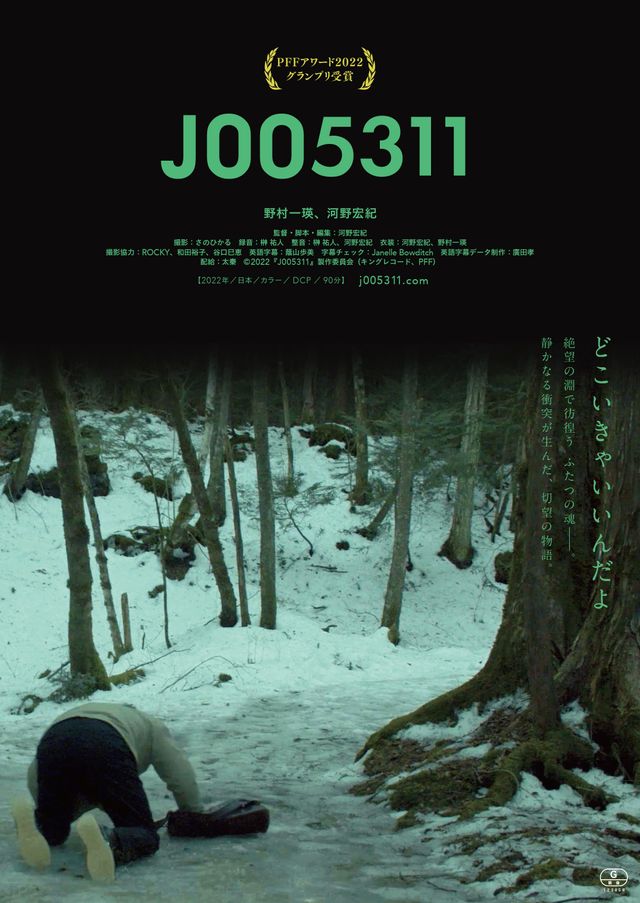
J005311 (Hiroki Kono, 2022)

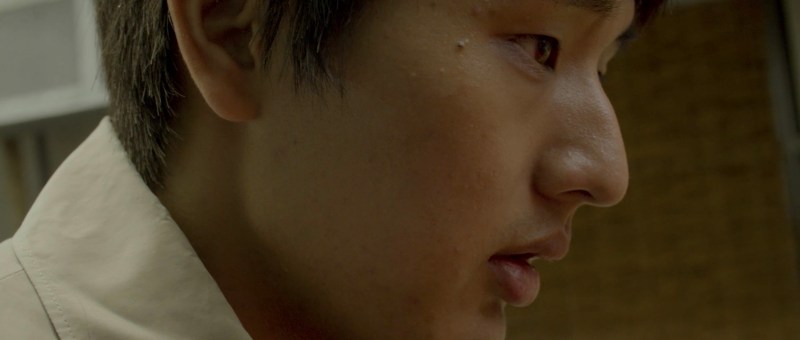
If a stranger offers you a large amount of money to drive to an undisclosed location, what would you say? Hiroki Kono’s J005311 is so named for a bright new star born when two stars already dead collided which goes some way to explaining the central relationship between the two men at the film’s centre. Though they rarely speak, a kind of connection arises between them that changes them both in unexpected and unexplained ways but perhaps gives each a new sense of hope and possibility. 

After some kind of alarming phone call, Kanzaki (Kazuaki Nomura) throws away various things in his apartment and leaves as if not expecting to return. He goes out and tries to hail a cab, but it seems as if the driver refuses to take him where he wants to go. Kanzaki slowly walks away and sits down wondering what to do next before catching sight of a young man running furiously across the road after snatching a woman’s handbag. Kanzaki wouldn’t usually be the sort to chase a thief, but tears off after the man and makes him a rather unexpected offer. He will pay him a million yen if only he’ll agree to drive him to a location near Mount Fuji around two hours away. The man is understandably suspicious and in fact tries to snatch the bag Kanzaki had the money in but is ultimately unsuccessful and agrees to the drive.

No real explanation is given for why Kanzaki is prepared to pay this large sum of money to get someone to drive him rather than taking public transport at least part of the way or booking a car through some kind of chauffeuring firm where long fares are more usual. It may be because he’s afraid whoever called him will find him on a train or bus, which would also explain why he leaves his phone behind at a service station, or perhaps he just wants company and companionship on what is looking increasingly like a final journey. Kanzaki tells the man, Yamamoto (Hiroki Kono), that he’s going to meet “a friend” which is a fairly unimaginative lie he doesn’t believe for a second though he for the moment he lets it go. Later Yamamoto notices he has a rope in his bag while we also see Kanzaki loop its strap around his neck and try to strangle himself all of which adds grim import to his final destination. 

For his part, Yamamoto is wary of the arrangement and also of Kanzaki who is awkward in the extreme. He tells Kanzaki that he can buy whatever he likes with the million yen yet when he asks what he’ll use it for he says he doesn’t know. He says he likes work that’s “easy” like construction or deliveries while evidently supplementing his income with the purse snatching which he remarks gets easier each time you do it. Several times it seems as if Yamamoto may run off with the money, or just run off leaving Kanzaki stranded, but eventually comes back if for unclear reasons that nevertheless suggest he’s begun to care Kanzaki and feels to an extent responsible for him while fearing what awaits him at his destination. 

Kanzaki too feels responsible for Yamamoto, eventually asking him to give up bag snatching as if implying that he’s better than that and ought to respect himself more. After tipping copious amounts of sugar onto his food at a rest stop, Kanzaki shoves a whole pastry into his mouth and seems as if he’s about to cry perhaps feeling rejected or that he overstepped the mark with Yamamoto before suggesting that he might want to walk the last part alone only for Yamamoto to once again return and follow him. In a sense they begin to save each other, bonding in a shared sense of despair if exchanging few words and emerging with a new sense of possibility forged by their unexpected sense of connection. Kono follows the two men with restless intensity, the camera swooping POV style or clinging tightly to them in the confines of the rented car while eventually seeming to vibrate in the poignant closing scenes. At times obscure, the film nevertheless has a wintery poetry and melancholic soul and ends on a note of silent serenity as the two men prepare to move on though who knows where to. 


J005311 screened as part of this year’s JAPAN CUTS.

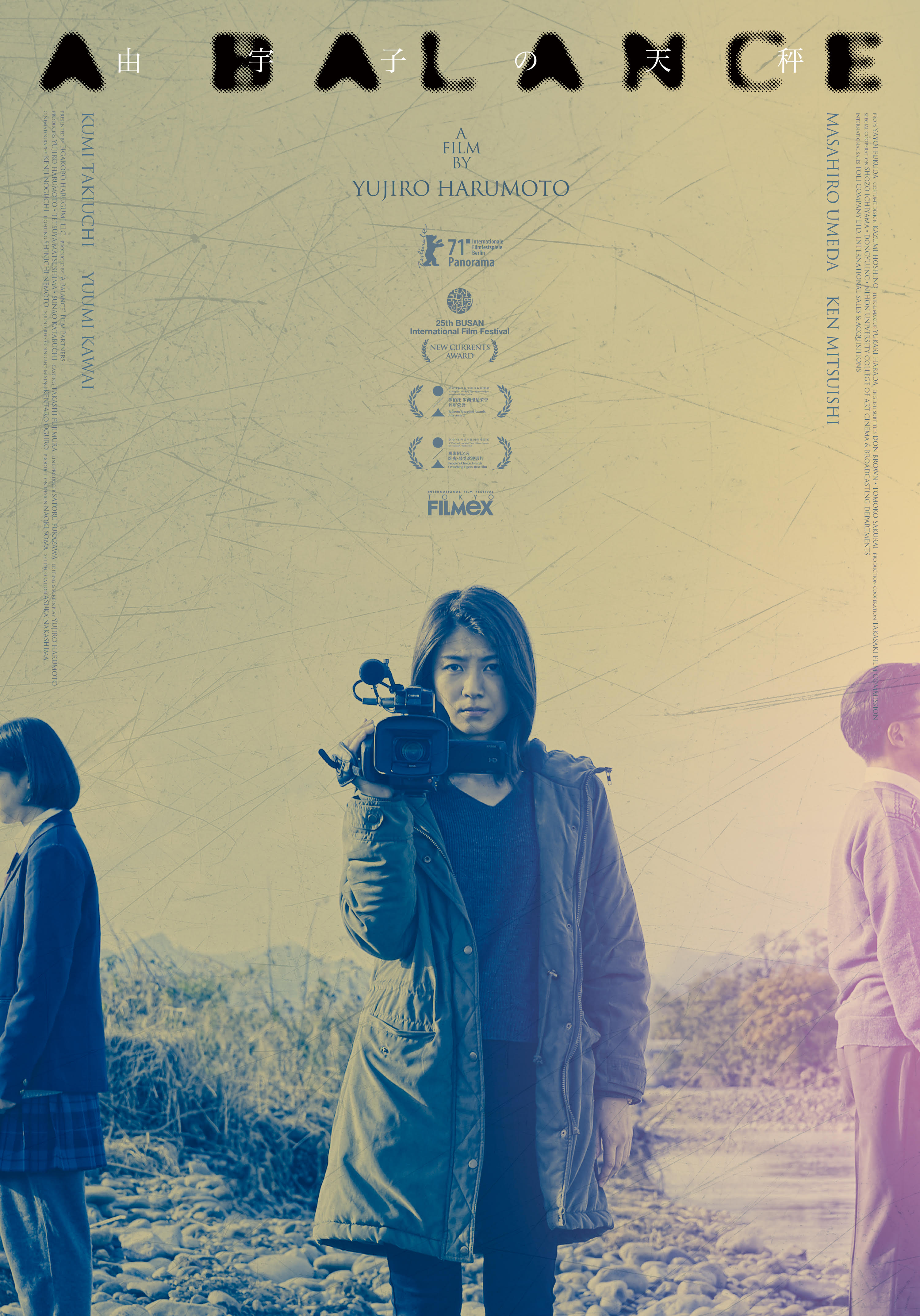
A Balance (由宇子の天秤, Yujiro Harumoto, 2020)

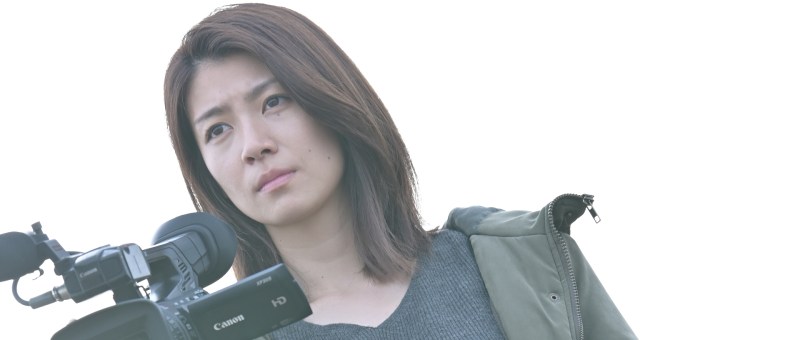
“What’s moral isn’t always what’s best” according to the morally compromised heroine at the centre of Yujiro Harumoto’s A Balance (由宇子の天秤, Yuko no Tenbin). To Yuko (Kumi Takiuchi), a balance is what a documentarian should strike, not taking one side or another but shining a light on hidden truths. The irony is that in seeking to expose one truth she accidentally stumbles on another uncomfortably close to home and although her job is to highlight injustice finds herself making the decision to do the opposite concluding that in this case, and perhaps many others, keeping quiet may actually be what’s best for victims, victimisers, and everyone in-between. 

As the film opens, Yuko is shooting a potentially manipulative interview with the grieving father of a young woman, Hiromi, who took her own life after becoming the subject of scandal and rumour when it was revealed she may have been involved in an inappropriate “relationship” with a teacher. The teacher, Mr. Yano, eventually took his own life too leaving behind him a note proclaiming his innocence and explaining that death is the manner he has chosen for his resistance. Yuko is sympathetic to Mr. Hasebe (Yuya Matsuura), but also perhaps verging on the unethical in the depth of the questions she asks him of his daughter’s death. Soon enough a conflict emerges between the nature of the documentary Yuko would like to make which is more contemplative than polemical, and the “routine piece on bullying” the TV studio think they’ve commissioned. Consequently, we see the suits redacting problematic lines in Yuko’s scripts in editorial meetings, misrepresenting Mr. Hasebe’s words in removing his criticism of mass media which he blames for hounding Mr. Yano to his death and thereby depriving him of answers. 

Yuko remains determined to provide “a balance” in interviewing Yano’s surviving family members including his mother Toshiko (Mitsuko Oka) and sister Shiho (Misa Wada), but discovers them tyrannised by the treatment they’ve received at the hands of the media and a vindictive society. Toshiko near collapses towards the end of the interview when asked if there was anything the family could have done to prevent this tragedy happening, inviting Yuko to visit her at home whereupon she discovers her living in near total darkness, afraid to go out lest she be recognised and explaining that she has few possessions in case she has to move again in a hurry because someone has exposed her address online. This little old lady is living in terror because of something her son was accused of which later caused him to take his own life and even that did not end the torment for his family. 

Meanwhile, in an ironic touch, Yuko discovers that a young woman, Mei (Yumi Kawai), attending the cram school owned by her father where she also teaches part-time has become pregnant and claims her father, Mr. Kinoshita (Ken Mitsuishi), is responsible having accepted sex in lieu of her overdue fees. Yuko does not want to disbelieve her and confronts her father, holding up her iPhone as a record, who admits that what Mei has said is true. Yuko tells herself she’s doing what’s best for Mei, bonding with her as two women who lost their mothers young (as did Hiromi), understanding that she may not want to go to the authorities because of the lingering stigma of being involved such a scandal. But she also can’t deny that her actions are self-interested in that she doesn’t want her doc pulled or her career messed up by her father’s transgression, something which gets harder to ignore when she discovers Mei’s pregnancy may be high risk and requires immediate medical treatment from a proper hospital to ensure her safety. 

The lines become ever more blurred, Yuko developing a quasi-maternal relationship with the motherless Mei which is in its way perfectly genuine even as she pays their overdue gas bill and worries about her potentially abusive father (Masahiro Umeda), but is nevertheless coloured by her desire both to cover up this harmful secret and to atone for her father’s wrongdoing. For his part, Mr. Kinoshita wants to confess but as Yuko points out he’d be doing it to unburden himself which in effect would merely shift the burden onto others including Mei but also Yuko herself, her documentary team, the other students at the cram school, and in effect everyone else they’ve ever known. 

Yet can Yuko be an effective arbiter of the truth especially when, as it turns out, neither she nor anyone else is being entirely honest? Her job is to present information in such a way that conclusions can be drawn, but she is herself making decisions in selecting the information she presents and the manner in which she presents it. She may resent the interference of the studio, but in reality they aren’t doing anything she hasn’t already done even if they are acting less out of a sense of integrity than commercial concern. “Whatever we put together is the truth” as her exasperated producer (Yota Kawase) finally insists. It’s in this same conflict that she begins to lose her sense of balance, trying to help those victimised by an unforgiving society while attempting to protect herself from unwelcome consequences of social scandal aided and abetted by the industry in which she herself works. “Ask them who is the real victimiser” Toshiko asks of Yuko taking aim at the mass media who have shamed her into a life of total darkness, but all Yuko can in the end do is turn her camera back on herself in contemplation of her shattered integrity.  


A Balance screens Aug. 12 as part of this year’s New York Asian Film Festival.

Original trailer (English subtitles)

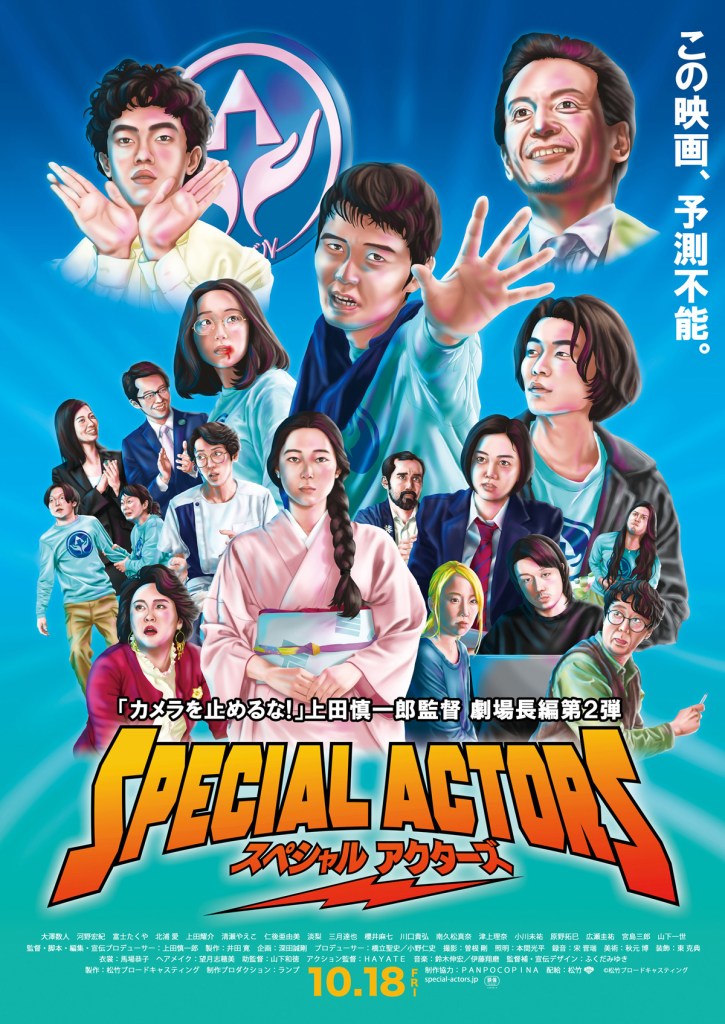
Special Actors (スペシャル アクターズ, Shinichiro Ueda, 2019)

When your made on a shoestring indie debut becomes an accidental international phenomenon, no one could really blame you for succumbing to imposter syndrome. Shinichiro Ueda’s One Cut of the Dead, a meta comedy with high concept conceit, delighted fans around the world but rather than slide into summer tentpole territory Ueda remains true to his roots with follow up feature Special Actors (スペシャル アクターズ) once again developed through actors’ workshops and owing a significant debt to contemporary stage comedy.

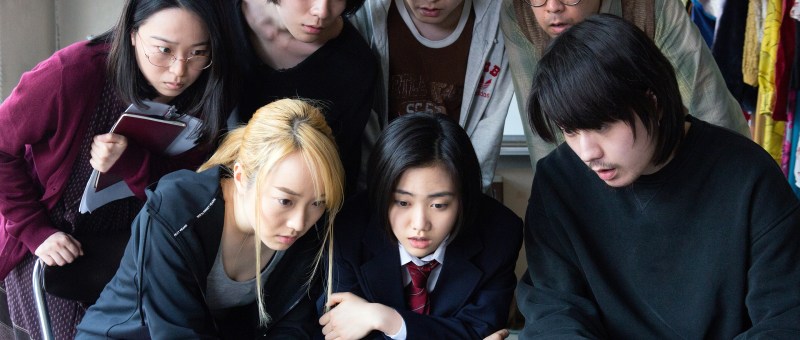
Our dejected hero, Kazuto (Kazuto Osawa), is an anxious young man burdened with PTSD from childhood trauma that causes him to faint when he becomes overly stressed or is confronted by an overbearing, if not actually violent, male authority figure. He dreams of becoming a hero who can protect people like Rescue Man, the star of an American tokusatsu-style show he’s obsessively watched dubbed into Japanese since childhood, and is determined to become an actor only his habit of fainting mid-audition constantly frustrates his ambitions. Already behind on his rent and about to be fired from his part-time job as a security guard on the grounds that he didn’t disclose his “illness” when he applied, Kazuto is reunited with his estranged younger brother Hiroki (Hiroki Kono), also an actor, who offers to introduce him to his agency, “Special Actors”. In addition to the usual TV and advertising work, Special Actors speciality is renting out talent for “real” as in providing professional mourners, bulking out theatre audiences with laughing stooges, and engineering long queues outside previously empty restaurants. 

Kazuto isn’t quite convinced, not only because it seems like anxiety central, but because it’s more than a little bit shady. The lead “scenario” writer was once a conman, and you can’t get away from the fact this is all quite manipulative and essentially unethical. Forced to take the job because of his financial predicament, he finds himself involved in various plots to change problematic behaviour at the request of well-meaning relatives such as a mother desperate to rescue her daughter from frittering all her money away at host bars. But are the Special Actors really any different than a host at a host bar who is after all only playing a role, as the young woman must know even if she has for some reason been taken in by it? Perhaps they’d be better to find out what is fuelling her obsession rather than coming up with some hokum involving a fake shaman to convince her that her behaviour is dangerous on a cosmic level. 

The moral ambiguity only deepens when the team take on their biggest challenge yet, taking down a shady cult at the request of an orphaned teenage girl whose sister seems primed to give away the family inn. Abruptly shifting into the realms of the espionage thriller reimagined as theatre, Ueda concocts an elaborate heist as the Special Actors infiltrate with the intention to expose. The central irony is of course that in practical terms there isn’t so much difference between them. They are both “lying”, manipulating vulnerable people and doing it for financial gain. “Acting is a big lie” the irate director had screamed in Kazuto’s face, “you have to mean it”. Is the shady cult merely “theatre” taken to an extreme, and if so who if anyone should be held responsible?

Ueda isn’t so much interested in these themes as the ironic potential of their latent comedy, stitching together a series of theatre skit set pieces working towards the epic finale in which the hero, Kazuto, learns to put on his cape and save the day by overcoming his internal “villain” in the shape of his abusive father. Like the cult, the Special Actors are also promising salvation or at least liberation from behaviours which others find problematic regardless of the target’s own wishes or desires even if in the case of some it may be for their own good, a more elaborate form of role play than that enacted in a therapy session. We are indeed all “acting” to one extent or another and you can never be sure that anyone is who they say they are because life itself is theatre. Shot with a perhaps thematically appropriate TV drama aesthetic, Kazuto’s zero to hero journey is pure wish fulfilment fantasy, but even if never reaching the perfectly constructed heights of One Cut of the Dead is undeniably entertaining. 


Special Actors is available to stream in the US until July 30 as part of this year’s Japan Cuts. Tune in for the live Q&A (available worldwide) after the movie on July 17 (also available afterwards on demand)!

Original trailer (English subtitles)