
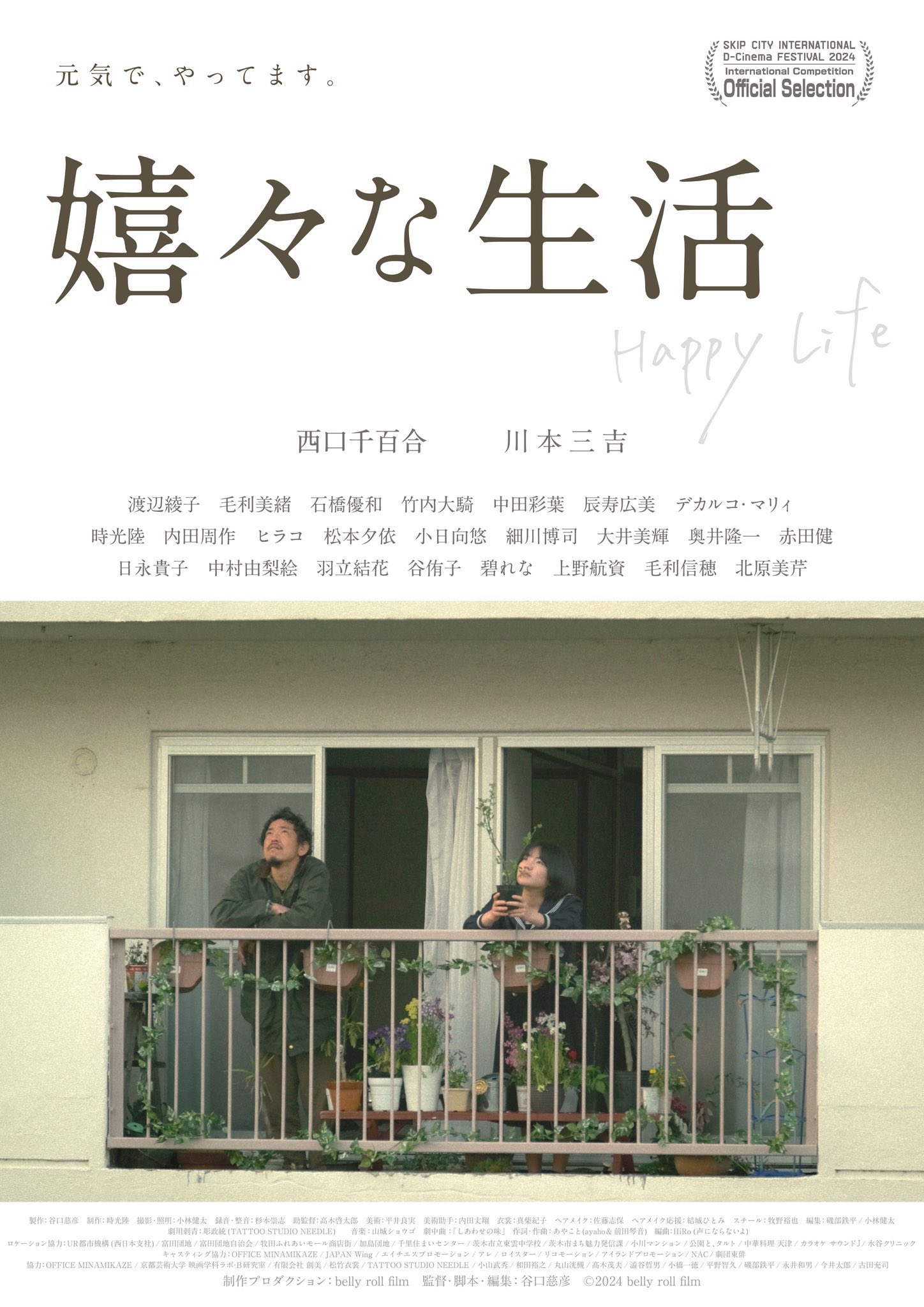
A teenage girl finds herself responsible for her family after her mother’s sudden death and father’s descent into depression in the ironically named Happy Life (嬉々な生活, Kikina Seikatsu). Filmed with gritty realism, Yoshihiko Taniguchi’s indie drama explores life on the margins but also the judgement and stigmatisation of those who are struggling, along with the echoing effects of parental neglect and a wider lack of compassion and understanding in the community.
Kiki once had a happy life but after her parents moved into a larger apartment on a housing estate, it all seemed to go wrong. Her mother died suddenly, and her father Kensuke has become depressed which has left him unable to work and plunged the family into financial insecurity. As the oldest of three siblings, Kiki has had to pick up the strain with the consequence that she has little time to think about her own future. She tells a friend that she doesn’t have any dreams, but it maybe more that she already feels them to be impossible. She’s more or less stopped going to school and is checking out ways to earn a lost of money fast including a few jobs for a dodgy relative of her friend Miyu who keeps trying to talk her into taking up compensated dating or embark on a blackmail plot of their unpleasant head teacher they say is at any rate at least over friendly with pupils.
Mr. Maehara is also harassing Kiki’s seemingly similarly depressed teacher who has a habit of putting things in his letter box as revenge. Though he chided her for not addressing Kiki’s truancy problem or investigating whether there might be issues at home, Ms. Kozuma does later take an interest in Kiki and her family which does allow her to begin emerging from her own depression after quitting her teaching job. Lifting some of the burden from Kiki, she helps out by cleaning the apartment and cooking for the family while encouraging Kensuke to apply for benefits and seek psychiatric treatment for his declining mental health.
Those on the danchi are supportive in some ways and in others not. Many of the neighbourhood women feel sorry for the children and often give them leftover food, but at the same time they’re wary of Kensuke and have lost both patience with and sympathy for him. The family is now several months behind on the rent and some of the other residents dissapparove of the family being allowed to go on living there while there is no immediate sign that their living standards will continue to rise. A window herself, Mrs Miyake takes Kensuke to task for failing his children but he doesn’t have much of an answer for her, while Ms Kozuma tells her they should be patient because Kensuke ill and can’t simply snap out it to resume a paternal role over his family.
For his own part, he resents Ms Kozuma’s help because it highlights his own failing but is unable to do anything about his situation while lost in dreams of his late wife. Matters come to a head when he inexplicably takes a little girl’s scooter and throws it on the ground which proves the last straw for a community that’s already come to think of him of “scary”. The irate father of the little girl goes so far to suggest that the family should leave because Kensuke makes people “uncomfortable”, even though his own aggression makes him dangerous and unpredictable. Kiki tries to talk back and defend her father, but the other man simply tells Kensuke that he needs to teach his kids some manners because his daughter’s got problems too, signalling the extent to which anyone who doesn’t fit the norm is not really welcome in this society.
Even so, thanks to the help of Ms Kozuma and means of connecting with her late mother, Kiki gains the courage to dream, too, deciding she will go to high school after all and would like to become a nurse. Though often bleak in its depiction of the family’s mounting disintegration, the film does allow a ray of possibility to leak through suggesting that Kiki will be able to rediscover a happy life sometime in the future even if right now she doesn’t even have the time to imagine in.

Happy Life screens 30th May as part of this year’s Nippon Connection.
Trailer (English subtitles)
 Windows on Worlds