The 12th Suspect (열두 번째 용의자, Ko Myoung-sung, 2019)

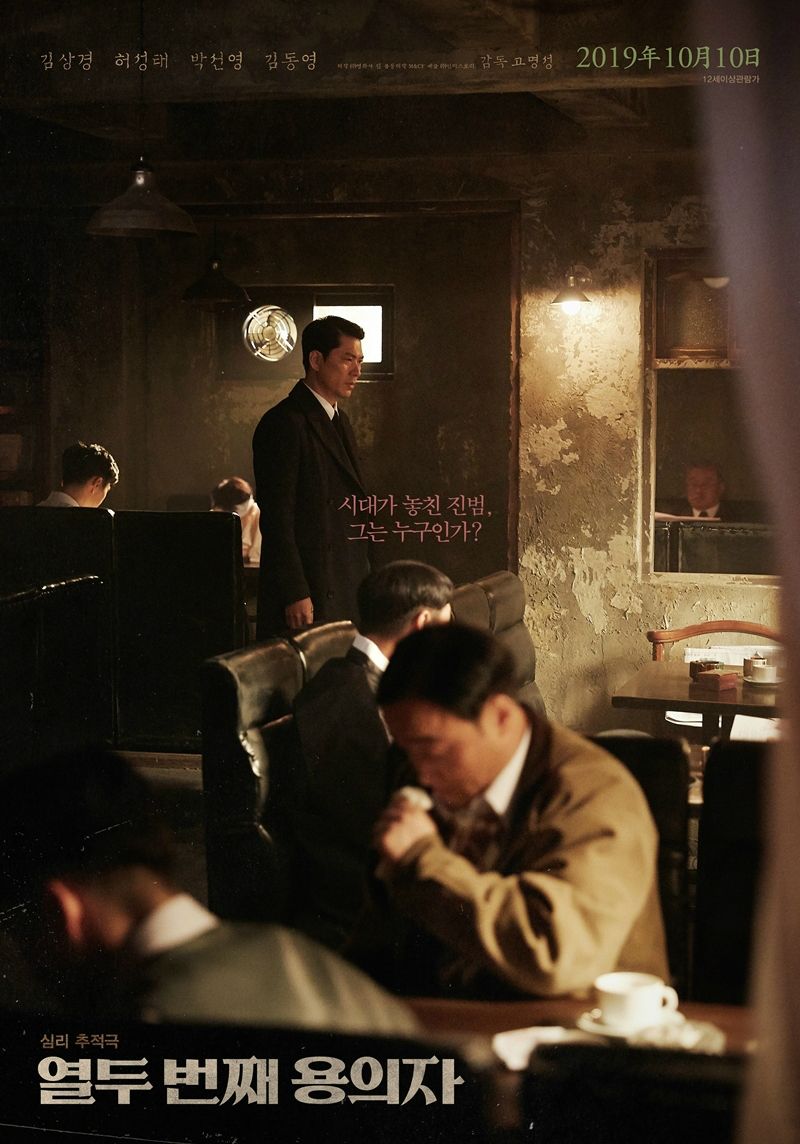
An inspector calls on a small group of artists in the immediate aftermath of the Korean War in Ko Myoung-sung’s taut psychological thriller, The 12th Suspect (열두 번째 용의자, Yeoldu beonjjae Yonguija). Set almost entirely within a tiny tea house, Ko’s steely drama lays bare the contradictions of the new society in slide towards authoritarianism which is itself a product of the failure to deal with the legacy of the colonial past while preoccupied about the “communist” threat in the quite literally divided nation. 

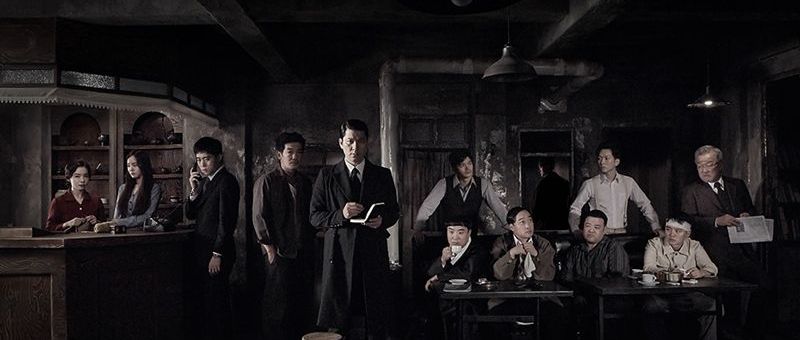
The Oriental Teahouse is home to a collection of poets, painters, and Bohemians seeking refuge from the everyday difficulties of life in the post-war city. Their peaceful idyll is rocked by the revelations that one of their number, Doo-hwan, died on a mountain the previous evening most likely murdered. As it turns out, no one seems to have liked Doo-hwan very much. He was “hateful and ignorant” not to mention a bad poet though many are sceptical of the story wondering if he might simply have had an accident. In any case, the newcomer to the cafe turns out to be a policeman, Ki-chae (Kim Sang-kyung), who confirms that Doo-hwan died of a gunshot wound and sets about asking a series of increasingly intense questions about his relations with the cafe’s denizens. 

To begin with, Ki-chae seems to be a Columbo-like avuncular detective, polite and sympathetic in his questioning until revealing his true purpose at which he turns into something of a firebreathing demon with a very particular vision of “justice”, hunting down “communist spies” in order to keep the South safe. As the murder weapon appears to be a Soviet-issue pistol, he assumes the killer(s) may be linked to the North accusing one of the patrons of having aided and abetted a cousin who was on the other side while throwing a book on Stalin at a university professor who desperately tries to explain that he’s had it since studying in Russia in his youth when times were different. 

Meanwhile, the policeman’s authoritarian sense of justice is gradually exposed as a kind of fascim born of his experiences under Japanese colonial rule. Doo-hwan may have died because of his actions during in the war when he collaborated with Japanese officers agreeing to send young men from his village as conscript soldiers to die for Japan on the frontlines or else as exploited slave labour in the coal mines. Ki-chae is hiding his own dark past while his quest for justice is riddled with corruption masked as patriotism as he vows to wipe out the “communist” threat in order to build a more secure Korea. “The existence of communists is a great misfortune to this country and also a danger” he adds before descending into a violent rage stamping on the face of his interviewee. 

His almost hysterical anti-communism is manifested in a general hatred for the kind of people who frequent the Oriental Teahouse, firstly taking them to task for their lifestyles in a time of chaos and privation while later viewing them as cowardly shirkers evading their duty to go to war. “I won’t let you ruin our country” he snarls while simultaneously embarking on an ill thought through argument that the communists are unfairly benefitting from the dire economic situation to “provoke good people”. He justifies his actions in insisting that everything he does is in order to prevent another “horrible war” while continuing to intimidate them into some kind of confession. His questioning reveals the petty jealousies and minor tensions between the artists along with the unreliability of their testimony while eventually exposing their small acts of resistance, cafe owner Suk-hyeon (Heo Sung-tae) determined to stand up to authoritarianism rather than forever be oppressed by it though others it seems are frightened enough by the potential dangers of rebellion to consider turning on their friends and allies. Locked in the tiny cafe with two soldiers blocking the exit, the artists are cornered and terrified as Ki-chae pits one against the other while all around them the prognosis looks bleak in a society in which men like Ki-chae wield ultimate power controlling the future through burying the past.


Original trailer (English subtitles)
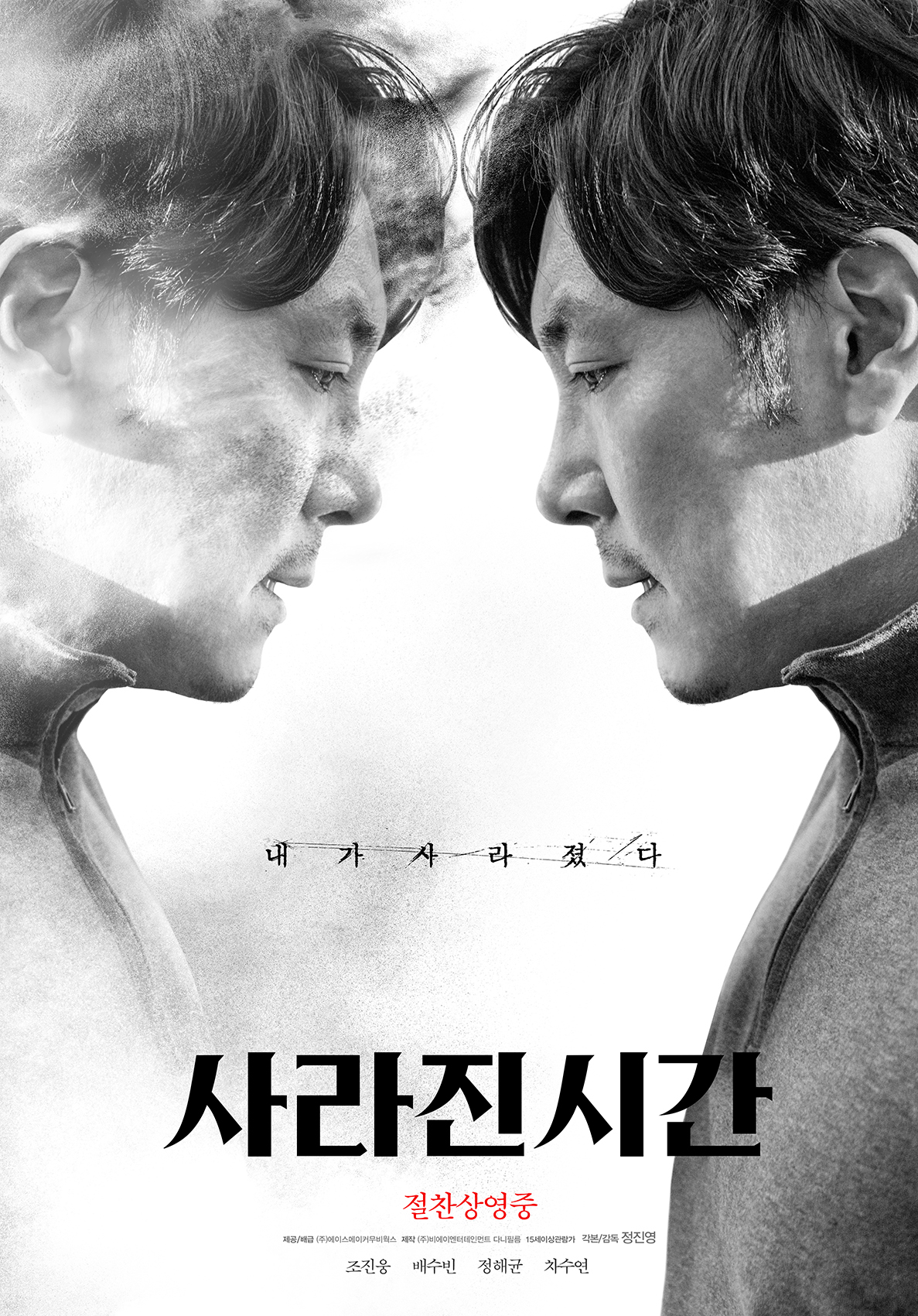
Me and Me (사라진 시간, Jung Jin-young, 2020) [Fantasia 2020]

“Don’t invent stories, just go with what you see” the hero of Jung Jin-young’s Me and Me (사라진 시간, Salajin Shigan) is advised, only to find himself investigating his own disappearance. The first directorial feature from the veteran actor, Me and Me throws its existentially displaced hero into another world but then asks him who it is he thinks he is if everyone is telling him he’s someone else. “It’s painful” he finally commiserates unexpectedly encountering a similarly troubled soul, living with another self inside him and consumed by a sense of loss for another life that perhaps never was or will be.

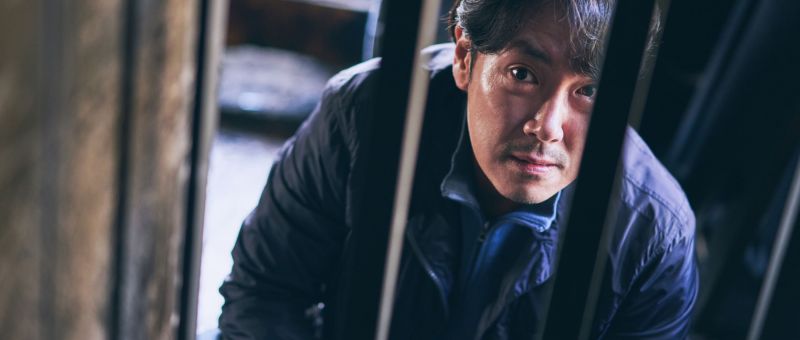
After a brief black and white title sequence featuring policeman Hyung-gu (Cho Jin-woong), Jung opens with a lengthy prologue following primary school teacher Soo-hyuk (Bae Soo-bin) who has just moved to a small, rural town along with his wife Yi-young (Cha Soo-yeon) who has, we discover, a secret. When the locals find out that at night she’s quite literally someone else, repeatedly possessed by departed spirits, they decide that she must be dangerous and install bars and a gate inside her home to cage her inside. Soo-hyuk refuses to leave her, asking to be locked inside too, and the sense of partial acceptance, that the townspeople know of her condition and have decided to meet her halfway, seems to free his wife. Having long been resistant, Yi-young warms to the idea of having a child, that perhaps they could have a happy family life despite her unusual affliction. 

Unfortunately, however, the house is consumed by fire and as they were locked inside, village foreman Hae-gyun (Jung Hae-Kyun) who has the key apparently out of town in a love hotel with the wife of the local police chief, Soo-hyuk and his wife are unable to escape. Hyung-gu finally arrives to investigate the crime, only to be bamboozled by the anxious locals who trick him into drinking some of their homemade pine needle liquor after which he wakes up to discover that he’s not a policeman after all, but the local schoolteacher and he’s very late for work. 

Obviously confused, Hyung-gu tries to figure out what’s going on. He misses his wife and his sons, but is distressed to discover that none of his neighbours recognise him, someone else lives in “his” apartment, and according to the school his kids don’t exist. Half-wondering if the pine needle liquor did something funny to his brain or even perhaps catapulted him into an alternate reality, Hyung-gu is forced to wonder if his previous life was a dream he’s now physically but not mentally woken up from, which means his wife, children, colleagues, and position in society as a policeman were not “real” no matter how real they might seem to him. The dilemma he now faces is in whether he should carry on trying to “wake up” from his new life to return to his “true” reality, or accept his new identity in the knowledge that this too could also be a “dream” from which he may someday wake and will eventually grieve. 

“When it’s time a new season comes” Hae-gyun reminds him, “and when it’s time it goes away”. Freeing himself, having the bars removed from his new home, Hyung-gu begins to accept his new reality, after all what choice does he have? But still he reflects on his own interior life, necessarily a secret from those around him and filled with private sorrow. Even little Jin-kyu, Hae-gyun’s dreamy son, had insisted on his right to privacy over his messy school locker which itself contains a secret pain for another life that he perhaps cannot share with those closest to him. “Everyone’s got a sickness” Hyung-gu sympathises with his new friend as she begins to tell him hers which is, ironically, another echo of his “dream” but also points towards the secret lives that most people have or more to the point never have, carrying something inside them never to be shared. “Don’t worry,” he reassures her, “you’re not the only one”. Each person is a hundred different people, or maybe just one in a hundred different parts. Perhaps in the end it is other people who will tell you who you are and you’ll eventually agree with them because it’s less painful than resisting, leaving that other life as a half-remembered dream. Elliptical and contemplative, Jung’s existential detective story refuses clear interpretation but is in its own way filled with a gentle humanity and a sense of acceptance for all of life’s transitory sorrows as well as its comfort and joy. 


Me and Me streamed as part of this year’s online edition of Fantasia International Film Festival.

Original trailer (no subtitles)

Missing (미씽: 사라진 여자, E Oni, 2016)

missing posterSince ancient times drama has had a preoccupation with motherhood and a need to point fingers at those who aren’t measuring up to social expectation. E Oni’s Missing plays out like a Caucasian Chalk Circle for our times as a privileged woman finds herself in difficult circumstances only to have her precious daughter swept away from her just as it looked as if she would be lost through a series of social disadvantages. Missing is partly a story of motherhood, but also of women and the various ways they find themselves consistently misused, disbelieved, and betrayed. The two women at the centre of the storm, desperate mother Ji-sun (Uhm Ji-won) and her mysterious Chinese nanny Han-mae (Gong Hyo-jin) are both in their own ways tragic figures caught in one frantic moment as a choice is made on each of their behalves which will have terrible, unforeseen and irreversible consequences.

Ji-sun is a busy woman. Recently divorced from her philandering doctor husband, Ji-sun is in the middle of a nasty custody battle over her daughter, Da-eun, which she has technically already lost though refuses to concede. Seeing as Ji-sun is barely ever at home (and when she is, she’s often still working), Chinese nanny, Han-mae is on hand to help her out. Han-mae’s Korean is imperfect, but she’s good with Da-eun and seems to have the knack for calming both the little one and her mum.

Other than the custody battle heating up as Ji-sun’s mother-in-law is intent on getting her grand-daughter away from her son’s awful former wife, Ji-sun’s life was functioning pretty well, all things considered. When she comes home one day and realises Han-mae and Da-eun aren’t around she’s a little put out but assumes they’re just delayed, have stopped off with friends, or are off somewhere having a lovely time without her. When they haven’t comeback by nightfall Ji-sun starts to worry.

Missing does its best not to judge either of the women. Though there is the subtle criticism of Ji-sun’s parental absenteeism, it’s largely manifested through her own feelings of guilt and fear as she’s placed in the difficult position of unexpected, middle-aged single parenthood. Divorced from her cold-hearted, selfish, lothario of a husband, Ji-sun would have needed to get a high paying job and maintain a middle class lifestyle to have any hope of keeping her daughter though the need to maintain both of those things would necessarily mean that she won’t be able to spend a lot of time with her child. Torn between the need to prove she can support herself alone and the need to play a fuller role in her daughter’s life, Ji-sun is understanably squeezed from both ends and left with little choice about any of it.

The problems both she and Han-mae face are those of an inherently sexist and intolerant society which forces them to prove themselves as women and judges them harshly when it believes they’ve deviated from the expected course. Ji-sun’s bosses make overtly sexist comments towards her, exclaiming that this is why they “don’t like employing mothers”, the police don’t want to believe her kidnap story because she’s just another hysterical woman, and her ex-husband knows he can take their daughter simply because he’s a man with a good job and a ready home.

Han-mae’s life has been darker and crueller, though hers is a greater struggle as she finds herself in an even lower status through being non-Korean and having poor language skills. Language skills are something she’s actively been denied in order to keep her from trying to escape a life of serfdom but in any case Han-mae’s prospects are not good. Ji-sun’s investigations take her to some very dark places as she searches for her child and begins to understand the reasons why she was taken. As a mother, as woman, and as a human being it is impossible to not to understand why Han-mae’s story ends the way it does, but it’s also impossible to not acknowledge a degree of unwittingly complicity in her ongoing suffering.

The last scene brings us unwelcomely back to that early debate surrounding the true mother and the unbreakable bond between a parent and a child, solving a complex problem neatly and smoothing it over with the gloss of emotion. Early on in the courtroom, Ji-sun says she’d do whatever it it took to keep her daughter, even run away with her if she had to. Later she says so again to a shady guy in a police cell who has more idea of what “anything” might mean, but Ji-sun was already doing quite a lot for Da-eun in running herself ragged just for the right to be near her. Neither Ji-sun or Han-mae were in any way at fault in the series of events which brought them to this point, a decision was made for them which was to have terrible, irreversible consequences. The two women are victims of the same oppressive social codes, but life is very different for each of them and if Ji-sun had been guilty of anything at all it was a blinkered way of living in which women like Han-mae are a barely visible presence except when needed to fulfil their allotted role.


Reviewed as part of a series of teaser screenings for the London Korean Film Festival 2017 the next of which, Queen of Walking, takes place at Regent Street Cinema on 22nd May 2017 at 7.30pm.

Original trailer (English subtitles)