My World (Murantin, 2021)

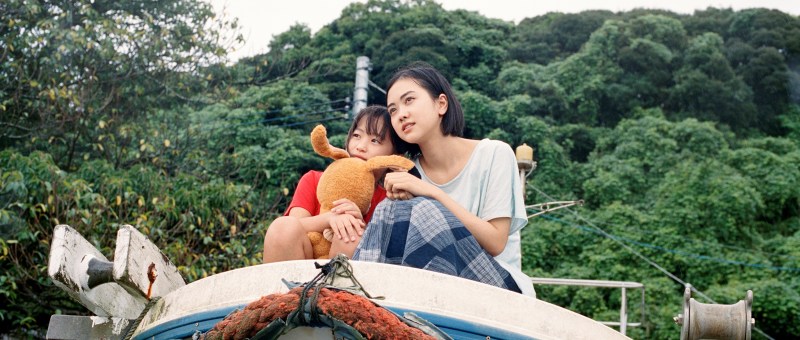
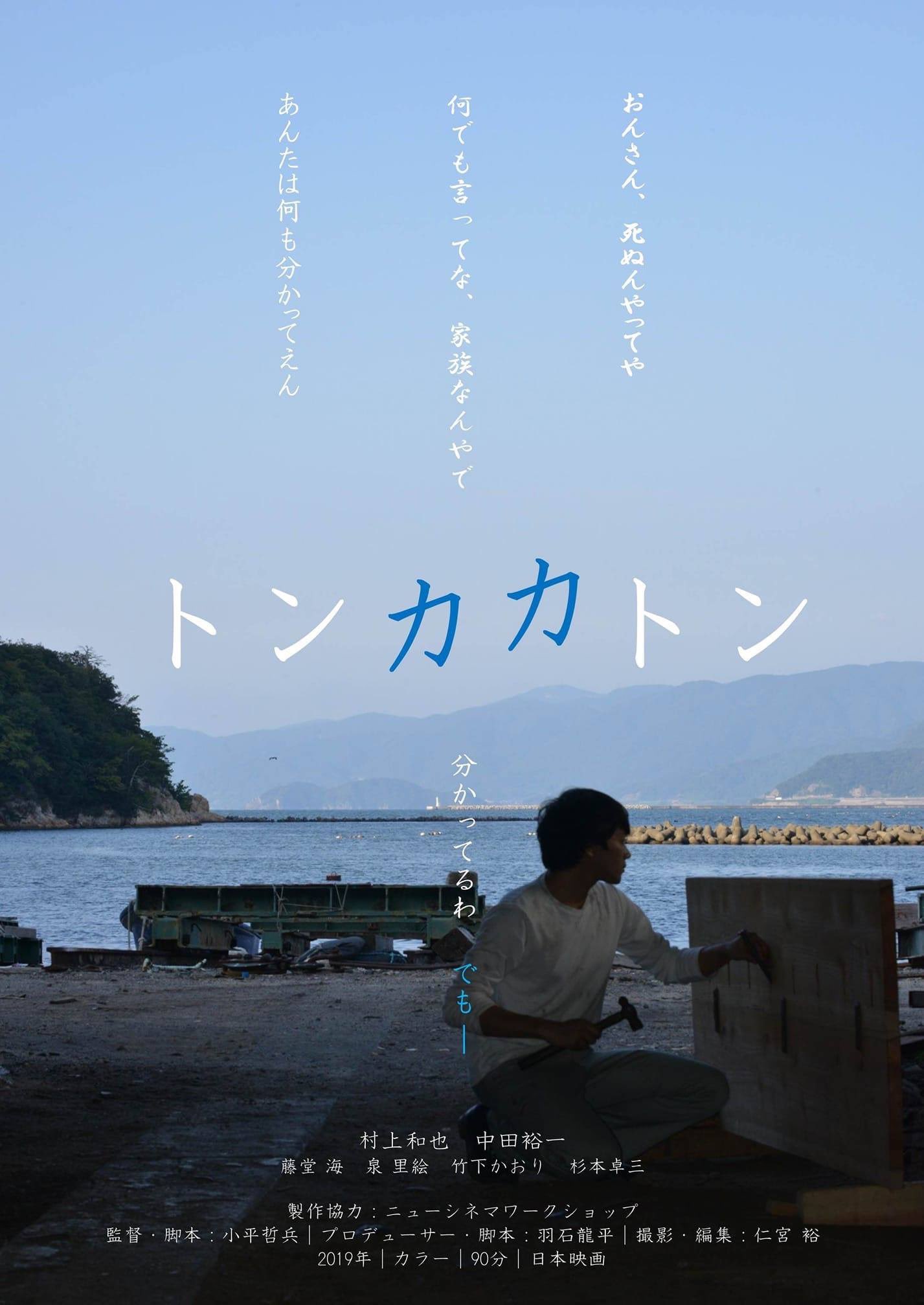
Perhaps we’ve all had that lonely feeling recently, walking around eerily empty streets as if somehow the world had ended while we were asleep and now we’re all alone, but the hero of theatre actor Murantin’s feature debut My World is about to discover that he really is (almost) the last of his kind as he struggles to reconstruct his history, identity, and sense of self while encountering only two other women one young and one more his own age but each with strange and unclear motives. 

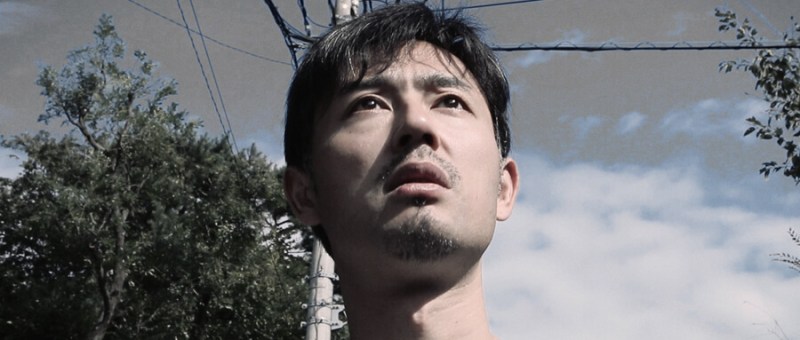
A man wakes up naked in a park, almost rebirthed in a sense, and rises in confusion. Finding a grey tracksuit abandoned a little way away he wanders through a town he doesn’t recognise where all the stores are closed and there are no people nor any traffic on the streets. With no sign of life to be found he’s drawn towards a library but finds little in terms of illumination before leaving and noticing a second Earth hanging in the sky where the moon ought to be. Returning to the park he sleeps, but is woken in the morning by an apparently concerned high school girl who later offers him a place in her home where she is currently living alone as her siblings are away and her parents abroad. A kind gesture, but perhaps not very sensible given her circumstances. In any case, she tells the man not to go out, buying him some nicer clothes and cooking dinner every night.

With no memories of his own, the man remains confused. The high school girl appears to be living normally. She leaves every day to attend class which suggests there are other people around though he never sees any and the strangely old-fashioned TV in the living room only displays static. One day she informs him her boyfriend wants to come over so he’ll have to make himself scarce, later escorting him to the basement where she handcuffs him to a water pipe. Why would a regular high school girl own a pair of sparkly handcuffs with fairytale-esque little blue keys? Why is he not supposed to look into any of the other bedrooms? What secrets is this world hiding from him? The plot begins to thicken when he decides to break the rule and follow the high school girl to see where she goes, only to find himself at the library again where he encounters a middle-aged woman in what appears to be her negligee. 

The man is in a sense imprisoned within the house, the handcuffs a literal extension of his mental constraint in a world which may be of his own making in wilful self-exile from a traumatic past. His strange dreams hint at another life, possibly on the other Earth, in which there are flashes of potential violence. Before long he begins encountering other versions of himself, fracturing under the weight of his internal confusion when directly confronted. The high school girl tells him he’s creating too much “disorder” and the only way to repair it is to go back to his own world, but the man doesn’t want to. Describing it as painful, he insists there’s no need to return if he can stay with the high school girl but in the end he will have to face himself and the traumatic past from which he seems to be in mental flight. 

Dreamlike in its uncanniness, Murantin’s camera chases a man on the run from himself as he walks through a world already dead, a still place with no past or future. He does not know himself, and no one else does either or at least that’s what they claim. The world is quite literally his, a place which he has unwittingly created in refuge from his trauma but he is no god only a man imprisoning himself, a wilful exile from a world he couldn’t accept. A tale of guilt and loneliness, My World offers its hero a chance at redemption through facing his past, accepting his responsibility, and learning the truth about himself but nevertheless concludes that there may be only one path to freedom while atoning for his transgressions in a world suddenly more alive and once more in motion. 


My World streamed as part of Yubari International Fantastic Film Festival 2021.

Trailer (English subtitles)

Kyoshin (共振, Keiichi Higuchi, 2021)

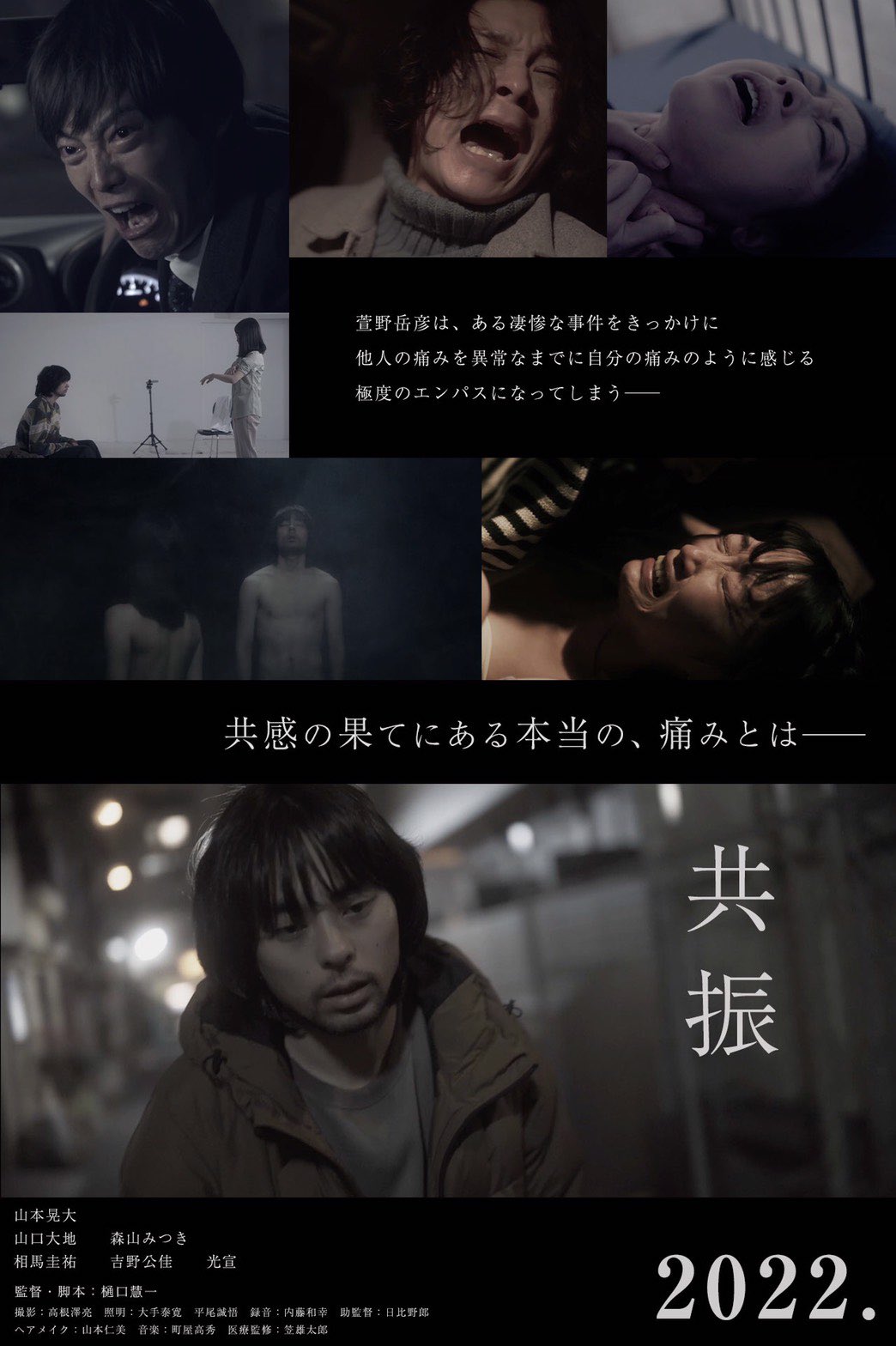
In modern society we often criticise others, but not always ourselves, for a perceived lack of empathy but what would it be like to truly empathise with everyone, all of the time, with no control over our own feelings? The hero of Keiichi Higuchi’s psychological drama Kyoshin (共振) finds himself with just this problem after a traumatic incident leaves him with both intense PTSD and the unwelcome side effect of being forced to feel the pain of others as his own. 

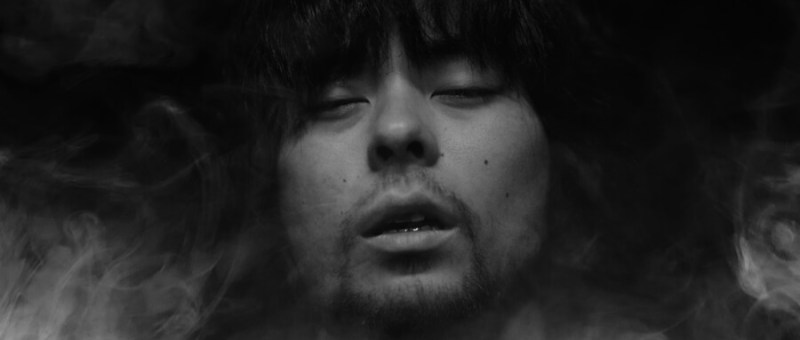
26-year-old Takehiko (Akihiro Yamamoto) thought of himself as perhaps a little over sensitive, feeling obvious discomfort sat opposite two salarymen arguing loudly in a crowded restaurant while also somewhat disconnected from his partner in a moment of supposed intimacy. It’s one evening on the beach, however, when everything goes into overdrive. Spotting two guys manhandling a screaming woman into a van he and his friend Gin (Keisuke Sohma) intervene but aren’t much of a match for two the young thugs and find themselves tied up and stunned in the back while the woman is forced to provide oral sex to the driver. Taking advantage of a momentary lapse from the other man who was busy interrogating Gin and Takehiko, the woman takes drastic action of her own in a bid to escape. Gin tries to help her, but seeing what’s befallen the driver Takehiko is plunged into fugue state able to do nothing other than scream in pain as if it were he that had suffered the catastrophic injury. 

A year on, Takehiko is a broken shell of a man unable to venture outside owing to the intense assault of other people’s pain. Ignoring calls from Gin, he’s cared for by his older brother Yuya (Daichi Yamaguchi) who ferries him to various doctor’s appointments, jeopardising his own employment in the process. Sick of medical professionals unwilling to admit they don’t know how to help him and obsessed with the curse of 27, Takehiko decides he’ll take his own life if there’s no improvement in his condition by his next birthday but then discovers potential salvation in an experimental programme run by a lesbian couple in which he will receive treatment from a woman who once experienced something very similar to himself but claims to have learned to live with it. 

The irony is that Takehiko’s condition is caused by extreme empathy in that he cannot avoid feeling other people’s physical pain as his own, yet he continues to treat those around him badly blind to the emotional toll caring for him is taking on them. His brother, feeling a parental responsibility as their parents passed away young, drops everything to help him but his boorish boss, ironically, has a fundamental lack of empathy. Annoyed that Yuya takes so much time off, he openly mocks him making the rather irrelevant point that Takehiko is 26 not six and therefore shouldn’t need so much care virtually accusing him of mollycoddling as if the problem were Yuya’s anxiety rather than his brother’s precarious mental health. 

Yet the experimental programme Takehiko finds himself involved with raises its own collection of ethical questions as the psychiatrist pushes him into a series of erotic situations arguing that if he learns to empathise across the emotional spectrum to experience other people’s pleasure as well as their pain he’ll be able to turn it off much more easily or at least flatten it out. She implies that similar therapies are what has enabled her to live a relatively normal life, but fails to disclose that she is also carrying a similar trauma which the treatment ironically recalls while largely failing to deal with the obvious possibility of transference in the potentially inappropriate lack of boundaries between patient and doctor. 

It might not be appropriate to ask how much empathy is too much empathy, but Takehiko’s path to recovery ironically enough lies only in secondary shock and a brush with death that allows him to reconnect with his friend Gin, suffering alone in their shared trauma, while empathising emotionally with his brother’s obvious care for him. It isn’t so much that Takehiko needs to disengage with those around him, but learn how to process effectively so that he can better help and understand rather solipsistically internalising external suffering. Shot with a sense of uneasy eeriness and a sci-fi twist in the manifestation of Takehiko’s descent into an oppressive empathy bubble, Higuchi’s provocative drama advocates for caring a little more about the pain of others but not so much that it stops you seeing where it hurts. 


Kyoshin streamed as part of Yubari International Fantastic Film Festival 2021.

Original trailer (no subtitles)
Lovely Little Ai (愛ちゃん物語♡, Ohno Candice Mana, 2021)

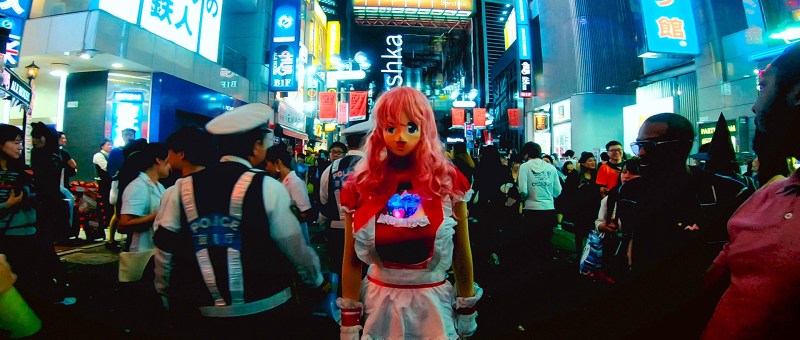
A lonely teenage girl begins to reevaluate her ideas of freedom and family after bonding with a sophisticated older woman from her neighbourhood in Ohno Candice Mana’s cheerfully quirky coming-of-age tale Lovely Little Ai (愛ちゃん物語♡, Ai-chan Monogatari). Aptly named for this is indeed a story of love, Ohno’s gentle drama cycles through the destructive effects of toxic, unsupportive parenting while finally finding solace in the strength of human connections to create new and enduring bonds not tied by blood. 

16-year-old Ai (Akane Sakanoue) explains that she lives alone with her father, her mother having passed away shortly after she was born, though alone is perhaps the most accurate word seeing as workaholic salaryman Tetsuo (Kan Hotoda) is rarely at home. Nevertheless, his authoritarian parenting style borders on the abusive as he bans Ai from hanging out with friends, makes her ask permission before anything she does, and insists she send him a photo of the clock to prove she’s home by the 6pm curfew (why she doesn’t just send the same picture every day is anyone’s guess). Ai seems not to think too much of it, but is also beginning to yearn for more freedom while additionally anxious that she has no friends and no idea how to make them because of her father’s controlling personality. 

Everything changes when she accidentally bumps into another woman on the street, knocking her over and spilling her bespoke cosmetics all over the road. Sensing a connection and hoping to get some feminine advice, Ai asks the woman to stay for a while and eventually ends up becoming friends with her, often eating in her apartment and taking various shopping trips together. In a sense, Ai comes to think of Seiko (Hisao Kurozumi) as a maternal figure but their relationship is later strained when she incorrectly comes to believe that she really is her mother despite having known all along that Seiko is trans and therefore could not have given birth to her. 

Well, Ai mostly refers to Seiko as someone who wears women’s clothing but evidently has no problem accepting her, offended on her behalf when a boy from school, Ryo (Ryo Matsumura), who has a crush on her rudely runs away screaming on seeing them together in town though he later makes a point of apologising explaining that he was merely shocked and had an unusual reaction born of nervousness. Nevertheless, a melancholy flashback reveals Seiko’s difficult childhood with an authoritarian father not unlike Ai’s who disturbingly decapitated her Barbie and broke her colouring in pencils in two in an attempt to discourage her femininity. Watching over Ai she encourages her to embrace her freedom, explaining that life is dull if you can’t do the things you want to do and allowing her the space and confidence to make friends with the popular girls at school while figuring out who she is in defiance of her father’s control. 

Even so on finding evidence that suggests Seiko has been keeping something from her she begins to doubt her new maternal relationship, unfairly feeling betrayed while refusing to give Seiko the opportunity to explain. What she eventually learns is that she’s come to see Seiko as a mother even if they are not related by blood and that the connection she has with her is what is most important. Her decision validates her right to choose and redefine the meaning of family including the boundaries around her own, but also affirms Seiko’s right to play a maternal role despite the rather unkind words Tetsuo had used to describe her before himself getting a wake up call in what it means to be a responsible father. 

Cute and quirky with its pastel colour scheme, whimsical production design, and frequent flights into fancy, Lovely Little Ai is a heartfelt tale of family as active choice in which a young woman comes of age while repairing her fracturing relationships by embracing the love of a new maternal figure and pushing her wounded father into accepting his emotional responsibilities and relinquishing his need for control. A lovely little tale indeed, Ai’s sweet summer story is a breath of fresh air and a welcome advocation for the new family founded on love and mutual respect rather than blood or obligation. 


Lovely Little Ai streamed as part of Yubari International Fantastic Film Festival 2021.

Teaser trailer (no subtitles)

PARALLEL (Daiki Tanaka, 2021)

A wounded young woman in search of a protector and a nihilistic serial killer fight for the meaning of existence in Daiki Tanaka’s dark romantic drama, Parallel. Taking different paths out of a sense of “unworthiness” each look for ways out of this “rotten world” but find themselves mirroring the magical girl anime that inspires the killer’s desire for escape in discovering an uncomfortable sense of mutual salvation in the histories of their shared trauma. 

Panning over a scene of scattered cosmetics and tangled wigs, the camera first lights on the sight of a bearded man gently stroking coloured hair before putting on lipstick in the mirror. We then transition to a scene of violence as a young girl is brutally beaten by her parents who later lock her inside a cupboard only for the cross-dressing man to turn up and kill them with a knife. The man spots the lock on the door and rescues the girl, giving his name as Shinji and asking in a soft voice if the girl, Mai, thinks he is beautiful. Mai nods tearfully, evidently viewing the killer as her saviour. Flashing forward a decade or so, Mai is a 20-year-old woman still haunted by her childhood trauma and captivated by reports of the “Cosplay Killer” who dismembers his victims and places lights inside to make them glow. The Cosplay Killer uploads photos of Shinji along with videos of his kills though it seems that Shinji was killed by police at the scene of Mai’s parents’ murder so the current killer is thought to be a copycat. 

That turns out to be true and not. A very emo, nihilistic young man, Mikio is a manga artist working on a magical girl series in which humanoid robots developed as anthropomorphic weapons develop a sense of humanity after becoming “broken” through fighting an earlier iteration of themselves inspired by Shinji. Something similar happens to Mikio on encountering Mai. A sociopath with no sense of morality, he is confused by his innate connection with the wounded young woman apparently the only person he would not like to kill, which makes him think perhaps he should kill her. 

Meanwhile, he secretly plots with a collection of similarly disaffected young men fed up with being made to feel inferior by this “rotten” world full of “trash humans” who can’t recognise people from machines. The present source of their ire is TV pundit Okudera who is a frequent commenter on the Cosplay Killer later going on a long rant about how anime should be banned for corrupting the minds of the youth seeing as they never had this kind of thing in their day. Backstage meanwhile he makes a point of humiliating his assistant, forcing him to get down on his knees and apologise for being “worthless” insistent that he should be grateful Okudera is training him so thoroughly when the rest of the world is so cold. 

Mai too just wants to feel “worthy”, laughing about a rubbish date with her friend Kana in which a dating app hook up earnestly declared his love. Kana not unfairly thinks that might have been a little creepy but even though she doesn’t plan to see the man again Mai enjoyed the attention in the sense that in the moment she needed to feel desirable. That might be why she seems to be making a living through compensated dating, making the middle-aged man she hangs out with wear a wig to better resemble Shinji while he somewhat uncomfortably echoes the words of her abuser in making her say “I love you, Daddy” over a hug to end the session. He offers her more money for a pair of her used panties, but at present Mai thinks that’s a step too far. 

Equally drawn to Mikio, Mai finds herself bonding with the “creepy” young man the pair of them baring their literal scars and then symbolically giving each other new ones with the aid of a box cutter. Mikio is obsessed with the idea of transformation but originally rejects his attraction to Mai because would it tie him to this rotten world rather than the better anime one his killing sprees allow him to escape into, his mangaka mentor later asking him why he can’t use love to transform himself and find new meaning, a kind of Earthly magic, in human connection but all of this is perhaps forgetting that Mikio is a man who stalks, kills, and dismembers his prey later explaining that unlike Mai no one came to save him from the abuse he too suffered and this was the way he freed himself. His concept of revolution has an extremely dark edge reminiscent of that pursued by angry, embittered young men radicalised by their sense of inferiority and so the otherwise touching affirmation from Mai that he has shown her the magical moment everything can change because they can create their own meaning in life has an unavoidable air of discomfort. A mix of slasher horror and emo teen romance, Tanaka’s giallo-esque neon-lit journey through a world of trauma and abuse allows its “broken robot” to find both peace and purpose but equally to avoid responsibility for his heinous violence.


PARALLEL streamed as part of Yubari International Fantastic Film Festival 2021.

Scherzo (スケルツォ, Takayoshi Shiokawa & Kanta Tomatsu, 2021)

It may be one thing to live profoundly in the moment, but if you have no memory of yesterday and know you’ll have no memory of today tomorrow can you really say that you “exist”? The hero of Takayoshi Shiokawa & Kanta Tomatsu’s Scherzo (スケルツォ) believes that he’s born every day and dies every day, his mind wiped clean each time he sleeps but how can you learn to find meaning in a life so defiantly brief in which you have no past or future?

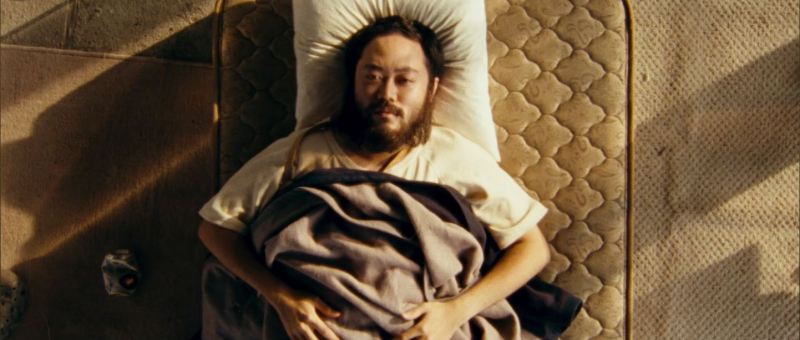
Then again, according to a random man in a laundrette people only start thinking about the value of life in order to avoid thinking about how bad their lives are currently when the real answer is to concentrate less on whether your current life has value and more on how to lead a better one. For “Koji” however, a name he chose for himself, the question may be moot. He wakes up every day on a stained mattress in a partially exposed rooftop flat with a sign above telling him to look at the wall where he’s explained to himself that his memory resets every day. A selection of polaroid photos feature the same young woman who also appears in a video tape playing on a nearby TV though Koji doesn’t know who she is. Taking the video camera with him he walks out into the town recording his every movement in lieu of his ability to remember and lives as if there’s no tomorrow because in a sense there isn’t. His first few days he hangs out in a hostess bar where he can’t pay the bill, robs a pizza man, and visits a sex worker for some existential chit chat abandoning the rules of morality in the knowledge that there can be no consequences because he dies by night and his existence is futile. 

All that begins to change, however, when he encounters a woman, Hinako, who looks like the one in his photos and appears to be suffering from the same condition as himself. Bonding with her slowly though neither of them can recall the other, Koji suddenly wants to find a way to remember certain that logically they are here today because of something that happened yesterday because of all the yesterdays that came before. 

Scherzo literally means “joke” in Italian, and you could indeed read Koji’s predicament as a bizarre cosmic prank otherwise unexplained in its absurdity. Yet it’s perhaps also a metaphor for the mutability of memory and elusiveness of love as much as in its usage in classical music a playful allusion to the self-contained brevity of his daily lives. He feels an innate connection to Hinako, as if he must have known her before but simply can’t remember. Even the most essential of emotions, love, can it seems be forgotten or gently fade away even if, as in the bar hostess’ melancholy ballad, something of it remains when everything else is gone. This is in one sense at least, a story of a couple who’d fallen out of love, or perhaps taken it for granted to extent that they’d almost forgotten it was there, rediscovering their feelings for each other and discovering in them a meaning for life. 

Meanwhile, Koji obsessively records all of his actions, filling 40 DV tapes of a sleepless road trip with Hinako, as if a physical recording could be more accurate than an organic memory. Memory is of course subjective and you can never know what it is you’ve forgotten whereas a tape maybe tampered with or faulty but supposedly contains objective truth though even that has a subjective quality simply by virtue of who recorded it and how. Nevertheless, if you can forget love, does memory really count for anything at all? Koji thinks he dies every day, but like Alice in Wonderland no one except for Koji is the same person they were yesterday or will be tomorrow. He can’t change or grow and has only the same version of himself to offer imperfect guidance. Nevertheless it’s love that in a sense restores his identity, gives him the will to remember, and makes it possible for him to live in the shadow of tomorrow rather than in an eternal present. Shot with a deadpan absurdism, Takayoshi Shiokawa & Kanta Tomatsu’s dryly humorous drama eventually concludes that it’s the memory of love, even if old or faded or failed, that gives life meaning allowing its anxious hero to move forward in finally regaining a sense of self if reflected in the eyes of another.


Scherzo streamed as part of Yubari International Fantastic Film Festival 2021.

The Albino’s Trees (アルビノの木, Masakazu Kaneko, 2016)

A young man is forced to face up to the nature of existential struggle when tasked with killing a god in Masakazu Kaneko’s meditation on land, modernity, and the taking of a life, The Albino’s Trees (アルビノの木, Albino no Ki). Filled with a sense of unease, Kaneko’s parabolic drama asks if it’s right to force others to live in the way you think is best, if it’s right to take the life of an animal simply because it’s inconvenient to you, and if it’s right to assume ownership over the natural landscape as if it’s yours to do with as you wish. To the young man at the film’s centre, these questions are ones he thinks he can’t afford to ask but is eventually confronted with in committing what to some may be an unforgivable transgression. 

Yuku (Ryohei Matsuoka) used to work in removals but times being what they are, his boss has taken a left turn accepting lucrative contracts working as animal control agents on behalf of local councils carrying out culls of wildlife deemed out of control. His colleague Imamori (Shuichiro Masuda) remains conflicted. He isn’t completely happy with this kind of work but has been persuaded that it’s necessary though it still seems cruel to him if not morally wrong to hunt and kill healthy animals solely for existing. Nemoto (Hiroyuki Matsukage), their boss, is keen for them to take on a well paid “confidential” job but with so little information the guys are reluctant, something about it seems shady. Nevertheless, with his mother seriously ill and needing money for medical treatment Yuku agrees as does Imamori only to discover that not even the local councillor who hired them wants to explain what the job is. 

The councillor does, however, begin to outline the economic history of the town once dependent on coal mining now pivoting towards innovative farming. With barely concealed disdain, he replies to Yuku’s inquiry as to whether the mountain in question is inhabited by briefly remarking on a traditional village on the other side the existence of which seems to fill him with such disgust one half wonders if Yuku’s contract job is even darker than it seems. He laments that they have “no desire to develop”, continuing to live a traditional rural existence rather than succumbing to the dubious conveniences of modernity. On meeting up with their contact (Hatsunori Hasegawa), another hunter living on the ridge, the pair discover that their assignment is to eliminate an albino deer because, according to the hunter, the council is nervous that some may assume its mutation hints at corruption in the soil endangering the stability of their eco farming project. The problem is that the villagers believe the albino deer to be an embodiment of the White Deer God that protects the mountain as part of their Shinto animist beliefs and have been protecting it by dismantling all his traps. Imamori declines to go through with the job, feeling that it’s wrong to kill the deer just because it was born different but thinking only of his mother Yuku is determined to do whatever it takes.  

His dilemma is in a sense mirrored by that of Nagi (Kanako Higashi), a young woman from the village he rescues from an animal trap who tells him that she remains torn between the allure of modernity and a traditional rural existence. Yoichi (Yusuke Fukuchi), a young man making a living carving traditional wooden bowls, is determined to preserve ancient beliefs Yuku regards as backwards and superstitious convincing himself that killing the deer is also an act of liberation that will bring enlightenment to the villagers so that they won’t “need” to live in such an archaic and primitive way. But as Yoichi tries to explain to him, you can’t force people to conform to your own way of thinking, it’s not as if anyone is a prisoner here if they didn’t like it they’d leave as all of the other young people have already done. He asks him if a world in which you simply eliminate things which are “inconvenient” to you is one you really want to live in but Yuku isn’t here for such philosophical questions only baffled by what he sees as primitive superstition that stands in the way of progress. 

Yet, the village is largely untouched by the corruptions of the modern society. The water in its rivers is clean and sweet, the wood in its trees strong and beautiful. As Nagi explains to him, the White Deer God has given them permission to drink from these springs, and permission to harvest the trees. By contrast, there’s an unpleasant look of triumph in Yuku’s eyes as he shoots deer from a distance killing for no reason at all, man overcoming nature. He thinks only of his own survival, taking the lives of other living things in order to preserve his own, determined to save his mother but indifferent to the fates of others. When it comes to killing the white deer his hands shake, struck for the first time by the enormity of what he’s doing while literally preparing to kill a god. While Yoichi venerates and protects the natural environment in a process of symbiotic living, Yuku sides with those willing to exploit it for economic gain brainwashed into believing that living with the land is “backward” and that it’s only “natural” to eliminate “inconveniences” such as “vermin” which impede “modern life” in a capitalistic society. Capturing the natural beauty of the Japanese countryside Kaneko’s existential fable is filled with a quiet unease in the ambivalent relationship between man and landscape but also in the solipsistic struggle for survival that all too often defines human relationships. 


The Albino’s Trees streams in the US Dec. 3 to 23 as part of Japan Society New York’s Flash Forward series.

Original trailer (English subtitles)

Closet (クローゼット, Takehiro Shindo, 2020)

“Everyone has their own closet” according to a bereaved older man sympathetically reflecting on a life half lived. The wounded hero of Takehiro Shindo’s Closet (クローゼット) is about to discover he may have a point as he works through his own issues, finally coming to an understanding of the true nature of intimacy before learning to open himself up to living life true to himself realising that perhaps his very ordinary dream is not as hopeless as he thought it was if only he can bring himself to put his male pride aside. 

Returning to Tokyo following a failed engagement, Jin (Yosuke Minogawa) finds himself taking on an unusual line of work on the invitation of an old friend, embarking on a career as a sleep companion. Essentially, he’s there to lie beside a lonely person offering a safe and supportive space where they can relax and be their authentic selves free from the judgement they may otherwise receive from a friend or a lover. Ironically enough, Jin is a man of few words, his fiancée once asking him to be a little more sociable when her parents visit, which means he’s a good listener but slow to adapt to the true purpose of his work. His first client, a harried hospital worker, seemingly just wants to destress but mostly through having someone listen to her rant about workplace concerns and nod along sympathetically rather than offer earnest advice. As his boss Takagi (Shinji Ozeki) reminds him, it’s all about empathy, or at least telling them what they want to hear which may sound insincere but in another sense may not be. 

As the old man says, everyone has something they don’t really want to let out but the presence of the sleep companion is intended to ease the burden and provide temporary relief. Jo Shimoda (Ikkei Watanabe), is grieving for his late partner who remained in the closet for the entirety of their relationship leaving him now with nothing but intangible memories. He asks Jin to put on the other man’s pajamas, experiencing the warmth and comfort he misses from his absent lover and gaining through it the ability to begin moving on. Kaori (Iku Arai), meanwhile, is a harried executive, or at least she claims, apparently in love with a slightly younger colleague but unsure if her crush is appropriate while worrying that she’s in danger of missing the boat both in love and in her career. 

A young student from the country, Nanami (Aino Kuribayashi), on the other hand, is in search of the kind of comfort she does not receive from her no good boyfriend, realising only too late that his treatment of her is abusive and their relationship is built on exploitation. Jin had in a sense experienced something similar, ruining his relationship in a crisis of masculinity. It is of course he who also receives warmth and support through his role as a companion, but the job also allows him to reconfigure his idea of what it is to be a man in providing a sense of safety, protection, and comfort while engaging in a true intimacy that is not defined by sexuality.

Through their shared experiences, both Jin and the sleepless companions begin to grow in confidence, accepting themselves for who they are and preparing to move on into a more authentic future even if for some the path turns darker before it reaches the light. Stepping out of their individual closets, they no longer feel so insecure finally gaining the courage to live as their true selves no matter what anyone else might have to say about it in the knowledge that others too are also suffering and might be led out of it by their example. A gentle tale of the simple power of human intimacy to overcome a sense of existential loneliness and individual despair, Closet allows its reticent hero to find new meaning in the ability to accept from and give to others comfort while coming to terms with his own traumatic past in realising that he is not and never was defined by conventional ideas of masculinity and that he is not worthless solely because he is no longer able to fulfil them. Perhaps that small yet infinitely ordinary dream is not so out of reach after all. 


Closet screened as part of this year’s Camera Japan

Original trailer (no subtitles)

Mari and Mari (彼女来来, Tatsuya Yamanishi, 2021)

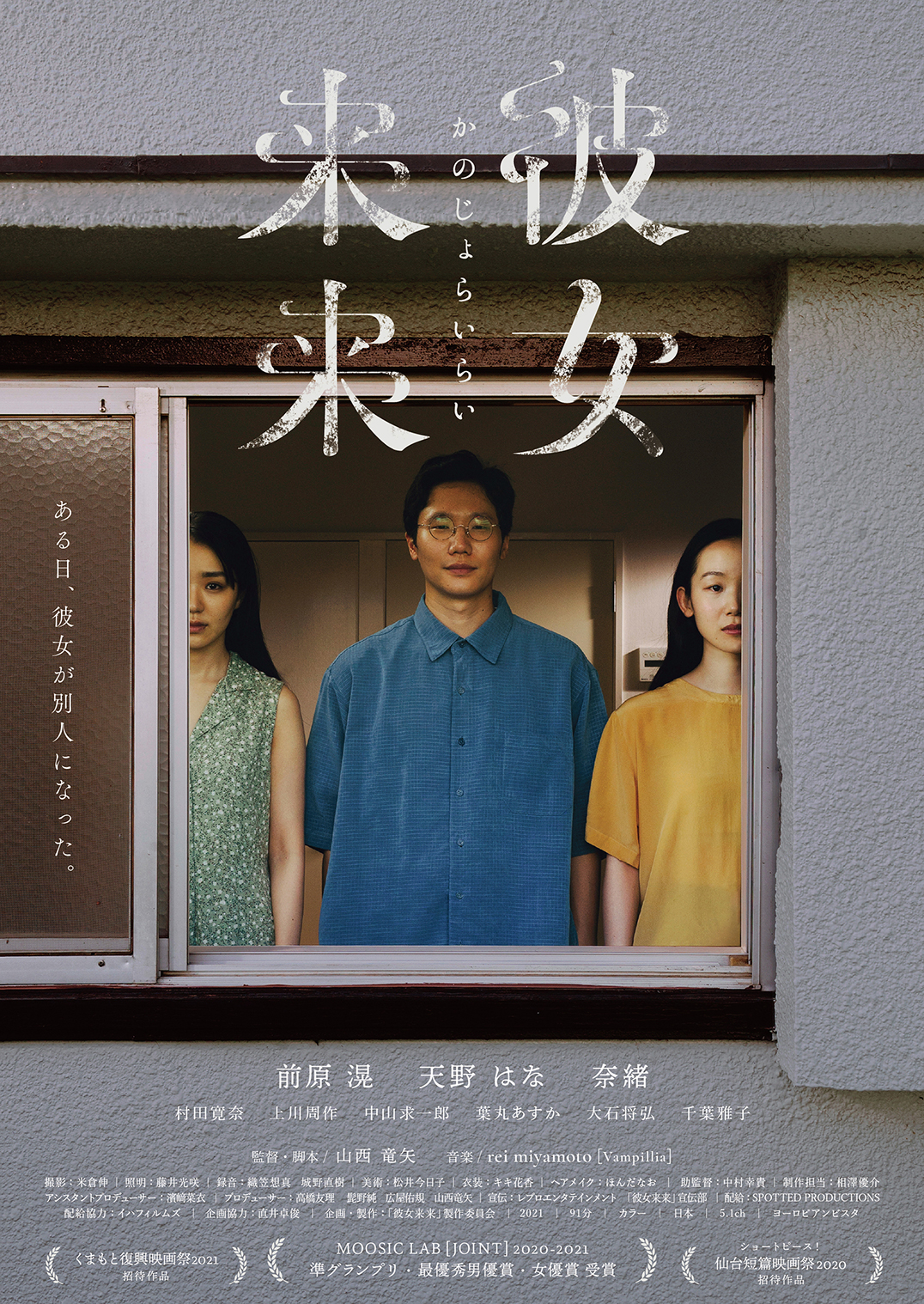
How well do you really know your significant other, and is it possible that even you can be lulled into a false sense of security by the performative qualities of your relationship? The befuddled hero of Tatsuya Yamanishi’s Mari and Mari (彼女来来, Kanojo Rairai) is forced to reckon with the superficialities of his romantic life when he arrives home one day to discover that his girlfriend is nowhere to be found and in her place is another woman with the same name who seems intent on occupying the space she has just vacated. 

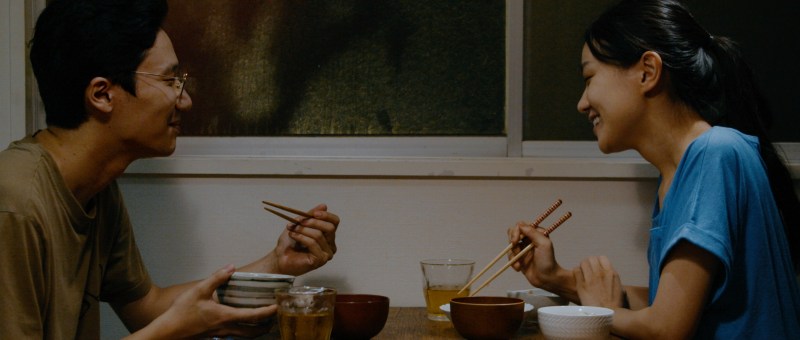
Casting agent Norio (Kou Maehara) is in a longterm, actually rather nauseating in its sweetness, romantic relationship with girlfriend Mari (Nao). Despite being a well established, not yet married but might as well be cohabiting couple, they have their own little song they like to sing about how great their lives are with each other while taking romantic walking dates along the river where they look lovingly into each other’s eyes. “You’ve been together for ages, but you act like it’s a first date” one of Norio’s colleagues unironically remarks, seemingly a little envious. After moaning about a workplace setback, Norio suggests taking a trip while Mari points out that he’s always too busy for holidays but seems pleased just with the thought. 

For all these reasons, Norio is especially confused when he arrives home after a tough day and finds Mari gone, understandably mistaking the figure of a woman sleeping on their sofa for his girlfriend only to realise his error when she gets up and turns around, the low evening light finally hitting her face. The woman, who is apparently also named “Mari” (Hana Amano) claims to have no memory of her life before waking up on the sofa, and declaring herself homeless announces that she’s moving in. Extremely confused, Norio embarks on a quest to try and out what’s happened to Mari but discovers few leads. Even her sister seems relatively unconcerned, certain that she’s just blowing off steam bringing up a childhood incident in which she “ran away” to stay with a friend whose family ran a sweetshop because she had a sweet tooth and they weren’t allowed sweets at home. 

This relatively innocent story perhaps highlights the possibility of cracks in Norio’s “perfect” relationship, that “Mari 1” might have been feeling the lack of something and has gone off to find it. Though we’re told that Norio and Mari had been happily coupled for some years, a surprise visit from Norio’s parents reveals they’d never met his longterm girlfriend which does indeed seem odd if the relationship is as serious and loved up as it seemed to be. The plot thickens further when he visits the bookstore where Mari was working and is told she quit her job a few days previously having said nothing to him. You have to wonder if Mari 2 is actually real or a merely a manifestation of his inability to accept the fact that his relationship has failed and his girlfriend has moved on. 

Could Norio be guilty of treating his romantic life like one of his auditions, simply slotting in a woman who looks the part to play the role of “girlfriend”? Maybe Mari 1 was so wrapped up in her relationship that she didn’t have any friends, but Norio doesn’t contact any outside of her sister and appears not to know very much about her interior life. He also appears oblivious to a sweet intern at the office, his work life beginning to suffer while he remains preoccupied with Mari 1’s disappearance, who seems to have a crush on him until becoming unexpectedly jealous on spotting her in a clinch with another coworker in the darkened break room. Missing Mari 1 he repeatedly rebuffs Mari 2, attempting to throw her out of his apartment and rejecting each of her attempts to get close to him but eventually warms to her presence and finally allows her to take Mari 1’s place as his live-in girlfriend. 

Are Mari 1 and Mari 2 interchangeable to him? His brief comment that Mari 1 looked like another person under different light hints at a slight fluidity in the nature of her identity, as does the repeated motif of the sunlight climbing towards her face in their darkened bedroom. Then again, could the memory of Mari 1 merely be the intrusive ghost of failed love that disrupts his subsequent relationships, suggesting that his relationship with Mari 2 is doomed to failure because of his obsession with the one who literally got away. Or are Mari 1 & Mari 2 actually the same and a reflection of the way people can sometimes change or you learn something new about them and they seem like a completely different person? Perhaps “Mari” is just a signifier for romantic partner, otherwise devoid of an individual identity. What seems clear at least is that Norio does not “see” the woman in his life because he only sees “Mari”, as the slightly melancholy, intensely lonely look on the face of the woman next to him at the film’s conclusion may seem to suggest. 


Mari and Mari streams in the US until Sept. 2 as part of this year’s Japan Cuts.

International trailer (English subtitles)

The Goldfish: Dreaming of the Sea (海辺の金魚, Sara Ogawa, 2021)

A young woman begins to come to terms with a painful maternal legacy while bonding with a neglected little girl in Sara Ogawa’s gentle coming-of-age drama, The Goldfish: Dreaming of the Sea (海辺の金魚, Umibe no Kingyo). As the title suggests, the heroine struggles with ambivalent feelings towards her future partly in the unresolved relationship with her mother but also in an unwillingness to move on without the firm anchoring of family, anxious about leaving the safety of her current life behind for the uncertainties of adulthood. 

About to turn 18, Hana (Miyu Ozawa) has been living in a children’s home for the past 10 years while her mother, Kyoko (Kinuo Yamada), has been in prison convicted of mass poisoning at a summer festival though she continues to protest her innocence. Part of Hana’s anxiety about the future stems from the fact that in order to apply for a scholarship to university she would need her mother’s signature, but she is reluctant to get back in contact with her and is even considering not going despite having studied hard with just that goal in mind. Perhaps surprisingly, Hana has kept her original surname and though seemingly living in a different area is largely shunned by her classmates, either because they know of her mother’s conviction or simply because she lives in a children’s home. 

Meanwhile, Hana finds herself bonding with a withdrawn little girl, Harumi (Runa Hanada), brought into the home for unclear reasons while remaining largely silent and keeping herself separate from the other children. Perhaps recognising something of herself in her, Hana takes the young girl under her wing and attempts help her adjust to life in care but is alarmed to notice scars on the back of her neck which may suggest she has been the victim of physical abuse. Of course, Hana has no way of knowing her family circumstances or if her mother was the one was harming her but is confused by Harumi’s obvious longing to return to a place in which she has been subjected to violence. As the sympathetic man running the home, Taka (Tateto Serizawa), reminds her, however, Harumi’s mother is the only one she’s ever known so of course like all children she wants to return to a familiar environment and continues to long for maternal love even if that love is also abusive. 

In her desire to protect Harumi Hana avoids reflecting on the similarities with her own life or relationship with her mother. Though many things remain unclear about her early years, Hana perhaps resents Kyoko for burdening her with a criminal legacy and essentially abandoning her into the foster system though it has to be said the children’s home is a warm and welcoming place where the children are each loved and well cared for. Nevertheless she fixates on her mother’s parting words to “be a good girl”, in a way like Harumi thinking that her separation from her mother is somehow her fault for being “bad” and if only she were good enough her mother would come back. Looking after Harumi she finds herself saying the same thing, fearful that she’s turning into her mother and that her maternity is necessarily corrupted beyond repair.  

Like the goldfish in her fishbowl, she longs for freedom and independence but is also afraid of it. Through the gentle bond they begin to build the two young women save each other and themselves, Hana giving herself permission to fail, to not always be “good” and to live her life in the way she wants unburdened by the stigma of her mother’s crime while Harumi discovers a kind of maternal love that is positive and supportive without the threat of violence. Nevertheless, the release she chooses despite its metaphorical qualities is also potentially destructive in that goldfish are freshwater creatures unlikely to survive in the highly salinated environment of the ocean. Even so in letting go of her trauma she begins to move forward into a more certain adult world, determined to take Harumi with her in providing the care and protection her mother was unable to give her. A gentle coming-of-tale, Ogawa’s subtle, empathetic direction lends a touch of melancholy but also a lyrical, hopeful sensibility as the young women discover in each other the means to overcome their trauma. 


The Goldfish: Dreaming of the Sea streams in the US until Sept. 2 as part of this year’s Japan Cuts.

Original trailer (English subtitles)

Extraneous Matter – Complete Edition (異物-完全版-, Kenichi Ugana, 2021)

If you suddenly encountered a weird, decidedly alien, octopus-like creature living in your wardrobe what would you do? Would it frighten or intrigue you, would you want to get rid of it as quickly as possible or look after it for the rest of your life? The presence of these strange creatures provokes different responses from each of the heroes of Kenichi Ugana’s Extraneous Matter – Complete Edition (異物-完全版-, Ibutsu – Kanzenban-), an expansion of his earlier short of the same title. Drawing inspiration from the early work of Shinya Tsukamoto, Ugana’s crisp, academy ratio black and white photography makes use of an ironic score mimicking classic Hollywood melodrama lending a mythic quality to this lowkey tale of alien sex fiend invasion and human loneliness. 

For Kaoru (Kaoru Koide), heroine of the first segment, the creature seems to signify her sexual frustration and sense of existential inertia. For her, every day is the same. She wakes up alone, makes herself a cup of coffee and eats a pastry in front of the television which always seems to be carrying news of a celebrity sex scandal, and then starts work with her friends (for some reason working at her apartment) who gossip about their various sugar daddies. Her boyfriend (Shunsuke Tanaka) apparently lives with her, but immediately disappears right after dinner and actively avoids intimacy. Were it not for later events, we might wonder if the creature is somehow a transformation of the boyfriend, Kaoru herself unsure whether it was a dream, first violated but then apparently satisfied by the alien tentacles which later begin satisfying all of her friends. 

If the “extraneous matter” of Kaoru’s life was indeed her unfulfilled desire and internalised shame, then for the barmaid (Momoka Ishida) of the second sequence it’s perhaps a lack of excitement while for the young man (Kaito Yoshimura) who brings a creature zipped into a holdall to a pub to meet his ex-girlfriend (Makoto Tanaka) it’s more a desire for familial intimacy or a sense of commitment that may previously have frightened him. He appears to want to get back together with the young woman, apologising for his past behaviour while explaining that he found the creature in his wardrobe scary to begin with but later became fond of it and is convinced he could raise it with her help, ordering a parfait to feed it because he’s discovered it has a sweet tooth and particularly likes strawberries. He swats the errant tentacles away as if shushing a naughty baby as the woman too begins to coo over it, shovelling cream from the parfait into its mouth with a spoon. 

But then, the extraneous matter of the lives of others can also present a challenge to the social order. Some wish to eliminate the alien threat, a young man working at a factory (Shuto Miyazak) charged with disposing of alien bodies eventually conflicted on discovering one alive sure that he can hear the creature begging him for help. Together with a like-minded colleague (Duncan) he determines to save it and help it return to its people, culminating in an unexpected ET moment which perhaps realigns the “alien” threat with a social other as the two compassionate employees evade the authorities to get the creature to safety despite having been betrayed by their female colleague (Mizuki Takanashi). 

So, what is the “extraneous matter” of our lives, a kind of loneliness, a sense of “alienation”, or of emptiness in an “absurd” world of infinite mundanity? Perhaps all of the above, Kaoru returning to her lonely life apparently missing the strange and unidentified creature only to re-encounter it in an unexpected place and discover it has not forgotten her. Gently ironic, Ugana’s sci-fi-inflected aesthetic begins with grim body horror before progressing into something warmer, for good or ill becoming fond of its alien invaders as compassionate humans refuse to reject them embracing in a sense these “extraneous” sides of themselves they may have previously found disturbing in search of more fulfilling lives. Elegantly composed in its classic academy ratio frame with its ironic bonsai pillow shots and continuing sense of unease, Extraneous Matter nevertheless ends on a note of hope rather than threat even as the invaders apparently lurk among us but bringing with them comfort even in the reflection of our unmet desires. 


Extraneous Matter – Complete Edition streamed as part of this year’s Nippon Connection.

Original trailer (English subtitles)