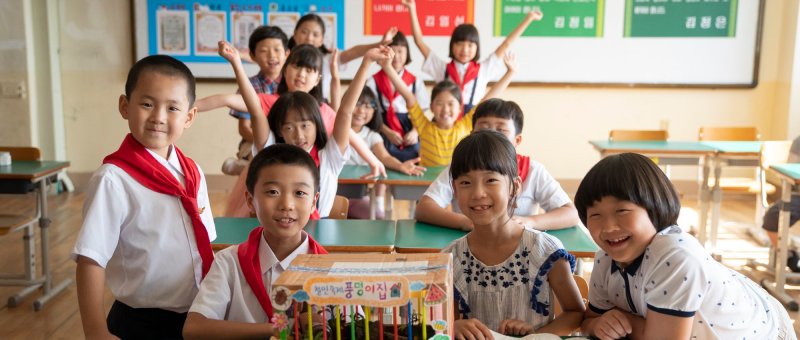
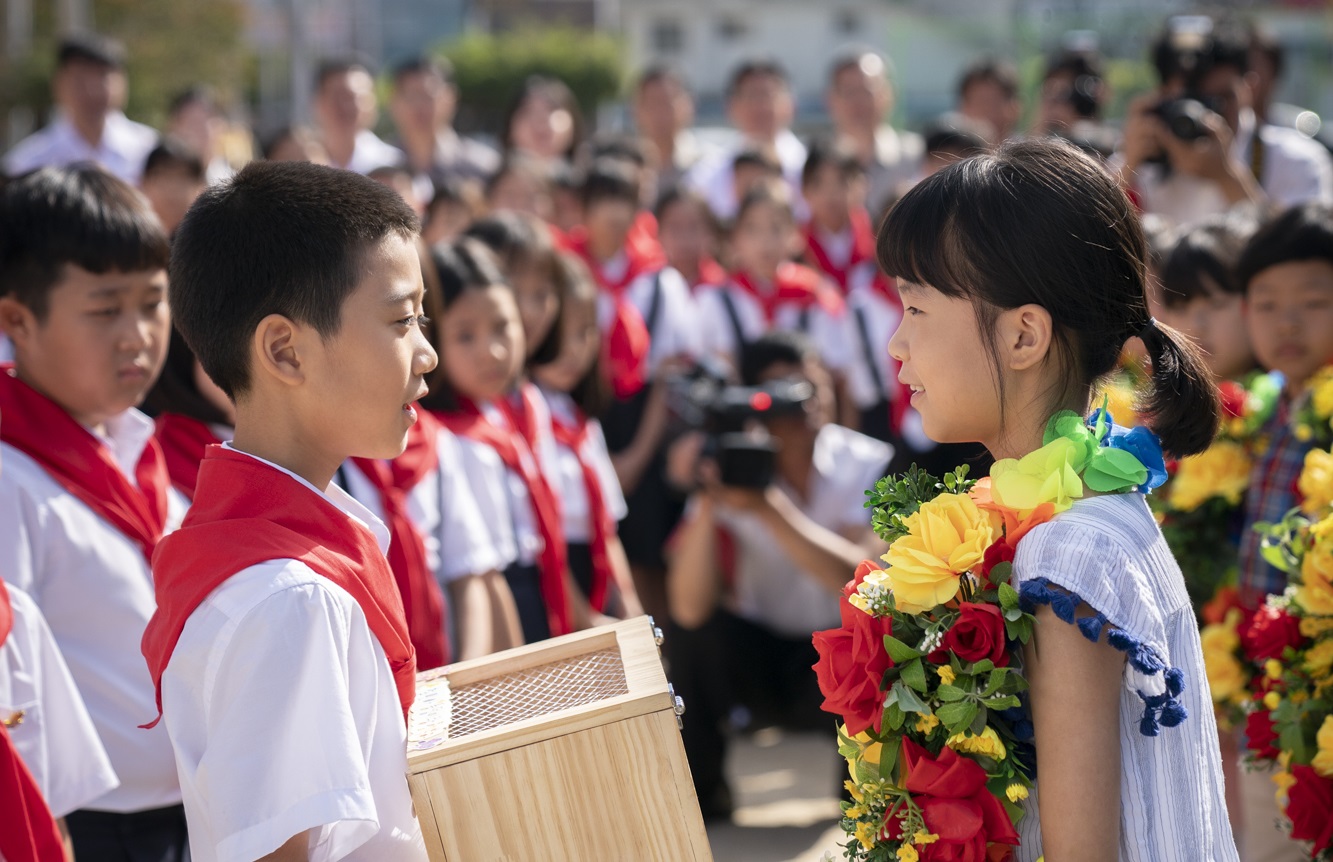
“Cousins should get along,” according to a North Korean soldier who’s just found out his son has been bullying his nephew, ironically by drawing a red line down the middle of their bedroom to make it clear that this interloper isn’t wanted in his territory. Red lines become a theme in Jim Kwang-kyo’s charming childhood drama The Beetle Project (숙제, Sugje) in which the pure-hearted goodness of a series of children knows no borders and sees only common ground between themselves and a North Korean boy who’s lost his pet beetle that he was keeping as a homework project.
Luckily, the beetle is discovered by best friends Ah-ram and Jae-hoon who decide to finish the boy’s homework for him in the hope that they will somehow be able to get the beetle back to him. Of course, that’s easier said than done given that Lee Chul-min lives in the North so it’s not like they can they just pay him a visit to give it back. The irony is that the beetle only came to them because of a flood that was partly caused by the North’s sudden opening of its floodgates prompting calls for greater co-operation across borders to prevent potential tragedies such as these.
Meanwhile, we discover that Lee Chul-min is experiencing a degree of familial discord as his younger brother Chul-kyu is resentful of the fact he’s been sent to the city to study in a better school while he’s been kept at home and is forced to work in the fields with his mother. The film’s depiction of North Korea is largely utopian in which the repressiveness of the regime is barely felt aside from the occasional presence of soldiers and a degree of foreboding in the threat that the growing feud between the boys poses to a carefully balanced order. Chul-min’s cousin Chul-ju is also resentful that he now has to share everything including his room and has been bullying Chul-min because of it, though Chul-min is a stereotypically good boy who puts up with everything without making a fuss and makes sure to tell his mother what a good time he’s been having in the city where they get to eat ice cream every day when it’s hot.
Both sets of children deeply care about the fate of the beetle and what’s best for it, only to become a political football that’s picked up by a shady conglomerate Ah-ram’s journalist father Jin-kyu tried to expose for a food contamination scandal only to have to make a humiliating retraction on air when the station is ordered to back off. Hooked on the PR potential, they try to use the beetle, and Ah-ram, for their own ends, while the family simultaneously becomes the target of scammers promising they can help return the beetle for a small fee, and rightwing trolls who harass them for being North Korean collaborators. When one of the other kids damages the beetle’s enclosure. Ah-ram and Jae-hoon find themselves drawing another red line to keep them out only to later think better of it.
Disappointed by the adults around them, including Jin-kyu who is still struggling to deal with the death of his wife and his changed relationship with Ah-ram whom he sent to live with her grandmother in the country, the kids decide they want to send the beetle back by themselves and hand it straight to Chul-min. Jin-kyu ends up getting involved with an online insect enthusiast group who unbeknownst to him are all children and strangely led by a little girl who for some reason talks like a middle-aged farmer’s wife. In any case, it’s very much children doing it for themselves and realising that they have a lot in common despite the border between them. Ah-ram is worried that Chul-min will get into trouble for losing his homework and probably misses his beetle while she herself is also still processing her mother’s death for which she blames herself and adjusting to her new life in the country where she’s supported by her forthright schoolteacher who can’t resist resorting to colourful language whenever she encounters “injustice”. In its way, the beetle becomes a kind of symbol for Korea itself with the children promising to meet again as adults so they can find out what happened to it while wishing the best for “Beety” and vowing to look after it together. Charming and wholesome, the film is a gentle advocation for a spiritual, if not necessarily literal, reunification and a sense of solidarity among the younger generation dedicated to doing the right thing in a world in which adults call lies “flexibility” and think one beetle is no better than another.
The Beetle Project screened in Chicago as part of the 19th edition of Asian Pop-Up Cinema.
 Windows on Worlds