All the Songs We Never Sang (Chris Rudz, 2023)

A young woman finds herself diving into the past after receiving a less than enthusiastic welcome on visiting her mother’s island home in Chris Rudz’s gentle indie drama, All the Songs We Never Sang. As the title implies, the film is as much about time wasted in bitterness as it is about the surreality of life on a small island where pearl diving is still a dominant force in the local economy.

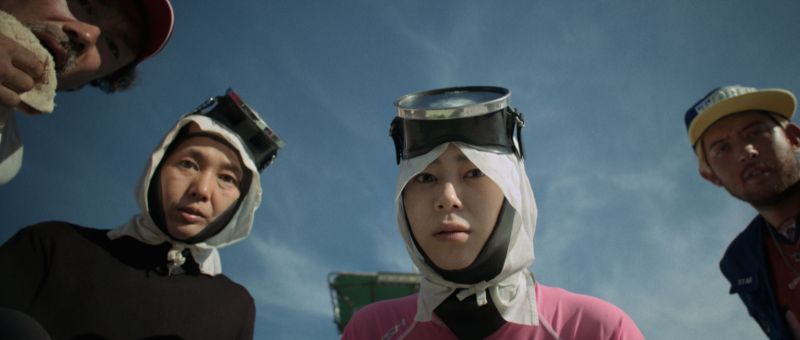
17-year-old Natsumi (Miru Nagase) has travelled to Kojima in search of her estranged aunt, Reiko (Junko Kano), her mother’s twin sister, only as it turns out Reiko is a strange and embittered woman who is only ever comfortable in the water. She grudgingly allows Natsumi to stay but only to avoid further island gossip and is unconvinced by her desire to become a pearl diver like her ancestors. As far as we can see, Reiko is one of a handful of divers left on the island and the other two are approaching old age. In fact, there don’t seem to be a lot of other young people around except for Shijo (Kai Hoshino Sandy), an eccentric boat operator and aspiring rapper with a nascent crush on Natsumi. Nevertheless, people on the island mainly remember her mother Akiko as the one who ran off with a fisherman and was never seen again.

Though the older pearl divers are kind to her, not everyone is happy to see an outsider visit and most especially rookie policewoman Yuka (Aoi Shono) who according to some has been given grandiose ideas thanks to going to university on the mainland. She is suspicious of everyone and hungry to uncover some kind of major crime, quickly coming up with an unlikely yakuza invasion as a possible explanation for a missing boat despite the fact that its owner is known to be fond of a drink or two and may simply have neglected to tie it up properly. A patient superior, Sarge (Pierre Taki), tries to explain the nature of small community policing to her that she should integrate more with the people of the island so she can tell when something’s not right and know best how to help. But her zeal for preventing crime eventually leads to accidental cruelty in bluntly divulging upsetting news, smugly proud of her successful bust without reflecting on its implications or the necessary hurt caused by an improper application of her authority as a police officer.

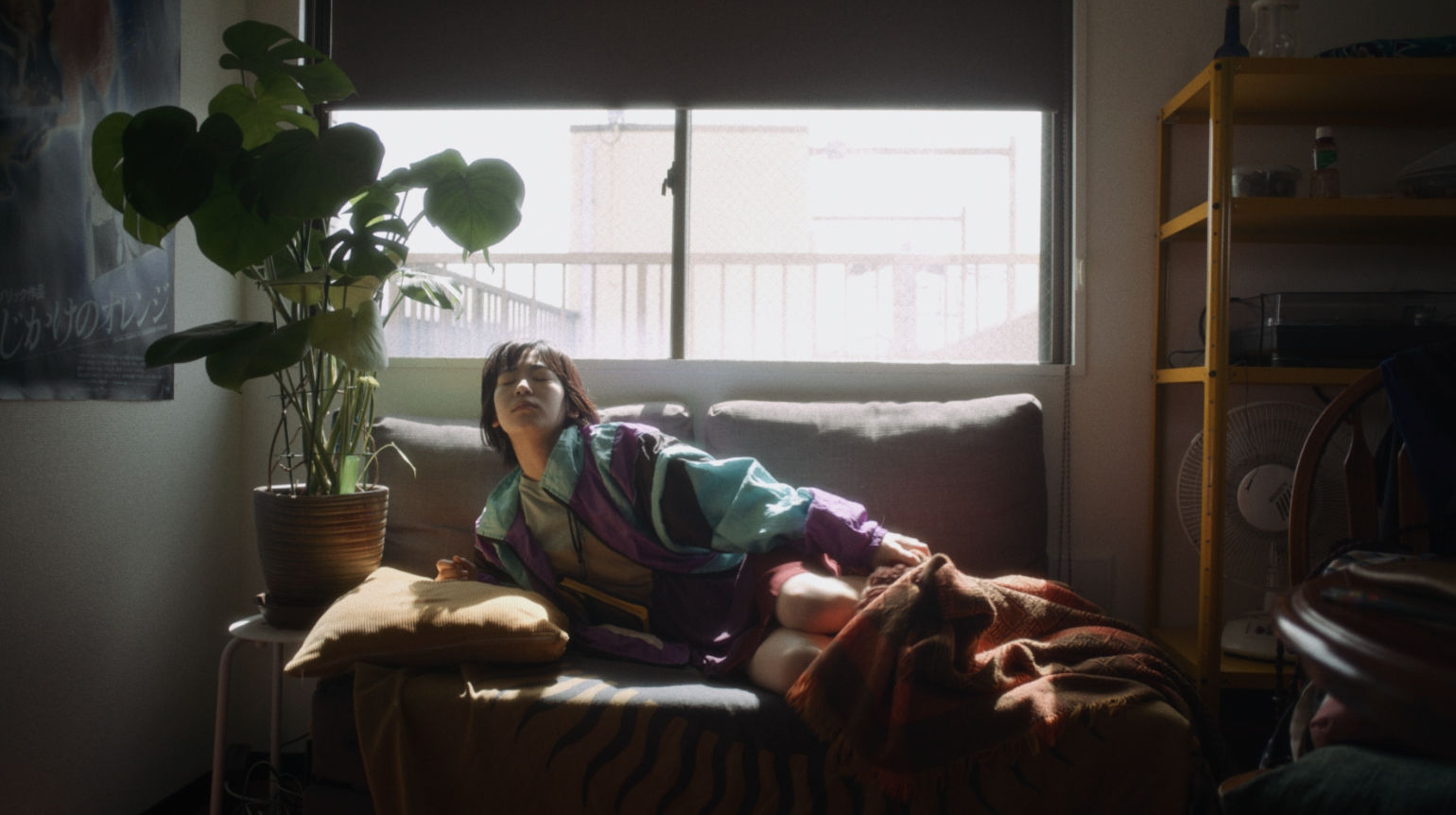
In a way it’s this kind of insensitivity that lies at the centre of the film as it becomes clear that Rieko has wasted the last 18 years of her life in bitterness unable to get over an act of emotional betrayal. She’s sworn off music, which she once loved, and often retreats to her bathroom to plunge herself into the water only really at peace when she’s diving. Looking for a treasure her mother supposedly left for her, Natsumi is diving too, reaching into the past while trying to figure out why her mother and Rieko became estranged and looking for a sense of home and family she feels she’s lost.

That might be the real treasure that her mother left for her even if she has to go diving for it and will need some help to bring it to the surface. In some ways a typical “island movie” about a slightly strange place more or less cut off from time, Rudz hints at a sense of despair in living somewhere there is not much else to do than drink and sing but otherwise captures the warmth of the community most of whom are very welcoming of eccentrics and outsiders even if somewhat prone to gossip for a lack of other entertainment. Through the process of their reconnection, old wounds begin to heal and a kind of peace is found with the past which is in many ways filled with “mermaid’s tears” more than pearls of joy. Still there’s a kind of lament for the songs unsung because of hurt and bitterness, and for the lost love and opportunities that went with them that has its own sense of poignancy tempered by the infinite possibilities of making up for lost time amid the gentle island atmosphere.


All the Songs We Never Sang screened as part of this year’s Osaka Asian Film Festival 

Original trailer (English subtitles)
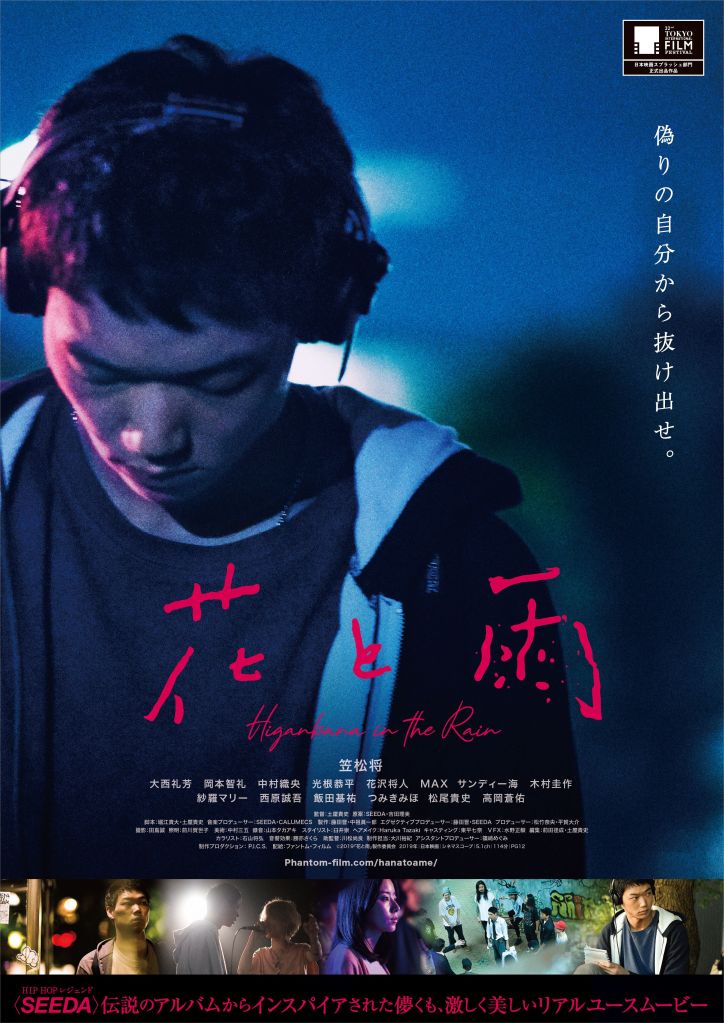
Flowers and Rain (花と雨, Takafumi Tsuchiya, 2019)

A troubled young man seeks fulfilment in hip hop glory but his self-involved insecurities frustrate his dreams in Takafumi Tsuchiya’s stylish coming of age drama Flowers and Rain (花と雨, Hana to Ame). Inspired by the album of the same name by real life rapper SEEDA, Tsuchiya’s film finds its conflicted hero consumed by a sense of internalised rage and cultural displacement as he struggles to find his place in conformist Japan after a childhood spent abroad realising only too late that he was not the only one struggling and that his self-absorbed inferiority complex has cost him dearly. 

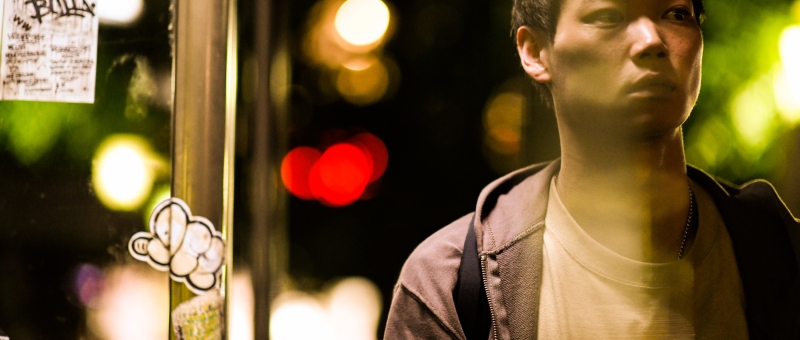
Hakuhiro (Sho Kasamatsu) spent his early childhood in London where his father was working at the time. Whilst there, he was sadly subject to common racist microaggressions from other children who tried to put him down by showing off to their friends with ugly playground chants. Nevertheless, Hakuhiro and his older sister Saki (Ayaka Onishi) profess that they prefer living in the comparatively less stressful UK than in conformist Japan and it is indeed Saki who seems to have the most difficulty when they are forced to move back after the financial crisis. She is determined to return to the UK for university, but as we later see ultimately remained in Japan. Hakuhiro meanwhile has become a sullen and distant teen, bullied by the high school delinquents for being a returnee student. He gives them the same treatment as he gave the playground bullies, ignoring them until he is able to ignore them no more. Mostly he just keeps to himself, listening to hip hop on cassette via his retro walkman and vintage headphones. 

Hakuhiro dreams of becoming a top rapper by rapping in English, but a small circle of likeminded friends including a fellow high school student, Aida, are unconvinced. Though he actually comes from quite a wealthy family and still lives at home supported mainly by his parents, Hakuhiro wants to rap about the same things as his heroes such as street life and social oppression, none of which rings true to those around him who are painfully aware that he is somewhat uncomfortably appropriating the struggles of others and pretending to be something he’s not. He blames his friend Aida for his lack of success in not writing good enough beats for his words and Japan as a country for failing to “get” true hip hop. His sense of insecurity eventually tips over into belligerent arrogance that sees him taken in by an unscrupulous promoter who allows him to humiliate himself during a live rap battle with his high school bullies resulting in the probable end to a credible career as an underground rapper. 

To get more experience of what he sees as “the life”, Hakuhiro has also gotten himself involved with drugs firstly by growing cannabis and then by trafficking cocaine on behalf of a shady street gang. His relationship with his family has obviously suffered and though he’s nominally gone back to uni he doesn’t seem very invested in his studies. Saki, herself troubled in repeatedly failing to pass the final exams for her MBA, tries to talk some sense into him but Hakuhiro repeatedly fails to notice that she is also in distress and trying to tell him something important. A brush with the law pushes him back towards the straight and narrow, but does not exactly humble him and he is still blind to the various ways in which his self-absorbed and arrogant behaviour ruins his relationships and with them his chance of ever making it in the music business. 

Only tragedy finally awakens him to his failings. As Aida had tried to tell him, his problem was a refusal to face reality as reflected in the inauthenticity of his lyrics. If he wants to make it as an artist he’ll have to face himself from a position vulnerability and give up the macho posturing of his adolescence for something a little more “real”. Drawing inspiration from SEEDA’s life and music, Tsuchiya is unafraid to allow his hero to appear unsympathetic even while emphasising the lingering traumatic echoes of a sense of displacement and rejection that prevents him from stepping into adulthood with a fully formed identity, but eventually allows him to find a sense of peace in art even if too late to repair fractured relationships with those he loves.


Flowers and Rain streamed as part of this year’s online Nippon Connection Film Festival.

Original trailer (no subtitles)