Samurai Hustle Returns (超高速!参勤交代 リターンズ, Katsuhide Motoki, 2016)

At the conclusion of 2014’s Samurai Hustle, it seemed that samurai corruption had been beaten back. Corrupt lord Nobutoki had got his comeuppance and the sympathetic “backwoods samurai” Naito was on his way home having found love along the way. Of course, nothing had really changed when it comes to the samurai order, but Naito was at least carving out a little corner of egalitarianism for himself in his rural domain. 

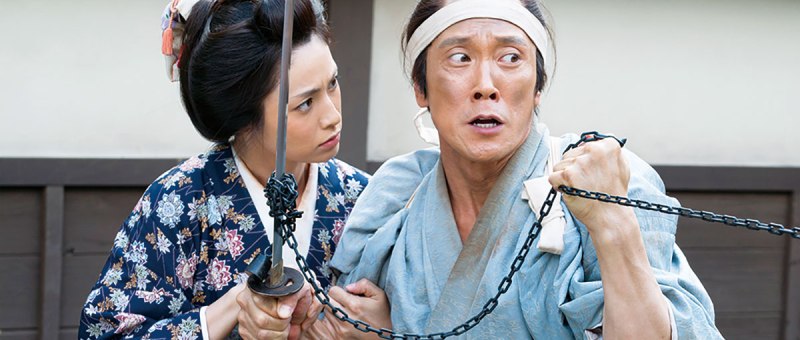
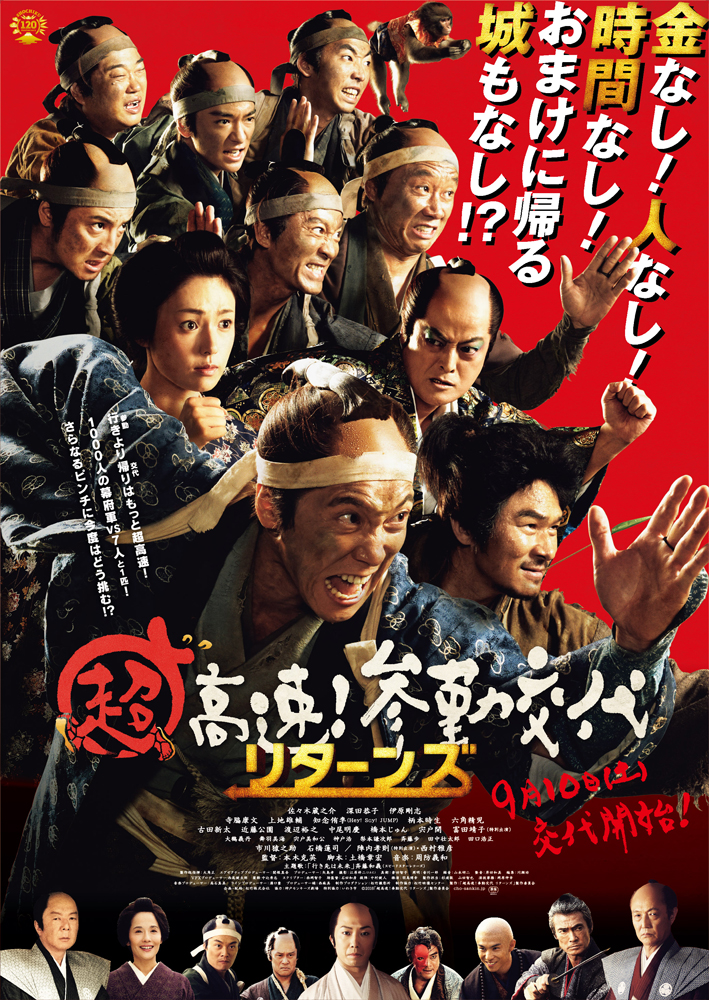
The aptly named Samurai Hustle Returns (超高速!参勤交代 リターンズ, Cho kosoku! Sankin kotai returns) picks up a month later with Naito (Kuranosuke Sasaki) taking a rather leisurely journey home in preparation for his marriage to Osaki (Kyoko Fukada) only to receive news that there has been a “rebellion” in Yunagaya. Predictably, this turns out to have been orchestrated by none other than Nobutoki who has been released early from his house arrest thanks to his close connections with the shogun but has been humiliated at court and is otherwise out for revenge with a slice of treasonous ambition tacked on for good measure. Just as in the first film, but in reverse, Naito and his retainers must try to rush home to get there before the imperial inspector arrives or else risk their clan being disbanded. 

Meanwhile, the shogun is absent at the wheel after having decided to resurrect an old tradition abandoned because of its expense and inconvenience to make a pilgrimage to Nikko. In an interesting parallel, the farmers are uncharacteristically upset with Naito, blaming him for the destruction of their fields because he wasn’t there to protect them. Naito also feels an additional burden of guilt given that, having run flat out all the way to Edo, he took his time coming back leaving his lands vulnerable to attack while he now risks losing the castle. Nobutoki wastes no time at all looking for various schemes to undermine him while secretly plotting to overthrow the shogun and usurp his position for himself. 

As in the first film, the battle is between samurai entitlement and the genial egalitarianism of Naito’s philosophy. “The real lords of Yunagaya are people like you who are one with the soil,” he tells the farmers, while Nobutoki sneers that “lineage rules supreme in this world, inherited wealth breeds more”. It doesn’t take a genius to read Nobutoki’s machinations as a reflection of his insecurity, that he invests so much in his rights of birth because he has no confidence in his individual talents. Naito counters that it’s the people around him that matter most, “people are priceless. Friends are priceless,” but Nobutoki rather sadly replies that people will always betray you in the end. Even the shogun eventually agrees that “anger brings enemies, forbearance brings lasting peace” but treats Nobutoki with a degree of compassion that may only embolden him in his schemes.

“Nepotism has endangered the shogunate,” the shogun ironically sighs apparently lacking in self-awareness even if beginning to see the problems inherent in the samurai society but presumably intending to do little about them. “No government should torment its people,” Naito had insisted on boldly deciding to retake his castle but even if this particular shogun is not all that bad, it’s difficult to deny that his rule is torment if perhaps more for petty lords like Naito than for ordinary people or higher-ranking samurai. Naito struggles to convince Osaki that she is worthy of his world and only finally succeeds in showing her that she has nothing prove and love knows nothing of class. The people of Yunagaya are impoverished but happy, satisfied with the simple charms of pickled daikon unlike the greedy Nobutoki whose internalised sense of inadequacy has turned dark and self-destructive. 

Then again, Naito is still a lord. He obeys the system out of love for his clan and a genuine desire to protect those around him but otherwise has little desire to change it actively even if his quiet acts of transgression in his closeness with the villagers and professions of egalitarianism are in their own way a kind of revolution in a minor rejection of the shogun’s authority to the extent that the time allows. Nevertheless, with his return journey he once again proves the ingenuity of a backwoods samurai getting by on his wits as he and his men race home to save their small haven of freedom from samurai oppression from the embodiment of societal corruption.


Trailer (no subtitles)

Mr. Suzuki: A Man In God’s Country (鈴木さん, Omoi Sasaki, 2020)

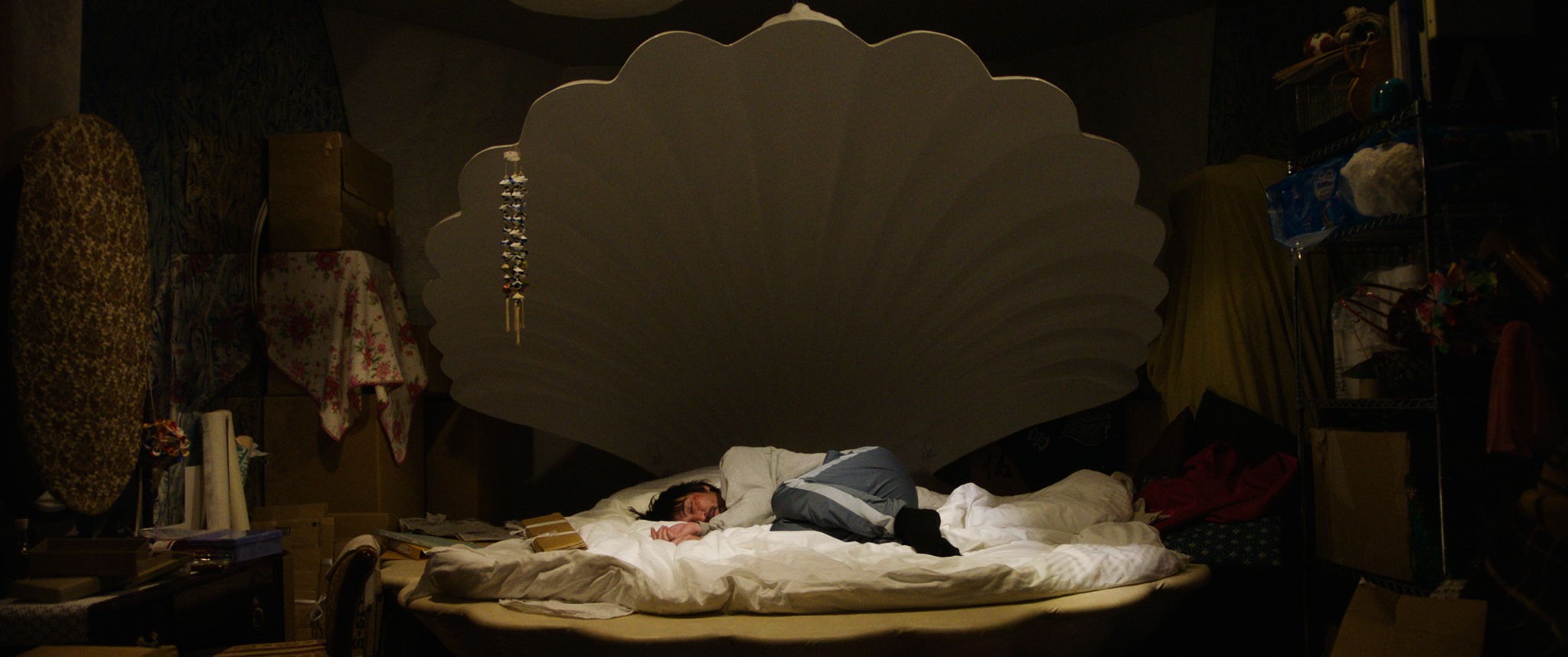
God is dead, or maybe not in Omoi Sasaki’s deadpan satire of the ills of contemporary Japan, Mr. Suzuki : A Man in God’s Country (鈴木さん, Suzuki-san). Set in a seemingly isolated fascist state, the film lays bear the intergenerational conflict of the ageing society along with the lonely resentment of those in middle-age caught between two stools in a society which seems only to cater for the young and the old while the powers that be, determined to build a “wholly beautiful city”, go to great lengths to cure the falling birthrate. 

It’s this that 44-year-old unmarried care home attendant Yoshiko (Asako Ito) fears especially when randomly informed one day that if she remains without a husband her citizenship will be cancelled and she’ll have to leave the city unless she elects to become a member of the military which is currently exempt. Her friend Ayako chooses to do just this, no longer able to bear the pressure of being unattached, but Yoshiko is unwilling to surrender her way of life on the whim of some government official. She is constantly bombarded with invitations to the “Beautiful Matchmaking” event but is later rejected because it is only for the “young” only to be reprieved by the mayor who tells her to come back in more suitable attire while declaring that God will not abandon those who make the effort. 

This almost forced insistence on national service as mediated through childbirth and the creation of “beautiful families” as an expression of one’s loyalty to “God”, the nation’s mysterious leader who has not been seen in 20 years, is of course disturbing even as other voices echo the words of real life politicians suggesting that those who have not born children are “defective adults” who must serve their country in other ways such as in the military. With God apparently in poor health the government reads out all his statements on his behalf, issuing commands in his name while distributing his image throughout the land as the locals continue to believe blindly in his existence. 

A crunch point comes for Yoshiko when she discovers a dishevelled middle-aged man taking shelter in the “Utopia” care home where she works. Rather than turn him in she decides to let him stay and later abruptly proposes a paper marriage so that she’ll avoid losing her citizenship. Though “Suzuki-sensei” (Norihiko Tsukuda) proves a hit with the ladies once they discover his musical talents, his outsider status later becomes a problem when the government use the pretext of a soldier’s death to claim they’ve started a war and are on the look out for “enemy spies” though they are also as it turns out looking for the absent God whose identity we can guess. Sights of the old ladies running defence drills with broom handles uncomfortably recall those of peasants training with bamboo spears during the war as does one old lady’s reluctance to take part having been led to blame herself for her brother’s wartime death while gossip that spies loot and poison wells is reminiscent of the pogrom against Koreans in the aftermath of the Great Kanto Earthquake of 1923. A gang of thuggish youths with a penchant for happy slapping the homeless insisting that they “do not deserve to live in God’s beautiful country” instantly become spy hunting vigilantes, while rewards are offered for informants reporting anyone whose face they do not recognise. 

The offer presents Yoshiko with a dilemma. Rather than marry him, she could decide to turn Suzuki in and get guaranteed citizenship along with a pension but would it really be worth the price of living with his betrayal? Mr. Suzuki’s true identity will come as no surprise, though his sojourn among the believers exposes the shakiness of the regime when he is mobbed by a militia of angry townspeople out for blood hellbent on rooting out a “spy”, ironically arranged in the form of a cross as they occupy a T-section surrounded by fields. Shuffling between the disturbing and the merely strange, Omoi Sasaki’s deadpan, absurdist drama has its share of poignancy in the frustrated connection between outcasts Yoshiko and Suzuki while satirising the surreal authoritarianism of the world all around them with its mandated hair cuts and bizarre portrait of its absent leader which must be bowed to on all occasions but perhaps does not stray so far from the contemporary realities in all of its discomforting talk of beautifying the nation through the sacred act of childbirth. 


Mr. Suzuki: A Man In God’s Country streamed as part of this year’s Nippon Connection.

Original trailer (English subtitles)

Thermae Romae

THERMAE ROMAE-T

Lucius ambulat in Tokyo? Review of improbable time travel comedy Thermae Romae up at UK-anime.net.


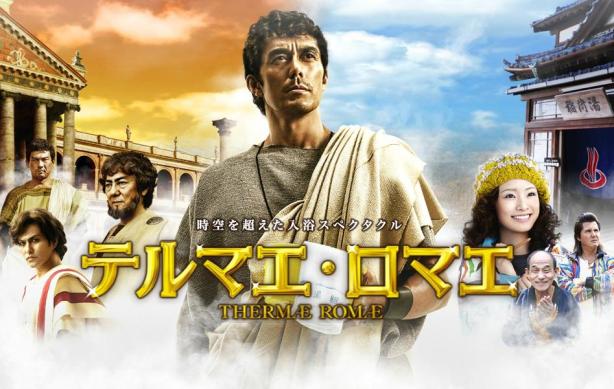
Pop quiz – what do modern day Japan and Ancient Rome have in common? Fish sauce? Emperor worship? Sandals? More than you thought, wasn’t it? Well, the correct answer is public bath houses and sure enough the people of modern day Tokyo still love going to the public bath even though they enjoy the luxury of being able to bathe at home! Of course, bath house culture with all its social and political uses and divisions was one of the things the Roman Empire took with it wherever it went. However, there must have been a time when some Romans began to feel their baths were getting a bit stale and in need of a new ‘modern’ twist, but what to do? What if they could leap forward in time and learn from the 21st century bath culture of modern Japan! Enter down on his luck architect Lucius who suddenly finds himself in a strange land full of strange looking people who seem to have taken bath technology to its very zenith.

Lucius Modestus (Hiroshi Abe) is a once successful bath architect with a case of serious designer’s block. Replaced on a prime project because he’s been unable to come up with any ideas he decides to go for a soak at the local bath house but whilst clearing his head underwater he finds himself sucked through a passage way only to reappear in a very strange looking place – it’s a bath house alright, but not as we know it! As they’re speaking a strange language he doesn’t understand, Lucius assumes the elderly men bathing here must be slaves and he’s been sucked into the “slaves only” part of the baths. Some of this stuff is kind of cool though – what are these funny spigot like things for, and these handy little buckets? Wait – they have baskets for their clothes?! We could do with some these in our bit! And so Lucius experiences the wonder of public bathing in Japan to the extent that it makes him cry with joy at which point he returns to Ancient Rome and begins to put some of these techniques to use in his designs. Travelling back and fore, Lucius always seems to run into the same Japanese girl who wants to make him the star of a manga and group of kindly old men. Can Lucius finally build the bath house of his dreams and stop a conspiracy against his beloved Emperor Hadrian at the same time?

Based on Mari Yamazaki’s manga of the same name (which also received an anime treatment from DLE), Thermae Romae sticks fairly closely to a fish out of water format for the the first half of the film as Lucius becomes by turns confused and then entranced by the various pieces of modern bathing technology he encounters on his travels. As a Roman encountering other people who are obviously not Roman, he of course adopts a superior attitude and assumes these people are either slaves or ought to be and so is extremely bewildered that their advancements seem to have eclipsed those of his own beloved Rome. These situations obviously provide a lot of room for humour as Lucius encounters various things that seem perfectly normal to us but strange and alien to him – his pure joy at discovering the wonder of the multifunctional Japanese toilet being particularly notable. It does though become fairly repetitive as Lucius finds himself in different situations which are essentially the same joke in different colours but then when the plot element begins to kick in later in the film it too fails to take off and feels a little too serious when taken with the wacky time travelling antics we began with.

Aided in his quest Lucius meets several amusing supporting characters including the group of elderly men from the baths who didn’t really need the help of an improbable ancient Roman to get themselves in trouble and Mami who functions as a kind of love interest who’s cast Lucius as the hero in her next manga. Mami begins learning about the Roman Empire and takes a course in Latin which helps a lot when she too finds herself in Ancient Rome and facilitates a kind of cross cultural exchange as she steals ideas from Rome for her manga as Lucius stole for the baths. However, the romantic comedy element never really comes together and even as Mami continues to pine over her noble Roman, Lucius remains aloof in the universal belief that all non-Romans are inferior. Though he does come to grudgingly acknowledge that the ‘flat faced people’ as he calls them have particular strengths such as their willingness to work as a team and put collective success ahead of personal gain, he never quite sheds his Roman arrogance.

It’s all very silly but undeniably quite funny if often absurd. We hear everyone in Rome speaking in Japanese and Lucius continues to think in Japanese wherever he actually is but obviously once he gets to Japan he can’t understand what anyone’s saying and attempts to communicate with them in Latin (whilst still giving his interior monologue in Japanese). Likewise, when Mami learns Latin she uses it to communicate with Lucius in Japan but once they get to Rome, all their ‘Latin’ is Japanese too which causes problems when the old men arrive because they’re speaking the same language as everyone else yet can’t understand anyone or be understood – which might be why they don’t get to say very much other than to Mami. It’s all quite strange and disorientating but kind of works as does the largely Puccini based score which screams 19th century Italy much more than Ancient Rome but helps to give the film the air of classical pomposity it’s aiming for. Big, ridiculous, silly fun – no one could accuse Thermae Romae of having any kind of serious message but it does provide genuinely entertaining silliness for the majority of its running time.