In Our Prime (이상한 나라의 수학자, Park Dong-hun, 2022)

Education is supposed to be the great leveller, a true meritocracy in which a combination of hard work and innate ability can enable anyone to follow their chosen path as far as it will go. The reality is however far less idealistic. Park Dong-hun’s In Our Prime (이상한 나라의 수학자, Isanghan Naraeui Suhakja) is the latest in a series of Korean films taking aim at corruption within the educational system along with a persistent classism that ensures only the “right” kind of people are allowed to prosper. 

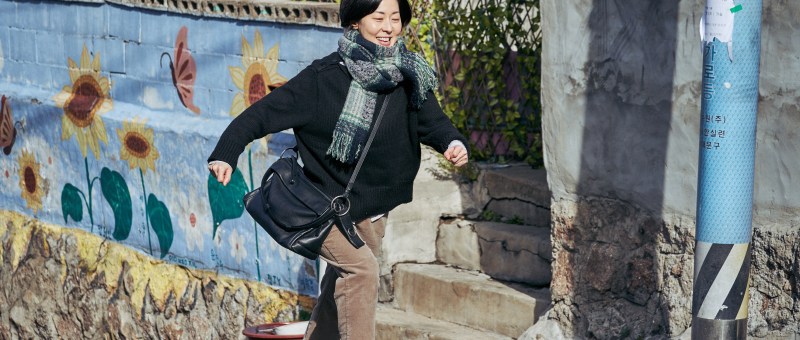
Han Ji-woo (Kim Dong-hwi) knows he’s not the “right” kind of person and feels out of place at the elite boarding school where he is bullied by teachers and students alike for being a scholarship boy amid the children of mostly wealthy families. Though he won the place though being a top student at his previous school, now his grades are merely average and he’s bottom of the class in maths. Ji-woo’s odious, elitist teacher coldly tells him that his case is hopeless and he’ll never get into a top league university with these kinds of grades at this kind of school. He pressures Ji-woo into applying to transfer out which he is reluctant to do because he knows how much his attending such a prestigious school means to his widowed single mother. In any case as we later discover, the teacher merely has it in for him openly complaining with other members of staff about having to fuss with paperwork for kids on scholarships and bursaries who in his opinion don’t really belong in a place like this which is clearly geared towards perpetuating the privilege of the children of the elite at the expense of those like Ji-woo. 

When Ji-woo is caught smuggling in pork and soju at the behest of his exploitative roommates he refuses to dob them in, making the unlikely claim that he intended to consume all four meals himself. The teacher first praises his idealistic stance but then calls him an idiot because the other boys wouldn’t do the same for him nor are they coming forward themselves to take responsibility. Perfectly happy to let the scholarship boy take the blame one of them even crassly slips Ji-woo some money afterwards, genuinely confused when Ji-woo tries to turn it down claiming such things are unnecessary between friends. Nevertheless, the incident brings him the attention of the “commie officer”, a North Korean defector (Choi Min-sik) working as the nightwatchman who easily solves Ji-woo’s impossible maths problems. The officer eventually agrees to teach him maths but only on the premise that he doesn’t care about tests or grades but solely on the art of learning. 

What he teaches Ji-woo is a valuable lesson that cuts straight to the quick of the issues within the educational system in which children are being taught to blindly answer standardised questions without developing critical thinking skills. The first problem he shows him has a deliberate error in it, but Ji-woo is so focussed on giving the correct answer he doesn’t stop to consider the question itself may be wrong and as the officer is fond of saying there can be no correct answer to an incorrect question. Yet this new philosophy of maths in particular being a purely rational science in which there is only one true answer brings Ji-woo back into conflict with his teacher who complacently teaches to test and humiliates him when he points out one of the test questions is badly formulated. The teacher tells them the correctness of their answer is irrelevant for they must answer in accordance with the textbook and willingly say that black is white if the textbook says it’s so. Meanwhile it also becomes apparent that he has been taking kickbacks from parents getting wealthy students into an elite tutoring group where he leaks the questions on upcoming exams.

This discovery prompts a minor rebellion by rich kid Bo-ram (Jo Yun-seo) who becomes disgusted with her elitist mother after being unwittingly enrolled in the cheating cabal while already resenting her for having made her give up playing the piano. For the officer, music is a mathematical language and merely an expression of the beauty of numbers which can used to explain everything there is in the world, yet as we discover he left North Korea after finding out that his research was used in weapons production only to become disillusioned with the South on realising that here people merely use it as a tool for advancement towards dull and conventional lives in the service of capitalism. When Ji-woo admits that he supposes he wants good grades to get into a good uni and then get a good job to be set for life, the officer decides to broaden his horizons encouraging the better instincts the elites at the school had rejected and showing him how to think for himself rather than blindly follow what he’s being taught. 

All that might seem quite ironic for a man from North Korea pointing out the unhelpful brainwashing of a rote learning system along with the unpleasant complacency of Ji-woo’s teacher not to mention his unethical hypocrisy. Nevertheless, the officer has his own tragic past which suddenly rears its head just as the two begin to form a paternal bond and Ji-woo finds himself at a moment of crisis once again pushed towards a transfer. Though the system is stacked against them, Ji-woo and Bo-ram eventually find their way through it in their shared resistance bolstered by the officer’s teaching as they gain the strength to fight back with honesty and integrity. It may be a slightly rosy conclusion implying the system has been corrected as if Ji-woo’s teacher were the only problem rather than the product of its corruption but does at least make the case that integrity is the one thing that pays but can’t be bought.


International trailer (English subtitles)
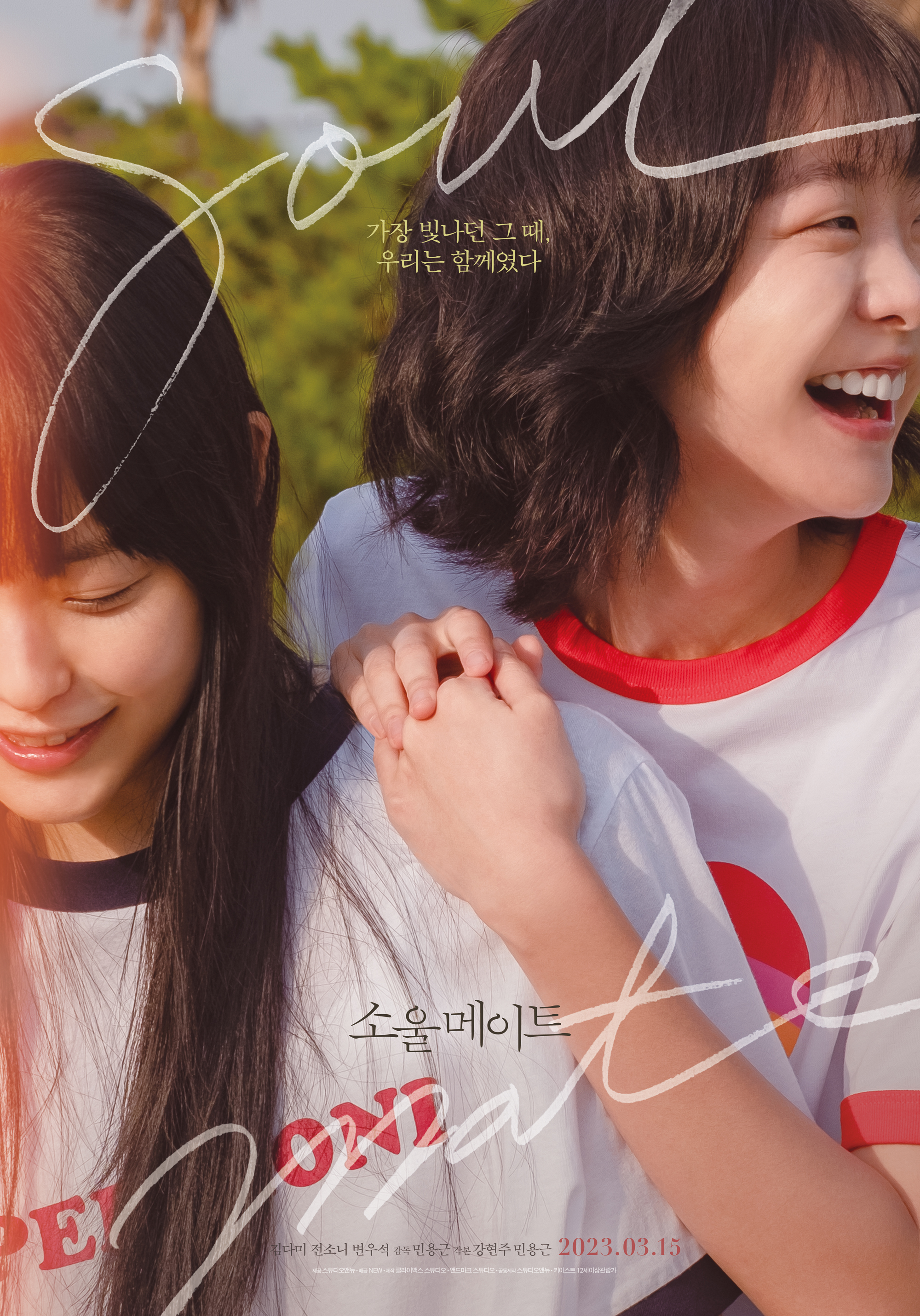
Soulmate (소울메이트, Min Yong-keun, 2023)

“Why should you step out for him?” one friend asks another, seemingly cutting to the quick of the fracture point in their relationship though ultimately unwilling to carry the conversation to its natural conclusion. A remake of Derek Tsang’s Soul Mate, Min Yong-keun’s frustrated love story is warmer and shorn of the icy angst which defined the original if also less certain in its implications and in the end profoundly melancholy in the missed opportunities and awkwardness of an unspoken affection. 

In the present day, a near 40-year-old Mi-so (Kim Da-mi) is called to a gallery to witness a giant and intricately drawn photorealistic portrait of herself attributed only to “Ha-eun.” The gallery owner has reason to believe the two women are friends and asks Mi-so to help her contact the reclusive artist, though she says that she knew only briefly in childhood and hasn’t been in contact with her for many years. This surprises the gallery owner as she’s uncovered a lengthy blog that outlines the entirety of their friendship in sometimes painful detail. 

The portrait staring back at her with her own gaze which is also the gaze of Ha-eun (Jeon So-nee) the artist confronts her with the painful realities of her past and the continuing absence of Ha-eun from her life. All we can know for the moment is that at some point they were separated and that Ha-eun has seemingly disappeared, though the Mi-so we see now seems so different from the one we encounter in childhood who is as Ha-eun describes her “free and also very delicate”. 

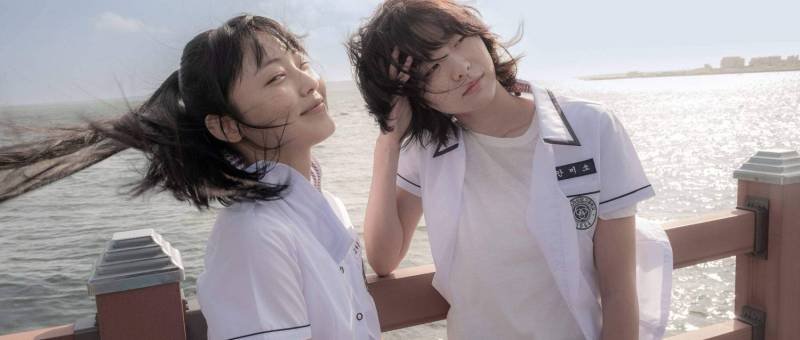
Inseparable for much of their youth, the relationship between the two women begins to fracture in adolescence as their paths begin to diverge. Ha-eun meets a boy, Jin-woo (Byeon Woo-seok), which necessarily disturbs their friendship by disrupting its dynamic. Unlike Tsang’s original in which it becomes clear that perhaps neither woman was in the end very interested in the boy who was himself a kind of proxy for the mutual attraction they could not articulate, Min presents him as a more conventional romantic rival albeit one who represents the sense of conventionality that the more conservative Ha-eun continues to cling to in contrast to the free spiritedness represented by Mi-so and her love of Janis Joplin. 

Ha-eun is confronted by the darker sides of Mi-so’s unconventionality during a trip in which she witnesses Mi-so get a bottle of wine out of a collection of drunk businessmen by offering to mix them drinks. An argument about money and power dynamics soon returns them to the fault line in their relationship, Jin-woo and their complex feelings for each other. Wilful misunderstandings lead to irresolvable resentments, each believing they are somehow in the way while equally hurt by the dissolution of their friendship and too proud to say so.

Min’s drama decreases the homoerotic undertones of Tsang’s original and opts instead for the defence of a deeply felt platonic friendship that may have developed into an unconventional family unit if given the opportunity. An exchange of earrings on two separate occasions seems much more convincing as an act of marriage than the more literal union between Ha-eun and Jin-woo. Yet maybe that’s the message the portrait was trying to deliver, a sign of an unspoken love that reunites Mi-so with the childhood self who knew it was possible to draw one’s feelings while seeing herself as Ha-eun saw her, Ha-eun’s own eyes reflected back at her. The two women in a sense switch places, becoming one while split in two and eternally connected if physically separated. 

The irony is that it’s the fear of losing it that erodes their relationship, and pride more than shame that divides them even if it’s ultimately the unwillingness to confront their feelings and the inability to articulate them that keeps them apart. Nevertheless, they eventually come to an acceptance of themselves as sun and moon, two halves one whole continually incomplete happiest only in each other’s company. Then again, there are some very unreliable narrators in play and perhaps we can’t be sure that everything we’ve been told is true yet even if not literally so still speaks of a deeper emotional truth and the deepening wound of lost love comforted only by memory and the act of recapturing it. 


Soulmate screened as part of this year’s London Korean Film Festival.

Trailer (English & Korean subtitles)

Lucky Chan-sil (찬실이는 복도 많지, Kim Cho-hee, 2019)

Life can be cruel and unpredictable. The titular heroine of Lucky Chan-sil (찬실이는 복도 많지, Chansilineun Bokdo Manji) thought she’d go on making movies with the same group of like minded people until the day she died only to have the rug pulled from under her by an ironic twist of fate that leaves her feeling worthless and exiled as if she’s wasted her youth on a one-sided love affair with cinema. What are you to do when your whole world collapses and you aren’t even sure who you are anymore? The answer, apparently, is to “dig deep”, maybe make a few mistakes, but figure out what it is you really want and then do that. 

The trouble is, all Chan-sil (Kang Mal-geum) had ever thought of doing was making movies. She’d been a long term producer to a notable indie auteur, but when he suddenly dies at the launch party for their latest film it leaves her without a career. Though a top industry figure had previously described her as the hidden gem of Korean cinema, a statement that seemed too effusive to be sincere even in the moment, she later tells her she doesn’t see the point in giving her a staff job because she’d only ever worked with the same director and for auteurs the producer is irrelevant. He would have made the same film without her or with literally anyone else. Even Chan-sil’s new landlady (Youn Yuh-jung) seems intent to put the boot in asking a genuine question as to what it is a producer actually does. Chan-sil tries to explain, but only ends up talking herself into another spiral of despair in wondering what exactly it was she was doing all these years. 

To ends meet she moves into room in a house lodging with an elderly woman who keeps a locked room Chan-sil is instructed not to enter. She also ends up becoming a cleaning woman/assistant to an eccentric actress friend with problems and insecurities of her own of which her timekeeping is only one. Sophie (Yoon Seung-ah) is also taking French lessons from secret indie filmmaker Young (Bae Yoo-ram), on whom Chan-sil gradually develops an awkward crush unsure in herself if she’s actually interested in him, in romance in general, or simply lonely and losing faith in cinema which she realises she had always used to fill the void of the emotional intimacy otherwise missing in her life. 

She is indeed a keen cinephile, going off Young when she tells him of her favourite filmmaker Ozu, only for him to admit he found Tokyo Story boring because “nothing happens” while expressing a preference for “entertaining” films like those of Christopher Nolan and retro hits from Hong Kong. That might be one reason Chan-sil finds herself haunted by a strange ghost (Kim Young-min) claiming to be Leslie Cheung and dressed in the white singlet and boxers he wore in an iconic scene from Days of Being Wild. Nevertheless, Leslie ends up being a sympathetic sounding board, giving her little bits of life advice and encouragement that finally allow her to rediscover her pure love of cinema aside from her industry betrayal. 

Director Kim Cho-hee draws on her own experience as a former producer who worked with the prolific Hong Sang-soo from 2008 to 2015 though her film is perhaps both a winking homage and rejection of Hongism. She opens with a Hongian title sequence featuring stark names against rattan, in itself a reference back to the Ozu Chan-sil claims to favour, before ironically expanding from 4:3 to a more comfortable widescreen as Chan-sil’s world implodes, killing of the indie auteur at a trademark Hong soju session. She also plays with doubling and symmetry, Chan-sil’s attempts to help her landlady learn to read cut against those of Young struggling to teach Sophie French while we learn that the landlady once had a daughter who loved movies and Chan-sil had a grandma who never learned to read or write. But unlike one of Hong’s self-obsessed directors, Chan-sil’s introspection has a more open quality, deciding that she wants to know what it is to really live while accepting that for her cinema is a part of that. Kim ends, literally, with the light at the end of the tunnel while a ghost applauds in a standing ovation, perhaps joining in with the audience as they celebrate Chan-sil’s success in finding her way out of a mid-life crisis and into a more positive future.


Lucky Chan-sil streamed as part of this year’s New York Asian Film Festival.

Original trailer (English subtitles)

Leslie Cheung in Days of Being Wild

Idol (우상, Lee Su-jin, 2019) [Fantasia 2019]

Idol poster 1“Getting others to trust something is more important, not what they choose to believe” advises a cynical politician a little way into Lee Su-jin’s Idol (우상, Woosang). Image is indeed everything. Who are you more likely to believe – the slick, seemingly upstanding politician who’s done everything “right”, or an ageing, inarticulate aircon repairman with bleach blond hair? Two fathers go to bat for their sons, if in very different ways, but only one can emerge “victorious” in their strangely symmetrical endeavours.

Lee opens with a voice-over taken from a speech later in the film belonging to bereaved father Yoo (Sol Kyung-gu) in which he confesses that as his son Bu-nam (Lee Woo-hyun), who had severe learning difficulties, grew older, he found himself having to masturbate him to prevent him harming himself trying to calm his sexual urges. Yoo’s words play over his opposite number’s return home from a research trip to Japan. Koo (Han Suk-kyu) is a politician and former herbalist with a special interest in nuclear power. Ambitious, he spends much of his time travelling for business while his wife (Kang Mal-geum) cares for their wayward adolescent son, Johan (Jo Byung-gyu). A panicked text message warning that Johan has got himself into trouble again gets ignored, but when he arrives home Koo knows he has to act. Johan has knocked someone over and rather than take them to hospital, he’s brought the body back home.

A series of quick calculations tells him that the “best” option is for Johan to turn himself in, despite his wife’s insistence that they simply get rid of the body. He drives the corpse back to the scene and dumps it, gets rid of the original car, and then drives his son to the police station before expressing contrition in front of the cameras. That would have been that if it weren’t for Yoo’s dogged determination to find out what happened to his boy, and the fact that Bu-nam’s “wife” Ryeon-hwa (Chun Woo-hee), an undocumented former sex worker from China, managed to escape meaning there are loose ends Koo knows he needs to tie up.

“This rotting smell” Ryeon-hwa exclaims on putting a number of things together. There is something undoubtedly corrupt in Koo’s superficially smooth world of neatly pressed suits and sharp haircuts. Stagnant water swells around him, along with a murky swirl of blood, as he contemplates the best way out of his present predicament. Everything here is stained, marked, or scarred as if hinting at the darkness beneath gradually seeping through.

Yoo, meanwhile, perhaps knows he lives in a “dirty” world and though he never claims to be completely clean himself, is fully aware of the implications of his actions. A widowed father, he tried to do the best for his disabled son. He offered him relief in ways others would find perverse in a strange gesture of fatherly love, finally deciding to get him a wife in the hope of putting an end to such degradation for them both only to regret his decision when he realises Bu-nam may not have died if he’d just stayed home. Koo, meanwhile, tries less to protect his son than himself, weighing up that the boy will most likely get a slap on the wrist and he’ll come out of it looking better because he behaved “honestly” and in line with the law. To get elected he will stop at nothing to preserve the image of properness, even if it means he must get his hands “dirty”.

In that essential ruthlessness, he may have something in common with the jaded Ryeon-hwa whose sister warns Yoo not to trust her because “her nature is different”. Like Koo, she has done terrible things but done them to survive rather than to prosper. Her marriage to Bu-nam might seem like no prize, but it was better than the life she was leaving behind and, crucially, a guaranteed path to Korean citizenship assuming Yoo eventually filled in the marriage papers properly.

Yoo just wants “justice”, but ruthless men like Koo who care about little other than image are not about to let him get it, which is why he finds himself trotted out as a superficial ally to bolster Koo’s appearance at the polls in return for Ryeon-hwa’s “assured” safety. In the end, all Koo’s scheming blows up in his face, but, Lee seems to say, the image always survives and men like Koo know how to spin it to their advantage while men like Yoo will always be at the mercy of the system. A bleak, often confusing, noirish thriller, Idol plunges a knife deep into the heart of societal corruption but finds that truth often matters less than the semblance of it in a society which idolises the superficial.


Idol was screened as part of the 2019 Fantasia International Film Festival.

International trailer (English subtitles)