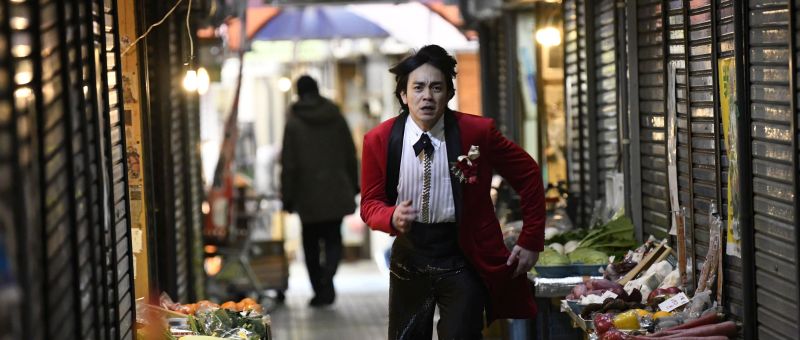
(Ab)normal Desire (正欲, Yoshiyuki Kishi, 2023)

There’s a pun embedded in the Japanese title of Yoshiyuki Kishi’s heartfelt drama (Ab)normal Desire in that first character in the word for “sexual desire” (seiyoku, 性欲) has been replaced by one that can be read the same but has the meaning of “correct”, or “proper”. But “normal” is also relative construct that implies conformance with the majority even if that may not actually be the case. As one of the protagonists later remarks “everyone is pervy” though they themselves feel such a degree of shame and otherness that it’s largely prevented them from living any kind of life at all.

In that sense it may be hard to understand why a fetish for water would invite such severe self-loathing in that it causes no harm to others if admittedly resulting in ridicule if exposed. Then again, society can be a fierce watchdog. Department store shop assistant Natsuki (Yui Aragaki) is taken to task by her pregnant colleague who refuses to take her seriously when she says she’s not really interested in getting a boyfriend before giving her a lecture about her biological clock. Though Natsuki appears uninterested in her vacant prattling, the woman later becomes upset and harshly tells her that she was only trying to be “nice” because she felt “sorry” for her and that making people be nice to you in this way is actually a form of harassment which, whichever way you look at it, is some particularly twisted logic.

Her alienation seems to stem from the fact that she feels “abnormal” and that her fetish for water is a part of herself she must be careful to hide. Her parents watch a news report on Tokyo Rainbow Pride and marvel at the idea that there are now choices other than marriage and children but even among the young there remains confusion and shame amid an inability to reconcile the seemingly opposing concepts of “normality” and “diversity” as they struggle to define themselves. A plan to have a male dancer who usually dances in a masculine style dance in a more feminine way backfires when he points out that asking someone to dance in a way they don’t want to doesn’t really do much to advance “diversity”.

But diversity isn’t considered an ideal by all and parents of young children find themselves confused and conflicted when their kids begin to reject conventionality at an early age by asking to withdraw themselves from school and instead focus on other kinds of education that align with their interests. Challenged by his wife about why he never listens to their son’s concerns, prosecutor Hiroki (Goro Inagaki) replies that he should “just be normal” and later describes people who are “unable to live normal lives” as bugs in the system which must eradicated. A symbol of lingering authoritarianism, Hiroki is an intensely conservative man obsessed with properness who thinks it’s his job to decide which crimes everyone is guilty of rather than make any attempt to understand the world around him outside of binary terms like right and wrong or normal and abnormal. When his assistant passes him information on fetishes as a potential explanation for the case of a man who repeatedly steals taps, he simply rolls his eyes and dismisses it.

Yet he perhaps has his own fears and internalised shame as evidenced by his outrage on discovering that another man has been coming to the house to help his wife with tech setup for their son’s new outlet in livestreaming and not only that, he was able to blow up the balloons that Hiroki himself failed to inflate. It’s his rigid authoritarianism that eventually alienates his wife and son who come to see him only as an oppressive bully unable to accept anything that differs from his own definition of “normal”. Finally, he’s the one who is isolated, imprisoned by his own repression and lack of understanding or unwillingness to accept those around him.

Even so, despite its positive messages that no one should feel themselves alone or that society has no place for them the film muddies the waters by introducing fetishes that are necessarily problematic in that they cause harm to others who do not or cannot consent and could not and should not be accepted by mainstream society though oddly those that have them seem to feel less shame only fearing being caught because acting on their desires is against both moral and judicial laws. In any case, in discovering togetherness, that they are not alone, those who feel their desires to be “abnormal” can begin to ease their loneliness and find a place for themselves in an often judgemental world.


(Ab)normal Desire screened as part of this year’s Toronto Japanese Film Festival.

Original trailer (English subtitles)
Bento Harassment (今日も嫌がらせ弁当, Renpei Tsukamoto, 2019)

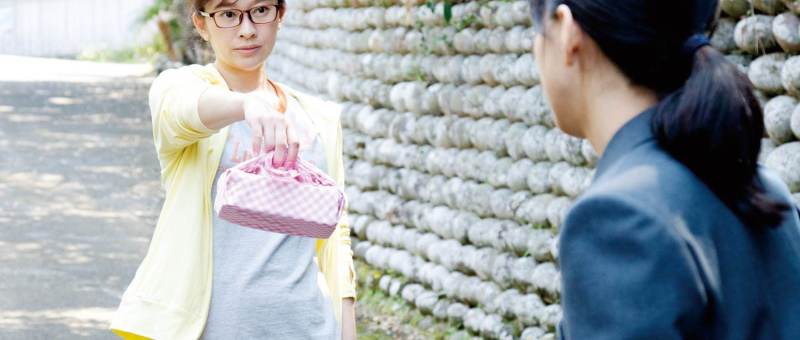
Bento harrassment posterChildhood’s a funny thing. Obviously lacking life experience and used to being the centre of someone’s universe, children can be curiously self-centred, little knowing the hard work their parents put in to try and make them happy until they suddenly realise years later that their mothers must have toiled through the night just to finish that costume for fancy dress that they didn’t really want to wear. Fed up with her teenage daughter’s sullen indifference, the heroine of Bento Harassment (今日も嫌がらせ弁当, Kyo mo Iyagarase Bento) comes up with an ingenious solution – increasingly elaborate lunchboxes designed to vent her frustration in a way that’s impossible for her daughter to ignore.

12 years previously Kaori (Ryoko Shinohara) was blissfully happy with her two little daughters, Wakaba (Rena Matsui) and Futaba (Kyoko Yoshine), but then her husband was killed in an accident and her life was turned upside down. Now she lives alone with her youngest daughter Futaba who has entered something of a rebellious phase, never directly talking to her mother but communicating through pithy, passive aggressive texts. In a bid to get her attention, Kaori decides to play her at her own game – by becoming so annoying that she’s impossible to ignore. From the day that Futaba enters high school she commits herself to making one “annoying” bento every day, eventually adding a message or two into the mix. Much to Futaba’s chagrin, her mother’s bento becomes a cause of daily excitement among her school friends who can’t wait to see how her mother has chosen to troll her on this particular day.

Perhaps tellingly, Kaori and her daughters live on a small island, Hachijojima, which is technically classed as “Tokyo” though in another sense almost as far from the bustling metropolis as it’s possible to get. There are no trains, or shopping malls, or convenience stores, just cows and wholesome wisdom. Caught between one thing and another, Futaba quits her after school athletics club to sit in a field and write angsty poetry about how she’s all alone in the universe. She doesn’t understand why her mum’s so extra and is confused by her attraction to a childhood friend (Kanta Sato) who has now become buff after developing an obsession with taiko drumming. Beginning to figure out why her daughter’s so moody lately, Kaori doubles down on the annoying bento plan but tries to put a little guidance in there too to push the indecisive Futaba towards making concrete decisions about her future.

Unlike the typically self-sacrificing mothers of “hahamono”, Kaori has her spiky side and never particularly looks for thanks or recognition from her daughters only basic civility. She works two jobs (one in a bento shop and another in a pub) and still makes time to devote herself to the petty art of annoying bento which she also posts online on a blog which becomes an instant hit with similarly stressed out parents looking for a little innocent revenge. Through the blog she finds herself bonding with Shunsuke (Ryuta Sato), a widowed father of a five-year-old boy who is struggling to perfect the art of bento though his aim is less revenge than trying to bond with his son who obviously misses his mum. Yet even “annoying” bento comes from a fundamental place of love – after all, you don’t spend all night cooking to send a passive aggressive message to someone you don’t like. Rising to the challenge, Futaba refuses to admit defeat and makes a point of eating all of the annoying bento without a word of complaint, allowing a kind of communication to arise between herself and her extremely patient mother.

Seeing all her dreams crushed on one extremely bad day, however, makes Futaba lose faith in her mother’s gentle wisdom. Kaori tries to convince her that nothing’s ever really “wasted” because even when things don’t work out the way you hoped they still teach you something else but that’s a hard lesson to learn when you’re young and unused to disappointment. Nevertheless, thanks to her mother’s relentless trolling and some careful words from her sister, she comes to realise just how much her mother has sacrificed on her behalf and understand her mother’s love. A warmhearted tale of mother daughter bonding and an ode to persevering through life’s various difficulties, Bento Harassment is a wholesome treat and inspirational tribute to living life without regrets.


Bento Harassment screens in Chicago on Sept. 27 as part of the ninth season of Asian Pop-Up Cinema.

Original trailer (English subtitles)

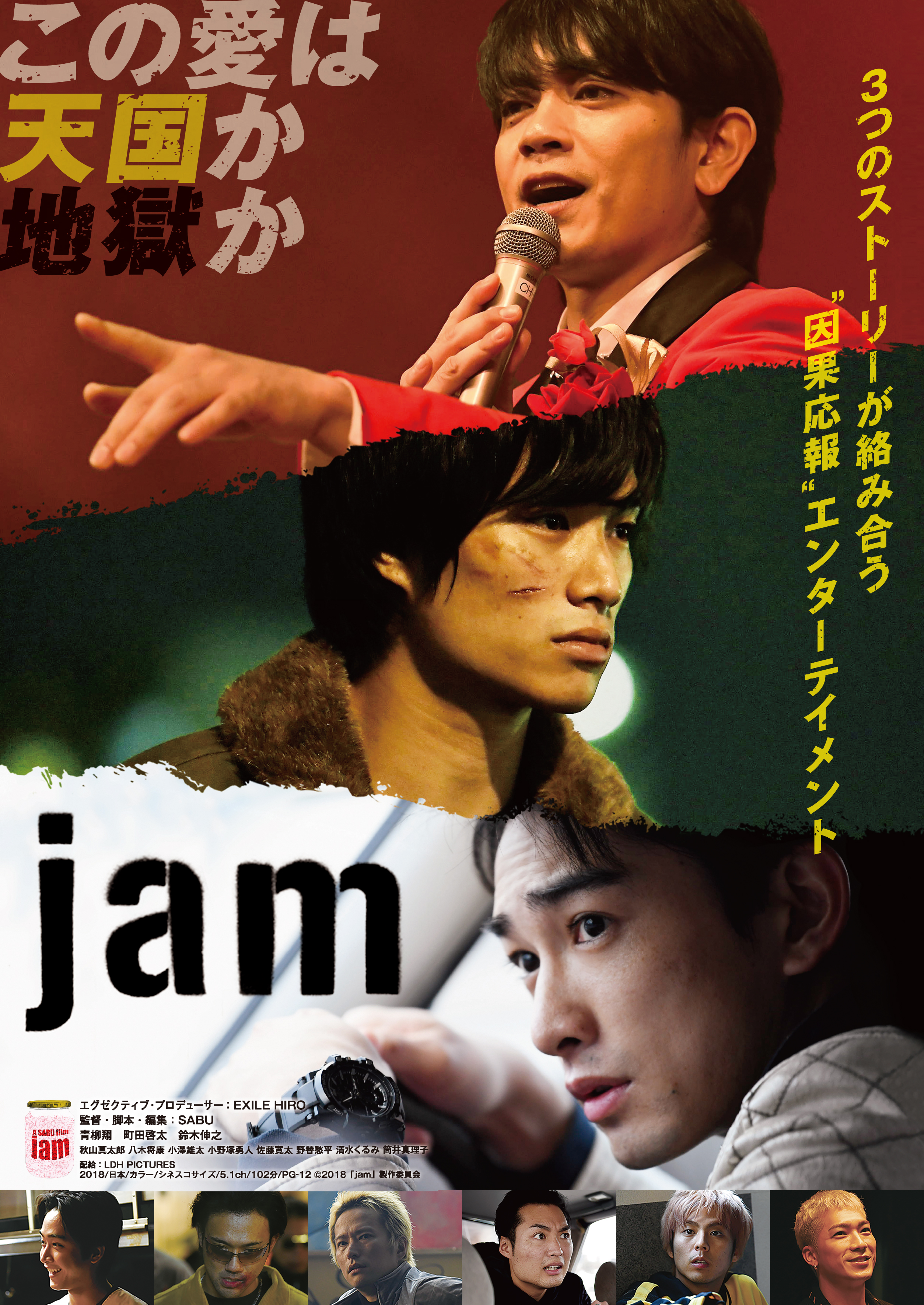
Jam (SABU, 2018)

PrintSABU began his directorial career with a reputation for shooting on the run. Time may have caught up with him, in that relaxed contemplation has begun to replace frenetic action in the more recent stages of his career, but it’s to his first feature, Dangan Runner, that he (after a fashion) returns in the similarly structured Jam. Random circumstance conspires once again to send three fugitive guys on a zany collision course, but this time the crash offers each of them something a little more positive (to a point, at least) than a grudging acceptance of life’s impossibilities.

The first of our three heroes, Hiroshi (Sho Aoyagi), is a cheesy enka singer with an army of middle-aged female fans whom he is perfectly aware of exploiting. Despite his “star status” with the ladies who crowd out his meet and greets, Hiroshi’s big concert is at the Civic Centre in Kitakyushu which is not exactly the Budokan, but it’ll do for the minute. Trouble brews when the wealthiest of his fans, Mrs. Sakata, suggests a change to the setlist only for a backbencher to leap to Hiroshi’s defence with slightly embarrassing fervour. Masako’s (Mariko Tsutsui) crazed fan aesthetic is later brought to its zenith when she gets Hiroshi to chug down some home made soup which is laced with some kind of knock out drug.

Meanwhile, all round good guy Takeru (Keita Machida) is driving around in a not quite classic car and looking for people to help because a Buddha appeared to him and told him if he did three good deeds a day his girlfriend would wake up from her coma, and ex-con Tetsuo (Nobuyuki Suzuki) is patiently pushing his grandma round town in a wheelchair and taking revenge on the gangsters who have betrayed him every time her back is turned.

“Pay back is scary as hell” one of the gangsters affirms as he laments potentially mixing up a thoroughly good guy like Takeru in their nasty yakuza business. As the other had earlier outlined, this is a world very much defined by karma – you do good and good comes back to you, but do something bad and you’re in for more of the same. The logic is sound, and yet it doesn’t quite work the way you’d expect it to. Takeru is nothing but good, too good as it turns out, but constantly suffers precisely because of his goodness. Not only is his girlfriend gunned down in front of him during an act of random street violence, but he eventually finds himself tricked into helping the exact same thugs commit further crime only to attempt heroics and see that massively backfire too. Even so, he keeps on trying to be good and perhaps it really will pay off in the end.

Meanwhile, Hiroshi seems to be leading something of a charmed life though perhaps through a prism of self-loathing. He knows he is a cheesy lounge singer and one step up from gigalo in the way he accommodates himself to these older ladies in whom his only interest is their money. This is perhaps why he finds himself desperately playing along when kidnapped by Masako in the hope he will write a song just for her (that’ll show the snooty Mrs. Sakata), but finally betraying her in the final moment as if attempting to reassert his artistic autonomy. Masako eventually makes a sacrifice of her own which sends Hiroshi running for the hills only to finally acknowledge a sense of responsibility for his willing misuse of her loneliness and disappointment in selling her an impossible dream of connection.

As for Tetsuo, pushing granny round the city by night, the yakuza lurk round every corner proving the past really is impossible to escape. As expected, the paths of the three men eventually intersect in strange and various ways though each is bound for a different destination and an individual epiphany. Another boy band odyssey from SABU, this time in collaboration with studio LDH and the members of EXILE, Jam takes a fairly ironic view of the idol business if thinly disguised in Hiroshi’s depressing business plan of self-debasement and fansploitation while simultaneously asking if you really do reap what you sow when it comes to cosmic karma in an increasingly surreal existence.


Jam was screened as part of the 2019 Udine Far East Film Festival.

International trailer (English subtitles)