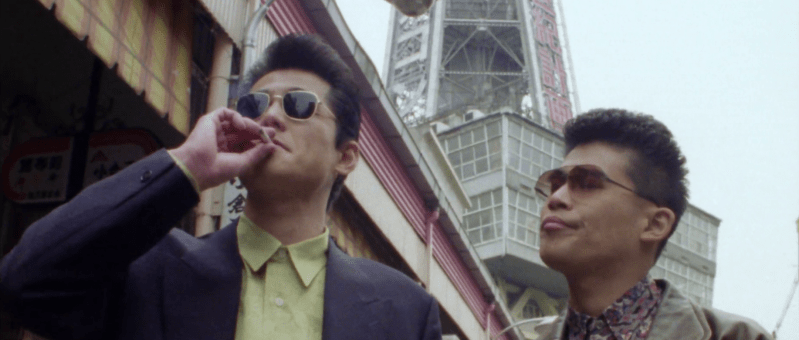
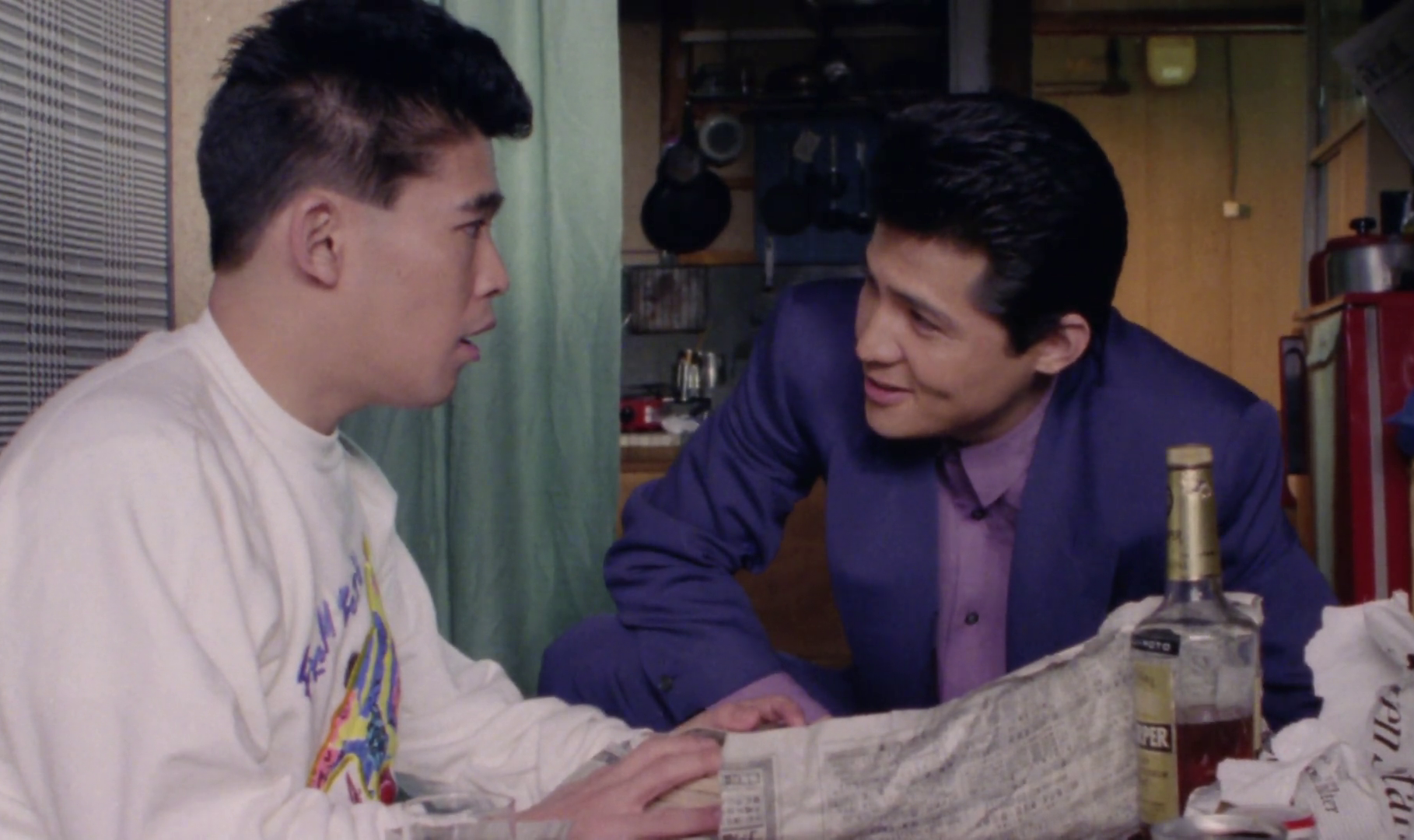
Video Girl Ai (電影少女, Ryu Kaneda, 1991)

The thing about video is that it is essentially one-sided. Though it might be possible to achieve the effect of interactivity, the video itself is obviously not responding to the viewer but proceeding along its preordained path. Then again, in the new AI age, interactivity can also be dangerous as chatbots are programmed to say whatever the user wants to hear, even if it ends up encouraging them to do something harmful to themselves or others.

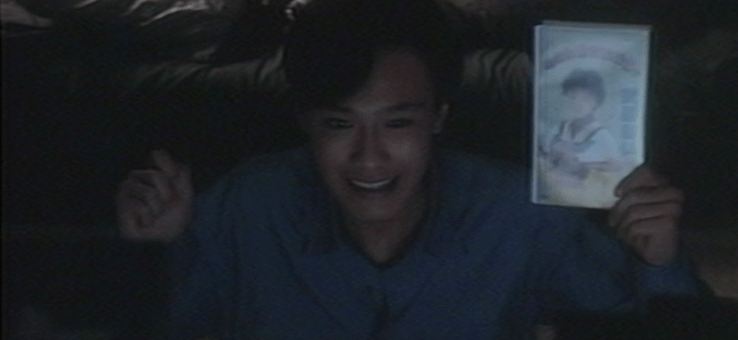
Video Girl Ai (電影少女, Denei Shojo), whose name means “love”, is definitely not artificial intelligence but a sort of video fairy that the hero discovers after encountering the “paradise” video store which is only visible to the pure of heart. The extremely odd proprietor gives Yota (Ken Ohsawa) a videotape he says will heal him following a moment of heartbreak on learning that the girl he fancied, Moemi (Hiromi Hiraguchi), actually has a crush on his best friend Takashi (Naoki Hosaka). Takashi acts cool, but is actually just as diffident as Yota and also has a crush on Moemi. He can’t say anything either, less because he feels bad for Yota than he just can’t muster up the courage.

Nevertheless, he keeps encouraging Yota even if it may be partly to assuage his own fear in not having to deal with his feelings for Moemi. Everyone seems to think Yota is a bit a of a loser and the kids at school have created a pun on his surname to make it sound like he’s called “Yota no luck with girls.” He is indeed awkward. His first date with Moemi goes incredibly badly. Not only is he late because he went to the wrong place, but is overly obsessed with his carefully constructed itinerary which he keeps checking on his electronic day planner. Unable to adapt to the moment, he irritates his date and is finally unable to say how he feels.

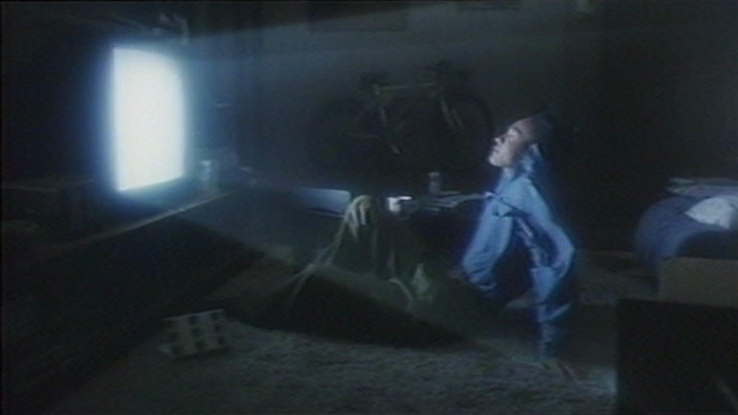
Queue Video Girl AI (Kaori Sakagami) who has been sent to comfort him. Thanks to a malfunctioning VHS player, Ai emerges from the TV set a little differently to how she was described on the back of the case. Though she was said to be kind and graceful, Ai is feisty and immediately starts giving Yota what for. After getting to know him a little, Ai begins to develop human feelings and fall for Yota herself, even though she’s supposed to be comforting his broken heart and supporting his romance with Moemi. At this point, she basically finds herself at the centre of a love square as she flirts with Takashi to get him to back off from Moemi so Yota’s romantic fantasy can come true.

Yota, meanwhile, is a classic nice guy but struggles with interpersonal communication and pales in comparison with his ultra-cool friend Takashi. In this case, the TV really can talk back and interact like a real person. Ai is not, however, very familiar with human customs and asks inappropriate questions in public, such as the nature of marriage and sex which she awkwardly says she wants to try out for herself later without knowing what it is. That he has to sort of train Ai opens up a dialogue and gives Yota a means of teaching himself, but despite the fact that Ai has corporeality, there is still a question mark over whether or not she is “real”. Looking at Ai’s imitation flowers, Yota says they’re still pretty even if they’re just pretend, just the like ready meals that Ai starts buying after realising her cooking’s gone to pot because of the damaged VCR. 

Nevertheless Yota struggles with himself. His love is a pure-hearted kind, so he’s firmly rooting for Moemi and Takashi rather than resentful or trying to keep her to himself despite knowing she likes someone else. He’s torn between his growing feelings for Ai and those he had for Moemi while also uncertain how long Ai can stay before her tape runs out. Ironically enough, she’s eventually told that she can’t voice her feelings or risk erasure because her role is supposed to be purely supportive. Erasure is in a way what Yota and Takashi fear. They’re too afraid to voice their feelings in case the girl rejects them. The first ever girl Yota asked out turned him down, which left him vowing never to tell another girl he liked her again. As he describes it, love is conflicting emotions, but thanks to his friendship with Ai, Yota is beginning to find the courage to face his feelings. There’s a minor irony, then, that he may be destined to forget her in the same way as the memories of an old girlfriend inevitably fade, leaving him clinging on to a forgotten ghost of love rather than risk romantic heartbreak pursuing connection in the real world.


Prison Circle (プリズン・サークル, Kaori Sakagami, 2019)

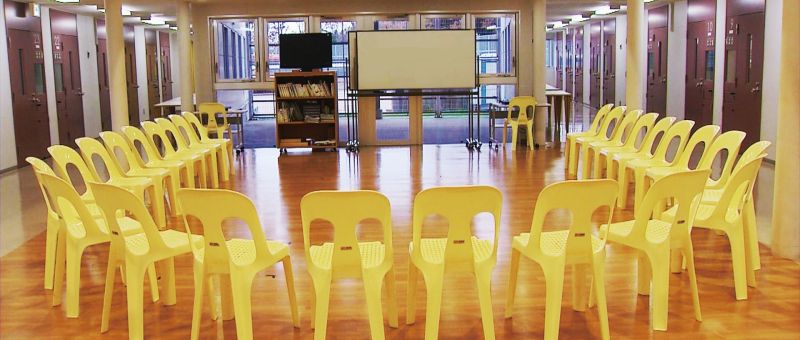
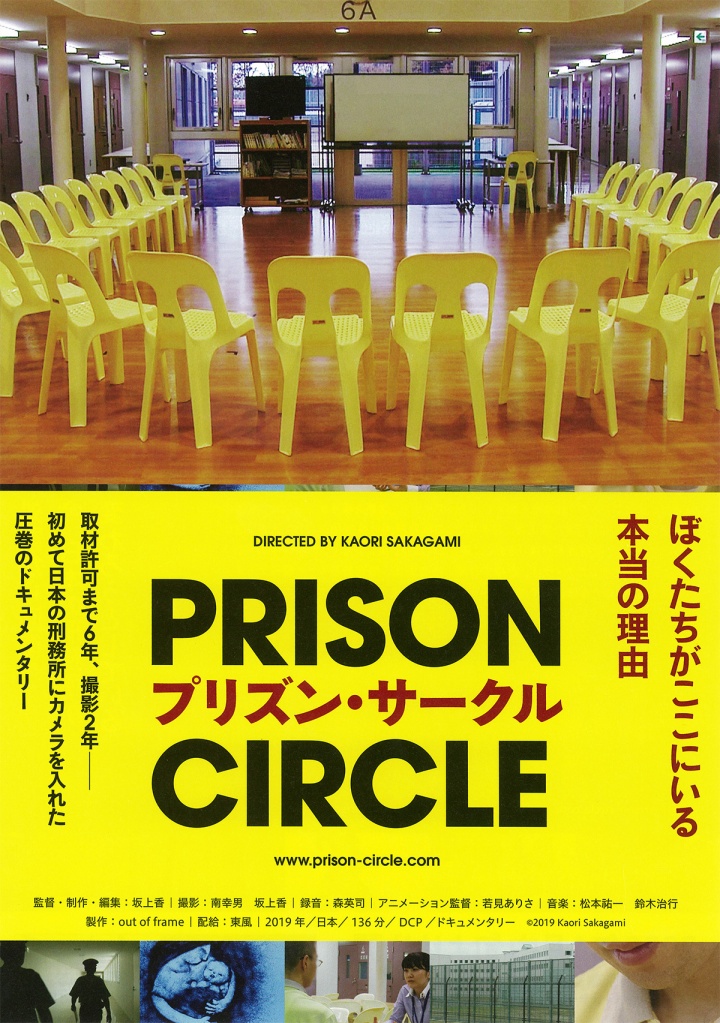
“A scar may recover but trauma never goes away” according to one of the inmates in Kaori Sakagami’s heartfelt documentary Prison Circle (プリズン・サークル). Neatly encapsulating the doc’s themes, the title refers both to the circle of chairs which represents the open group therapy sessions at the centre of the experimental rehabilitation programme on which the film is focussed, and the cycle of violence to which it alludes. Long interested in justice issues, Sakagami follows her two previous documentaries dealing with the US penal system with that of Japan, but concerns herself less with life in prison than the wider social issues which led to these men being convicted of crimes along with their future possibilities for reintegration into mainstream society. 

Sakagami apparently spent six years trying to acquire permission to shoot inside a Japanese prison before coming to an agreement with Shimane Asahi Rehabilitation Program Center which nevertheless has its limitations in that the faces of all the inmates are understandably blurred, she is always accompanied by two guards, and is not permitted to interact with prisoners or anyone working in the prison outside of a few direct interview sessions. Apparently inspired by Sakagami’s US documentary Lifers: Reaching for Life Beyond the Walls, the Shimane programme is the first and only of its kind in Japan shifting the focus away from punishment towards rehabilitation supporting around 40 men through a therapeutic treatment centre (TC) which attempts to help the prisoners understand the reasons for their crimes, empathise with their victims, and eventually return to mainstream society. According to the closing text the programme has been successful in reducing the rate of recidivism among its graduates in comparison with those released from a regular prison. 

In order to qualify, inmates must have the will to change, have no underlying mental health conditions, and be serving at least six months. The prisoners are also described as low risk though many of those we meet have been convicted of violent crimes including those which involved a death. Operating as a small bubble within a larger facility, the TC shares many of the rules and regulations with the wider population in that inmates are expected to raise their hand to ask permission of the guards any time they want to do something, but unlike other blocks are permitted to walk around unsupervised and sleep in “rooms” rather than “cells”. Prisoners engaging in the programme are also partially exempted from mandatory labour requirements while required to participate in the group sessions that are at the core of the TC. 

Following four men over two years, Sakagami finds a fatalistic similarity among their stories despite the differences in their offences, painting their crimes as a cry for help and direct result of childhood trauma. Each of the men who are now in their 20s comes from a difficult family background and experienced abuse, neglect, and bullying which is, the film seems to suggest, the root cause of their lawbreaking. The first of the men, Taku, was abandoned by his abusive father into a children’s home and thereafter left without support as a young man leaving care with nothing to fall back on. Encouraged to be open, he relates his embarrassment in revealing that even as a grown man he often longs to be hugged he feels because his parents never held him when he was a child. The other prisoner reveals he feels something similar, and other of the men admit they fell into crime in part because they wanted to stay connected to something even if it was delinquent kids in place of a family that had already failed them. The last of the men, Ken, also explains that he ended up getting into debt in part because he was buying expensive presents for his mother and girlfriend because he feared they’d abandon him and he didn’t know how else to keep them. 

Yet the prisoners also admit to feeling little remorse, seeing themselves as victims rather than perpetrators and struggling to draw the lines between their trauma and the crimes they have committed along with the hurt they’ve caused to those around them. Through therapy and role play sessions, the prisoners learn to empathise with each other as well as themselves as they begin to process their trauma in an essentially safe space. Sakagami shifts into gentle, storybook-style sand animation in order to dramatise their often horrific childhood memories linking back directly to a fairy tale written by one of the men about a boy who cried wolf because of a mysterious curse which forced him to lie, insisting that he was fine even in his loneliness as he pushed away those who had not rejected him. The boy in the fairy tale is eventually given the power to free himself after being approached by a benevolent god who gives him permission to speak his truth, emerging from his darkness into the light. Though limited by the conditions of filming and over reliant on onscreen text, Sakagami’s compassion for these men and faith in the project is never is doubt as the closing dedication “For everyone who wishes to stop the cycle of violence” makes plain. 


Prison Circle streamed as part of this year’s online Nippon Connection Film Festival. Viewers in the US will also be able to catch it streaming as part of this year’s Japan Cuts!

International trailer (English subtitles)