 Caesium is a chemical element which has the distinction of being one of the very few metals which remains liquid at room temperature. These days you’re most likely to hear about one of its isotopes which is produced as a result of nuclear fission and can pose a serious environmental problem following a nuclear related disaster. Caesium comes to be something of an obsessive concern for the 17 year old heroine of Ryo Saitani’s debut film, Cesium and a Tokyo Girl (セシウムと少女, Cesium to Shojo), as Mimi comes to connect the presence of caesium in the water with the constant soreness she’s been experiencing with her tongue since the disaster hit.
A fairly normal teenager, Mimi is a precocious student, obviously bright but undoubtedly forthright and unafraid to correct her teachers should they make a mistake (she is also entirely unaware of the way her direct manner may make other people feel). She lives a comfortable life with her successful father and cheerful nursery school teacher mother and even makes sure to visit her grandmother who is ill in the hospital.
One day, she runs into a strange man during a thunderstorm who claims to be the god of thunder and also knows lots of other supposed deities currently living out their immortal existences in the modern Japan. When grandma’s beloved mynah bird, named Hakushu after the famous poet Hakushu Kitahara, suddenly ups and flies away, Mimi hits on the idea of trying to get some of her new found omnipotent friends to help her though the quest to track down one missing bird ends up leading her on a strange odyssey through time and geography as she follows a meandering path through Japan’s modern history.
Like many people following the Great East Japan Earthquake and the accompanying tsunami, Mimi has been left with deep seated existential doubts which prompt her into a deliberate consideration of the way she’s living her life and what might happen to her in the future. Using the unique powers of the gods, she travels back in time to 1940 and experiences the life her grandmother led at her own age but in very different circumstances. These wartime episodes don’t shy away from uncomfortable historical truths as her grandmother loudly and proudly extols the virtue of the nation’s “ally” Adolf Hitler whilst singing a patriotic song penned by her favourite poet, Hakushu Kitahara, who, at this point has lost his sight due to complications from diabetes and will eventually pass away in 1942 never knowing the outcome of the war.
Joining the seven gods as a kind of Snow White figure, Mimi’s life takes a surreal turn filled with cheerful musical sequences which run the gamut from a cute kids song to an oddly ‘80s inspired dance sequence as her grandmother meets sailor granddad to be. Saitani also ropes in another few top animators to come up with some impressively designed scroll painting inspired set pieces to give us a suitably ancient backstory on our gods as well as adding some humorous stop motion and brief pop-art inspired moments to make what could be a fairly heavy condemnation of recent history and the rise of nuclear technology into a fun and quirky comedy.
That said, there is a tendency at certain points to fall into an educationalist mood leaving things feeling like an entertaining for schools programme rather than a comedy with an ingrained streak of social commentary. Saitani began his career working with the similarly ironic Kihachi Okamoto and you can definitely see a lot of Okamoto influence in Saitani’s approach to his material as he adds in layer upon layer of surreal playfulness but always anchors his flights of fancy in a serious concern. Bright and cheerful it may be, but the ideas are anything but trivial.
The gods are not angry, exactly, just disappointed. We’ve been given this beautiful gift of bountiful green forests and flowing rivers and yet we’ve shown so little interest in taking care of it that much of it is withering before us like a forgotten houseplant after an extended holiday. However, the final piece of advice given to Mimi is that perhaps we need to stop harping on the past and concentrate on making the most of what we have right now, only that way can we begin to undo some of the damage that we’ve done in our relatively brief time as the dominant species and finally face up to our responsibilities as caretakers of our planet.
Reviewed as part of the SCI-FI London Film Festival 2016.
Unsubbed trailer:
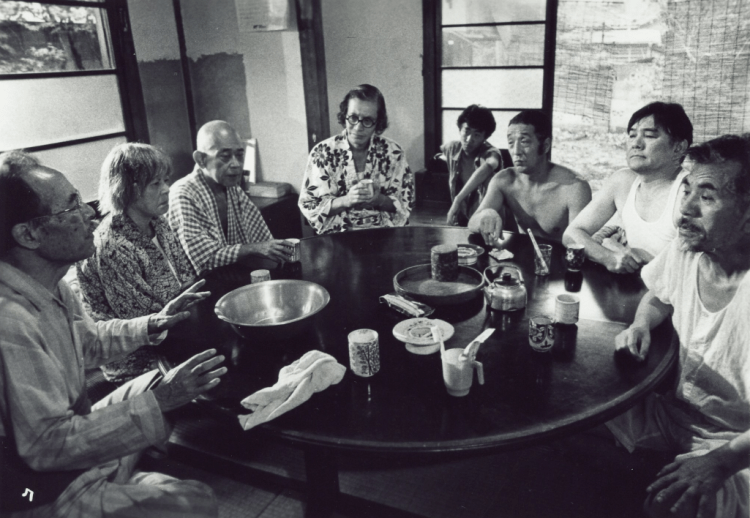 Kihachi Okamoto first made his name with his samurai movies but his output was in fact far more varied in tone than the work most often screened outside of Japan might suggest. Marked by heavy irony and close to the bone social commentary, Okamoto’s movies are nothing if not playful even in the bleakest of circumstances. He first teamed up with Japan’s indie power the Art Theatre Guild for
  Windows on Worlds