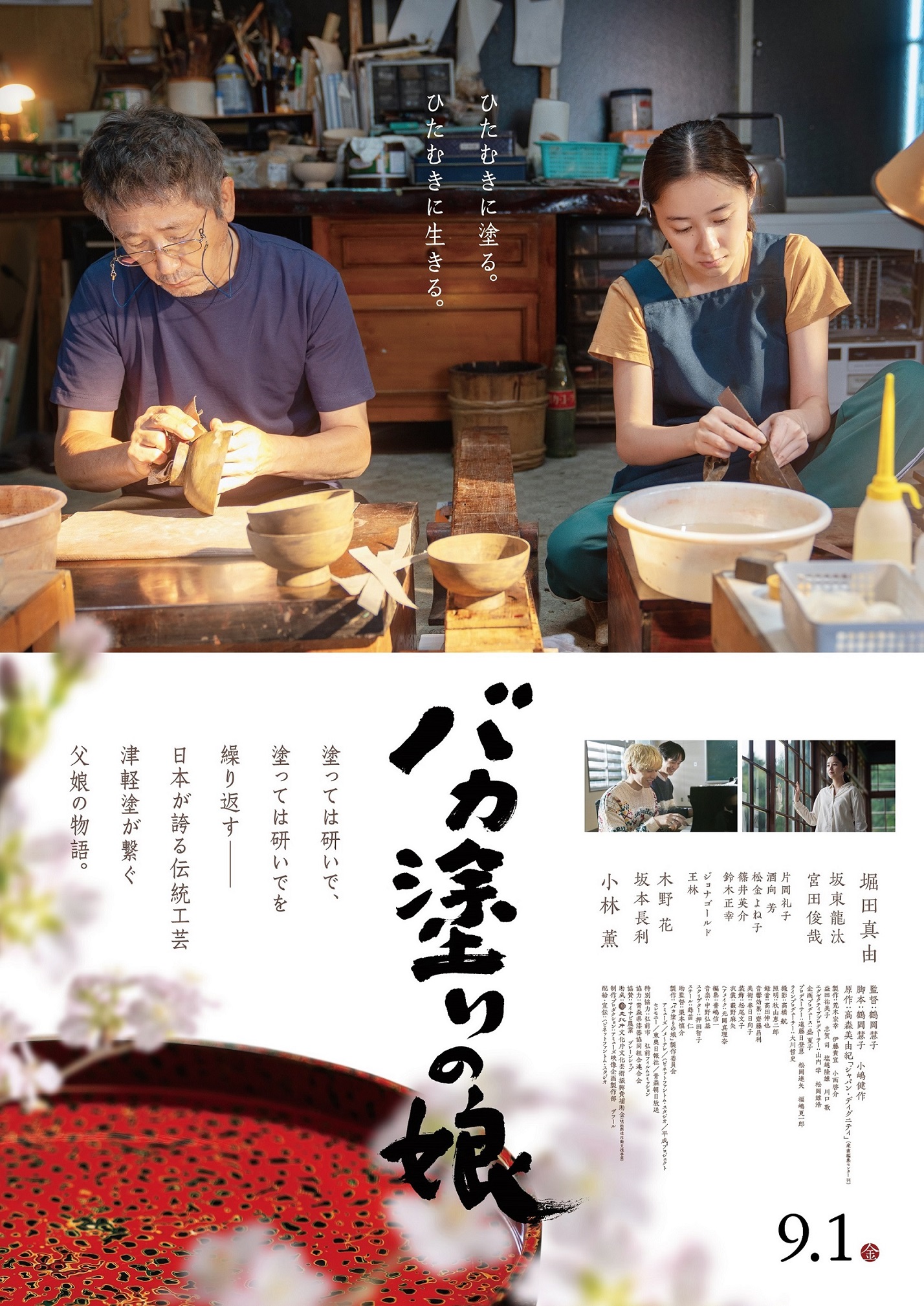
Tsugaru Lacquer Girl (バカ塗りの娘, Keiko Tsuruoka, 2023)

Which traditions should we keep and which should we lose? A young woman finds herself frustrated by outdated gender norms in her desire to take over the family lacquerware business in Keiko Tsuruoka’s gentle rural drama, Tsugaru Lacquer Girl (バカ塗りの娘, Bakanuri no Musume). While her family, save older brother Yu (Ryota Bando) who has already rejected lacquerware, do nothing but run her down and claim she’ll never be a success at anything all she wants to do is devote her life to a traditional craft her father no longer believes has any kind of future. 

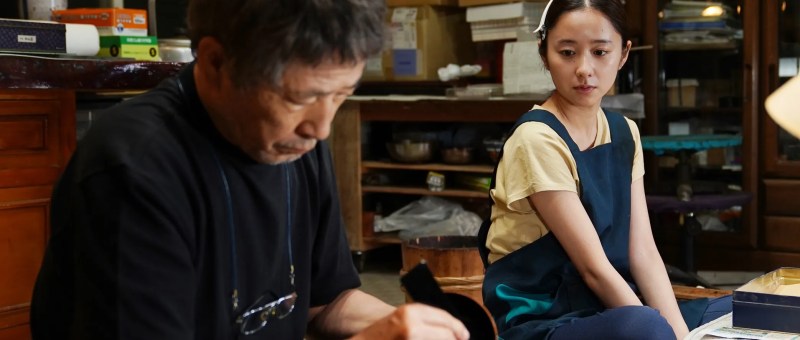
Even so, Seishiro (Kaoru Kobayashi) is dead set on Yu taking over the business to the point that they have become semi-estranged. He calls Miyako (Mayu Hotta) “clumsy” and complains that she has no aptitude for anything unlike Yu who was always good at anything he tried. Miyako too later suggests that she was her brother’s opposite, while he was cheerful and outgoing she is shy and melancholy but then perhaps it’s hard to be cheerful when everyone’s always telling you you’re useless and doing everything wrong. In an interesting parallel, Yu is also trapped by outdated social codes in that he is gay and he and his partner have decided to move to London where they can legally get married and live their life out and proud in a way they feel they cannot do in contemporary Japan. 

Lacking other direction in her life, Miyako has been working a part-time job in a local supermarket which she hates while her father occasionally allows her to help him finish big orders though it’s clear her salary is now their main source of financial support. A local inn keeper who is a good customer of theirs explains to some of his guests that craftsmen rarely construct large pieces such as tables because they are no longer cost effective while fewer young people are willing to take up apprenticeships leaving the traditional art in danger of dying out despite the frequent remarks that everything tastes better out of a lacquerware bowl which is after all in the modern parlance “sustainable” in that it will last for many decades and can easily be repaired if damaged. 

Seishiro doesn’t seem to have a reason for rejecting the idea that Miyako might take over aside from basic sexism in preferring to hand the business over to his first born son. It might be tempting to think that he dissuades her because he thinks there isn’t a future in lacquerware, but if that were the case he could simply retire. Her mother (Reiko Kataoka), who left the family some years ago in part it seems because of her own animosity towards lacquerware and its lack of financial promise, seems to feel much the same comparing Miyako to a more successful cousin who has kids and a high powered job at an international trading firm, telling her that she should be settling down and getting married suggesting that she is simply incapable of becoming a successful lacquerware artist and should at best keep it as a hobby. 

Her mother had also shut down her desire to learn piano as a child by telling her there was no point because she’d never be good at it. Miyako’s decision to prove herself by re-laquering an abandoned piano in her disused school is then an act of rebellion against both parents showing them what she can and will achieve along with the direction she has chosen for her life. Not everyone respects it even if her father begins to come around but really it doesn’t matter because the decision is hers alone whatever anyone else might have said. Far from being insular, the embrace of traditional culture gives Miyako new opportunities and allows her to grow in confidence until she’s finally ready to set off along her own path. Even so, it seems there are some traditions she thinks it would be better to lose, such as her father’s sexism and the homophobia that has forced her brother to emigrate in order to live a happy life just as he is. They call it “fools lacquer” because no one but a fool would go to all this trouble to make a bowl but in many ways that’s the point. Miyako pours all of herself in to the lacquer, piling layer on layer dotted by handfuls of thrown rice that give it its pattern much as she herself is slowly tempered by the world around her.


Tsugaru Lacquer Girl screened as part of this year’s Camera Japan.

Original trailer (English subtitles)
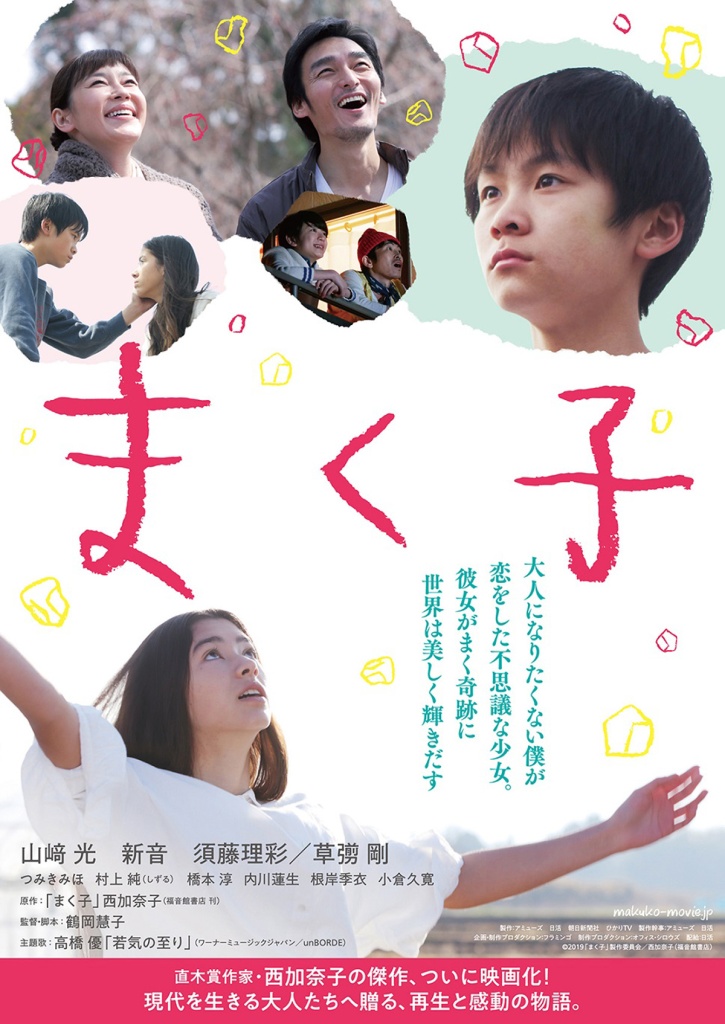
Makuko (まく子, Keiko Tsuruoka, 2019)

“In this world nothing lasts forever” the conflicted hero of Keiko Tsuruoka’s Makuko (まく子) is tearfully told, though it’s a lesson he struggles to learn as he battles the anxiety of leaving the certainties of childhood behind. Adapted from Kanako Nishi’s 2016 novel, Makuko is unafraid of the fantastical but resolutely rooted in the everyday as “aliens” make their descent into regular small-town life to learn what it is to die, or so they say, while the hero discovers what it is to live through the beauty of transience. 

11-year-old Satoshi (Hikaru Yamazaki) is coming to the realisation that he is growing up. Things around him, or more precisely his perception of them, are changing in small but obvious ways and he’s not OK with it. Like the other children he used to enjoy being read manga by Dono (Jun Murakami), a middle-aged man with learning difficulties who hangs around with the local children, but has for some reason begun to find it embarrassing. Meanwhile, he’s also battling a degree of resentment towards his distant father (Tsuyoshi Kusanagi) in becoming aware of his parents’ complicated relationship after spotting him with another woman and hearing constant references to his philandering which his mother (Risa Sudou) seems to have accepted. Satoshi doesn’t know much, but he knows he doesn’t want to be like his dad or any of the other duplicitous adults he sees around the town which is one of many reasons that he fears growing up and being forced to enter the world of adult hypocrisy against his will. 

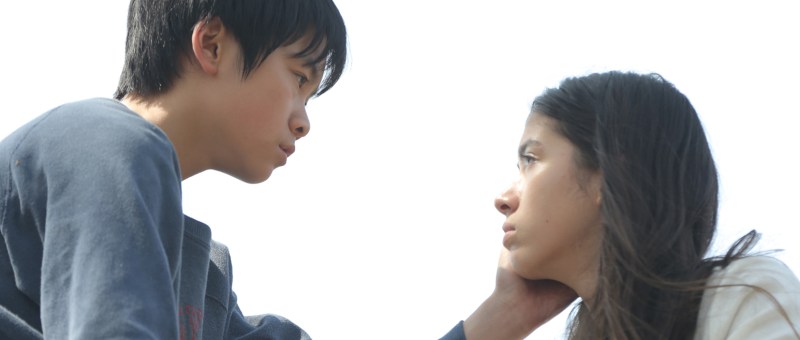
All of these fears are challenged by the unexpected appearance of intergalactic transfer student Kozue (Ninon) who tells him that she and her equally odd mother (Miho Tsumiki) are actually from a distant planet somewhere near Saturn where nothing ever changes and no one gets old. This is, she explains, because their bodies are made of particles which are eternal and unchanging, unlike those of Satoshi’s body which are constantly in flux which is why humans grown old and die. When a meteorite carrying different particles hit the planet’s surface, it caused a population explosion leaving her people with the unprecedented choice to die only no one really knows what “death” means which is why she’s come to Earth. Satoshi is envious of an unchanging world, seeing only futility in his equation of change with death which is what it is that he’s really afraid of. Why grow up only to die? he asks, only for Kozue to point out that like the leaves she’s fond of throwing in the air, if they didn’t fall they wouldn’t be so pretty. 

Satoshi isn’t really sure he believes Kozue’s strange story, only that he’s certain he doesn’t want her to die. It seems he fell out with a friend who stopped coming to school because of stories the other kids thought he was making up about UFOs and ladders in the sky, but if what Kozue says is true then perhaps he owes him an apology. Dono, whom he’d previously looked down on as “the town’s second biggest loser” offers him some valuable advice that perhaps it’s better to believe the things that people tell you and if you find out later that they lied, well you can deal with that then. 

Whether Kozue’s an alien or not, Satoshi is fairly certain he’s falling in love with her which is a whole other set of problems which brings him back to his problematic dad and the awkwardness of puberty. He doesn’t want to be an adult, but his body is changing all on its own and there’s nothing he can do about it. The local festival is all about “rebirth” through creation and destruction, but Satoshi still struggles to accept the necessity of change in order to grow, wishing things could simply remain as they are. What he learns is that we’re all “aliens” in one sense or another, everyone is lost and afraid and different but also the same, keepers of a hundred “tiny eternities” equating to one vast whole.  

“Everything disappears in the end” Satoshi is told during an intense encounter with his father’s mistress, but then again perhaps it doesn’t only remaining in a different form. A cosmic event brings the townspeople together in banal awe that quickly passes into a collective memory, and while some depart others arrive in their place bringing with them their own near identical anxieties and, like meteorites striking home, new opportunities for growth. 


Makuko is available to stream in Germany until June 14 as part of this year’s online Nippon Connection Film Festival.

International trailer (English subtitles)