
Project Wolf Hunting (늑대사냥, Kim Hong-sun, 2022)

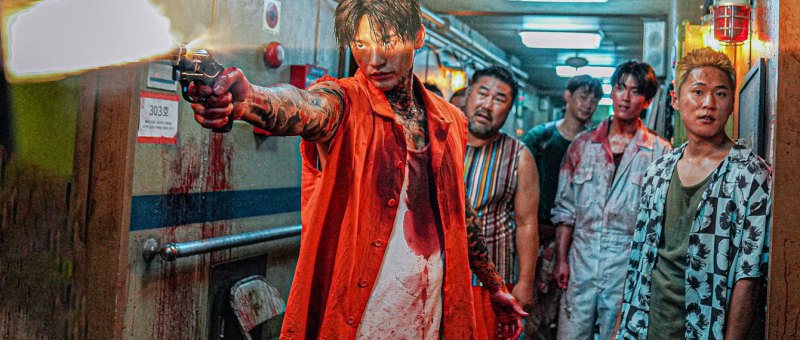
“Remember, there’s nowhere to run” an arrogant police officer explains to collection of rapists and murderers locked aboard a cargo ship ready to be delivered to “justice” in Korea having attempted to flee to the Philippines. It is in someways ironic that these men and women, depraved as many of them may be, have been loaded onto a commercial vessel to be shipped home less like cattle than faceless and inanimate objects. Kim Hong-sun’s eerie gore fest Project Wolf Hunting (늑대사냥, Neukdaesanyang) is in many ways about the horrors of the past but also suggests that the present is little better in a world in which there is little difference between cop and thug and we are all at the mercy of looming violence. 

As one older prisoner puts it, “if this isn’t hell, I don’t know what is”. Thanks to an international extradition arrangement some of the worst Korean criminals are about to be repatriated from the Philippines only the historic event is disrupted by a suicide bombing carried out by a disgruntled victim whose smashed glasses and severed limbs are an eerie harbinger of what’s to come. After a rethink, the government decides to hire a cargo boat instead so the public won’t have access to the criminals, which is somewhat ironic, while accompanied by a crack team of veteran cops each with over 10 years of experience on the force. Already it isn’t seeming like a very well thought through plan, but as Captain Lee (Park Ho-San), who openly beats a prisoner with whom he has prior history on the dock, points out, there aren’t any cameras so he has full authority to enforce the law with no concern for the rights of inmates nor basic human morality. To cut it short, he’s little different than they are even if he isn’t, as far as we know, a multiple murderer or rapist. 

In any case, keeping a bunch of violent criminals handcuffed with only one bathroom break a day and no stimulation seems like a recipe for disaster even if it weren’t just plain inhumane. But inevitably the operation is compromised by an attempt to spring a gang boss which lets the criminals take control of the ship albeit temporarily seeing as there’s something else lurking in the bowels of this floating hellscape that is pure nightmare fuel and a not quite living embodiment of man’s inhumanity to man. Predictably, this all stems back to the abuses of the colonial era and the machinations of the equivalent of Unit 731 operating in the Philippines but has since seemingly been co-opted by a shady Korean organisation apparently also attracted to the research’s capitalistic potential in the booming anti-ageing market hoping to usher in the next stage of human evolution. 

What ensues is a parade of senseless violence in which cop and killer alike are stalked by a mysterious “monster” with wolf-like senses and preternatural strength, and that’s on top of the bloody destruction wrought by the vengeful criminals in their unsuccessful attempt to escape. As Lee had said, there really is nowhere to run though as it turns out that cuts both ways. The gang boss proves unexpectedly heroic, genuinely trying to save the moll who’d been arrested alongside him, while law enforcement reveals itself hopelessly out of depth even as Lee and his female subordinate Da-yeon (Jung So-min) pivot towards protecting the prisoners they were previously intent on oppressing as they form a temporary alliance to defend themselves against the mysterious threat, ironically a product of the “kemono” (beast) project and a reminder of what happens when you decide that some people aren’t really “human” after all. 

Even so, the rampage is indiscriminate. The “monster” doesn’t care if you’re a cop or a killer, all it knows is violence smashing in the heads of the toughest gangsters and ripping hearts out of well-built bodies without a second thought. It’s got no eyes but knows how to use a gun and it still might not be the scariest thing on the boat, at least not in the end as we wonder what exactly all this is for and what might be meant by the next evolution of our species. This is indeed hell and there’s no where to run either from the unresolved past or the malignant future. 


Project Wolf Hunting is released in the US on Digital, Blu-ray, and DVD on Feb. 14 courtesy of Well Go USA.

International trailer (English subtitles)
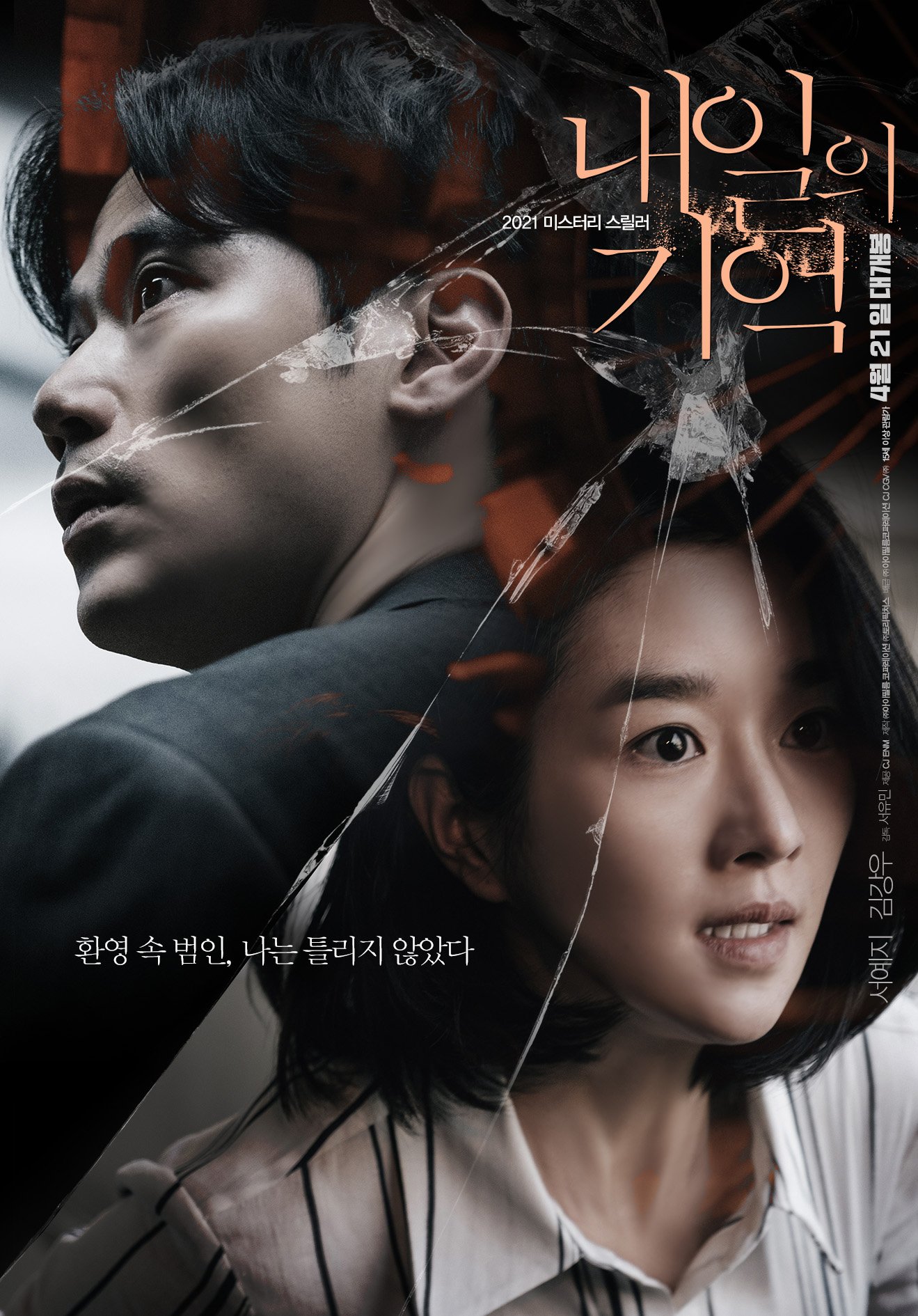
Recalled (내일의 기억, Seo Yu-min, 2021)

A traumatised woman finds herself trapped in an uncertain reality in Seo Yu-min’s puzzle box neo noir, Recalled (내일의 기억, Naeileui Gieok). Situating itself in a world of future ruins, Seo’s tragic tragic tale of existential mistrust is as its sci-fi-inflected Korean title “Memories of Tomorrow” might imply also a paradoxical exploration of the importance of dreams and the belief that other lives are possible while the heroine struggles to piece together the shards of her fractured identity only to realise there are some truths it may be better never to learn. 

30-something Soo-Jin (Seo Yea-ji) wakes up in hospital after an accident she has no memory of to realise that she has no idea who the extremely upset man at her bedside could be, or who she herself is for that matter. The nurses ask her if she recognises her husband, Ji-hoon (Kim Kang-woo), which she doesn’t but evidently does feel some degree of closeness to him as he continues to care for her with the utmost devotion. On leaving the hospital, he takes her home to a well-appointed flat in an affluent area and though she tries to restart her life from zero she can’t escape her sense of anxiety and begins having what she regards as premonitions of impending disaster centring on two other apartments one with two small children and the other a teenage girl and an intense middle-age man. Her doctor tells her that she is most likely hallucinating because of her brain injury, while even Ji-Hoon snaps at her that she’s obviously unwell and ought to take things easy. Nevertheless, Soo-Jin can’t simply ignore the increasing uncanniness of the world around her especially when she begins to discover discrepancies in the backstory she’s been fed by Ji-Hoon and the evidence presenting itself about her former life. 

Perceptive policeman Ki-sang (Park Sang-wook) himself hints that there might be something not quite right with Soo-jin’s life in remarking that her apartment looks like a model home seconds after walking in and then noticing a few other details that set off alarm bells in his admittedly suspicious mind. Meanwhile, he’s investigating the theft of materials from a nearby abandoned building site for a never completed block of luxury condos suggestively titled “Dream Town”, a project cancelled when the architecture firm Ji-hoon worked for went bust. The foreman who reported the theft remarks that the apartments pre-sold like hotcakes, but even in the building where Soo-jin lives a banner outside advertises a “big sale on unsold units” hinting at a kind of economic hubris or perhaps suggesting that the “dream” they’re offering of luxury living is either unrealisable for most or simply undesirable. According to Ji-hoon, Soo-jin wanted to emigrate to Canada for a quiet life surrounded by nature hoping to escape the unsatisfying present for an ironic return to the pastoral past. 

Soo-jin meanwhile struggles to orient herself having only Ji-hoon as an arbiter of truth but unable to trust him, doubting not just his identity but her own, while burdened by prophetic visions which may be less missives from the future than intrusions from the traumatic past. As she later puts it, her Canadian dream became a memory which sustained, both beacon of hope and escapist fantasy in its promise of idyllic peace and happiness. There is however a cruel irony in the suggestion that good and bad all this is happening to her because of love and its competing desires for salvation and destruction, while she only blames herself consumed with misplaced guilt and confused by an imperfect grip on objective reality. “Our memories await us there” she’s ironically advised of her Canadian dream, urged to abandon this failing reality for a new one exchanging her traumatic memories for those not yet made which in a sense already exist and have only to be attained. The final revelations may therefore be somewhat cruel as Soo-jin gathers the shards of her broken past to come to a long delayed understanding of herself, but Seo’s finely crafted puzzle box mystery does at least afford her the opportunity of reclaiming her identity while resolving the multi-layered trauma of her life in a patriarchal society ruled by personal greed. 


Original trailer (no subtitles)

Lucid Dream (루시드 드림, Kim Joon-sung, 2017)

lucid dream posterA relatively rare phenomenon, a lucid dream is one in which the dreamer is aware they are asleep and “awake” enough to influence the outcome. Rather than using the ability to probe some kind of existential question, Korean science fiction thriller Lucid Dream (루시드 드림) focusses on the evidence gathering possibilities, going one step further than hypnotic regression to revisit old memories and zoom in on previously missed details.

Dae-ho (Ko Soo) is an investigative reporter currently in hot water over a controversial story. He’s also a doting single father to a little boy, Min-woo (Kim Kang-Hoon), who resolves to put his work aside for a day to take his son to an amusement park. Tragedy strikes as Dae-ho is busy having words with a paparazzo and then notices Min-woo has disappeared from his horse on the carousel. Catching sight of Min-woo walking off with another man, Dae-ho collapses, a tranquilliser dart sticking out of his leg. Dae-ho searches for his son with no concrete leads until, three years later, he hears about the possibilities of lucid dreaming and attempts to figure out exactly what happened that day by reliving it in his sleep.

Lucid Dream begins in true conspiracy thriller mode by introducing Dae-ho’s past as a controversial journalist responsible for ruining prominent businessmen by exposing their corruptions and manipulations of the laws everyone else is expected to abide by, but this potentially rich seam of social commentary is cut off in full flow as paternal concerns take centrestage.

Dae-ho is a single dad raising Min-woo alone with the help of a friendly nanny. Although he tells Min-woo his mother is “in America” no concrete information is given regarding her whereabouts though the fact that she is never heard from after Min-woo’s disappearance suggests she may be somewhere further away. Apparently a devoted and good father from the very beginning, Dae-ho will stop at nothing to find out what’s happened to his son. Three years on he remains distraught and desperate, willing to try anything that might help him uncover the truth. He finds an ally in the policeman handling his case who is in a similar predicament as his own daughter lies in a hospital bed, born with serious medical abnormalities. The true paternal love, determination, and sacrifice of men who are already good and devoted fathers raising pleasant, uncomplicated children define the drama as others attempt to subvert that same love in choosing to sacrifice one child in favour of another.

Though Dae-ho originally assumes the plot is directed at him alone, possibly revenge for his exposés, the truth is darker and moves towards child trafficking and the trade in illicitly harvested organs though this too is mostly glossed over in favour of competing parental needs. The men who’ve taken Min-woo veer between amoral gangsters and those who can’t stomach the outcome of their actions ultimately deciding to rebel against their own side, and even if the real perpetrator turns out to be someone not so different from Dae-ho, there can be little justification in this dark flip side to Dae-ho’s all encompassing paternal love.

The central premise of dreams and memory is an interesting one, but largely squandered by the increasingly dull narrative progression in which Dae-ho moves from clue to clue in linear fashion and along predictable genre lines. Most viewers even remotely familiar with similarly themed films will have correctly identified the villain right away thanks to the heavily signposted script, and will necessarily be disappointed by the rather predictable yet action packed finale.

Dae-ho travels through dream states, eventually learning to invade the dreams of others thanks to the guidance of a mysterious shared dreamer but the application is inconsistent and relegated to plot device only. The finale takes place within a dream and with the stakes heightened as it becomes clear death inside someone else’s mind results in death outside it, but the imagery remains clichéd as Dae-ho battles the villain inside a rapidly disintegrating building before being forced into a literal leap of faith. Despite the surface level grimness of the story, Lucid Dream remains firmly in mainstream thriller territory with under developed characters, dead end sub plots, and a satisfying if not entirely earned moment of final closure. It is, however, also a rare example of a broadly happy ending in a Korean procedural, in which a father’s love can and does save the day, if not the film.


Original trailer (English subtitles)

https://www.youtube.com/watch?v=ylJzvTgv3-Q