Janur Ireng (Janur Ireng: Sewu Dino the Prequel, Kimo Stamboel, 2025)

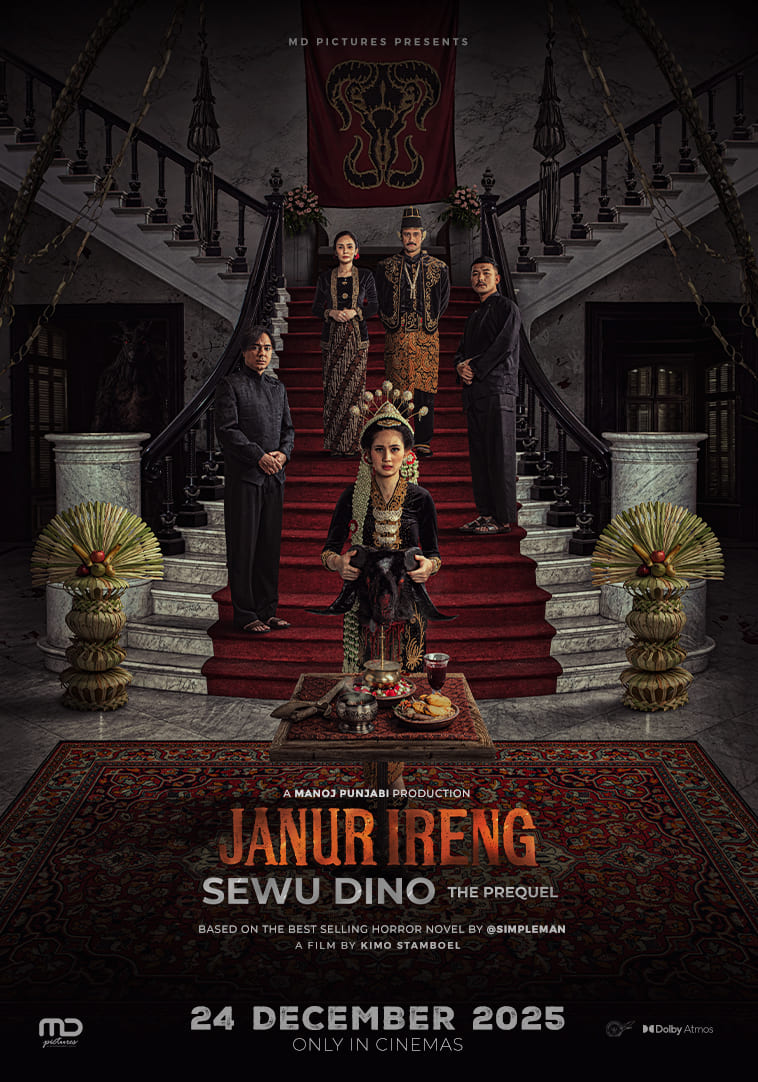
If something seems to good to be true, it probably is. Sabdo (Marthino Lio) and his sister Intan (Nyimas Ratu Rafa) might be too young to know any better, but even they have their doubts when a mysterious man shows up after their house has burnt down claiming to be an estranged uncle. Their late father never mentioned having a brother or any family at all and did not ask for him when he was dying. As the siblings will discover, there’s a reason for that and they may not want this particular familial legacy no matter the trappings it comes with. 

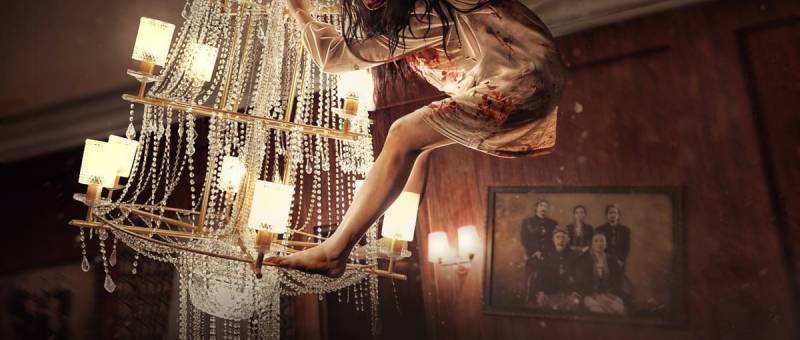
A prequel to his previous film A Thousand Days (Sewu Dino), Kimo Stamboel’s Janur Ireng is partly a metaphor for the exploitative practices of the super rich who use their wealth to manipulate or abuse those with lesser means. Having grown up without much money and fallen into poverty after their father died to the extent that Intan had had to leave education, being suddenly adopted by their wealthy uncle plunges the pair into a new world they are not altogether equipped to understand even without all the weird black magic rituals and sense of unease pervading the country mansion. Intan complains that the house has creepy vibes, and there is something gothic about it aside from feeling lost amid its vastness. Intan dislikes sleeping alone because her new room is simply far too big, even it didn’t turn out to come with some unexpected residents. It’s wandering around the house that she discovers something shocking, unsure if it’s something she wasn’t supposed to see or if she was guided there by a mysterious force.

Sabdo, meanwhile, is taken on as his uncle’s heir and protege. He discovers that Arjo (Tora Sudiro) is trying to regain land lost to the family including a banana plantation he days will be his to run, though Arjo seems pretty wealthy already. He is, though, on frosty terms the “7 Families” who run things in the local area and appears to want to reassert his status. With little in the way of explanation, he gets Sabdo to repeatedly sacrifice goats and do other strange things “to protect the family”, which Sabdo goes along with because he doesn’t quite know how to refuse and is confused by this strange new life. But on the other hand, Sabdo is a stranger here. He’s only told that he’s a member of the family and has no other connection with it or proof that it’s true. His loyalty really is to Intan, and it may be that he stays and does these increasingly weird rituals because Arjo promised Intan what he couldn’t give her in sending her to school and allowing her to fulfil her dream of going to university and getting a good job. A friend had needled her a little bit about ending up like another girl who married young, laying bare the patriarchal nature of the society in which Intan is imprisoned even before finding herself more literally locked up in her uncle’s house. 

Even if Sabdo thinks he finds allies in this world, they too may be using him for their own ends and wielding the power of family against him. Arjo claims their success is down to the patronage of a demonic entity that keeps them safe from other supernatural creatures which what has made their family so wealthy and powerful, but there are reasons their father decided to leave this place even If it meant giving up on the privilege he was born with. There is definitely “a lot wrong with this house” as Sabdo says, though he only makes up his mind to leave it when he realises the threat it poses to Intan. She, however, has already been corrupted by the house as its ghosts and malevolent entities begin to get to her. Kimo Stamboel ups the ante with a series of increasingly bizarre sequences of severed eye balls and torn out hearts, culminating in another kind of ritual disrupted by a once in a generation act of black magic that sees party guests literally tearing their own heads off and continuing to dance. That does not, however, seem to be the end of it for Sabdo whose dark family legacy continues to overshadow his life in ironic ways as he does his best to escape the house his uncle built.


Trailer (English subtitles)
The Queen of Black Magic (Ratu Ilmu Hitam, Kimo Stamboel, 2019)

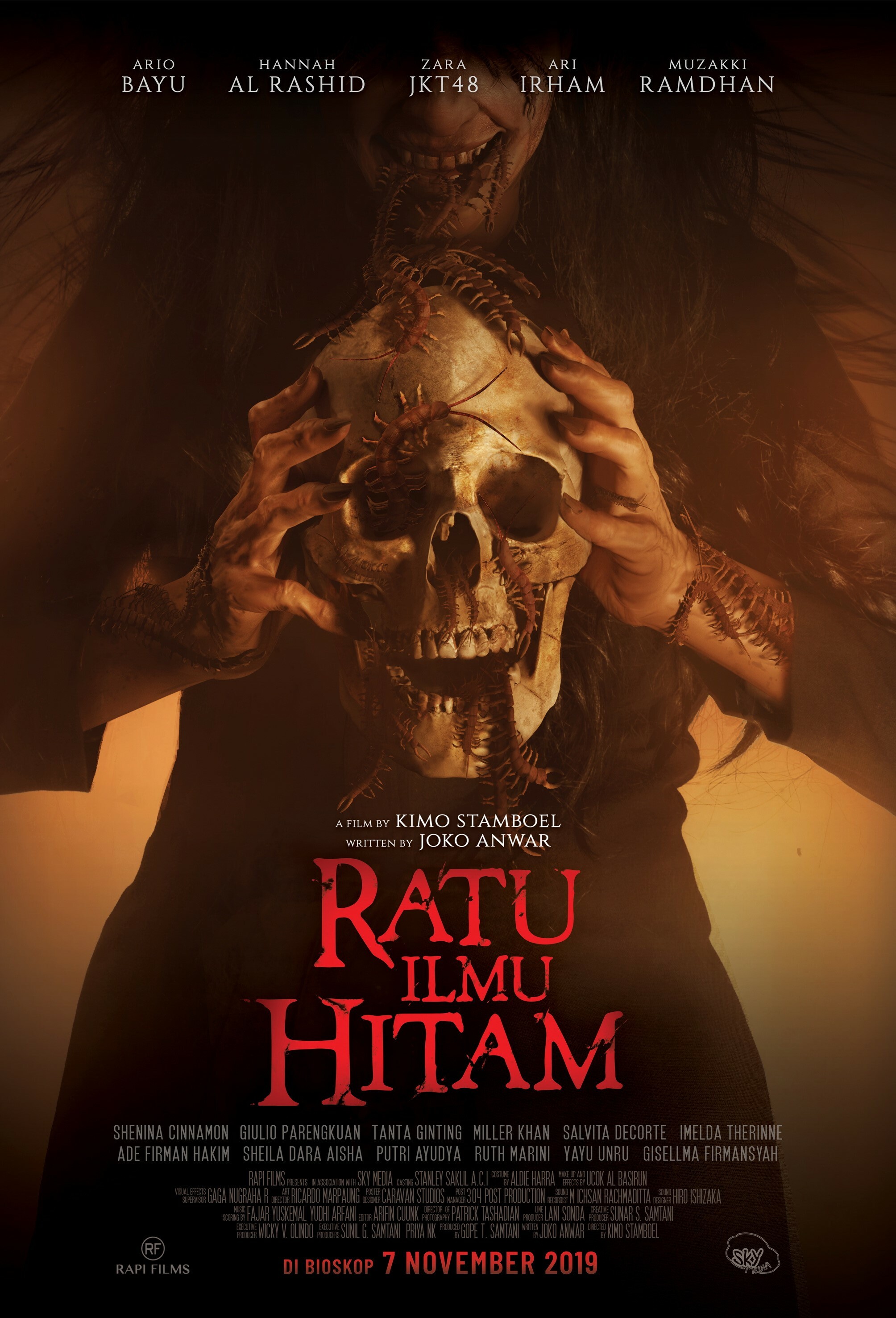
“I’m not here just to punish you, I’m here to create hell” the vengeful tormentor at the centre of Kimo Stamboel’s contemporary remake of the 1981 classic The Queen of Black Magic (Ratu Ilmu Hitam) cooly intones. Reminding her victims that not to know is also a sin, the shadowy villainess has come she says to create hell on Earth because she is uncertain that mortal transgressions will be suitably punished after death and means to ensure those who have sinned suffer accordingly. Quite literally trapped in the space of their trauma, the heroes attempt to find a way out of their guilt and shame but are perhaps confronted as much by themselves as by a witch hellbent on justice as they try to find escape from the traumatic past. 

Hanif (Ario Bayu) and his wife Nadya (Hannah Al Rashid) have foregone their planned holiday to Bali to visit the man who ran the orphanage where Hanif spent much of his childhood who is now apparently close to death. This comes as a surprise to their three children who hadn’t realised their father was adopted or really ever thought about kids who don’t have parents, and though they are perhaps annoyed to have missed out on their holiday they are also a little excited to be going somewhere so unusual. Unfortunately however, the family’s cheerful mood is broken when they hit what they assume is a deer on their way to the orphanage casting an air of foreboding over their journey. 

Though it appears Hanif has been “open” with his wife about his past, the same is not necessarily true for his “brothers” Anton (Tanta Ginting) and Jefri (Miller Khan) who have also brought their partners to meet Mr. Bandi (Yayu A.W. Unru), Jefri’s wife Lina (Salvita Decorte) complaining that she knew nothing about any of this until they were already in the car on their way over. Far from a happy reunion, however, the brief sojourn at the orphanage begins to highlight the strain on each of the familial relationships, Lina apparently experiencing a kind of body dysmorphia and preoccupied with her weight while Anton’s wife Eva (Imelda Therinne) is constantly applying moisturiser to guard against a mysterious rash she was convinced was down to flesh eating bacteria but others feel is simply “dry skin”. These will however be the least of their worries as the men vaguely hint on voicing their anxiety that Mr. Bandi’s biological children may sell the estate to developers unsure of “what they’ll uncover”.

This perhaps implies that the now grown up men know more than they’re willing to admit about the dark secrets the orphanage hides, something which Hanif has in any case not shared with his wife who has only a rosy picture of his childhood with Mr. Bandi who eyes her with nervous suspicion even on his death bed. Nevertheless, the men have each been drawn back to the source of their trauma and now find themselves unable to escape without a reckoning, recalling a similar occasion that they tried to run only to find themselves mysteriously brought back as if by some supernatural force. There are indeed dark, other worldly forces in play but also a healthy dose of patriarchal violence, entrenched misogyny, abuse of power, and as the villainess had hinted a wilful tendency not to see especially when it comes protecting the most vulnerable members of society, children without parents who are easily manipulated in the knowledge that, as Hanif originally puts it, they would otherwise die abandoned. 

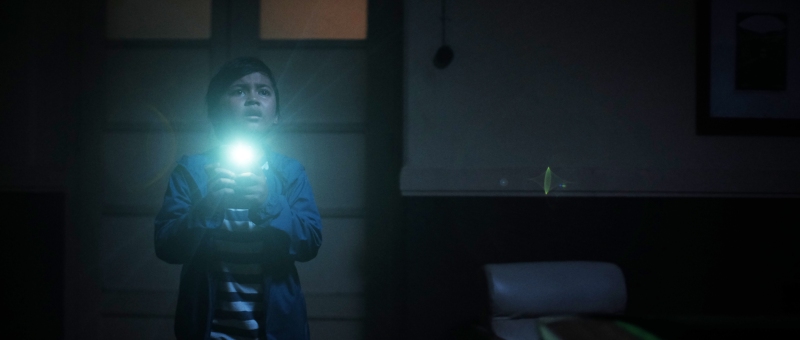
Justifying a particularly ironic part of her revenge plan, the witch reveals that the orphans may in fact be better off dead than raised by a man like Bandi, something which Hanif himself echoes if not quite with the same intent. Creating her hell, she forces her prey to harm themselves and each other with a variety of weapons ranging from kitchen knives, scythes, and comparatively more modern projectile weapons to insects literally choking the guilty from the inside. The orphanage itself is a place out of time, frozen as it was during Hanif’s childhood, one of the two orphans to have remained behind as mystified by Hanif’s inquisitive son Haqi’s (Muzakki Ramdhan) references to such things as “the internet”, “wi-fi” and “streaming” as he is by the “scary” VHS tape she shows him featuring actual footage of his father and a mysterious figure of legend. Yet even in realising they have allowed themselves to serve poor masters, deceived by a man they trusted, there is a sense the men at least, absent from the final frames, may never be able to free themselves from their guilt, forever haunted by the spectre of those they have unwittingly harmed. An eerie, gory, dread-propelled voyage through human cruelty to supernatural retribution, Queen of Black Magic positions the evil that men do ahead of that performed by vengeful witches looking for spiritual justice as its misused heroes attempt to find accommodation at least with the traumatic past.  


The Queen of Black Magic is available to stream via Shudder in the US, Canada, UK, Ireland, Australia, and New Zealand from 28th January.

Trailer (English subtitles)