Brand New Landscape (見はらし世代, Yuiga Danzuka, 2025)

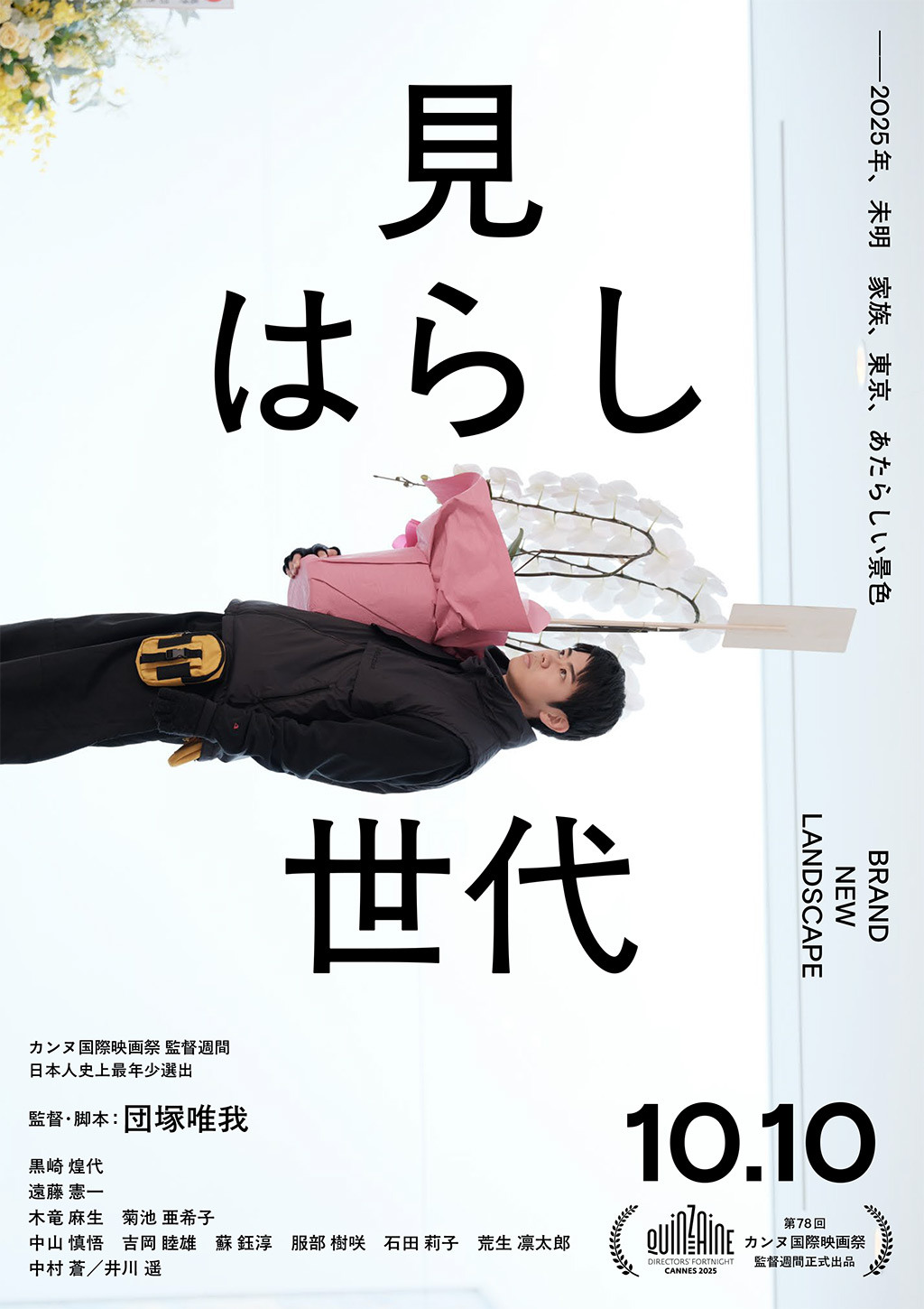
Do we inhabit spaces, or do the spaces inhabit us? Yuiga Danzuka’s autobiographically inspired Brand New Landscape (見はらし世代, Miwarashi Sedai) situates itself in a haunted Tokyo which is forever remaking itself around its inhabitants like a constantly retreating cliff edge that leaves them all rootless and in search of a home that no longer exists. Some long for a return to the past and wander endlessly, while others defiantly refuse to look back and are content to let history eclipse itself in a journey towards an ineffable “new”.

These imprinted spaces come to represent the disintegration of a family torn apart by their shifting foundations. Ten years previously, Ren (Kodai Kurosaki) and Emi’s (Mai Kiryu) mother, Yumi (Haruka Igawa), took her own life during a family holiday after their father Hajime (Kenichi Endo) told her that, despite his promises, he would be returning to Tokyo to pursue a work opportunity. “It’s pointless to go back and forth like this,” he remarks with exasperation, making it clear that he’ll be going no matter what she says. Rather than simply being a workaholic, Hajime is a deeply selfish person who doesn’t much care how other people are affected by the decisions that he makes. He wants this opportunity to prove himself and acts out of a mixture of vanity and a desire for external validation through professional acclaim rather than the love of his family. He claims he’s doing this for them, that the opportunity will provide additional financial security and a better quality of life for his children, but Yumi replies that they don’t need any more money. All she wanted was family time, albeit within this artificial domestic space of a rented holiday villa by the sea.

Three years after their mother’s death, Hajime left the children to chase opportunities abroad and they haven’t seen him in years. Younger son Ren is now working as a floral delivery driver for a company selling expensive moth orchids. It’s on a job that he first learns that Hajime has returned and is holding an exbitiion of his work that includes the controversial Miyashita Park redevelopment project designed to fuse the natural space of the park with a commercial centre the exhibition’s copy describes as a symbol of the “new” Tokyo. It also, however, required the displacement of a number of unhoused people who were living in the park in order to provide space for upscale outlets such as Louis Vuitton and Gucci. When Hajime accepts the opportunity to work on another such project, a young woman on his team voices her concern. She asks him where these unhoused people are supposed to go, but Hajime says it’s not his problem. It’s for the authorities to decide. She asks him if he’s considered the effect taking on such a large project will have on their team when the company is already working beyond its limit, but he gives her all the same excuses he gave Yumi that make it clear he’s not interested in the needs and well-being of his employees just as he wasn’t interested in those of his family. “It’s pointless going back and forth,” he tells her while trying to sound sympathetic but really emphasising that his decision is made and nothing she could say would sway him from his course.

Maybe, to that extent, oldest daughter Emi is much the same in that she’s decided she doesn’t want to see her father and resents Ren’s attempts to force her into doing so. She’s about to move in with her boyfriend and looking ahead towards marriage, but also prone to “low energy” days like her mother and anxious in her relationships, fearful that like that of her parents’ they can only end in failure. Ren, meanwhile, struggles with authority figures like his ridiculous boss who tries to assert dominance by giving him a public telling off about the non-standard colour of his hip pack, and then yells at him that he’s fired only to chase him out of the building throwing punches when Ren calmly replies that shouting only makes him look silly. In the midst of the drama, another young woman states her own intention to quit, politely bowing to everyone except one particular man before walking out the other door towards freedom as if to remind us that there are countlessly other stories going on in this city at the same time.

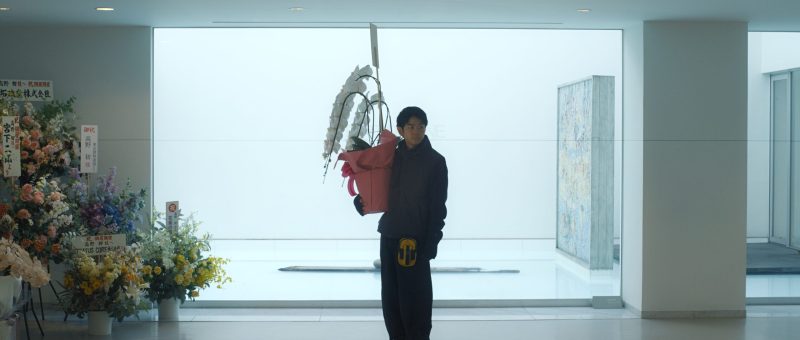
There’s a moment when Ren is delivery the orchids that he just stands there holding them, like he doesn’t know where to go or what to do. He’s lost within this space and is unable to find his way back within a Tokyo that’s always changing. In an attempt to find some sort of resolution, he drives Emi back to the service station where they had their final meal as a family, only their mother’s chair remains painfully empty. A perpetually falling ceiling light hints at the unreliability of these spaces. It isn’t and can’t ever be the same place it was before and has taken on new meanings for all concerned. Ren stares up at the Miyashita Park development as if caught between admiring his father’s achievement, wondering if it was worth it, and mourning the loss of everything it eclipsed in building over the past with a “new” that will quickly become the “old” and then be rebuilt and replaced. Nevertheless, he has perhaps begun a process of moving on even if for him moving forward lies in looking back.


Brand New Landscape screens as part of this year’s San Diego Asian Film Festival.

Original trailer (no subtitles)
She Taught Me Serendipity (今日の空が一番好きとまだ言えない僕は, Akiko Ohku, 2024)

Akiko Ohku’s quirky dramedies have so far mostly focused on an introverted woman’s quest for love, but with She Taught Me Serendipity (今日の空が一番好きとまだ言えない僕は, Kyo no Sora ga Ichiban Suki to Mada Ienai Boku ha) she moves into new territory in adapting the novel by Shusuke Fukutoku in which an alienated college student is unwittingly caught between two women. Set in the picturesque city of Kyoto, the film echoes the work of Tomihiko Morimi and revels in the power of serendipitous connection but equally the melancholy loneliness that underpins it in the legacy of grief and regret.

Returning after a six-month absence following the death of his grandmother, Konishi (Riku Hagiwara) is indeed at odds with his environment. He walks as if in a fog and is slightly out of tune with the world around him while often carrying an umbrella, or parasol depending on the weather, as a bulwark to protect him from prying eyes. Unlike his classmates, he speaks in the standard dialect rather than with an Eastern-inflection which his only friend Yamane (Kodai Kurosaki) has taken to extremes, describing his manner of speech as “Yamane Dialect”. It’s on campus that he begins catching sight of a young woman Yamane has dubbed the “solo soba” diner who seems to be just as solitary as he is, though the pair later strike up a connection precisely because of their shared sense of alienation.

To that extent, it’s not unreasonable that Konishi might doubt his new friendship with his young woman, Hana (Yuumi Kawai), who seems to be tailor-made for him and appeared seemingly from nowhere during his absence. Meanwhile, he’s resumed his old job at a local bathhouse where he cleans after hours with a girl-named Sacchan (Aoi Ito) who, judging by the looks she exchanges with the owner’s daughter Kaho, is secretly in love with him though he hasn’t noticed. While Hana is like him quiet and mysterious, Sacchan is a live wire, a young woman full of life who can’t stop talking and makes each of their cleaning sessions a riot of fun and silliness. 

But in keeping with these kinds of stories, Konishi suffers from extreme main character syndrome and never really sees either woman as a whole person rather than as an extension of himself. As Sacchan says in a poignant monologue movingly delivered by Aoi Ito, he never even bothered to ask her full name. He promised to buy her dinner to make up for missing shifts and needing extra help, but most likely never planned to follow through, nor did he ever listen to the song she recommended to him, though he went and read the short story Hana referenced right away. On the one level, there was nothing he could do to avoid hurting her feelings when he couldn’t return them, but at the very least he’s been self-involved and insensitive, just as he is when Hana suddenly drops out of contact and he convinces himself she was only hanging out with him as a joke. Rather than process his pain, he lashes out at Yamane instead and almost loses his only remaining friend before finally growing up a bit and making the effort to say sorry. 

The Japanese title translates as something like “I, who still can’t say, ‘Today’s sky is my favourite’,” echoing a common phrase repeated by Hana’s late father and Konishi’s grandmother, and hinting at Konishi’s inability to embrace whatever life gives him and find joy within it. Nevertheless, he does perhaps learn the importance of saying how he feels before it’s too late while taking into account the feelings of others even if his final confession comes at an awkward and insensitive moment, though it’s true enough that he’s really talking to himself. On one of their surreal adventures, he and Hana visit an unusual restaurant where all the dishes have quirky codenames except for one. It turns out the proprietor used to have someone to help him, but for whatever reason they’re not around anymore. Playing with aspect ratios and split screen, Ohku often fills the frame with a sense of absence in which characters simply disappear quite abruptly, echoing the fragility of these connections and, in fact, of everything, but makes plain that the main thing is to embrace them when they come rather than live in the shadow of loss or let the chance for love pass you by in fear of its failure.


She Taught Me Serendipity screened as part of this year’s Toronto Japanese Film Festival.

Trailer (English subtitles)

Hoyaman (さよなら ほやマン, Teruaki Shoji, 2023)

According to Hoyaman, a kind of superhero in the guise of a mutated sea squirt, the sea squirts’ lifecycle involves swimming around like tadpoles after hatching from an egg and then finding a nice rock to sit on at which point they lose their brains. This is what the hero of Teruaki Shoji’s quirky island comedy Hoyaman (さよなら ほやマン, Sayonara Hoyaman) is becoming afraid of, worried he’s about to lose his brain forever stuck in the home he inherited from his parents but also afraid to leave its safety to venture forth and explore some other rocks before it’s too late.

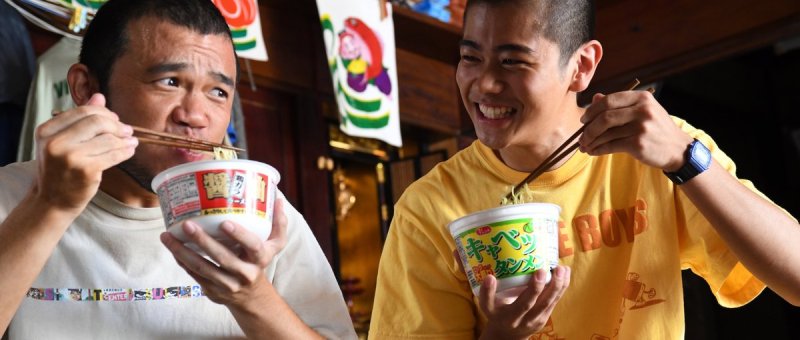
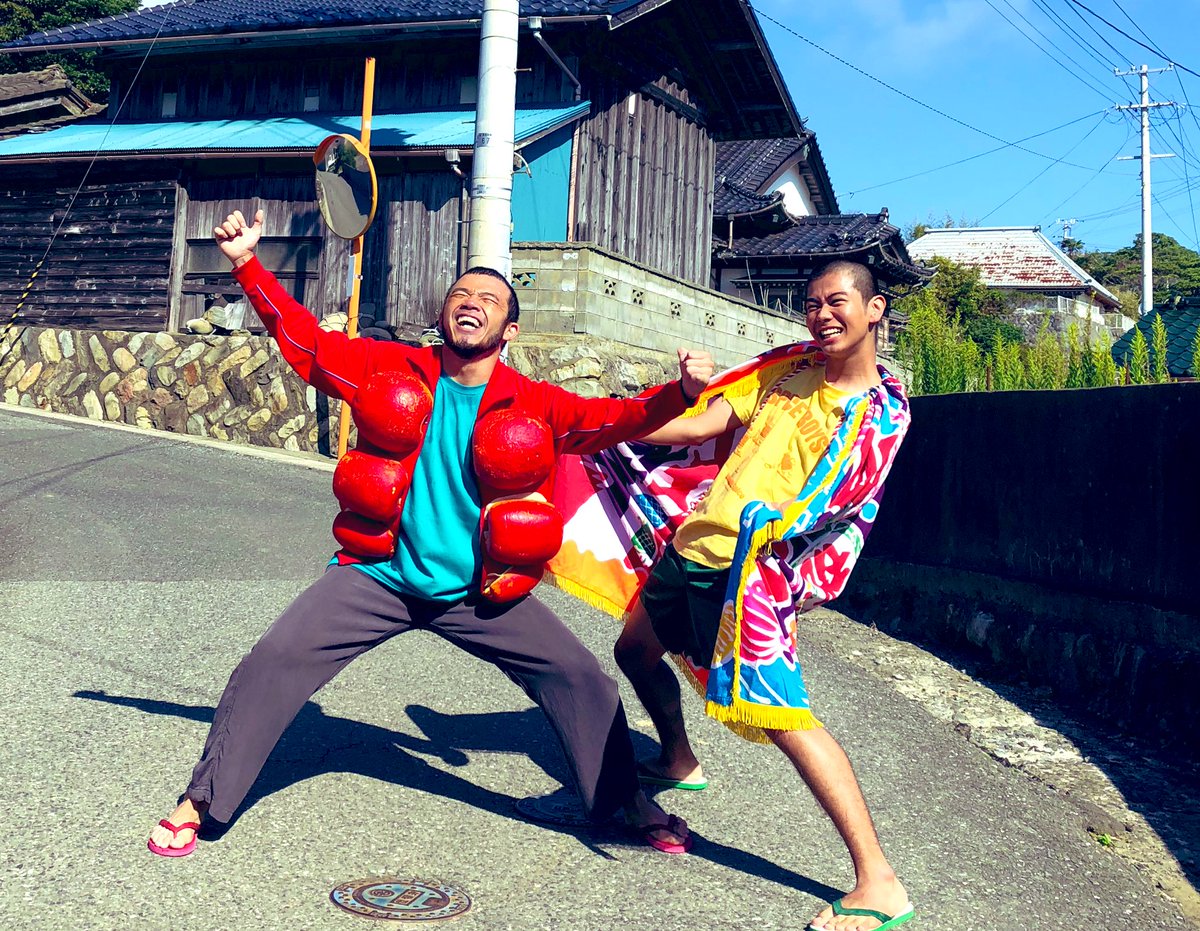
He’s jolted out of his sense of inertia by a mysterious woman, Mahiru (Kumi Kureshiro), who suddenly arrives and tries to buy his house off him though of course Akira (Afro) is not willing to sell despite being so heavily in debt he’s about to lose his fishing boat (and therefore his means of supporting himself) and he and his brother Shigeru (Kodai Kurosaki) are subsisting on a single pot of instant ramen a day. The house itself is like a kind of rock pool where the brothers are trapped in a protracted adolescence having lost their parents in the 2011 tsunami, thereafter floundering around unable to move on with their lives. As their bodies were never found, Akira hasn’t even got round to registering his parents’ deaths or dealt with any of the practical matters surrounding their living arrangements but now realises that he’ll have to something to secure a financial future for himself and Shigeru who seems to have some kind of learning difficulties and is unable to work.

That’s one reason he decides to accept the deposit from Miharu, a manga artist fleeing her life in Tokyo feeling all washed up as she too drifts onto the shore looking for a good rock to sit on. They are all looking for a kind of escape but unsure where to to find it, Akira wondering if it’s time to leave the island just as Miharu arrives. The old woman next door, Haruko (Yoneko Matsukane), who acts like a kind of surrogate mother figure to the boys, confesses that she would have liked to try living off the island and was resentful when their father mentioned the possibility of leaving. She encourages Akira to swim out into deeper waters but he continues to struggle with himself consumed by the trauma of the earthquake, his guilt, and complicated feelings about the responsibility of looking after Shigeru who likely would not be able to adjust to life outside of the island or remain behind on his own.

Madcap schemes ensue including an unlikely bid to become YouTube stars by resurrecting a mascot character created by their father to promote the island, Hoyaman. Miharu tries to explain to them that like everything else in the village they’re ten years behind the times, but the boys are naively excited about their prospects while simultaneously trying to recapture the past in the same way Miharu may be in admitting that she based her manga on her own younger brothers of whom Akira and Shigeru remind her. Well meaning gestures eventually backfire, but also lead to a kind clarity that allows each of them to realise who they are and where they want to be or at least what kind of rock they want to be sitting on when it’s time to jettison their brains. 

Even so, it’s not all rainbows on the island as Akira discovers when his bid for YouTube success turns sour and the villagers turn against him for embarrassing them on national scale while Miharu also has her fair share of haters along with a troubled past she’s struggling to overcome. What they rediscover is a sense of community and solidarity among those who wash up on the island whether by virtue of birth or some other happy accident. Meeting his trauma head-on, Akira is able to find an accommodation with his guilt and loss but also a way forward that might not necessarily be the one most would expect as does Miharu though buoyed by her serendipitous connection with the zany brothers, nice old lady, and the gentle rhythms of an island life.


Hoyaman screens Feb. 18 as part of Family Portrait: Japanese Family in Flux

Original trailer (no subtitles)