All the Songs We Never Sang (Chris Rudz, 2023)

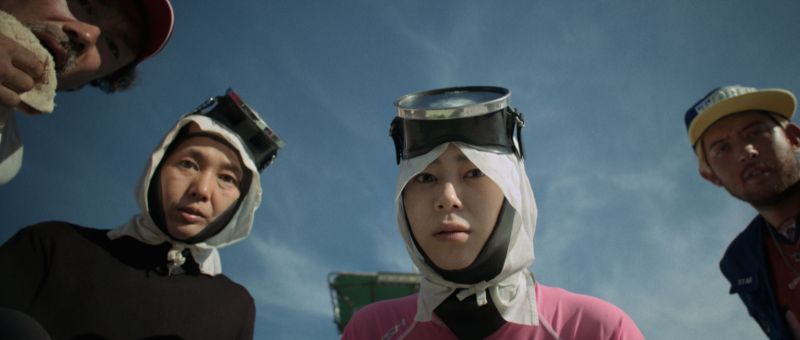
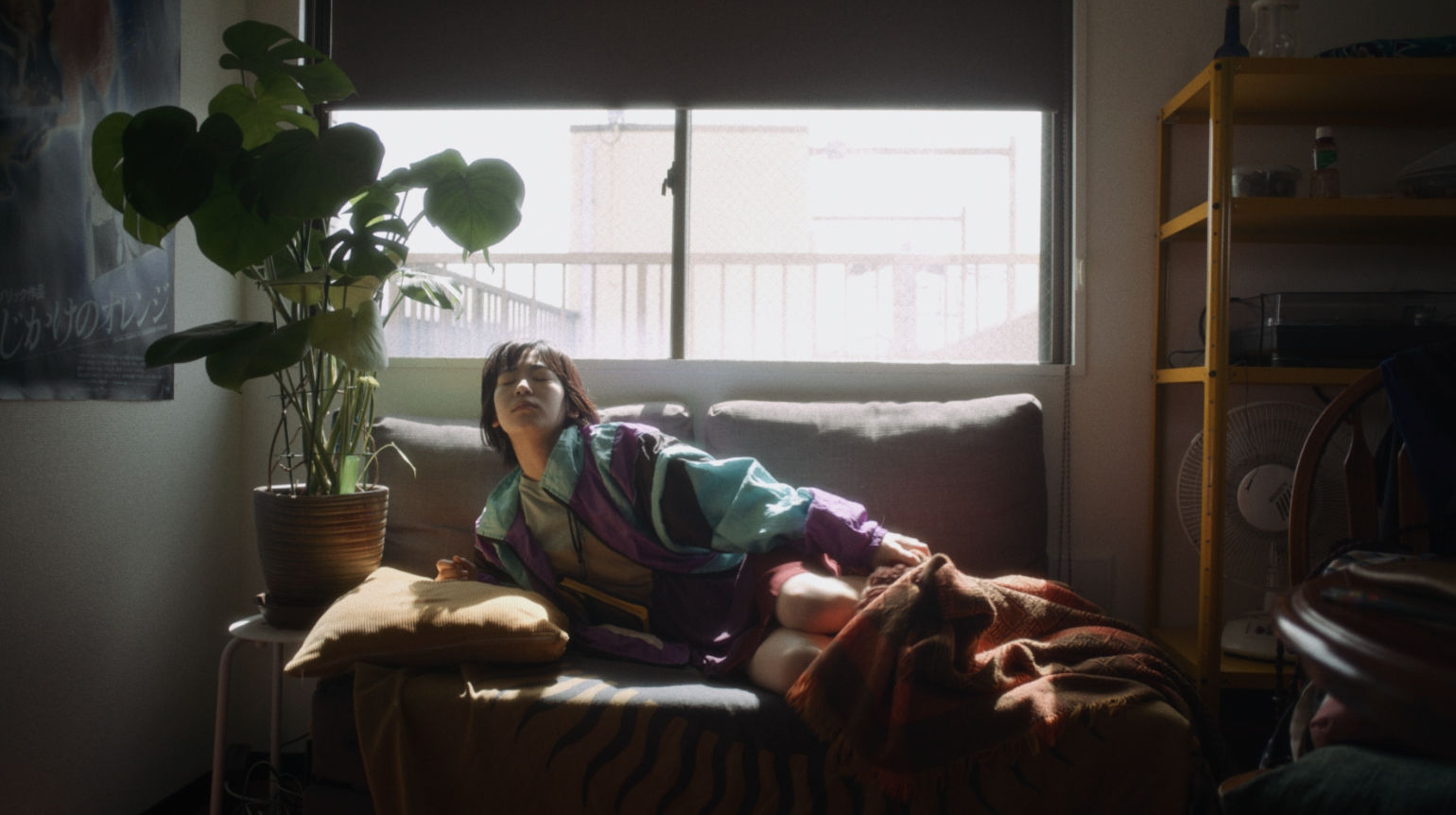
A young woman finds herself diving into the past after receiving a less than enthusiastic welcome on visiting her mother’s island home in Chris Rudz’s gentle indie drama, All the Songs We Never Sang. As the title implies, the film is as much about time wasted in bitterness as it is about the surreality of life on a small island where pearl diving is still a dominant force in the local economy.

17-year-old Natsumi (Miru Nagase) has travelled to Kojima in search of her estranged aunt, Reiko (Junko Kano), her mother’s twin sister, only as it turns out Reiko is a strange and embittered woman who is only ever comfortable in the water. She grudgingly allows Natsumi to stay but only to avoid further island gossip and is unconvinced by her desire to become a pearl diver like her ancestors. As far as we can see, Reiko is one of a handful of divers left on the island and the other two are approaching old age. In fact, there don’t seem to be a lot of other young people around except for Shijo (Kai Hoshino Sandy), an eccentric boat operator and aspiring rapper with a nascent crush on Natsumi. Nevertheless, people on the island mainly remember her mother Akiko as the one who ran off with a fisherman and was never seen again.

Though the older pearl divers are kind to her, not everyone is happy to see an outsider visit and most especially rookie policewoman Yuka (Aoi Shono) who according to some has been given grandiose ideas thanks to going to university on the mainland. She is suspicious of everyone and hungry to uncover some kind of major crime, quickly coming up with an unlikely yakuza invasion as a possible explanation for a missing boat despite the fact that its owner is known to be fond of a drink or two and may simply have neglected to tie it up properly. A patient superior, Sarge (Pierre Taki), tries to explain the nature of small community policing to her that she should integrate more with the people of the island so she can tell when something’s not right and know best how to help. But her zeal for preventing crime eventually leads to accidental cruelty in bluntly divulging upsetting news, smugly proud of her successful bust without reflecting on its implications or the necessary hurt caused by an improper application of her authority as a police officer.

In a way it’s this kind of insensitivity that lies at the centre of the film as it becomes clear that Rieko has wasted the last 18 years of her life in bitterness unable to get over an act of emotional betrayal. She’s sworn off music, which she once loved, and often retreats to her bathroom to plunge herself into the water only really at peace when she’s diving. Looking for a treasure her mother supposedly left for her, Natsumi is diving too, reaching into the past while trying to figure out why her mother and Rieko became estranged and looking for a sense of home and family she feels she’s lost.

That might be the real treasure that her mother left for her even if she has to go diving for it and will need some help to bring it to the surface. In some ways a typical “island movie” about a slightly strange place more or less cut off from time, Rudz hints at a sense of despair in living somewhere there is not much else to do than drink and sing but otherwise captures the warmth of the community most of whom are very welcoming of eccentrics and outsiders even if somewhat prone to gossip for a lack of other entertainment. Through the process of their reconnection, old wounds begin to heal and a kind of peace is found with the past which is in many ways filled with “mermaid’s tears” more than pearls of joy. Still there’s a kind of lament for the songs unsung because of hurt and bitterness, and for the lost love and opportunities that went with them that has its own sense of poignancy tempered by the infinite possibilities of making up for lost time amid the gentle island atmosphere.


All the Songs We Never Sang screened as part of this year’s Osaka Asian Film Festival 

Original trailer (English subtitles)
Bad Poetry Tokyo (東京不穏詩, Anshul Chauhan, 2018)

Bad Poetry Tokyo posterRunning towards a dream can help you forget whatever it was you were running away from, but there may come a time when you have to accept that your dream has betrayed you and the sun is already setting. For the heroine of Anshul Chauhan’s debut feature Bad Poetry Tokyo (東京不穏詩, Tokyo Fuon Uta) that moment has arrived all too soon and though she perhaps expected it to come and had actively resisted it, it can no longer be outrun.

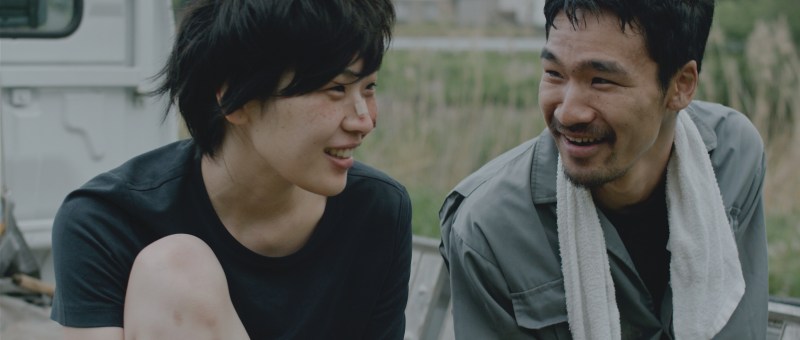
30 years old, Jun’s (Shuna Iijima) dream has been a long time coming. At a make or break audition for a Canadian film, she tells the panel that she studied English at a top university in Tokyo and plans to move to LA to work in movies. Meanwhile, she blew out of her country home five years ago and has become estranged from her family. She supports herself working as a hostess in a seedy bar which is more a front for sex work than it is a drinking establishment, but sex work is work and at least pays well allowing her to save money to move to LA.

Unfortunately she plans to move there with her current boyfriend, Taka (Orson Mochizuki), who is a bouncer at the club and was responsible for getting her the job in the first place even if he now can’t quite reconcile himself with the feelings of jealousy and resentment her work causes him. Taka also has issues of his own and when twin crises present themselves in the form of a possessive and intimidating client, and a home invasion that seems like an inside job and leaves her with visible facial scarring, Jun is finally robbed of all hope and left with no other option than to retreat to her hometown and the quiet horrors which have been patiently waiting for her return.

Jun’s life, it would seem, has been one long scream. Returning to a seemingly empty home, she is less than happy to find her slumbering father (Kohei Mashiba) slumped over in the living room. Noticing the wounds on her face he begins to ask her what happened but more out of irritation than concern – he warns her not to bring any trouble to his door. Jun mutters that it might have been a mistake to come back, to which her father cooly retorts that the biggest mistake was her birth, resenting his daughter for her very existence and the taboo desires she arouses in him while insisting that this is all her fault because she is essentially “bad”. Jun’s dad didn’t even bother to tell her that her mother had died, perhaps out of embarrassment or shame for this was not a natural death and though not at his hand he is very much to blame. The first of many men to have wronged her, only now in her somewhat weakened and desperate state is Jun finally ready for a reckoning. After all, there is nothing more to lose.

Men have indeed ruined her life, as has the oppressive patriarchy which continues to define it. The first time we see her, Jun is forced to perform an intense audition scene of a woman being brutally beaten and abused for a dispassionate director. Which is to say, she is forced to humiliate herself and relive very real traumas in the quest to fulfil her dream. This early scene of playacting will be recalled several times, most obviously in the flashforward which opens the film and eventually leads to a moment of both liberation and transgression which ultimately seals her fate.

Unable to gain a foothold in acting, Jun is forced into a life of sex work which she finds degrading and unpleasant, allowing herself to be “violated” in return for money as she later describes it. Again reliving past traumas, her anger only grows and intensifies as she passively permits herself to be misused. A final act of rebellion in refusing the intimidating and entitled attentions of a controlling client leads to a dangerous situation in which he reminds her that women like her belong to men like him and if it pleases him he will destroy her. Jun gives up on her dream and therefore has no more need of the club, but employment in a hostess bar is not always as casual as it seems and one cannot just simply leave. Once again Jun has become someone’s property, not merely as an idea but as flesh.

Jun’s physical wounds are a manifestation of her emotional trauma and the legacy of violence which traps her in an oppressive cycle of abuse and despair. Back in her hometown, filled as it is with unpleasant memories and the shadow of her father’s cruelty, Jun is haunted by the spectre of an innocent childhood. Reuniting with an old friend who, it seems, has always carried a torch for the girl she once was, Jun is forced to confront the gulf between the “innocent” self which escaped with hope, and the defeated self which has returned with none. Even this seemingly positive, innocent romance is eventually tainted by violence offered as an act of love which has its own sense of disquieting poetry. Yet violence is the force which perpetuates despair, creating only fear and rage and pain each time it breeds. Jun is running once again but neither forward nor back, only full pelt towards the setting sun.


Bad Poetry Tokyo was screened as part of the 2018 Raindance Film Festival.

Festival promo (English subtitles)