
Tiger (Anshul Chauhan, 2025)

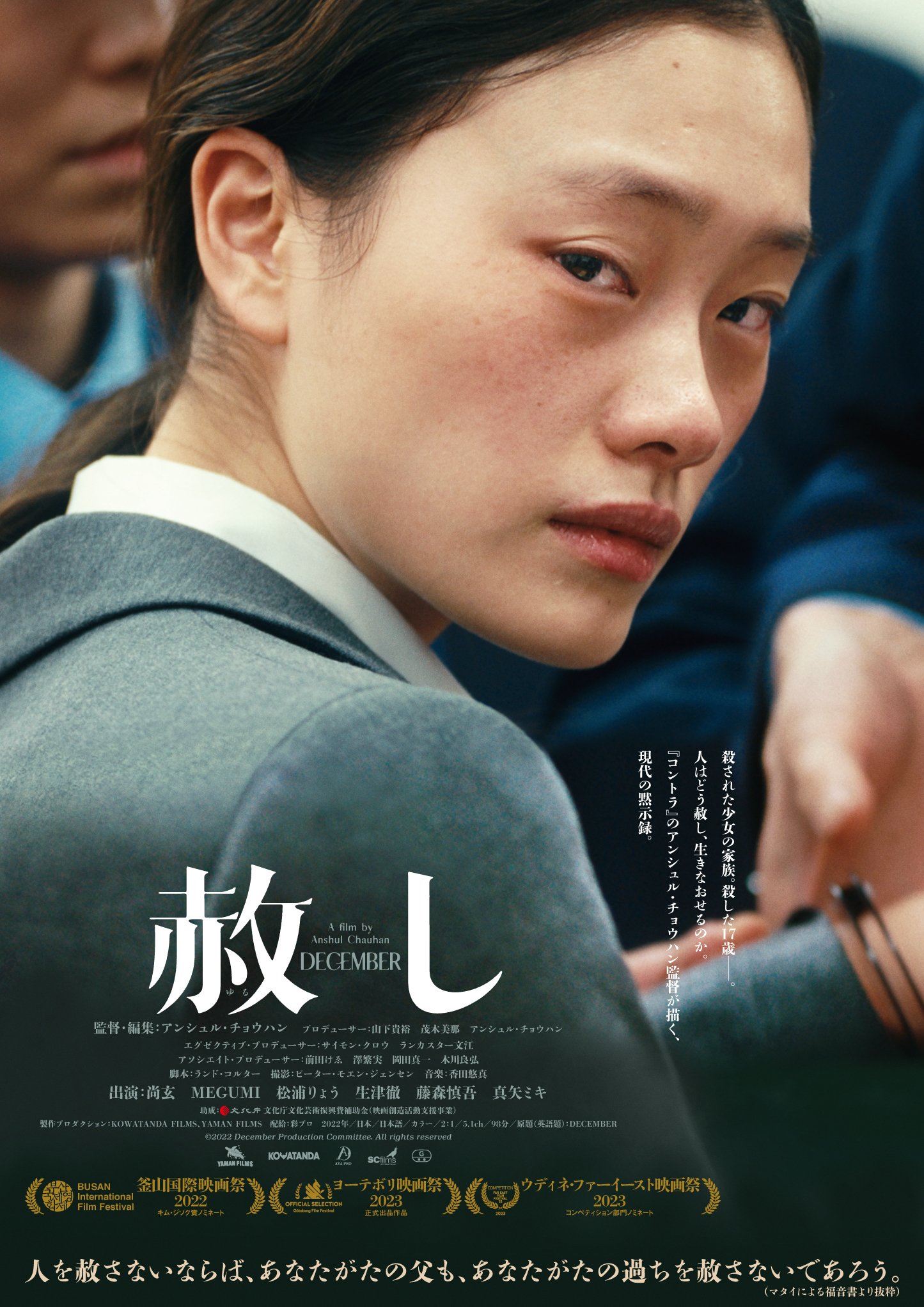
At 35 years old, Taiga (Takashi Kawaguchi) is beginning to tire of city life and thinking of settling down, but as a gay man in contemporary Japan, there are limits to how much that is possible for him. Inspired by real life stories from the LGBTQ+ community, Anshul Chauhan’s Tiger is more character study than issue drama, but explores the ways in which Taiga’s horizons are constrained by the way society receives his sexuality to the point that he finds himself considering entering a platonic marriage as the only real way to ensure a full domestic life with the possibility of raising children.

As someone from the “Friendship Marriage” organisation points out, even the recently introduced partnership system available in some areas of Japan is a long way from a legal marriage and is geared more towards housing provision and hospital visits. It doesn’t confer inheritance rights for those who own property, or even the right to attend a funeral if the other relatives object. Child adoption is relatively rare in Japan in any case and not generally available to same sex couples while even costly options such as IVF and surrogacy could be bureaucratically difficult given the way the family register system works. 

Though the woman giving the presentation seems incredibly angry about the weakness of the partnership system legislation, labelling it “a disgrace”, it can’t be denied that Friendship Marriage is essentially complicit with the heteronormative views of mainstream society in which it is still socially and in some cases practically difficult not to be married. After signing up for the service, Taiga meets a woman who is half-Iranian and grew up in Tehran. It doesn’t occur to him that her decision to come to Japan was not made entirely freely and that she cannot safely return there without the threat of violence. Taiga may feel himself constrained, but he won’t be arrested or tortured solely for existing as a gay man. Nevertheless, he faces reduced options when it comes to employment and has never revealed his sexuality to his father fearing that he will reject or disown him.

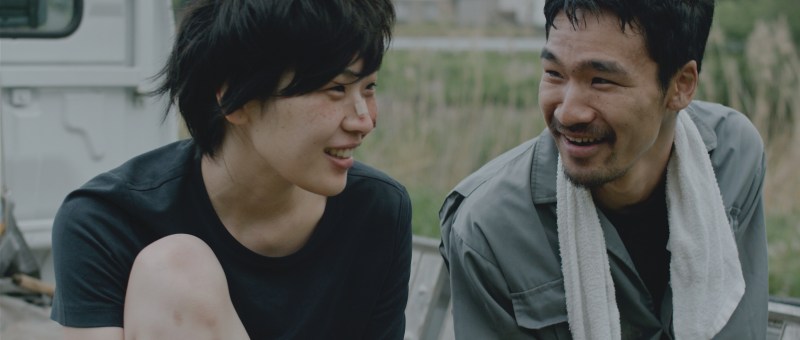
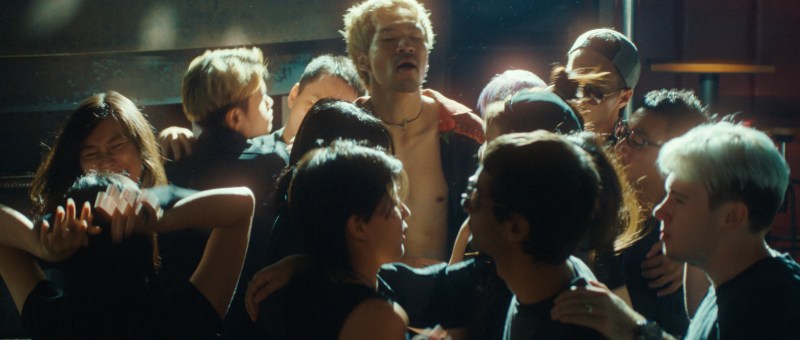
Tensions come to a head, as they so often do, when the matter of inheritance is raised. Taiga’s sister Minami (Maho Nonami) is aware of his sexuality though does not seem altogether accepting and is resentful of his life in Tokyo which she assumes to be aimless and free of responsibility while she has had to shoulder the burden of caring for their ageing father alone. It’s obvious that she has been banking on inheriting the family home and is resentful on hearing their father has suggested leaving it to Taiga on the condition that he marries and has children, knowing that this is something that is not possible in contemporary Japan. The implication is that Taiga had no choice but to leave his home town in order to lead a more authentic life and essentially develops two opposing personas, that of “Tiger” the aspiring porn star and “Taiga” the would-be-family man. 

Minami later wields this duality against him, asking him to baby-sit her daughter Kaede to whom he is especially close, while threatening to out him to their father if he doesn’t agree to give up his right to the domestic space represented by their family home. His former lover, Koji (Yuya Endo), has entered a conventional heterosexual marriage without disclosing his sexuality to his wife and is riddled with regrets over not leaving with Taiga and trying to start a domestic life in the city as a gay couple. The Friendship Marriage system removes the element of betrayal, but also elides authenticity in providing a mechanism for each partner to fulfil social and parental expectation while avoiding disclosing their sexuality, and equally prevents them from enjoying a full and loving domestic relationship with a same-sex partner.

The film never particularly suggests that there is anything wrong with the way Taiga is living in Tokyo nor with his desire to get into gay porn, but merely highlights the sense of emptiness he feels as someone denied the possibility a full domestic life. There is after all a kind of age cap involved in his life as a sex worker working at a men-only massage parlour which he may fast be approaching even aside from the clients who like to exorcise their own sense of powerless by paying money to abuse and humiliate him. In the end, all he’s left with is an uncertain liminal space living as a literal stand-in marooned on the sidelines with no place to call his own.


Tiger screens as part of this year’s Nippon Connection.

Trailer (English subtitles)

Images: © Tiger Production Partners
December (赦し, Anshul Chauhan, 2022)

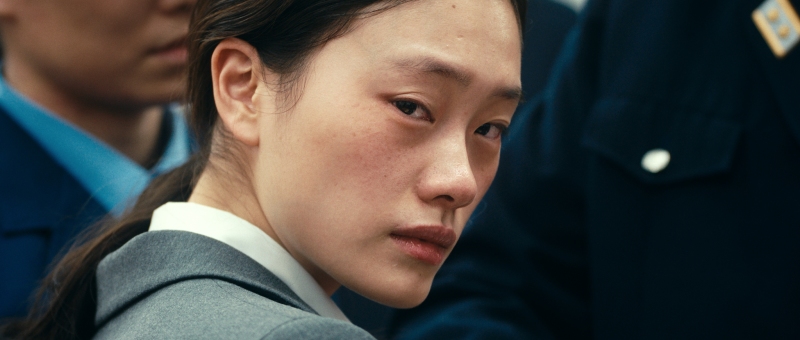
Where is the line between justice and vengeance? The grieving father at the centre of Anshul Chauhan’s December (赦し, Yurushi) is determined that the teenage girl who stabbed his daughter to death should never leave prison, but what he wants is a kind of equivalent exchange in that the person who stole his future along with his child’s should have no right to one herself. A more mainstream effort than either of his previous films Bad Poetry Tokyo and Kontora each of which dealt with similarly thorny themes, Chauhan’s unusually tense courtroom drama is the latest to put the legal system on trial while asking difficult questions about grief, guilt, and what exactly it is we mean when we talk about “justice”.

Seven years previously, 17-year-old Kana (Ryo Matsuura) stabbed her classmate Emi (Kanon Narumi) multiple times in a frenzied attack that resulted in her death. She was sentenced to 20 years in prison and has never attempted to deny her crime. It isn’t she who has asked for her sentence to be reviewed but an independent lawyer, Sato (Toru Kizu), who claims he’s doing it for “justice” though as Kana points out might have half an eye on compensation money she’d be able to claim for wrongful imprisonment if the case were successful. Sato seems to think it will be on the grounds that Kana was unfairly tried as an adult, mitigating circumstances were never brought to the defence’s attention, and the judge’s sentencing was swayed by personal feeling placing it outside of conventional guidelines that should be applied in cases like these.

For Emi’s parents, Katsu (Shogen) and Sumiko (Megumi), the appeal is a slap in the face. The couple have separated and while Sumiko has attempted to move on with her life, marrying a man she met in a support group for bereaved parents, Katsu has become a bitter alcoholic living a purgatorial existence of almost total inertia. Outraged, he is determined to make sure that Kana never leaves prison and is only sorry that she could not receive the death sentence because of her age, while Sumiko would rather not be involved at all, uncertain that she would be able to endure the emotionally draining process of another court case. They settle on presenting a united front, but discover that to do so is also to put themselves on trial while being confronted by a past neither has ever really faced.

The strain on Sumiko is evident as she walks along along a bridge at night and peers over the edge as if about to jump. She later learns that Kana had a mother too who did in fact take her own life after selling everything she owned to pay the compensation money that is used against them in court to imply that they’ve already been served “justice” in the form of monetary recompense from the defendant’s family which ought to declare the matter closed. Unlike Katsu, Sumiko had said her goal wasn’t vengeance but only to make sure that no other mother suffers as she has done, yet another mother already has for she lost a daughter too. Kana meanwhile has no one left to turn to even if she were released, she will have to make a new life for herself alone. Kana is herself victimised by an unforgiving society, the subtext suggesting that she was bullied for being the daughter of a single mother who was unable to fully care for her or provide the kind of material comfort children like Emi receive. The “happy family home” Katsu accuses her of destroying is also a symbol of everything Kana was denied but she did not kill out of jealousy or resentment only, ironically, to escape a kind of imprisonment and free herself of an oppressive bully.

Katsu says he’d kill her himself if he had the chance, but as Sumiko points out then he’d just end up in prison for the rest of his life with only his “righteousness” to comfort him. How could he claim to be any better? As Sato says, emotion has no place in a court of law. That’s why the law the exists and we mediate “justice” through a dispassionate third party to ensure the sentence is fair and not merely “vengeance”. Katsu certainly sees himself as a righteous man. In a repeated motif, Chauhan shows him taking the long way round by walking on the pathways of the grid-like forecourt leading to the courthouse while others hurriedly take the direct route crossing the squares at a diagonal angle. For him the answer is only ever black and white and he is very certain of his truths, but also blinded by his pain and unable to see that his desire for vengeance is more for himself than it is for Emi.

Only by accepting a painful truth can he begin to move past his grief, despite himself moved by Kana’s quiet dignity in which she admits her responsibility and suggests that she will never really be “free” even if she is released. What she offers, in her way, is peace allowing the bereaved parents to bring an end to their ordeal or least enter a new phase in their grief which allows them to move forward in memory rather than remaining trapped within the unresolved past. Perhaps in the end that’s what we mean by “justice”, a just peace with no more recrimination only sorrow and regret with renewed possibility for the future.


December screened as part of this year’s Osaka Asian Film Festival.

Original trailer (no subtitles)

Bad Poetry Tokyo (東京不穏詩, Anshul Chauhan, 2018)

Bad Poetry Tokyo posterRunning towards a dream can help you forget whatever it was you were running away from, but there may come a time when you have to accept that your dream has betrayed you and the sun is already setting. For the heroine of Anshul Chauhan’s debut feature Bad Poetry Tokyo (東京不穏詩, Tokyo Fuon Uta) that moment has arrived all too soon and though she perhaps expected it to come and had actively resisted it, it can no longer be outrun.

30 years old, Jun’s (Shuna Iijima) dream has been a long time coming. At a make or break audition for a Canadian film, she tells the panel that she studied English at a top university in Tokyo and plans to move to LA to work in movies. Meanwhile, she blew out of her country home five years ago and has become estranged from her family. She supports herself working as a hostess in a seedy bar which is more a front for sex work than it is a drinking establishment, but sex work is work and at least pays well allowing her to save money to move to LA.

Unfortunately she plans to move there with her current boyfriend, Taka (Orson Mochizuki), who is a bouncer at the club and was responsible for getting her the job in the first place even if he now can’t quite reconcile himself with the feelings of jealousy and resentment her work causes him. Taka also has issues of his own and when twin crises present themselves in the form of a possessive and intimidating client, and a home invasion that seems like an inside job and leaves her with visible facial scarring, Jun is finally robbed of all hope and left with no other option than to retreat to her hometown and the quiet horrors which have been patiently waiting for her return.

Jun’s life, it would seem, has been one long scream. Returning to a seemingly empty home, she is less than happy to find her slumbering father (Kohei Mashiba) slumped over in the living room. Noticing the wounds on her face he begins to ask her what happened but more out of irritation than concern – he warns her not to bring any trouble to his door. Jun mutters that it might have been a mistake to come back, to which her father cooly retorts that the biggest mistake was her birth, resenting his daughter for her very existence and the taboo desires she arouses in him while insisting that this is all her fault because she is essentially “bad”. Jun’s dad didn’t even bother to tell her that her mother had died, perhaps out of embarrassment or shame for this was not a natural death and though not at his hand he is very much to blame. The first of many men to have wronged her, only now in her somewhat weakened and desperate state is Jun finally ready for a reckoning. After all, there is nothing more to lose.

Men have indeed ruined her life, as has the oppressive patriarchy which continues to define it. The first time we see her, Jun is forced to perform an intense audition scene of a woman being brutally beaten and abused for a dispassionate director. Which is to say, she is forced to humiliate herself and relive very real traumas in the quest to fulfil her dream. This early scene of playacting will be recalled several times, most obviously in the flashforward which opens the film and eventually leads to a moment of both liberation and transgression which ultimately seals her fate.

Unable to gain a foothold in acting, Jun is forced into a life of sex work which she finds degrading and unpleasant, allowing herself to be “violated” in return for money as she later describes it. Again reliving past traumas, her anger only grows and intensifies as she passively permits herself to be misused. A final act of rebellion in refusing the intimidating and entitled attentions of a controlling client leads to a dangerous situation in which he reminds her that women like her belong to men like him and if it pleases him he will destroy her. Jun gives up on her dream and therefore has no more need of the club, but employment in a hostess bar is not always as casual as it seems and one cannot just simply leave. Once again Jun has become someone’s property, not merely as an idea but as flesh.

Jun’s physical wounds are a manifestation of her emotional trauma and the legacy of violence which traps her in an oppressive cycle of abuse and despair. Back in her hometown, filled as it is with unpleasant memories and the shadow of her father’s cruelty, Jun is haunted by the spectre of an innocent childhood. Reuniting with an old friend who, it seems, has always carried a torch for the girl she once was, Jun is forced to confront the gulf between the “innocent” self which escaped with hope, and the defeated self which has returned with none. Even this seemingly positive, innocent romance is eventually tainted by violence offered as an act of love which has its own sense of disquieting poetry. Yet violence is the force which perpetuates despair, creating only fear and rage and pain each time it breeds. Jun is running once again but neither forward nor back, only full pelt towards the setting sun.


Bad Poetry Tokyo was screened as part of the 2018 Raindance Film Festival.

Festival promo (English subtitles)