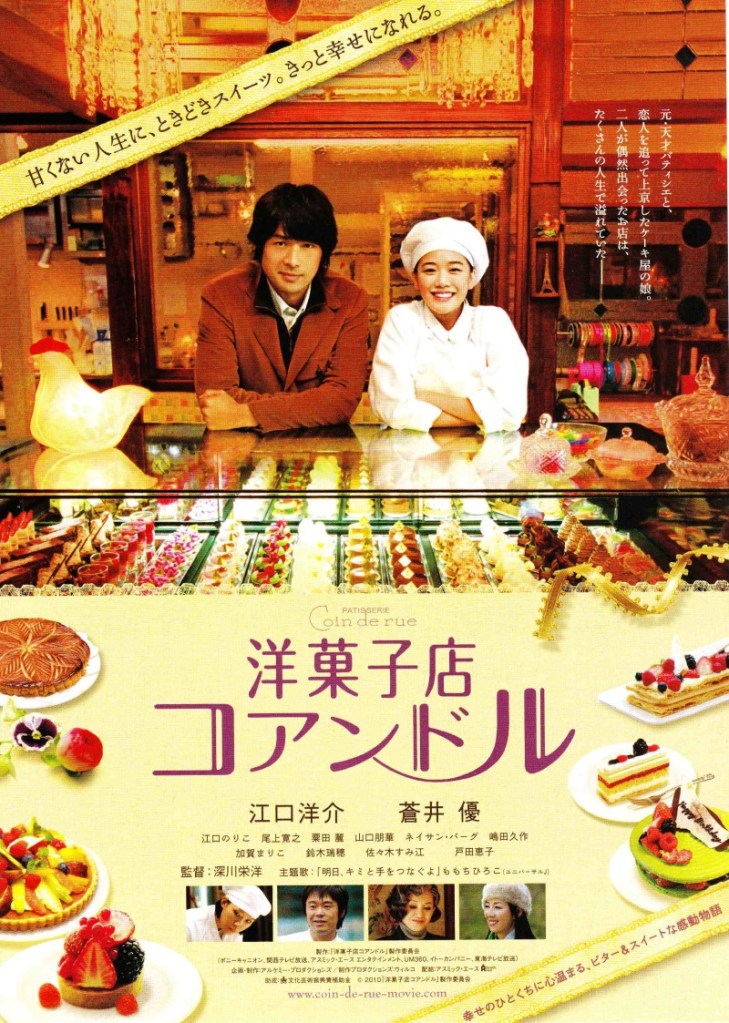
 You know how it is, when you’re from a small town perhaps you feel like a big fish but when you swim up to the great lake that is the city, you suddenly feel very small. Natsume has come to Tokyo from her rural backwater town in Kagoshima to look for her boyfriend, Umi, who’s not been in contact (even with his parents). When she arrives at the patisserie he’d been working at she discovers that he suddenly quit a while ago without telling anyone where he was going. Natsume is distressed and heartbroken but notices that the cafe is currently hiring and so asks if she may take Umi’s place – after all she grew up helping out at her family’s cake shop!
However, as you might expect, even if her cakes are perfectly nice in a “homecooking” sort of way, they won’t cut it at a top cafe like Patisserie Coin de rue. Natsume is not someone who takes criticism well and is hurt that her skills aren’t appreciated but vows to stay and become the best kind of pastry chef she can be.
At heart, Patisserie Coin de rue (洋菓子店コアンドル, Yougashiten Koandoru) is a fairly generic apprentice story as Natsume starts off as a slightly arrogant country girl with an over inflated opinion of her abilities but gradually develops the humility to help her learn from others around her. Natsume, played by the very talented Yu Aoi, is not an easy woman herself and often rides a rollercoaster of emotions in just a single sentence. She’s loud but passionate and she does work hard even if her over confidence and slapdash approach sometimes cause problems for her fellow workers.
Patisserie Coin de Rue is also refreshing in that it’s one of the few films of this nature that do not attempt to pack in a romantic element. Natsume may have come to Tokyo to look for her boyfriend but no attention is paid to the possibility of winning him back or finding someone else, after calling time on her quest Natsume simply buckles down to learning her craft.
This is doubly true of the film’s secondary plot strand which centres on former international pastry star Tomura (Yosuke Eguchi) who mysteriously abandoned his cooking career eight years ago and now mostly works as a critic with some teaching on the side. He cuts a fairly sad figure as a regular visitor to Patisserie Coin de rue where he’s also an old friend of the owner and Natsume’s mentor, Yuriko. Natsume finally manages to coax him out of his self imposed isolation but the relationship is more paternal than anything else and, thankfully, never attempts to go down any kind of romantic route.
It’s a story that’s familiar enough on its own to have become something of a cliché and Patisserie Coin de rue doesn’t even try to put much of a new spin on it but it does at least carry it off with a decent amount of sophistication. Occasionally the film falls into the televisual but its production values are strong with the tone neatly flitting between mainstream aesthetics and a slightly alienated indie perspective. Of course, being a cake based film there are plenty of enticing shots of the baked goods on offer which do at least create a feast for the eyes.
The saving grace of the film is its leading actors who each turn in naturalistic, nuanced performances even given the lacklustre nature of the script. Yu Aoi carries the film as her surprisingly feisty Natsume dominates each scene she’s in while support is offered by the silent, brooding Yosuke Eguchi and the wise and patient shop owner Yuriko played by Keiko Toda. The film really owes a lot to the talent and commitment of its leading players who help to elevate its rather ordinary nature into something that’s a little less disposable.
That said Patisserie Coin de Rue is a little like a pleasant cafe you find in an unfamiliar area – the coffee’s good and the pastries are pleasant enough, you might drop in again if you’re in this part of town but you probably won’t make a special journey. A little bit formulaic and ultimately too sweet, Patisserie Coin de Rue is a shop bought cake in a boutique box which though enjoyable enough at the time is unlikely to linger long in the memory.
The R3 Hong Kong DVD release of Patisserie Coin de rue includes English subtitles.
(Unsubtitled trailer)
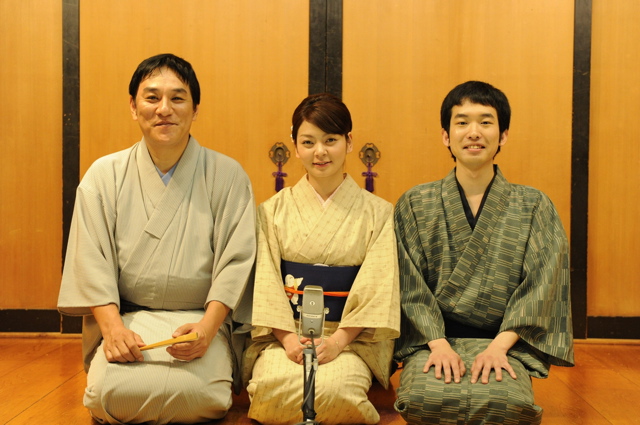 When it comes to the classic Japanese art forms, kabuki, noh and maybe even bunraku are not so uncommon overseas. Rakugo, however, has not been as lucky. Famously impenetrable for non-native speakers even if their language skills are otherwise top notch, rakugo is the art of traditional comic story telling in which the “rakugo-ka” recites a standard monologue with the aim of mining it for laughs in their own individual fashion. These stories date back to the Edo-era and rely heavily on classic Japanese puns, stock characters and cultural assumptions, consequently, their appeal has been on the wane in Japan for sometime. That’s not to say the art form is quite dead yet though, as real life rakugo-ka Shinpei Hayashiya’s Rakugo Monogatari attempts to prove.
 Windows on Worlds