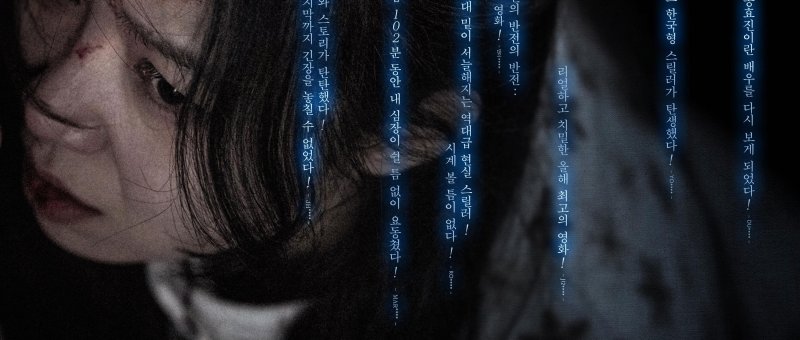
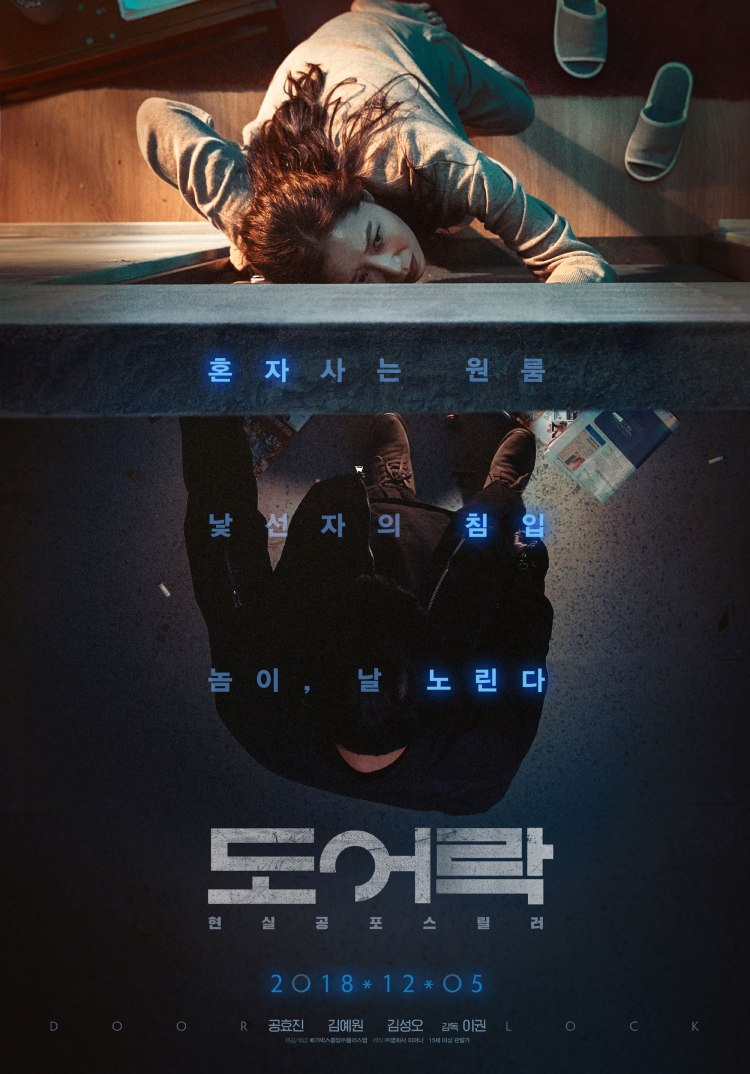
 Behind your own front door, you’re supposed to feel safe but the modern city conspires to ensure no space, not even the most private, can feel completely free from danger. A Korean spin on the Spanish film Sleep Tight, Lee Kwon’s Door Lock (도어락) shifts the focus from perpetrator to victim as it explores each of the many and various ways women are made to feel vulnerable in the still male dominated Korean society.
Kyung-min (Gong Hyo-jin) has more than one reason to feel anxious. A bank clerk on a temporary contract, she’s forever worrying that she’ll soon be out of a job though there is a rumour of permanent employment on the horizon if only she can keep up her efficiency at work. That might be difficult, however, because Kyung-min has not been feeling well. She wakes up groggy and goes through much of the day feeling a little out of things, though perhaps that’s just the city air. Another cause for concern is that she keeps having the eerie feeling that someone’s been in her apartment when she wasn’t there. Fully aware of all the dangers (and perhaps having had problems before), Kyung-min is concerned enough by signs of someone fiddling with her door lock to change the code every few days, and is panicked by someone furiously rattling the door late at night trying to get in.
Like any sensible person, Kyung-min calls the police but they remain unsympathetic to her fears. Knowing she’s called several times before, they write her off as nervous and hysterical or perhaps an attention seeking lonely single woman. Kyung-min, unfortunately for her, has a habit of attracting the attentions of unpleasant men like a customer at the bank, Ki-jung (Jo Bok-rae), who refuses to take no for an answer after inappropriately asking her out during a consultation about his bank account. In an angry rant, Ki-jung accuses her of leading him on, that she flirted with him on purpose to encourage him to take out additional accounting services. Kyung-min feels herself shrinking in wondering if there’s some truth in what he said, instantly blaming herself, as she recalls that the appraisals are in the offing and she wasn’t making enough sales. Her colleague told her to smile more, so maybe she did and this is what comes of it. The situation is only diffused when Kyung-min’s smartly dressed boss steps forward to place a hand on her shoulder and call security on her behalf.
The boss, nice and well mannered as he is, is perhaps another sort of problem as he too has additional interest in Kyung-min that could end up becoming an awkward workplace issue. As it turns out he becomes another sort of crisis entirely which gets Kyung-min mixed up with the police who now assume she herself is the creepy stalker with only the evidence of her previous calls to back up her claim of persistent harassment. The police remain unsympathetic, intent on pinning something on Kyung-min to close the case quickly while dismissing her fears as either lies, psychosis, or hysterical paranoia. Eventually Kyung-min and her best friend Hyo-joo (Kim Ye-won) decide they’re on their own and they’ll have to proactively protect themselves because, it seems, no one else is going to.
The men who routinely approach Kyung-min do so with frustrated entitlement. They disregard her right to refuse for no particular reason and assume it to be a slight, insisting that Kyung-min is a snob who has only rejected them for their working class occupations and relative lack of financial status. Wounded male pride is once again the most dangerous force of them all. In a precarious economic situation of her own, Kyung-min is left feeling as if nowhere is safe in an intensely chauvinistic, rabidly capitalist, and conservative society which encourages her to find fault with herself rather than the world in which she lives that forces her to feel that way. Inequalities, both economic and sexual, are driving violent crime but when it comes down to it the powers that be are relatively uninterested in the fears of single women or in doing more to create a fairer, safer society. They would rather hang fake security cameras that make you feel safe than deal with illicit spy-cams or listen seriously to women’s concerns when they say they feel afraid. A tense and harrowing thriller, Door Lock is also a frighteningly relatable exploration of the fears of modern urban living.
Door Lock was screened as part of the 2019 Udine Far East Film Festival.
International trailer (English subtitles)
 Windows on Worlds