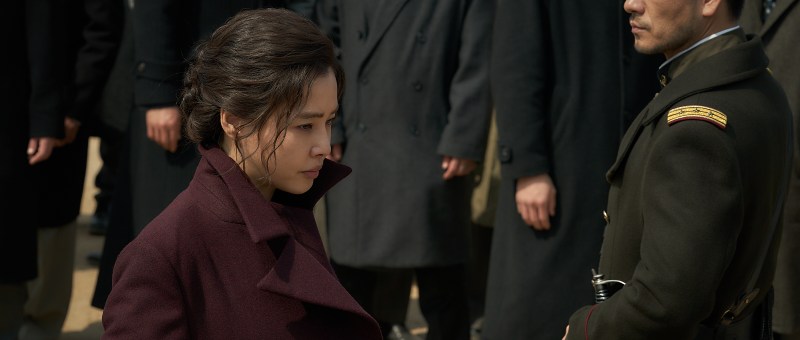
Neatly subverting the drawing room mystery, Lee Hae-young’s intense colonial-era spy thriller Phantom (유령, Yuryeong) positions female solidarity as the roots of resistance towards oppressive militarist rule. Inspired by Mai Jia’s novel Sound of the Wind which focused on Chinese resistance towards the Japanese puppet government in Nanking, the film does indeed begin with the suggestion that one of the people in this room is a spy but soon encourages us to wonder if they all may be or some other game may be being played by an infinitely corrupt authority in the midst of a constant series of betrayals and reversals.
Opening in Kyungsung (modern day Seoul) in 1933, the film both begins and ends with a radio broadcast in Japanese reporting on the actions of “terrorist” group known as the “Shadow Corps” which has been conducting “organised crime” through a network of spies known as “Phantom”. An assassination attempt has recently been made in Shanghai on the new Korean governor and all members of the organisation are reported as dead following shootout with the Japanese authorities, though that obviously turns out not to be the case and we are quickly introduced to operative Park Cha-kyung (Lee Hanee) who works in the intelligence division of the colonial government and utilises a local cinema permanently screening Shanghai Express to communicate with her handlers. New instructions are boldly announced in plain sight through coded messages on cinema posters including one for Tod Browning’s Dracula.
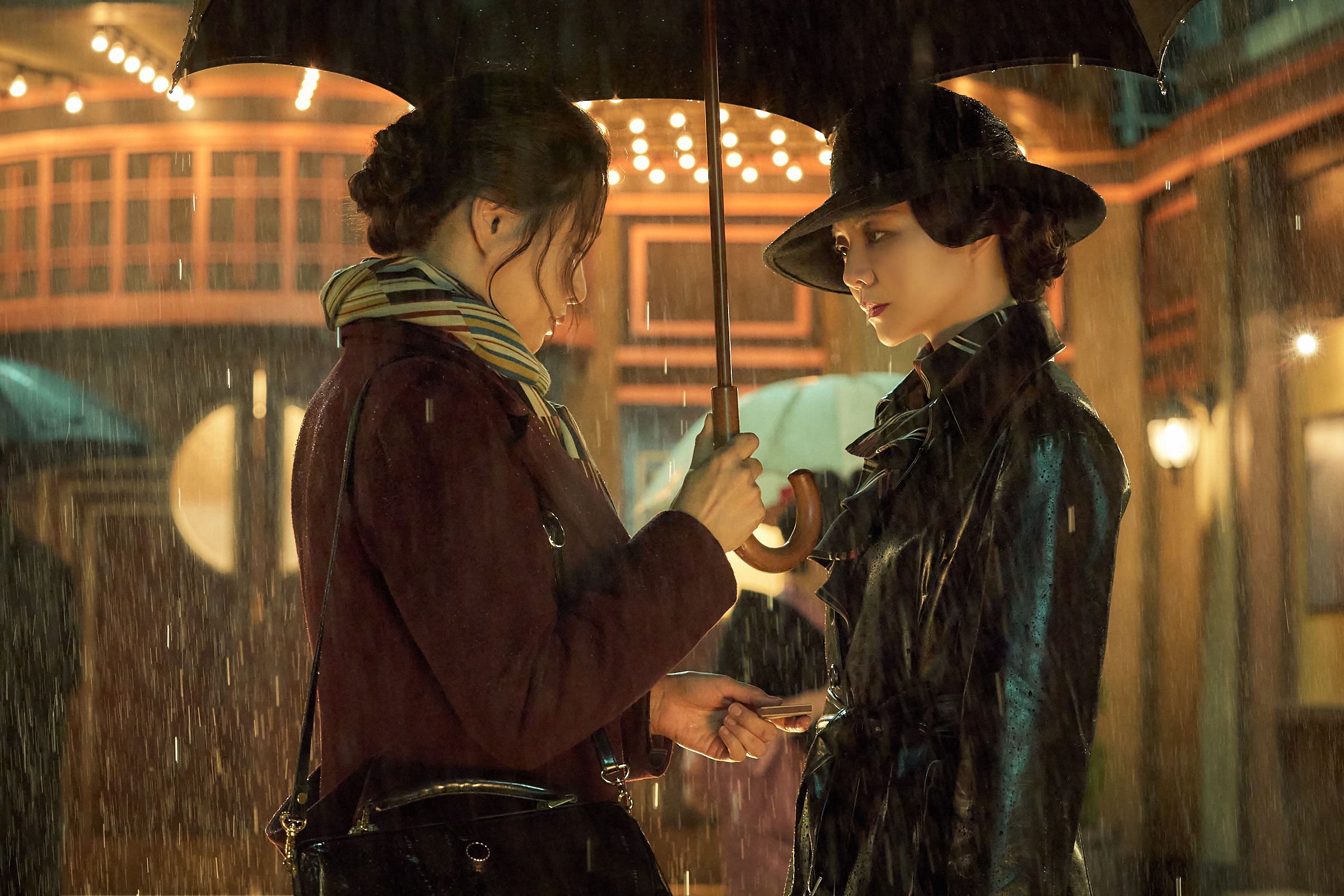
The group plan to assassinate the new governor when he visits a Japanese shrine in the city. A young woman dressed as a Shinto shrine maiden using a pistol concealed in a tray manages to wound but not kill him. She makes an escape but is shot by an unseen hand that could have come from either side. Following, Cha-kyung witnesses her death but can do nothing other than make a swift disappearance before the authorities arrive. Cha-kyung is often depicted as a shadow presence, disappearing phantom-like from the scene both there and not there as she tries to maintain her cover, but Lee also imbues her with an additional layer of repression in that the assassin, Nan-young (Esom), had been her lover. The two women meet briefly outside the cinema in an emotionally charged scene in which they can display no emotion as they must appear to be two strangers exchanging a match on the street though it’s clear that something much deeper is passing between them.
The exchange of cigarettes itself becomes repeated motif standing in for deepening intimacy in an atmosphere of intense mistrust. The box of matches that Cha-kyung had given to Nan-young as a parting gift and means of buying a few seconds more, blows their operation in leading investigating officer Takahara (Park Hae-soo) to a bar opposite the cinema where he figures out their code. Seemingly unsure as to who is the “Phantom”, he rounds up five suspects and takes them to a clifftop hotel where he encourages them to identify themselves or else they will be interrogated the following day. Along with Cha-kyung whom we already know to be “a” if not “the” Phantom is a police officer against whom Takahara bears a grudge (Sol Kyung-gu), the governor’s flapper secretary Yuriko (Park So-dam), codebreaker Cheon (Seo Hyun-woo) who is very attached to his cat, and terrified mailroom boy Baek-ho (Kim Dong-hee).
Lee keeps the tension high and us guessing as we try to figure out what’s really going on, who is on which side, and if there’s to this than it first seems. Cha-kyung too seems uncertain, unable to trust any of her fellow suspects who obviously cannot trust her either while trying to maintain her ice cool cover. With sumptuous production design evoking the smoky, moody elegance of the 1930s setting, Lee drops us some clues in focussing on footwear particularly Cha-kyung’s ultra-practical boots and Yuriko’s totally impractical high heels and fancy outfits which as it turns out may have their uses after all when the simmering tension finally boils over and all hell breaks loose at the combination luxury hotel and state torture facility. In any case, as we gradually come to realise, the real “Phantom” the title refers to may be Korea itself, the resistance fighters accused of clinging on to the ghost of a nation which no longer exists while themselves rendered invisible, forced to live underground until the liberation day arrives.
Phantom screens July 30 as part of this year’s New York Asian Film Festival.
International trailer (English subtitles)
Images: ⓒ 2023 CJ ENM Co., Ltd., THE LAMP.ltd ALL RIGHTS RESERVED
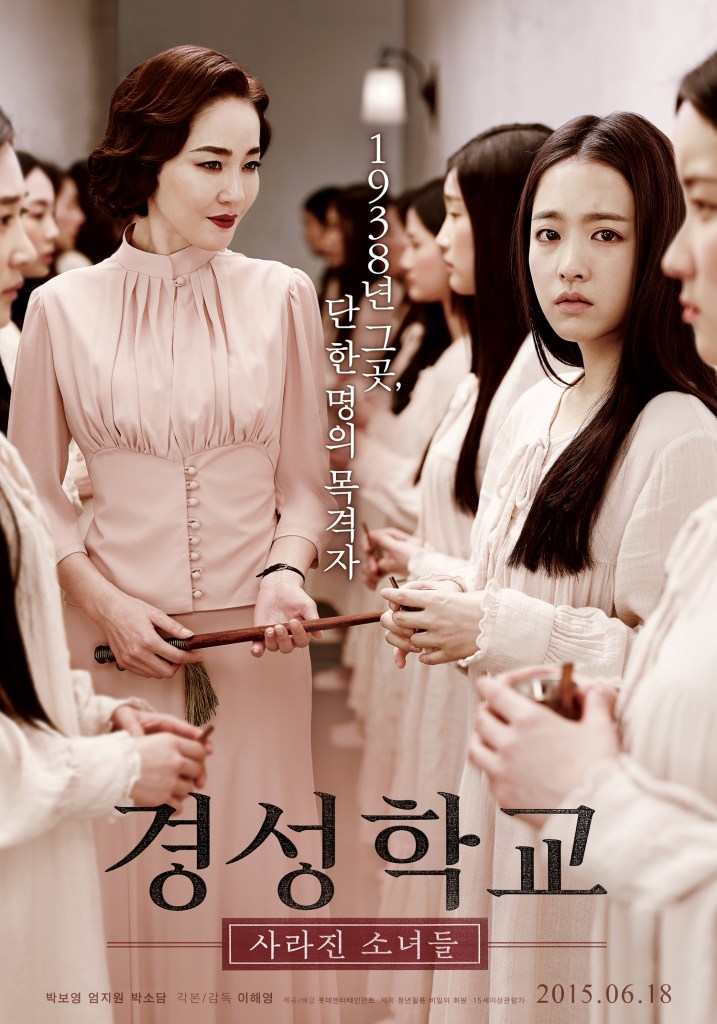 The Silenced (경성학교: 사라진 소녀들, Gyeongseonghakyoo: Sarajin Sonyeodeul) has all the classic genre aspects of the boarding school horror story familiar to fans of gothic literature everywhere, but this is no Victorian tale of repressed sexuality and hallucinatory psychosis. What The Silence does is take all of these essential elements and remix them as a metaphor for the horror of colonialism. Surrounded by quislings and forced into submission in order to survive, how does the essential soul of an oppressed people survive? The Silence would seem to argue that perhaps it can’t, but can evolve and learn to resist its colonisers even if it has to bend to do so.
 Windows on Worlds