Project Wolf Hunting (늑대사냥, Kim Hong-sun, 2022)

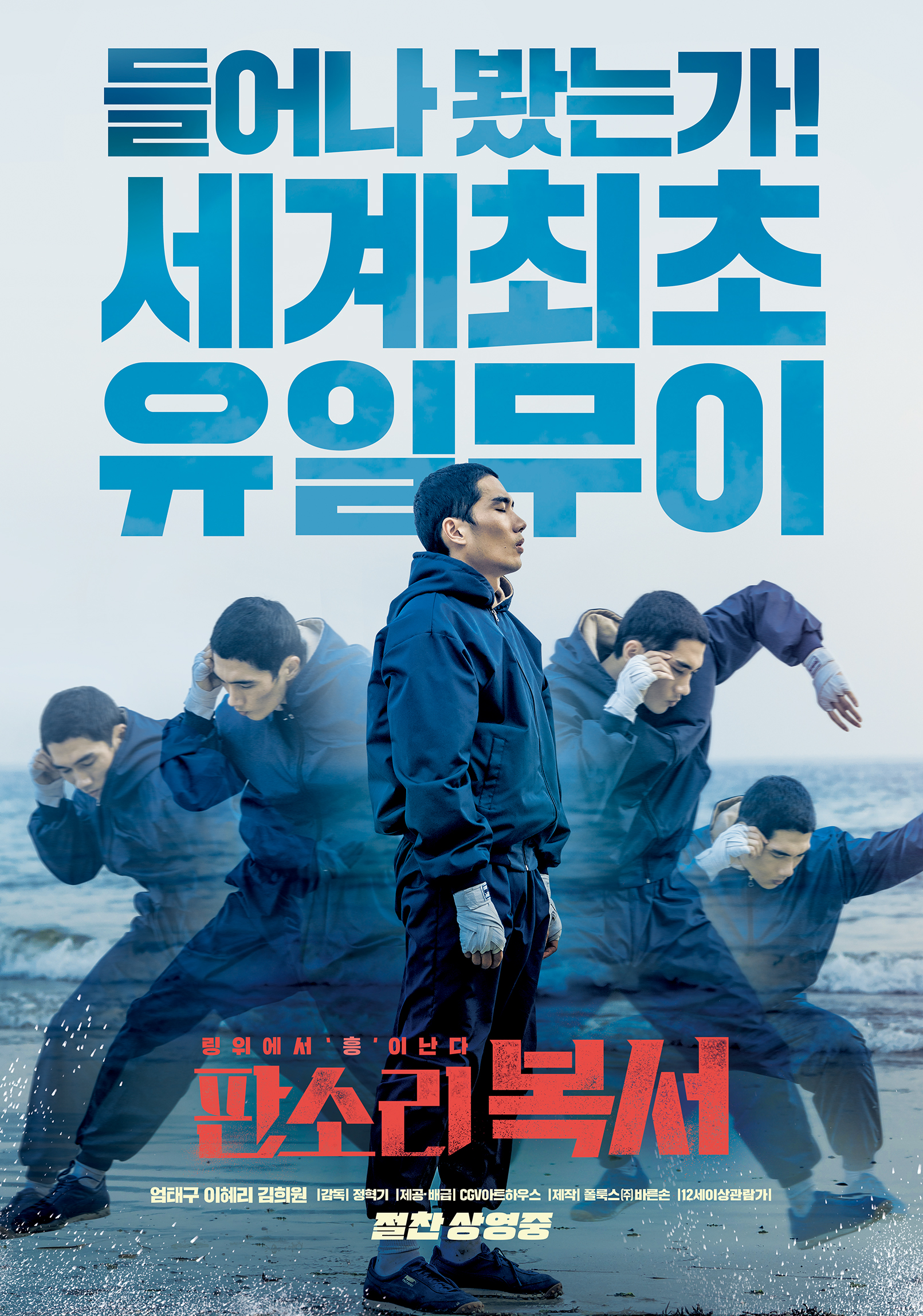
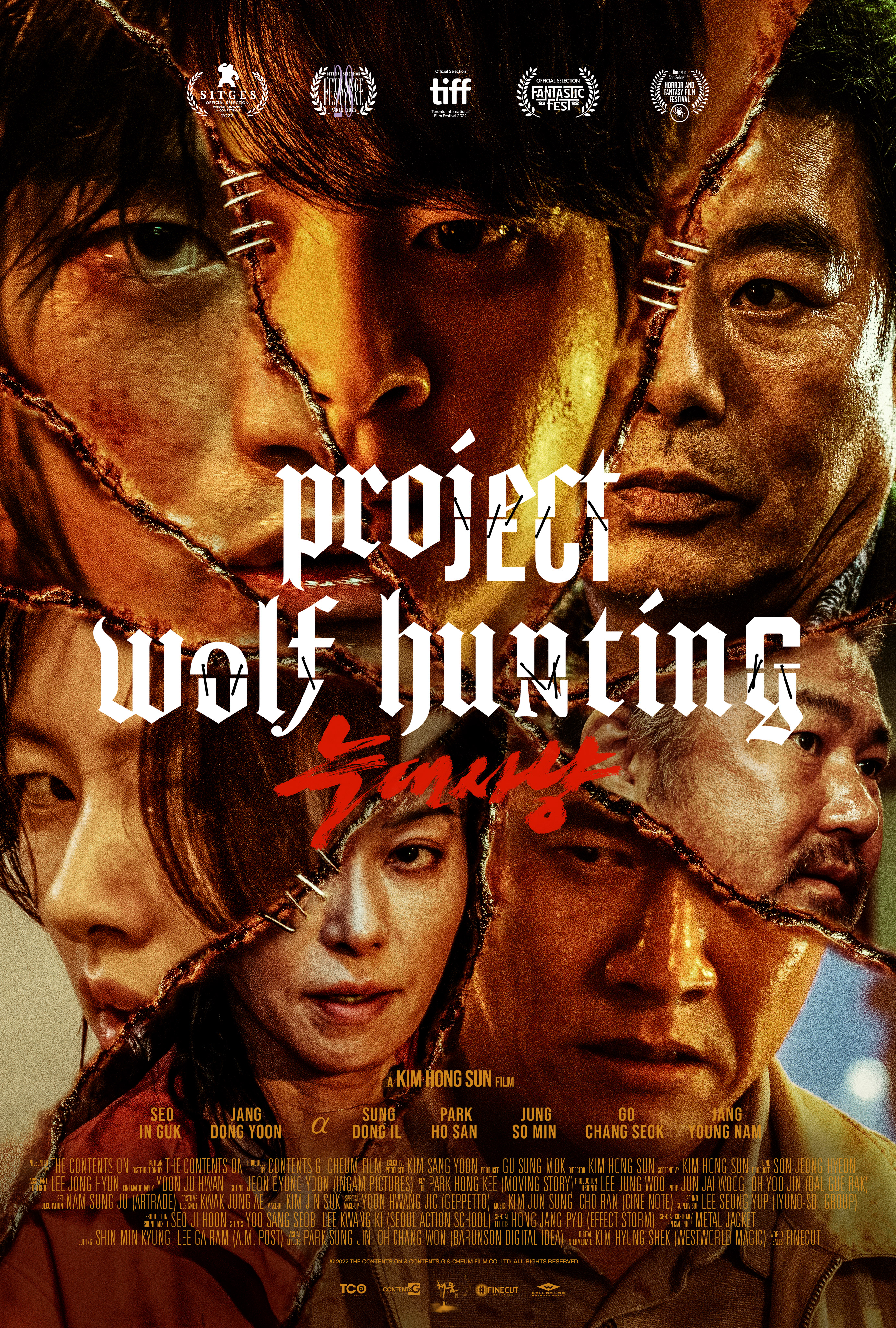
“Remember, there’s nowhere to run” an arrogant police officer explains to collection of rapists and murderers locked aboard a cargo ship ready to be delivered to “justice” in Korea having attempted to flee to the Philippines. It is in someways ironic that these men and women, depraved as many of them may be, have been loaded onto a commercial vessel to be shipped home less like cattle than faceless and inanimate objects. Kim Hong-sun’s eerie gore fest Project Wolf Hunting (늑대사냥, Neukdaesanyang) is in many ways about the horrors of the past but also suggests that the present is little better in a world in which there is little difference between cop and thug and we are all at the mercy of looming violence. 

As one older prisoner puts it, “if this isn’t hell, I don’t know what is”. Thanks to an international extradition arrangement some of the worst Korean criminals are about to be repatriated from the Philippines only the historic event is disrupted by a suicide bombing carried out by a disgruntled victim whose smashed glasses and severed limbs are an eerie harbinger of what’s to come. After a rethink, the government decides to hire a cargo boat instead so the public won’t have access to the criminals, which is somewhat ironic, while accompanied by a crack team of veteran cops each with over 10 years of experience on the force. Already it isn’t seeming like a very well thought through plan, but as Captain Lee (Park Ho-San), who openly beats a prisoner with whom he has prior history on the dock, points out, there aren’t any cameras so he has full authority to enforce the law with no concern for the rights of inmates nor basic human morality. To cut it short, he’s little different than they are even if he isn’t, as far as we know, a multiple murderer or rapist. 

In any case, keeping a bunch of violent criminals handcuffed with only one bathroom break a day and no stimulation seems like a recipe for disaster even if it weren’t just plain inhumane. But inevitably the operation is compromised by an attempt to spring a gang boss which lets the criminals take control of the ship albeit temporarily seeing as there’s something else lurking in the bowels of this floating hellscape that is pure nightmare fuel and a not quite living embodiment of man’s inhumanity to man. Predictably, this all stems back to the abuses of the colonial era and the machinations of the equivalent of Unit 731 operating in the Philippines but has since seemingly been co-opted by a shady Korean organisation apparently also attracted to the research’s capitalistic potential in the booming anti-ageing market hoping to usher in the next stage of human evolution. 

What ensues is a parade of senseless violence in which cop and killer alike are stalked by a mysterious “monster” with wolf-like senses and preternatural strength, and that’s on top of the bloody destruction wrought by the vengeful criminals in their unsuccessful attempt to escape. As Lee had said, there really is nowhere to run though as it turns out that cuts both ways. The gang boss proves unexpectedly heroic, genuinely trying to save the moll who’d been arrested alongside him, while law enforcement reveals itself hopelessly out of depth even as Lee and his female subordinate Da-yeon (Jung So-min) pivot towards protecting the prisoners they were previously intent on oppressing as they form a temporary alliance to defend themselves against the mysterious threat, ironically a product of the “kemono” (beast) project and a reminder of what happens when you decide that some people aren’t really “human” after all. 

Even so, the rampage is indiscriminate. The “monster” doesn’t care if you’re a cop or a killer, all it knows is violence smashing in the heads of the toughest gangsters and ripping hearts out of well-built bodies without a second thought. It’s got no eyes but knows how to use a gun and it still might not be the scariest thing on the boat, at least not in the end as we wonder what exactly all this is for and what might be meant by the next evolution of our species. This is indeed hell and there’s no where to run either from the unresolved past or the malignant future. 


Project Wolf Hunting is released in the US on Digital, Blu-ray, and DVD on Feb. 14 courtesy of Well Go USA.

International trailer (English subtitles)

Hot Blooded (뜨거운 피, Cheon Myeong-kwan, 2022)

A dejected gangster decides to take the chance on a different kind of life but is soon pulled back into internecine underworld conflict where humanity is weakness and the only prize is a lonely hegemony in Cheon Myeong-kwan’s ‘90s-set thriller, Hot Blooded (뜨거운 피, Ddeugeoun Pi). As much about fathers and sons as it is about uneasy brotherhood, Choi’s adaptation of the novel by Kim Un-su harks back to the classic gangster picture in which the hero proves too noble for his surroundings and finds a single act of compassion provoking nothing more than chaos and misery. 

In the small enclave of Kuam, Busan, Hee-su (Jung Woo) is a petty foot soldier on the cusp of turning 40 who is becoming tired of this way of life. Loyal to his boss, Son (Kim Kap-soo), Hee-su is also aware that times are changing and the boss’ tried and tested approach may no longer meet them. When a vicious gangster, Yong-kang (Choi Moo-sung), returns from exile abroad after fleeing to escape a murder charge, gangland equilibrium is suddenly unbalanced not least by his shift into drug dealing that eventually places him at odds with Hee-su’s gang. After defusing a potential turf war, Hee-su decides he wants out and takes up with booze smuggler Yang-dong in the electric slot machine trade hoping to make enough money to open a small hotel on a nearby island with his longterm girlfriend and her adult son Ami (Lee Hong-nae) who has just been released from prison after falling in with a thuggish gang. 

As he eventually realises, Hee-su has merely ended up as a pawn stuck between Son and Nam, the head of a rival outfit trying to muscle in on their territory. His first problem is that his childhood friend, Chul-jin (Ji Seung-hyun), is a liaison for Nam’s gang. Son explains that only by taking out someone like Chul-jin can they start a negotiation with Nam to nix a gang war before it escalates, but Hee-su cannot bring himself to kill his friend while sufficiently unbalanced by his suggestion that he’s being played by Son as to doubt the old man’s advice. We’re given constant reminders that Chul-jin is a father of young children, while Hee-su has no children of his own but is a surrogate father figure to Ami. Effectively brothers, the two men met as orphans at a government facility and it’s clear that Hee-su sees Son as a man to whom he owes a fatherly debt while Chul-jin may not have any loyalty to anyone besides himself even as he claims that all he wants is to live peacefully with his children just as all Hee-su wants is to open his hotel and live with In-sook (Yoon Ji-hye) and Ami in a less violent environment. 

Hee-su’s decision to leave is a kind a of betrayal in itself, born of a desire to break free of the restrictive codes of gangsterdom and be his own man charting his own future but little realising that his life is still ruled by the laws of the underworld. Later someone asks him what it is he wanted to protect. All he can say is that there was something once, but he’s forgotten what it was. In leaving his gangster family he unwittingly destroys his dreams of forging his own, robbed of the more peaceful life he dreamed of by the chaos and violence of the underworld. The irony is that everyone describes Kuam as a “shithole”, a moribund small-town where even the casino hotel craze which is the centre of the gangster economy may be on its way out. Hee-su can’t really understand why they’re having a turf war over a place no one wants, only to realise it’s just a smokescreen to disguise what it is that’s really worth having and why. 

A late existential speech makes plain Hee-su’s predicament in Yang-kang’s logic that men like him fall to the depths of hell or become kings of all they survey. Yet for Hee-su it’s all much the same, rendered lonely by everything he’s lost while achieving the success craved by so many that is the opposite of what he wanted. It turns out Son may have had a point, the reason he survived so long was his ability to keep calm and play the long game. Hot-headed revenge is a luxury a gangster can’t afford as Hee-su finds out to his cost. “Fathers are all powerless” Chul-jin tries to tell him, though there’s something left of the old Hee-su in his final act of letting a man who betrayed him go because he’s the last in the boss’ bloodline potentially sealing his own fate in some far off act of vengeance. Very much a classic gangster drama in which a noble foot soldier finds himself torn by conflicting loyalties, Hot Blooded proceeds with a weary fatalism leaving its hero a coldblooded ghost which might be a fitting end for a man who once tried to make his fortune selling fake hot peppers.


Hot Blooded screened as part of this year’s London Korean Film Festival.

Original trailer (English subtitles)

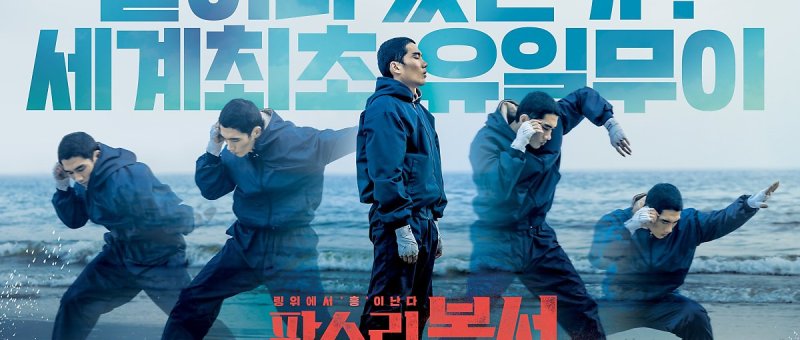
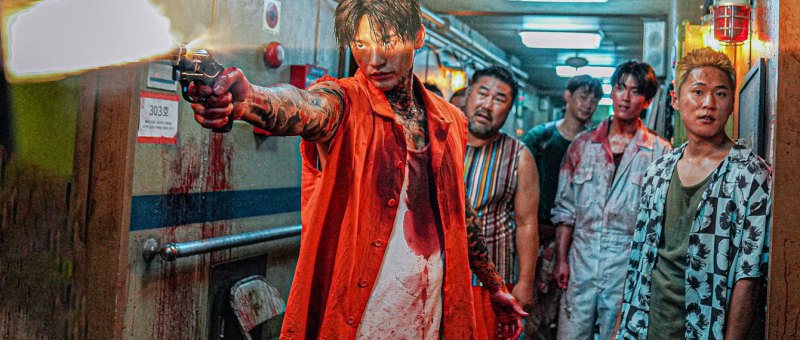
My Punch-Drunk Boxer (판소리 복서, Jung Hyuk-ki, 2019) [Fantasia 2020]

“The most Korean is the most universal” according to the hero of My Punch-Drunk Boxer (판소리 복서, Pansori Boxer) and his childhood best friend as they pursue parallel dreams of Pansori and pugilism which are destined, we come to understand, only for heartbreak and tragedy. Yet, in true Korean sports movie fashion, there’s more than one way to win and the best revenge against cruel fate might indeed be living well because “we only live once we should do what we want or you’ll regret it before you die.”

Byung-gu (Um Tae-goo) was once an aspiring boxer determined to make it to the top, developing his own idiosyncratic style of fighting dubbed “Pansori Boxing” fought in rhythm with the drum beats of traditional folk music as played by his friend Ji-yeon (Lee Seol) who is equally determined to become the world’s best performer of Pansori. These days, however, he works part-time at his old gym doing odd jobs and handing out flyers to try and win more customers. Waking up one day he claims from a “very long and strange dream”, Byung-gu has a sudden urge to take up boxing again, reminding his old coach that George Forman was 45 when he became World Champion so 29 is not to old to give it another go. Director Park (Kim Hee-Won) is unconvinced, partly it seems because Byung-gu has partially forgotten the reasons he was forced to give up his boxing career in the first place which make It unlikely he’ll be able to regain his licence. Meanwhile, in an attempt to increase his chances, he begins coaching a young woman, Min-ji (Hyeri), coaxed into the gym by one of his unconventional ads which promise dramatic weight loss as a result of intensive boxing training. 

Boxing is however outdated. As the two young tykes who hang out in the gym point out, they don’t even show boxing on the TV anymore it’s all about MMA. The gym is dying, hardly anyone wants to train and the only other boxer on the books, Gyo-hwa (Choi Joon-young), is continually put out because they’ve yet to arrange any fights for him. “Times have changed” Park is told, eventually agreeing as he contemplates making a sacrifice to make Byung-gu’s dreams come true. But as Byung-gu tells him, “our prime time may be over, but that doesn’t mean that we are”, determined to regain himself in the ring if aware that his gesture is in one sense “meaningless” and soon to be forgotten. 

As we soon discover, Byung-gu’s words have an additional meaning beyond simple transience in that he is suffering from “punch-drunk syndrome”, a degenerative condition similar to Alzheimer’s brought on by brain damage sustained by all those blows in the ring. His world is literally disappearing, the photographer’s closing down because no one uses film anymore and, unbeknownst to him, the gym targeted for demolition, yet it’s Byung-gu’s sense of reality that is ultimately crumbling as he looks back on past mistakes and regrets the failure of relationships that were important to him because of his stubborn pride. As Min-ji tells him, however, no matter what it was he did that has a him continually remind her that he’s a “bad person”, his other problem is that he’s too nice, a mild-mannered boxer who won’t fight for himself outside of the ring but is always in everyone else’s corner. 

The central irony is that he fights partly for the honour of boxing, an outdated craft, incongruously married to the similarly ‘outdated” art of Pansori which sees him move not only in an unexpected rhythm but incorporating the sweeping moves of traditional dance. As luck would have it, Min-ji is also a Pansori drummer, providing him with a new beat to spur him on to achieve his dreams while Park eventually comes on side in realising that nothing matters so much anymore as making sure Byung-gu gets the opportunity to fulfil himself while he’s still in some way present. Featuring lengthy sequences of Pansori performance singing Byung-gu’s story in traditional recitative as well as off-beat editing to the rhythms of traditional folk music, My Punch-drunk Boxer is a heartfelt ode to giving it everything you’ve got right to the mat but also to forgiveness and redemption as Byung-gu learns to make peace with the past while supporting and being supported by those all around him quietly fighting similar battles of their own. 


My Punch-Drunk Boxer streamed as part of this year’s online edition of Fantasia International Film Festival.

International trailer (English subtitles)