I am More (모어, Lee Il-ha, 2021)

I am More (모어, More) is as much a mission statement as it is a simple piece of biographical information in Lee Il-ha’s musical documentary following transgender drag artist More. Born in Korea but based in Japan since 2000, Lee’s previous documentaries focused on the position of Zainichi Koreans but with I am More he explores the position of minorities within Korea itself while providing a platform for More to express herself fluently through music and performance art. 

More describes herself as having a love hate relationship with drag which she has been performing for over 20 years in the bars and clubs of Itaewon. She relates that she still has a gun in her heart and that going to perform is like going on duty while throwing shade on the Western customers at her bar and their $1 tips. Even so, drag was a liberating experience for her on arriving in the city in which attitudes towards gender norms were much stricter than they had been in the small town where she grew up even if they had not exactly been much warmer there. Embarking on her studies at Seoul University of the Arts, a fellow student punched her in the face and told her to lose her feminity while when forced to do military service she was briefly placed in a mental hospital. 

More’s warmhearted and completely accepting mother claims that there was no bullying during More’s childhood and that nobody thought much of her atypical gender presentation, but More also reveals that she once tried to take her own life during high school but survived and in fact went straight to an exam to avoid getting in trouble for missing classes. Her teacher also recalls another student whom he describes as “effeminate” and apologises for the way they were treated by their classmates while More seems to have developed a friendship with one of the bullies who tormented her but also showed her kindness. He reflects on the various ways their perspective was “limited” by their small-town upbringing remembering how small he felt on going to the city and realising he was no longer at the top of the social hierarchy. 

The situation may be very different than it was during More’s childhood, but the LGBTQ+ community still faces prejudice and discrimination from religious groups who are seen protesting pride events and harassing attendees while a patriotic song from the era of dictatorship singing of “our Korea” ironically plays in the background. More is in a longterm relationship with a Russian man, Zhenya, whose immigration status is precarious as he is stuck on a job seeker’s visa. Same sex marriage is not recognised in Korea meaning that he is unable to apply as a spouse and is in the midst of trying to gain Korean citizenship. Meanwhile despite having a PhD in chemistry he is currently unemployed and losing himself in the comparatively tranquil world of Pokémon Go where he says the monsters are kinder than people. Though they have been together a long time, some of it on and off as Zhenya later implies, Lee follows More as she introduces Zhenya to her parents who welcome him with open arms and make sure to invite him to all the major celebrations as More’s partner seeing as he obviously has no other family in Korea to spend them with. 

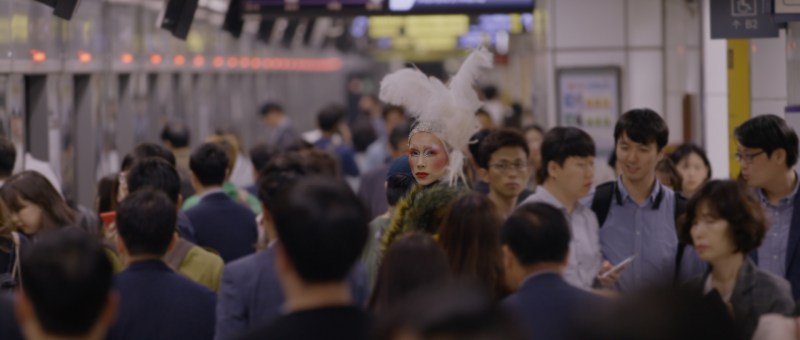
Meanwhile, Lee spends much of the documentary focussing on More’s rehearsals for a show in New York celebrating the 50th anniversary of Stonewall during which she develops a friendship with Hedwig and the Angry Inch star John Cameron Mitchell who later travels to Korea and remarks on how difficult it can be to be yourself in a conformist society where individuality can sometimes be read as selfishness. Hedwig in a sense brings things full circle with a reference back to More’s own Wig in a Box moment discovering drag in Itaewon while Lee is careful to give her her own space to express herself as she lip syncs to iconic pop songs and performs poetry and performance art in elaborate outfits at Seoul landmarks as if beckoning towards a new and more inclusive culture. A vibrant portrait of a queer artist who is absolutely herself I am More more than lives up to its name in its electric advocation for a world of love and joy. 


I am More screened as part of this year’s New York Asian Film Festival. It will also be screening in London on 13th November as part of this year’s London Korean Film Festival.

Festival trailer (dialogue free)

Though the film’s subtitles refer to More as “he”, she has confirmed with festival organisers that she prefers feminine pronouns.

Images: ⓒ2021 EXPOSED FILM, All Rights Reserved

Counters (카운터스, Lee Il-ha, 2017)

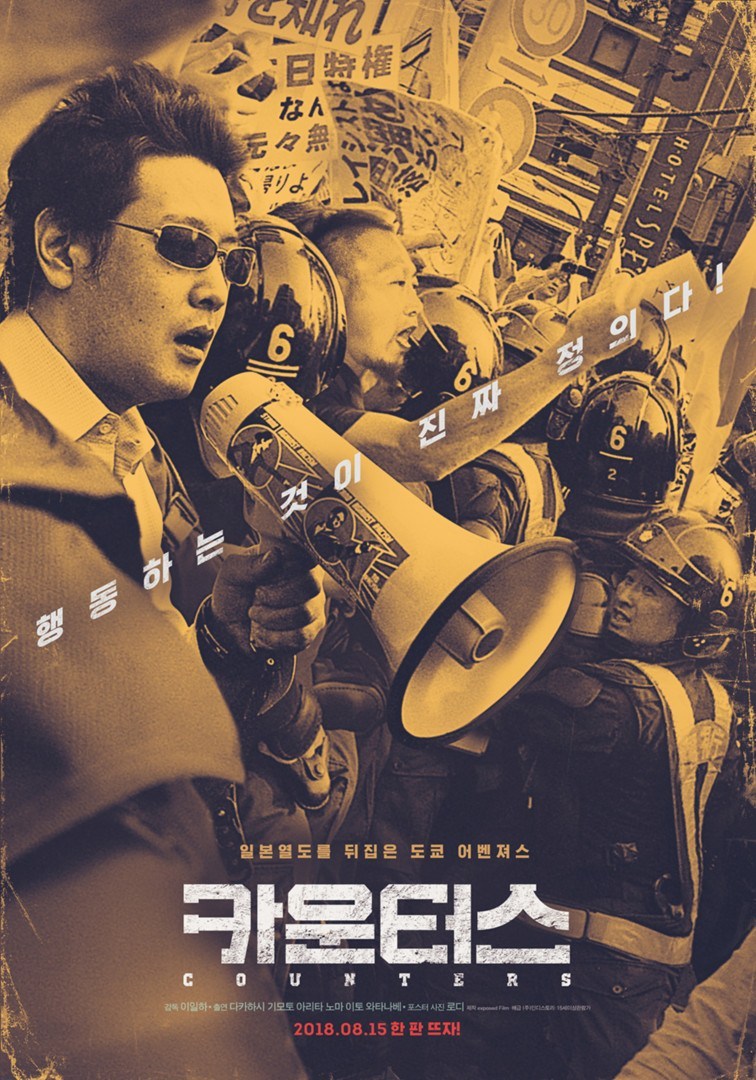
Counters poster 1The far right is on the rise the world over and Japan is no exception. A resurgent nationalism has long been a worry as the memory of wartime folly fades and the young, manipulated by fears of the nuclear threat from North Korea and frustrated by a stagnant economy, are duped by the messages of unscrupulous forces who convince them the cause of all their troubles is an easily scapegoated minority. Lee Il-ha’s documentary Counters (카운터스) takes a look at the deeply entrenched xenophobic racism directed at “Zainichi” Koreans and the counter protest movement against it which finds itself divided over the question of violence.

The main focus of Lee’s documentary is the enigmatic leader of the “Otoko-gumi” (lit. “men’s group”, a noticeably yakuza-esque name) – former mob boss Takahashi. Unlike many of the “Counters” who turn up to disrupt right-wing rallies, Takahashi identifies himself as a right-winger who venerates the Emperor and the Imperial past but cannot tolerate the unfettered bullying of those who shout vile racist statements while preaching the glory of Japan. A former yakuza, Takahashi himself had originally been taken in by the falsehoods spread by men like Sakurai – the virulently racist leader of Zaitokukai which makes the dubious claim that Zainichi Koreans are somehow “privileged” thanks to special residency arrangements originally set up to avoid the bureaucratic nightmare of trying to account for all the Korean (and Taiwanese) residents who arrived as Japanese citizens during the colonial period. Though he had harboured doubts about the anti-Korean propaganda he’d been hearing, it wasn’t until he had the opportunity of a straightforward conversation with an activist that he came to realise that it was all lies and the guys on the other side had a point after all.

Later, one of his comrades describes Takahashi as an old school yakuza – the kind that thinks it’s his job to protect people and stand up for those who can’t stand up for themselves. Takahashi evidently doesn’t like bullies or liars and was brought into the struggle by witnessing an old lady in kabukicho crying after a protest. His methods are, however, those of the street. Running Otoko like a gang he determines that the best way to silence the racists is to rough them up so they’ll think twice about coming back.

This places places Otoko at odds with the mainstream Counter movement which is committed to non-violent protest and social change through outreach and education. Though their aims share much in common, the Counter organisation fears becoming with associated with Otoko because of its less savoury elements – not only the violence itself but Takahashi’s criminal past and ties to the yakuza. If the Counters want to be taken seriously as a legitimate protest group, they have to be careful to present a professional, diplomatic image. Meanwhile, Otoko is free to shake things up without needing to think too hard about anything much beyond crushing the racist right.

Another activist engaged in building a shelter for oppressed minorities – not just Zainichi Koreans but Ainu, Brazilian-Japanese, LGBTQ+ etc, admits as much when he attempts to probe the paradox of Takahashi’s liminal status in the political world. The progressive movement has long been bound by its own principles and progress has been slow. Like it or not, Otoko seems to have created a shift in the political landscape no matter how one might feel about their methods. Takahashi corrals his men into building the shelter by day, but is a frequent visitor to the Yasukuni shrine in the mornings. Nevertheless, he remains an unlikely ally at the side of all oppressed peoples including transgender men and women and the LGBTQ+ community.

Lee imbues his footage with the true punk spirit, spinning back from Takahashi’s violent clashes to a whimsical jazz overshadowing the shadiness of government while playing heavily with on screen text and effects which occasionally trivialise the action as in Sakurai’s failed showdown with the Mayor of Osaka who proves once and for all that he won’t have any of Sakurai’s nonsense in his kind and welcoming city. The level of vitriol on show is truly shocking with heinous, violent statements offered by ordinary young women turning on the kawaii to call for the deaths of a persecuted minority while middle-school girls influenced by right-wing fathers preach atrocity in the streets (tacitly confirming the veracity of various other atrocities the right is usually keen to deny). The long awaited anti-hate speech law may finally have been passed, but there is still much work to do. The Sakurais of the world aren’t giving up, but neither are the Counters. A timely reminder that now more than ever resistance is the key.


Counters was screened as part of the 2018 New York Asian Film Festival.

Original trailer (Korean subtitles only)

https://youtu.be/7Ck2ypHxaIw