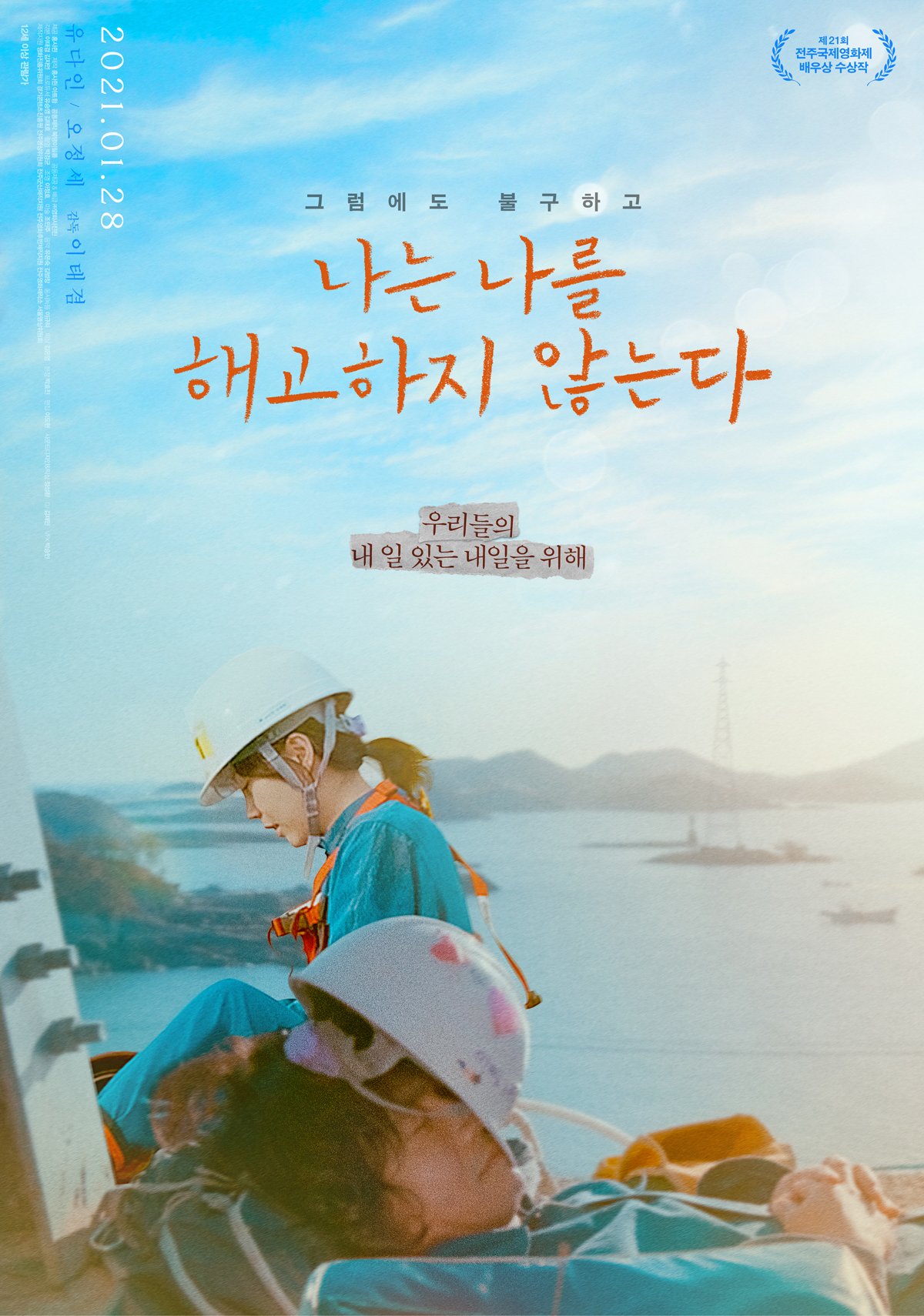
I Don’t Fire Myself (나는 나를 해고하지 않는다, Lee Tae-gyeom, 2020)

“All we asked for is not to die” a disgruntled employee reasonably explains, finally finding her voice on being confronted with the consequences of her complicity. Lee Tae-gyeom’s impassioned workplace drama I Don’t Fire Myself (나는 나를 해고하지 않는다, Naneun Nareul Haegohaji Anneunda) is the story of one woman’s path towards reclaiming agency over her life, but it’s also a subtle condemnation of rampant capitalism and the various ways entrenched social mores can set the oppressed against each other, hiding from the very ways they are each victims of the same social order. 

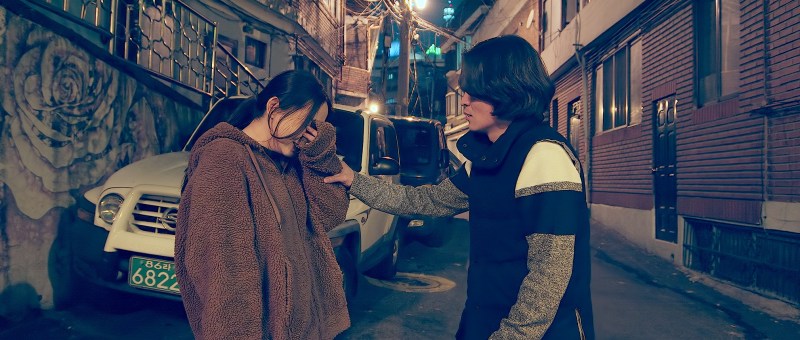
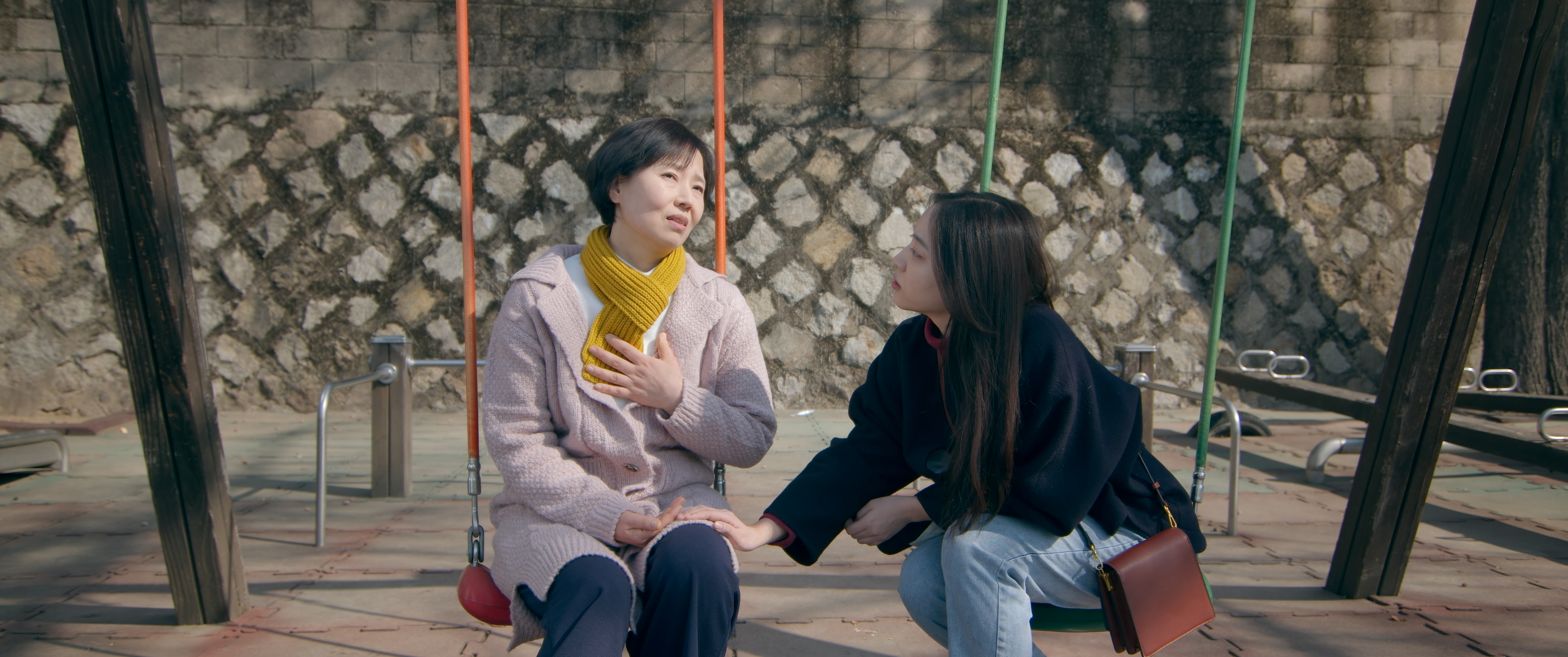
30-ish Jeong-eun (Yoo Da-in) is a talented employee working at an electrical company but her capability only makes her a threat to her male bosses. Insisting that “it’s not about whether a woman can do the job”, her superior forces her to accept a one-year transfer to a rural electrical engineering subcontractor promising that if she works out the contract she can come back to HQ. Resolving to make the best of a bad situation Jeong-eun soon realises her new boss is not keen to have her. Her presence is an obvious inconvenience to the other three male employees who must now put a curtain up so they can change into their work clothes while resenting the unexpected intrusion into their working life. What soon becomes clear to Jeong-eun is that her new assignment is in reality just an elaborate form of “banishment room”-style constructive dismissal. Her old boss is trying to make her working life so miserable that she’ll quit on all her own. 

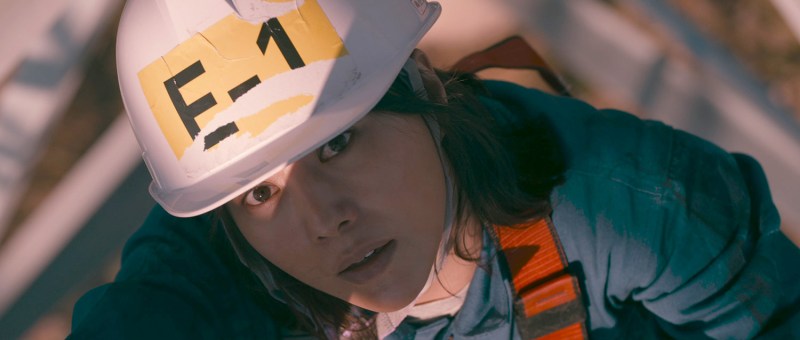
Only, as a friend of Jeong-eun’s points out, neither of them can afford to quit because it’s so unlikely they’ll be able to find alternative employment. Jeong-eun was good at her job, but as a woman she has very little chance of career advancement and had to work twice as hard as the men just to be employed. Perhaps for these reasons, she refuses to quit resolving to stick out the year in the sticks to see what happens, but her new manager refuses to give her any work and is himself pressured by the higher ups to either push Jeong-eun towards resignation or engineer a reason to fire her. Her male colleagues only come to resent her more when it’s revealed that the substation is expected to cover her salary out of their budget which is also being reduced meaning someone will likely be out of a job. Hoping to win their trust and respect, she studies electrical engineering manuals in her off hours and offers to accompany them into the field but is quickly undone by anxiety as she looks up at the tall towers of the electricity pylons unsure how she could ever scale them. 

There is something of a potent metaphor in Jeong-eun’s attempts to climb these infinite structures while the men around her laugh and try to pull her down. Latterly sympathetic colleague Seo (Oh Jung-se) snaps at her that for men like him getting fired is worse than dying and the reason she can’t climb is that for her it never will be. But Seo has in a sense miscalculated. Jeong-eun may be educated and middle class, but as she claps back to her getting fired and dying are synonyms. They are each victims of the same system, but blind to the ways they are similarly misused. Jeong-eun knows only too well the costs of getting fired, her grief over a close friend who took her own life after being forced out of her job possibly contributing to her self-destructive drinking problem. Seo meanwhile is constantly being reprimanded for falling asleep on the job, largely because he also works a series of part-time gigs to make ends meet such as manning the till in a convenience store and working as an Uber driver. As Jeong-eun discovers this dangerous, highly skilled work which is essential both for public safety and economic support pays almost nothing while the workers are also expected to provide their own protective safety gear including electric resistant overalls which run to $1000. 

The inspectors sent to undermine Jeong-eun and pressure the manager harp on about how the company has already been privatised and can no longer afford “inefficiency” while continuing to exploit their employees and ride rough shod over both employment law and people’s basic rights. Jeong-eun has three months to decide if she wants to try suing them for constructive dismissal but is warned that if she does the company will retaliate and even if she wins the quality of her working life may not improve. Yet if everyone goes on thinking only of themselves the company will continue to get away with their nefarious practices 

Pushed to breaking point, Jeong-eun’s epiphany comes only after a colleague is killed after being asked to fix a transmission tower in unsafe conditions while her slimy boss shows up to pressure his young daughter who can’t be more than 10 to sign away her right to proper compensation. She realises that she’s been “fired” by everyone in her life from her parents to her company, but has also been wilfully complicit in her reluctance to rock the boat believing that if you work hard and follow the rules you’ll eventually succeed even while intellectually knowing that that way of thinking is merely another tool used by the powerful to maintain their grip on power. She realises that she doesn’t need to fire herself too, seizing her own agency to mount a resistance towards the amoral venality of her ultra capitalist bosses by refusing to play by their rules anymore. A subtle yet pointed attack on the radiating effects of Korea’s notoriously poor labour law, I Don’t Fire Myself allows its educated middle-class heroine to find unexpected solidarity with a working-class labourer while ending on a note of positivity as Jeong-eun finds the courage to climb alone in the hope of bringing the light to others much like herself. 


I Don’t Fire Myself streams in the US Aug. 18 to 23 as part of this year’s New York Asian Film Festival.

Original teaser trailer (English subtitles)
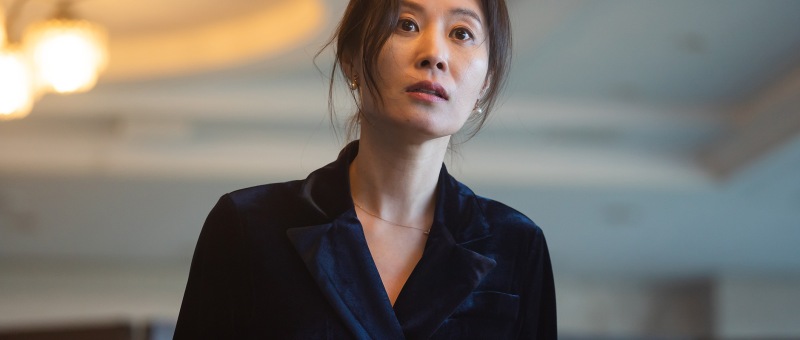
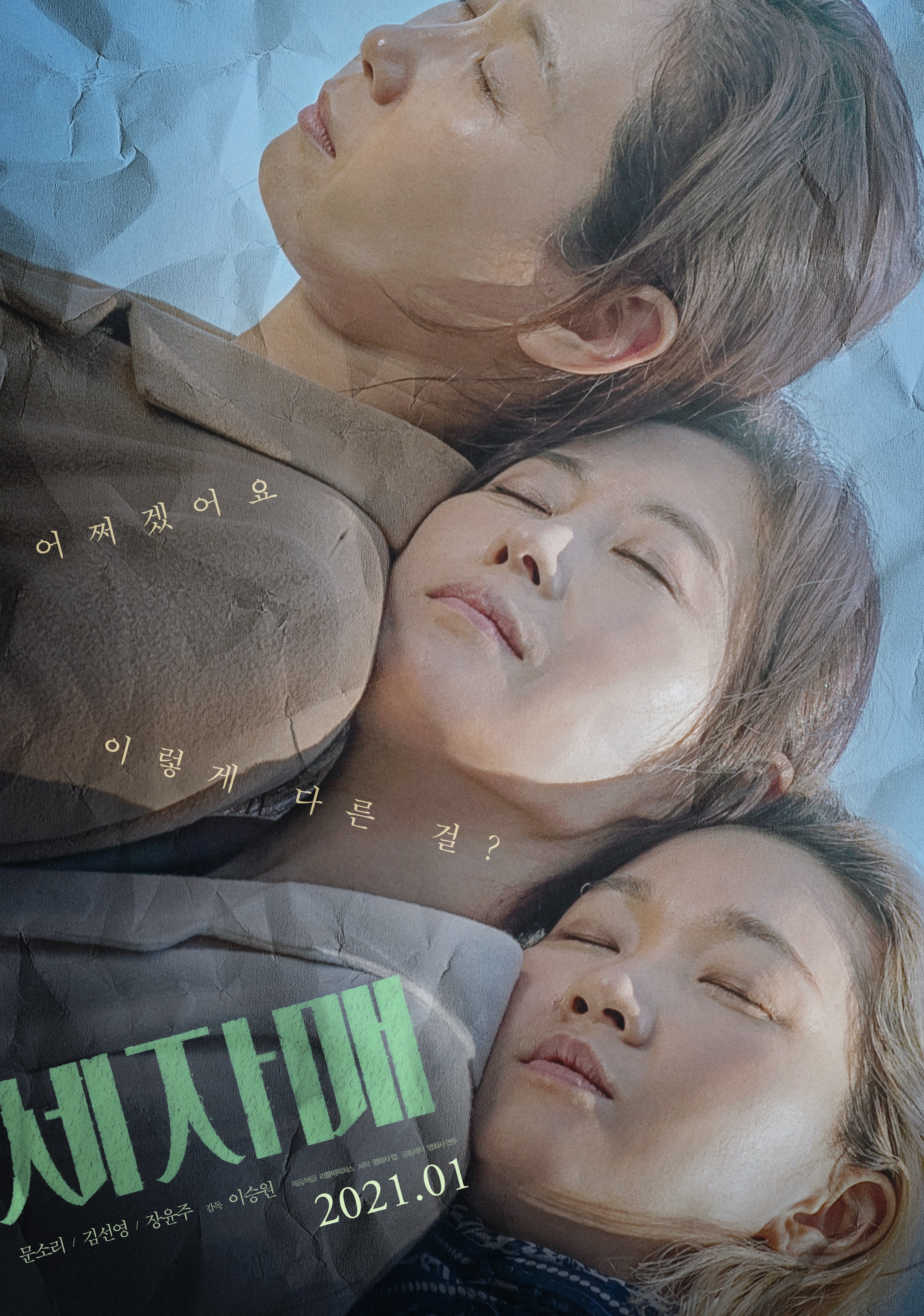
Three Sisters (세자매, Lee Seung-won, 2020)

Lee Seung-won’s lightly humorous family drama is not an adaptation of the Chekhov play, but like its namesake does find Three Sisters (세자매, Se Jamae) trapped in the past, their lives “messed up” by the demands of living in a patriarchal society. A showcase for the three actresses at its centre, Lee’s drama works towards a gradual sisterly solidarity brokered by an awkward confrontation with the source of all their trauma but also lays bare the radiating consequences of unchecked male failure as the three women struggle to lead successful adult lives in the shadow of their childhood suffering. 

Opening with a black and white sequence in which two young girls run hand in hand quite clearly away from something bad rather than just for the joy of it, Lee switches to the present day in which oldest sister Hee-sook (Kim Sun-young) is an anxious middle-aged woman perpetually making apology for her existence, while middle sister Mi-yeon (Moon So-ri) is a cooly controlled deaconess and mother of two, and little sister Mi-ok (Jang Yoon-ju) is an unstable drunk and struggling playwright married to a moderately wealthy greengrocer with a teenage son from a previous marriage. 

They have all quite obviously chosen different methods in effort to suppress the effects of their childhood trauma, raised as we later realise in a violent home abused by their drunken father but apparently expected to put up with it out of filial piety. A half-sister Hee-sook finds herself apologising for anything and everything, filled with intense shame for her very existence. Mi-yeon by contrast has chosen order, devoutly religious she maintains high standards for her family but is filled with barely repressed rage unable it seems to express any other emotion. On realising that her professor husband (Jo Han-chul) is having a highly inappropriate affair with a much younger student she reacts with both violence and cunning, unilaterally putting a stop to his philandering while subtly letting him know that she knows and has dealt with it. Further emasculated, he tries to get some kind of normal reaction from her, hoping she will shout or hit him but she continues in the same calm and controlled fashion as if nothing had happened. Meanwhile, in another echo of her father’s violence she finds herself taking out her frustrations on her young daughter, Ha-eun (Kyung Daeun), who rebels against her need for order by refusing to say grace. 

Mi-ok by contrast has in a sense chosen chaos, drinking herself into oblivion while often ringing Mi-yeon in intense confusion unable to recall a seemingly unimportant detail from their mutual past. Taking on the big sister role, Mi-yeon finds herself in a similar position with Hee-sook who apparently doesn’t remember an event that was important to her of their dining together in the same cafe they are currently visiting back when she first came to the city and Hee-sook worked in a nearby office. Later the three sisters will attempt to visit another cafe that Mi-ok had struggled to remember but will find it closed, their past perhaps locked to them but in a sense also pushing them towards a happier future as they reaffirm their sisterly bonds after living lives of highly individualised suffering. 

Failed by a feckless father, the three women find themselves at the mercy of problematic men Hee-sook apparently re-victimised as the wife of an abusive partner who returns periodically to extort money and undermine her self-esteem, while Mi-yeon attempts to evade subjugation by dominating her husband only to find him rebelling against her through an extra-marital affair. Only Mi-ok seems to have made a better marriage to a mild-mannered, patient and caring husband but is also accused of marrying him for his money while taken to task by others for her “failure” to play the part of the conventional wife and mother, her ability to do so perhaps corrupted by her traumatic childhood. “Just treat them with love” Mi-yeon ironically advises seconds after unfairly scolding her own daughter, simultaneously explaining that no one learns to be a mother, though of course in some senses they do, and that anyone can be one as long as they work at it. Nevertheless, after confronting the source of all their pain and suffering the three women manage to rediscover a sense of solidarity that perhaps allows them to reclaim their agency and live better, more fulfilling lives free of the shadow of the past. 


Three Sisters screened as part of the 2021 Osaka Asian Film Festival

Original trailer (English subtitles)

Beyond You (그대 너머에, Park Hong-min, 2020)

Ever feel like there’s something you just can’t remember, a strange prickling like an ant crawling across the back of your mind? The frustrated director at the centre of Park Hong-min’s Beyond You (그대 너머에, Geudae Neomeoe) is beginning to experience something similar though perhaps it isn’t quite his memory at all. Returning five years after the experimental thriller Alone, Park’s existential melodrama begins in Hong Sang-soo territory with its caddish director and constant repetition but quickly veers off into the realms of the metaphysical as he contemplates memory and legacy through the prism of dementia. 

After a brief prologue in which an ant ventures off from its colony and is later swept into a local bin, Park opens with a strange sequence in which film director Kyung-ho (Kim Kwon-hoo) sobs on a bench next to a shrine while another man who is either sitting on his lap or somehow occupying the same space seems entirely oblivious of his existence. In any case, Kyung-ho has been waiting for Ji-yeon (Yoon Hey-ri), a young woman who is the daughter of his first love In-sook (Oh Mine) and has recently begun corresponding with him over some writing that her mother had done concerning their past relationship. It comes as something of a surprise, however, when Ji-yeon boldly suggests he might be her father, reacting with horror when she asks him to take paternity test. Taking the hint, Ji-yeon soon leaves apologising for her sudden intrusion after explaining that her mother has early onset Alzheimer’s and has spoken of him often aside from the episode contained in the writing. 

Thereafter Kyung-ho chases after her, thinking perhaps he’s been rude or over hasty shocked to think that he might have had a daughter he never knew about though later confessing he had in a sense “forgotten” In-sook not having really thought about her in the intervening 20 years since they last saw each other. He finds himself wandering around the dreamlike backstreets of the city chasing the image of Ji-yeon only for her to finally track him down and haunt him directly by emerging from a cupboard in his room when he refuses to open his door. This scenario directly mirrors his later incursion into the subconscious of In-sook, invited by Ji-yeon who is currently unable to enter because her mother does not remember her, complaining about a “strange woman” hanging round outside. 

Ji-yeon’s preoccupation is with the nature of her existence if she is not remembered by her mother and therefore not a part of her conscious world. Kyung-ho goes inside, in a sense, to rescue her only to find In-sook suddenly struck by a moment of existential attack pulling piles of papers out of her cupboards as she searches for the memory of her daughter she is unable to retrieve. Yet as she hinted in the dream narrative she’d explained to the “real” Ji-yeon, In-sook looks for her daughter every day, eventually finding her even if she fails to recognise and associate Ji-yeon with the fragmentary image in her mind. 

Kyung-ho, perhaps selfishly not wanting the bother of a secret daughter, is forever telling In-sook that it’s OK to forget him, as if his space could be freed up for Ji-yeon to enter yet through his dream odyssey he begins to lose himself. Or at least, perhaps this is all part of the screenplay Kyung-ho is attempting to write which is dismissed as dull and self-obsessed by his producer who advises him write something that other people will find “fun”. He tries teaming up with a screenwriter, explaining that “nobody wants to hear my story so I really want to tell it” but she too tells him that he might be better off just filming himself. The meetings repeat with small differences, but never go in his favour until he finds himself a ghost witnessing them from the outside. Just as Ji-yeon wasn’t sure she really existed outside of her mother’s writings, Kyung-ho begins to doubt his own reality while trapped inside the meta-dimensions of his unfinished screenplay.  

Park’s rather convoluted machinations may prove frustratingly incoherent, lacking internal consistency while insisting on the logic of dreams as the hero effectively haunts himself, but are perhaps explained in that early ant metaphor in a small creature’s attempt to venture away from the crowd only to end up feeling lonely, falling into despair and then attempting to crawl its way out. “Wherever you go no one will recognise you” Kyung-ho is told, yet his tragedy may be that he fails to recognise himself even as he chases fleeting visions in the minds of others searching for existential validation in shared memory. 


Beyond You screened as part of the 2021 Osaka Asian Film Festival.

Original trailer (English subtitles)