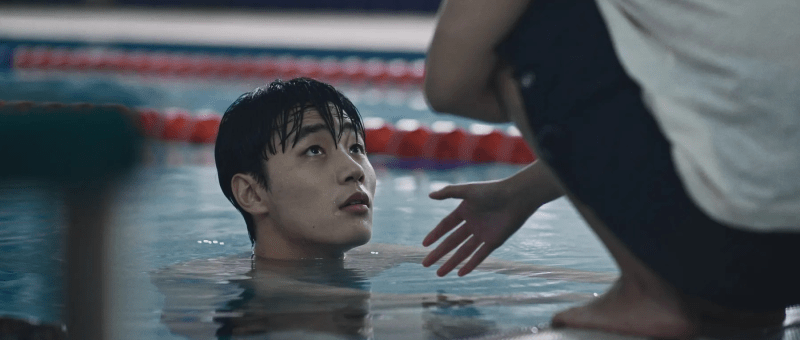
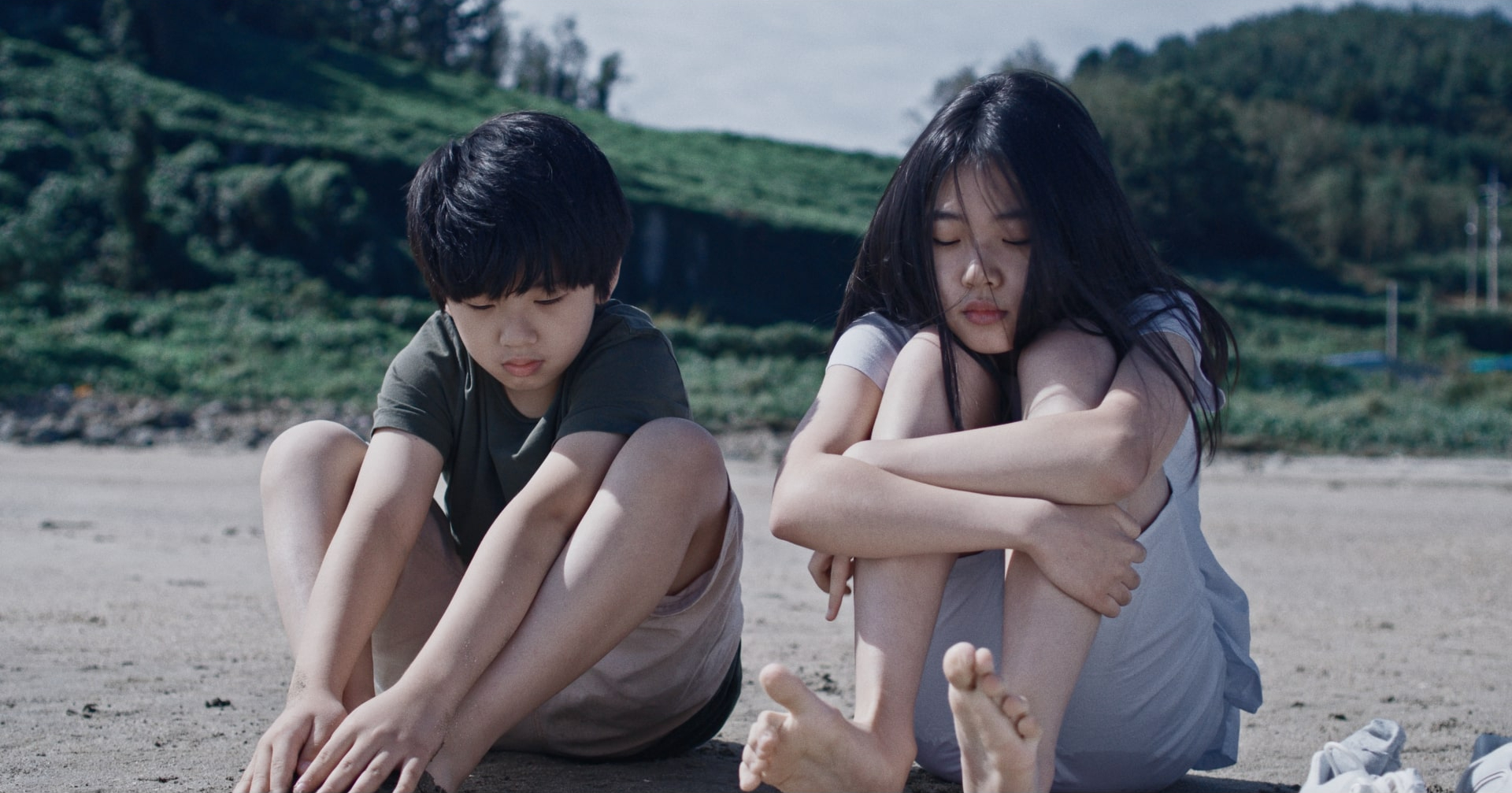
Boy in the Pool (보이 인 더 풀, Ryu Yeon-su, 2024)

If you know you’ll never be the best, is it better to give up right there and then or to continue but out of simple enjoyment rather than ambition? For Seok-young, the second option doesn’t make any sense. It’s just a waste of time to pursue something that you have no aptitude for when there are those born with natural abilities that you could not hope to equal no matter how hard you tried. But as much as she claims quitting doesn’t make you a loser, there is something a little sad in the idea of abandoning something you once loved simply because other people were better at it than you were.

At 13 years old, Seok-young is a swimming obsessive and very proud of the fact that she recently won a trophy. One of the reasons she’s so upset she and her family are moving back to her mother’s hometown following her parents’ divorce is that she’ll have to leave her swimming club and is worried there either won’t be one in the rural backwater or that the other kids won’t be at her level. Unable to make headway at the pool, she goes swimming in the sea instead only to be struck by a foot cramp and rescued from drowning by sullen local boy Woo-joo. Though he angrily runs away from her and says he hates swimming, the two later bond over their shared love of the sport and outsider status. But Woo-joo turns out to be a prodigy and much better than Seok-young meaning that he’s soon picked up by a coach to train in Seoul and Seok-young quits swimming in a fit of pique.

There’s a gentle yet contradictory theme running through the film of allowing your fear of not being good enough to rob you of the joy of doing something just because you enjoyed it. Seok-young seems to quit a lot of things, and as a high schooler is left home alone when her sister too goes to Seoul to train as a concert pianist. She is diffident and aloof in her relationship with Woo-joo, never revealing her true feelings but pushing him away and needling him in his own insecurity as a backwards way of reassuring him that he has the talent to succeed. Meanwhile, he is carrying a secret that makes him doubt his talent and feel self-conscious in the pool, afraid to reveal himself and as it turns out with good reason. Only Seok-young knows and is completely unfazed by his difference, recognising it as the thing that makes him unique while stopping short of admitting that she does indeed think there’s something more to him than swimming and would like him even if never swam again. 

Nevertheless, there’s something quite upsetting about the idea that Woo-joo would have to sacrifice what makes him unique not only to succeed but simply to be able to fit in. He lives with a sense of being different, and is perhaps also bullied and discriminated against because he’s being raised by his grandmother, something else which Seok-young just accepts without question. Seok-young, meanwhile, is displaced amid her parents divorce and humbled by the realisation that she may have overestimated her talent for swimming. She continues to vacillate and unlike those around her flounders for direction. Another boy who’s interested in her reveals that he kept going to the swimming club just for fun even after realising there was no way he could be as good as someone like Woo-joo, but Seok-young seems to retreat into herself in her insecurity. She’s afraid to keep going or try new things out of fear she won’t be good enough rather than simply doing her best and having a good time. 

But as she says, quitting doesn’t make you a loser and giving up something that isn’t making you happy can be a victory in itself as she perhaps discovers in returning home less in defeat than in search of something more. Woo-joo too seems to have found his niche, now whole again and all of himself while no longer submitting to the pressure of needing to achieve something more for others than himself that had ruined whatever joy he may have found in swimming. The message of Ryu’s gentle drama is less one of knowing your limitations than avoiding letting the fear of failure prevent you from doing something you love or conversely walking away from something that isn’t working while finally gaining the courage to chase after what it is you really want.


Boy in the Pool screens as part of this year’s Cinema at Sea.

Trailer (English subtitles)

The Odd Family: Zombie On Sale (기묘한 가족, Lee Min-jae, 2019)

The odd family poster 2It takes a special sort of mind to see a zombie and think “business opportunity”, but that’s exactly the kind of out of the box thinking you’ll find with the the Parks – a very strange family living way out in the countryside. Korean cinema is having a bit of a zombie moment, but they’ve rarely been as amusing as this. The debut feature from Lee Min-jae, The Odd Family: Zombie On Sale (기묘한 가족, Gimyohan Gajok) is a surreal satire of changing family values, the stereotypical strangeness of farm country, and the growing suspicion of underhanded practices in the pharmaceuticals trade.

As an opening voiceover informs us, there have long been rumours of diabetes drug manufacturer Human Bio kidnapping innocent members of the public to test their NoInsulin wonder drug. One day, a young man (Jung Ga-ram) manages to crawl out of a hole in the ground and shuffles zombie-like into the nearest village where he encounters the patriarch of the Park family (Park In-hwan), eventually biting him on the head. The Parks once owned the local petrol station, but with things as they are the business is all dried up and so now they mainly make their living by engineering road traffic “accidents” they can later charge exorbitant fees to fix seeing as they are literally the only place in town. When Mr. Park realises that after getting bitten on the head he’s regained his youthful virility, the family become less afraid of the fairly docile lad and decide to take him in partly with the idea of pimping him out to the other sad old men in town who long for nothing more than to regain their glory days.

Only middle son and recently returned failed salaryman Min-gul (Kim Nam-gil) wonders if there’s something not quite right about the new member of their family, showing the others a brief clip from Train to Busan to get his point across, but even he is temporarily won over by the money making opportunity. Tellingly, no one really stops to wonder if it’s OK to lock a young man up in the shed and make him do your bidding for no remuneration, but then where really is the harm if biting people on the arm makes them feel better about themselves? The harm is he’s a zombie which will eventually become quite a big problem.

Meanwhile, the strange Park family continues to fray at the seams. Youngest daughter Hae-gul (Lee Soo-kyung), an ethereal girl in dungarees with a fondness for pet rabbits she can’t seem to keep alive much longer than a month, takes to the zombie instantly. Naming him “Jong-bi” in a pun on his being a zombie and in keeping with the naming system for her rabbits, she installs him on a mattress right next to the hutch and proceeds to feed him cabbages for which he develops an intense fondness (along with ketchup which is Hae-gul’s personal favourite). Meanwhile oldest son Joon-gul (Jung Jae-young) does his best to keep out of the way while his heavily pregnant wife Nam-joo (Uhm Ji-won) keeps an iron grip on the family finances and the house in general. When everyone starts to wonder if dad is going to turn zombie, filial piety goes out the window but all Mr. Park wants is to jet off to Hawaii and leave the family to deal with the mess on their own.

With the patriarch out of the picture and a new little brother to play with (plus quite a lot of money to buy a new start), the Parks begin to repair themselves and make the “family” anew but the cracks are still there as Min-gul turns out to be more like his dad than he seemed in always looking for the best angle and opportunity to make some money no matter the risks or ethical concerns. Nevertheless, the zombie apocalypse does its best to remind them what’s really important as they find themselves having to work together to come up with a plan for survival. Riffing strongly off wholesome ‘50s Americana and kitschy pop-culture cues, The Odd Family is a charmingly surreal ode to family values in which one family’s money grubbing entrepreneurship almost leads to the end of the world only to paradoxically become its salvation as they prove that there’s nothing so potent as togetherness in combatting existential threat.


The Odd Family: Zombie On Sale was screened as part of the 2019 Udine Far East Film Festival.

International trailer (English subtitles)