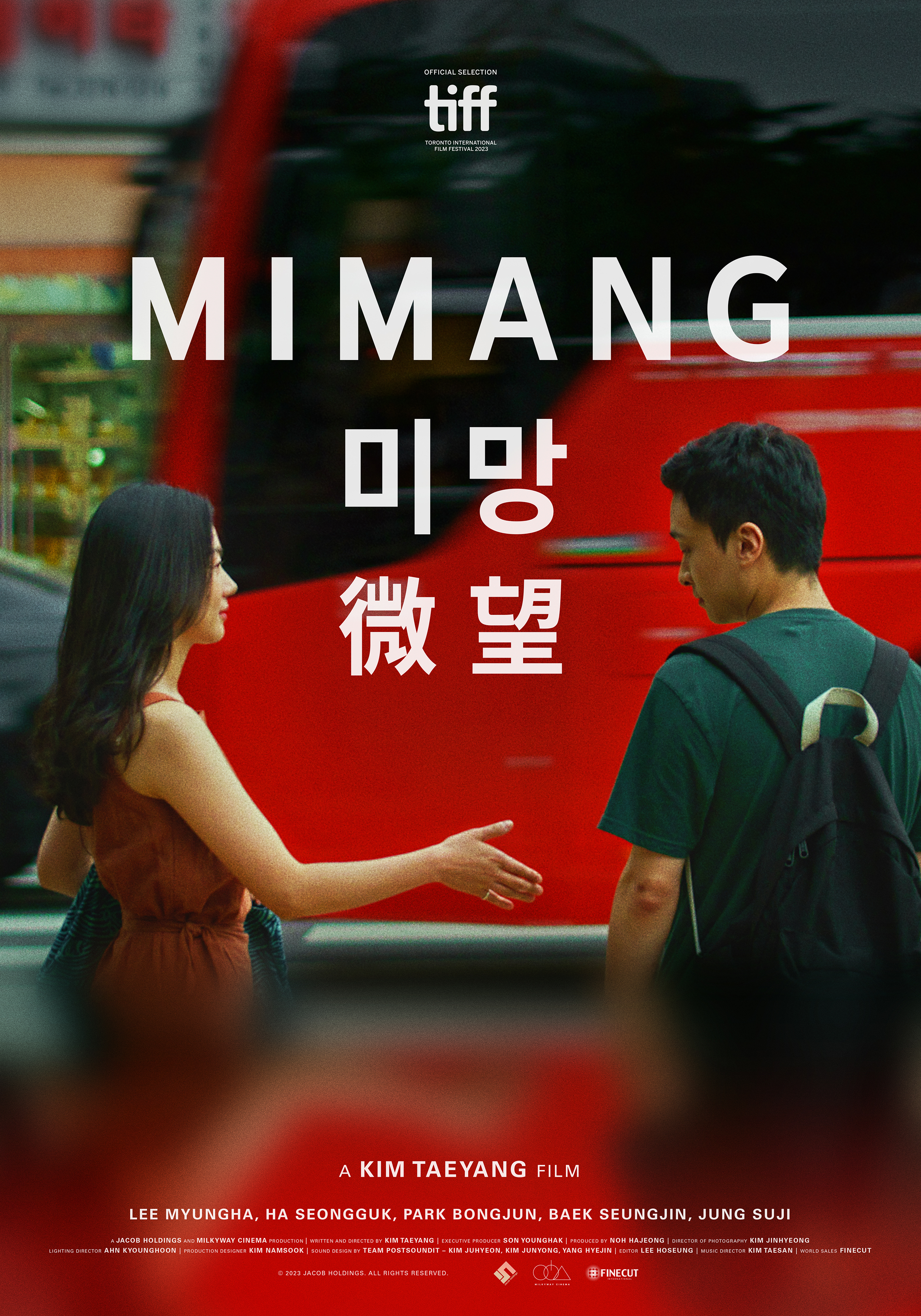
Mimang (미망, Kim Tae-yang, 2023)

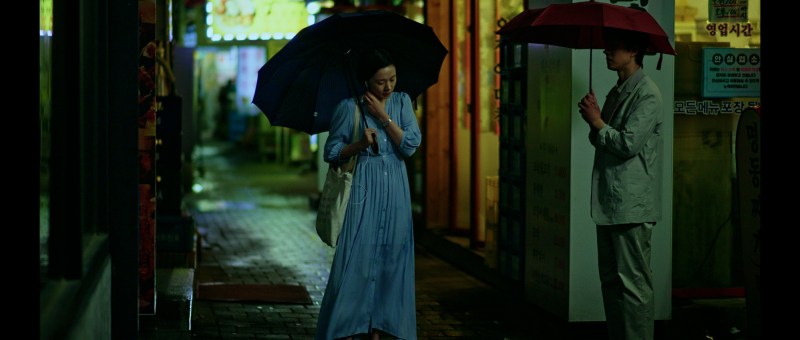
Part way through Kim Tae-yang’s Mimang (미망, Mimang), a woman giving a talk about a classic Korean film the ending of which is lost to time remarks that the audience will walk out onto the same Seoul streets the protagonists of the film once trod in 1955. They are literally the same streets, but of course they aren’t. On her way there, she’d talked to an old friend she’d bumped into along the way about the imminent redevelopment of the area which will lead to the cinema she’s on her way to being torn down. A statue of Admiral Yi they frequently refer to as a meeting point and landmark will be moved to accommodate the new road structure leaving them even less certain of direction than they were before.

In fact, the statue itself is compromised in that it depicts Yi holding his scabbard in his right hand which implies he was left handed in contrast to all the other statues of him that suggest otherwise. The woman claims her friend, the man, told her this before a long time ago and insisted that this sculptor did his homework and got it right though another woman he later meets, his current girlfriend, claims the reverse is true. A man the woman later meets, the organiser of the event she was appearing at, offers another interpretation which insists the only answer is uncertainty. There’s no historical record as to whether Yi was right or left handed, and in any case given the stigma towards left-handed people he may have been forced to behave as if he were right-handed even if he were not.

The conversations themselves are meandering and circular, offering no real conclusions and like the classic film missing an ending. The word “Mimang” can have many connotations some of which are outlined by title cards appearing throughout the film though all echoing a sense of being lost, wandering in a literal but also intellectual sense unable to reconcile oneself to an ever changing world that in other ways never changes. The man complains that everything repeats itself and that life is just a cycle that revolves from noon to midnight which is indeed what happens in the parallel conversations of the man and woman as they travel through the city in the company of their respective partners each revolving around the shortly to be (re)moved statue of Admiral Yi. 

In any case, we can feel a sense of loss between them that perhaps they were once together and then parted or almost but never were. In the third arc of the film which occurs some years later they re-encounter each other at the funeral of a university friend, someone their age who has passed away though as another friend points out they’re all still too young to see each other only at funerals. They make an arrangement to visit a bar they used to go to, near the statue of Admiral Yi, though something comes up, someone leaves, and they part again without really having said anything much at all. Moments pass without noticing, and as the song the man sings in memory of his friend suggests, were really “nothing special” after all. 

The organiser of the event the woman takes part in has a habit of saying “that happens” as if nothing really surprises him amid the mundanity of an ordinary life. As the film opened, the man had got off the bus at the wrong stop which is how he meets the woman to whom he explains that often finds his way by getting lost, a sentiment echoed in what he tells her learned in drawing class that things which seem like mistakes can actually be interesting diversions which take you somewhere new. A less comfortable motif sees both men confidently give the woman directions, assuming they know where she wants to go and somewhat unwilling to let her walk her own way though she in turn seems lost for direction and unsure which way to turn. We too can see the passage of time in the differing quality of the photography, the ADR’d dialogue and gentle ageing even the various ways the man and women dress though obviously more formally in the final sequence. Like the classic film this one has no ending either, just a gentle fade in which we can’t be sure if the man the woman will ever meet again or what might pass between them if they do only that they will continue to wander these ever-changing yet familiar streets in search of something they know not what.


Mimang screens in New York 17th March as part of this year’s First Look.

Trailer (English subtitles)

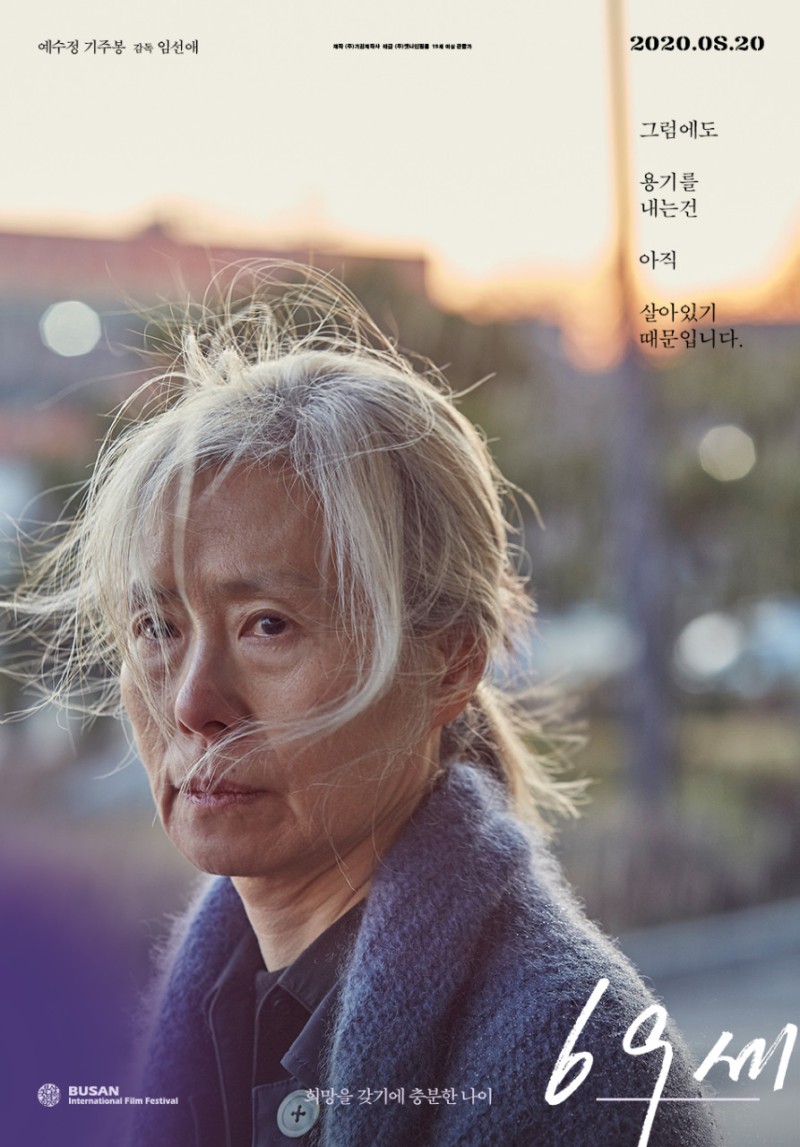
An Old Lady (69세, Lim Sun-ae, 2019)

“Would you say I’m safe in these clothes?” the 69-year-old heroine of Lim Sun-ae’s An Old Lady (69세, 69-Se) asks of a now sympathetic police officer who has just, perhaps slightly inappropriately, complemented her on her always elegant dress sense little knowing it’s little more than ineffectual armour designed to help her feel not just less vulnerable but less culpable in the eyes of those who tell her that she is to blame for her sexual assault at the hands of a healthcare professional. 

Lim opens with a lengthy period of darkness in which we only hear the dialogue between Hyo-jeong (Ye Soo-Jung), an elderly woman receiving her final physiotherapy treatment following a knee operation, and 29-year-old nurse Joong-ho (Kim Joon-Kyung). We can hear Hyo-jeong’s discomfort in her muted replies to Joong-ho’s increasingly inappropriate comments on the beauty of her legs and youthful appearance and though we don’t see what happened next, we’ve heard enough to believe that what she says is true and that she has been assaulted by someone who was supposed to be a position of utmost trust. Though she doesn’t quite explain why, Hyo-jeong asks her live-in partner, Dong-in (Ki Joo-bong) to accompany her to the police station certain that she should report the crime but fearful and needlessly ashamed. The police, however, are not originally sympathetic, giggling slightly when they realise Joong-ho is a handsome 29-year-old man, stunned into disbelief that anyone would rape a 69-year-old let alone someone 40 years their junior. “We won’t make a scene, it’s not a murder” the lead investigator insensitively adds as a means of assuring them he’ll be discreet in his investigations. 

As a counsellor later points out, rape victims are forced to prove the accusation even when there is clear video evidence. The problems Hyo-jeong faces are the same as any other woman, but they are compounded by her age and most particularly by the spectre of dementia which is both wielded as a weapon by Joong-ho who admits to the sex but claims it was consensual, and by the police who must proceed as if her testimony may not be reliable. Hyo-jeong didn’t known Joong-ho’s name to report it and claims not to have known him previously, but he tells investigators he met her at a Christmas market and in fact recommended his hospital to her. In many senses, this is irrelevant. Meeting someone once and taking them up on a recommendation does not amount to consenting to a sexual relationship and there’s no evidence of their meeting on any subsequent occasion, but the inability to remember it clouds Hyo-jeong’s mind leaving her wondering if she really could have known him and begun some kind of romance and then simply forgotten about it. 

Dementia is a key tool in the gaslighting of the elderly who, when they ask legitimate questions about their healthcare or financial circumstances are simply told that their memory is faulty and everyone believes it because they’re old. Ageism is something both Hyo-jeong and Dong-in are repeatedly forced to face, berated by the young for being slow or in the way and watching as others seem to step in and assume authority over them as if they were children who can’t look after themselves. Hyo-jeong bears her troubles with quiet grace, but Joong-ho’s abuse of his position is all the more egregious because it leaves her afraid to seek medical treatment despite being in great pain. The police struggle to believe a young man would rape an old woman, but fail to spot that a predator has most likely installed himself in a line of work in which he is likely to meet vulnerable people who cannot fight back because of the physical impairments they are receiving treatment for, knowing that should they complain he can easily dismiss their claims as a figment of an elderly imagination. Hyo-jeong is only able to force him to admit inappropriate sexual contact because she preserved material evidence in not wanting to deal with her soiled hospital gown. 

“It drowns you little by little, life is really stubborn” she later tells an unrepentant Joong-ho complaining about having his life “ruined” by her desire for justice, and we can see that she has also had tragedy in her life that perhaps prevents her from asserting herself. Though living with Dong-in and working in his shop, she stubbornly continues to call him “Mr. Nam”, and the situation is indeed complicated by the irony that the pair met when she was his care nurse while he was recuperating in a hospital. The police didn’t quite like it that these two elderly people live together but aren’t married, and there are obviously problems with Dong-in’s resentful lawyer son (Kim Tae-hoon) who declares that it’s fine for his widowed father to live with a woman but he doesn’t see why he should take an interest in her private life. Nevertheless he later comes up with a legal tip that they should be prosecuting Joong-ho on a charge of assaulting someone with an age-related disability which might make it easier to get through the courts. Hyo-jeong doubts herself and backs off, Dong-in uncomfortably shifting into a mild chauvinism as he tries his best to protect her while outraged that someone like Joong-ho can just carry on living his life after what it is he’s done, continuing to provide medical care to other vulnerable women. 

Yet through her ordeal Hyo-jeong perhaps finds the strength to step into her self. “Telling my story isn’t easy. But this is me taking a step into the sun”, she says now more grounded and less minded to run away, ready to face the past as well as the future in having accepted herself for all that she is. A fierce condemnation of an ageist, patriarchal society, An Old Lady eventually allows its oppressed heroine to free herself not through revenge but through the simple act of refusing to be silent in the face of injustice. 


International trailer (English subtitles)