Boy in the Pool (보이 인 더 풀, Ryu Yeon-su, 2024)

If you know you’ll never be the best, is it better to give up right there and then or to continue but out of simple enjoyment rather than ambition? For Seok-young, the second option doesn’t make any sense. It’s just a waste of time to pursue something that you have no aptitude for when there are those born with natural abilities that you could not hope to equal no matter how hard you tried. But as much as she claims quitting doesn’t make you a loser, there is something a little sad in the idea of abandoning something you once loved simply because other people were better at it than you were.

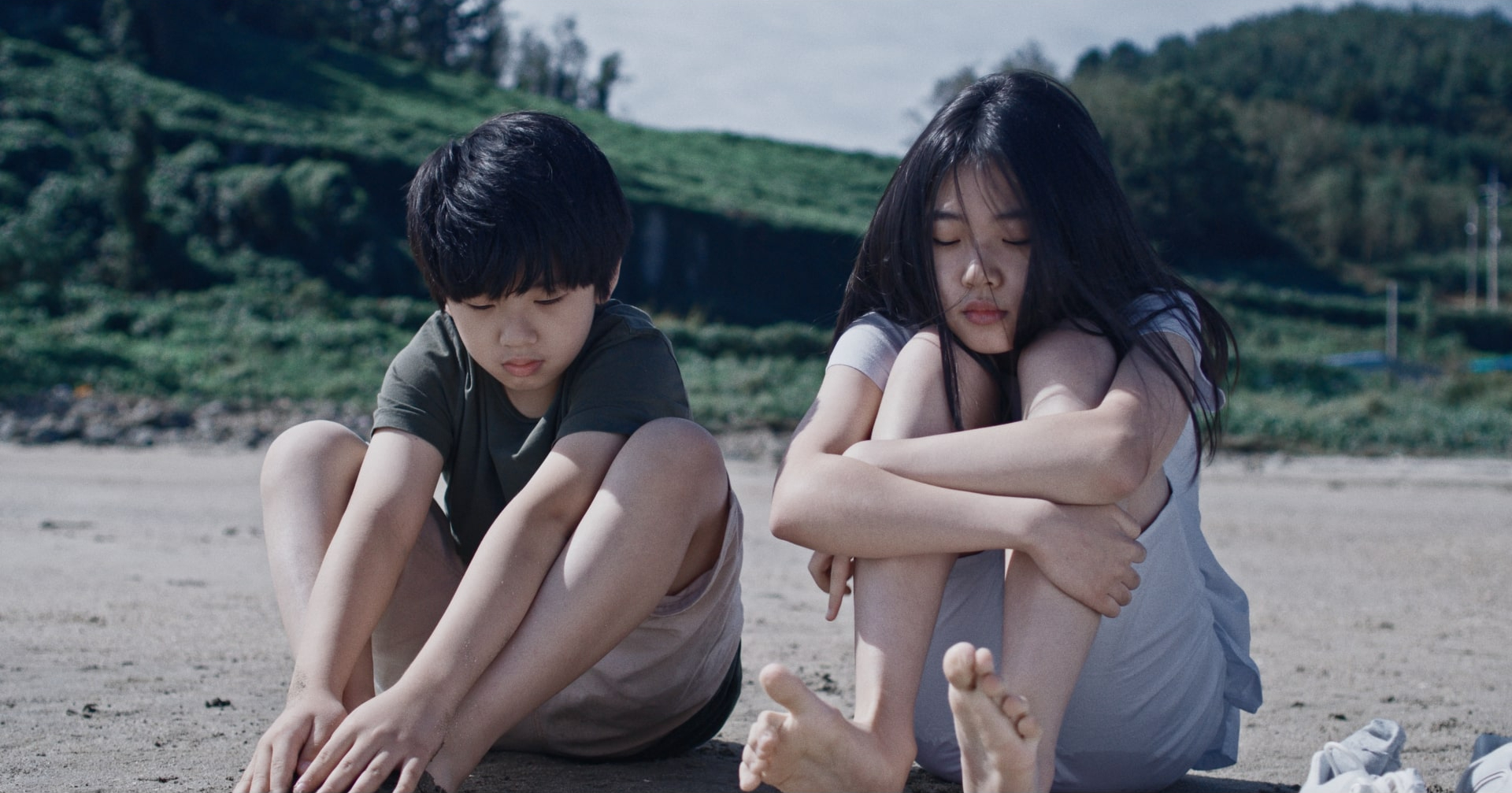
At 13 years old, Seok-young is a swimming obsessive and very proud of the fact that she recently won a trophy. One of the reasons she’s so upset she and her family are moving back to her mother’s hometown following her parents’ divorce is that she’ll have to leave her swimming club and is worried there either won’t be one in the rural backwater or that the other kids won’t be at her level. Unable to make headway at the pool, she goes swimming in the sea instead only to be struck by a foot cramp and rescued from drowning by sullen local boy Woo-joo. Though he angrily runs away from her and says he hates swimming, the two later bond over their shared love of the sport and outsider status. But Woo-joo turns out to be a prodigy and much better than Seok-young meaning that he’s soon picked up by a coach to train in Seoul and Seok-young quits swimming in a fit of pique.

There’s a gentle yet contradictory theme running through the film of allowing your fear of not being good enough to rob you of the joy of doing something just because you enjoyed it. Seok-young seems to quit a lot of things, and as a high schooler is left home alone when her sister too goes to Seoul to train as a concert pianist. She is diffident and aloof in her relationship with Woo-joo, never revealing her true feelings but pushing him away and needling him in his own insecurity as a backwards way of reassuring him that he has the talent to succeed. Meanwhile, he is carrying a secret that makes him doubt his talent and feel self-conscious in the pool, afraid to reveal himself and as it turns out with good reason. Only Seok-young knows and is completely unfazed by his difference, recognising it as the thing that makes him unique while stopping short of admitting that she does indeed think there’s something more to him than swimming and would like him even if never swam again. 

Nevertheless, there’s something quite upsetting about the idea that Woo-joo would have to sacrifice what makes him unique not only to succeed but simply to be able to fit in. He lives with a sense of being different, and is perhaps also bullied and discriminated against because he’s being raised by his grandmother, something else which Seok-young just accepts without question. Seok-young, meanwhile, is displaced amid her parents divorce and humbled by the realisation that she may have overestimated her talent for swimming. She continues to vacillate and unlike those around her flounders for direction. Another boy who’s interested in her reveals that he kept going to the swimming club just for fun even after realising there was no way he could be as good as someone like Woo-joo, but Seok-young seems to retreat into herself in her insecurity. She’s afraid to keep going or try new things out of fear she won’t be good enough rather than simply doing her best and having a good time. 

But as she says, quitting doesn’t make you a loser and giving up something that isn’t making you happy can be a victory in itself as she perhaps discovers in returning home less in defeat than in search of something more. Woo-joo too seems to have found his niche, now whole again and all of himself while no longer submitting to the pressure of needing to achieve something more for others than himself that had ruined whatever joy he may have found in swimming. The message of Ryu’s gentle drama is less one of knowing your limitations than avoiding letting the fear of failure prevent you from doing something you love or conversely walking away from something that isn’t working while finally gaining the courage to chase after what it is you really want.


Boy in the Pool screens as part of this year’s Cinema at Sea.

Trailer (English subtitles)
Romang (로망, Lee Chang-geun, 2019)

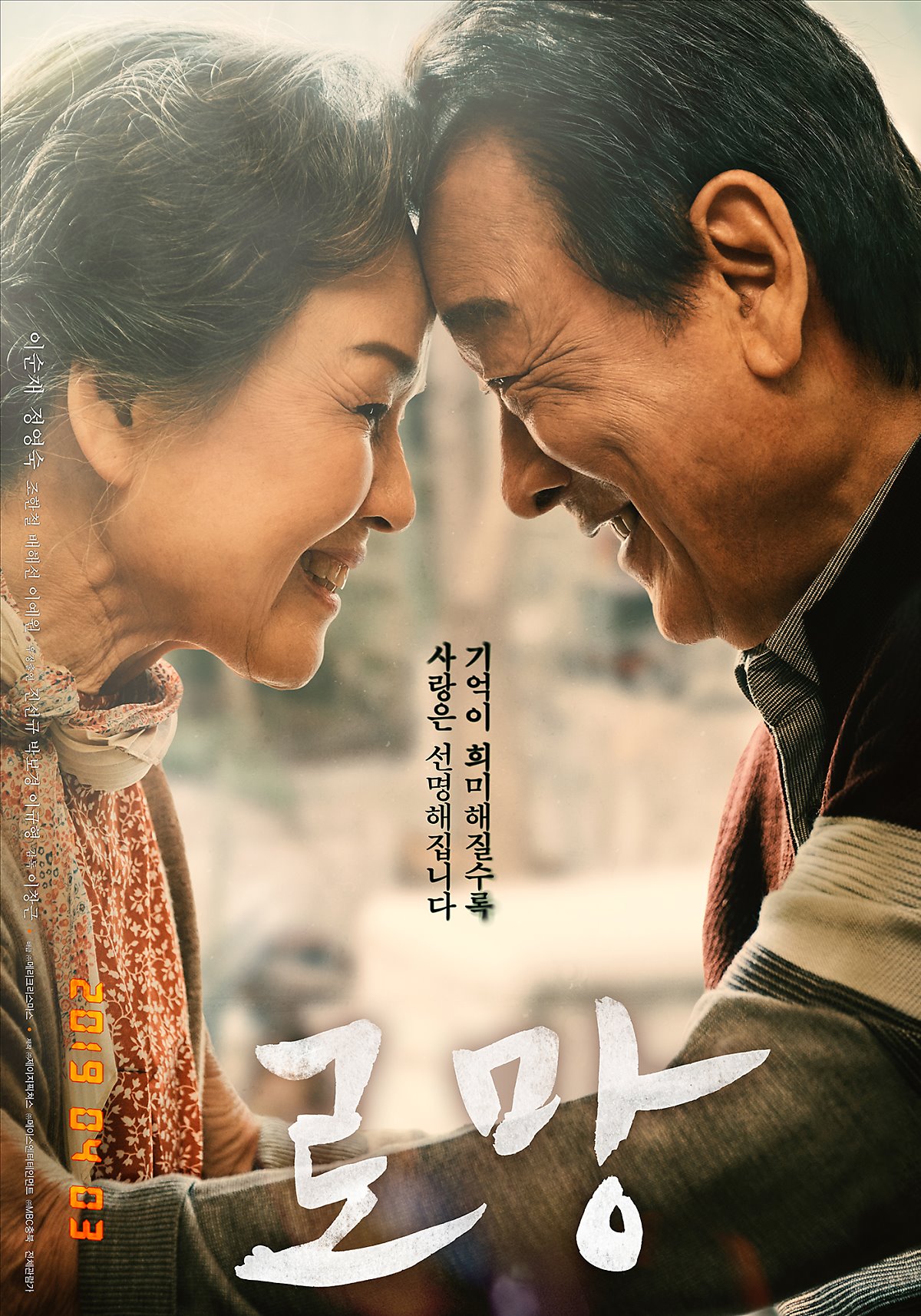
romang posterKorea, like many developed nations, is facing a demographic crisis as society continues to age at an unprecedented pace. While cultural norms demand deference to older people, the many problems they face in a society where welfare provisions are still minimal have often gone unaddressed in the assumption that family members have a duty to look after their relatives in their old age. This is, however, not always possible and there are occasions where considering opting for outside help becomes unavoidable.

This is the dilemma faced by elderly taxi driver Nam-bong (Lee Soon-jae) as he gradually comes to the conclusion that his wife, Mae-ja (Jung Young-sook), is suffering from dementia. The couple share their house with grown-up son Jin-soo (Jo Han-Chul), his wife Jeong-hee (Bae Hae-sun), and their young daughter Eun-ji who had mostly been cared for by Mae-ja while Jeong-hee was the family’s only breadwinner seeing as Jin-soo is an out of work academic (not particularly actively) looking for a new position. Mae-ja’s condition gradually declines to the point at which she begins to pose a danger to her remaining family members causing Jeong-hee to leave Jin-soo and take Eun-ji to her parents’ out of the way.

Gruff and insensitive, Nam-bong decides to send Mae-ja away to a hospice despite Jin-soo’s pleas but eventually reconsiders and brings Mae-ja home where he is committed to care for her himself. However, he too begins to experience the early signs of dementia and is at a loss as to how to proceed in the knowledge that it will become increasingly difficult for him to look after his wife or she him.

The onset of dementia, the film seems to imply, perhaps allows the troubled couple to begin to move past a central moment of trauma in their relationship which has left a lasting thread of resentment between them. Nam-bong, a chauvinistic, difficult husband is not well liked by his family members and most particularly by his son while Mae-ja had, maybe reluctantly, stood by him physically at least if not emotionally. His decision to send Mae-ja away is then a double betrayal in his abnegation of his duties as a husband and in his spurning of all Mae-ja has had to put up with over the last 40 years.

The distance between the couple has also had an effect on Jin-soo who always felt himself pushed out as an accidental victim of his parents’ emotional pain. It is clear that Nam-bong, a traditionally minded patriarch, has little respect for his son who, in his view, is a failure for not having secured a steady career which can support a wife and child, “allowing” his wife to work in his stead. For Nam-bong, being a man is all about “supporting” a family but not actually having to be around very much. For Jin-soo, a modern man, it’s very different. He wants to be there for his wife and daughter so that they have good memories of him hanging out and having fun rather than being that guy who turns up at dinnertime to shout at everyone and then leaves again.

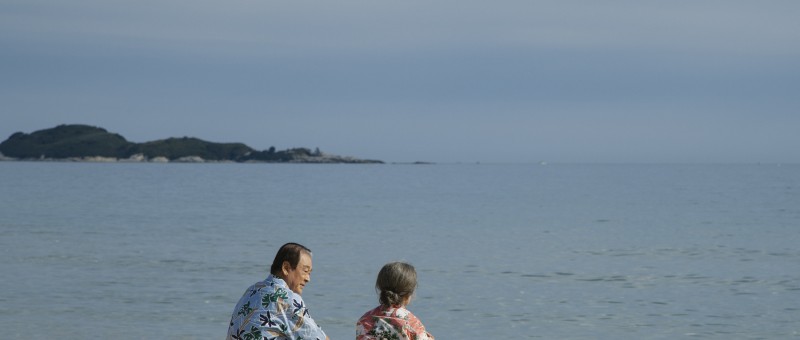
Nevertheless, Nam-bong is eventually forced to accept his emotional duty to his family when he decides to care for Mae-ja. While their mutual condition begins to bring old, negative emotions never fully dealt with to the surface, it also allows them to rediscover the innocent love they had for each other as a young married couple. When Jin-soo eventually leaves the family home to return to his wife and child, the couple decide to isolate themselves, holing up in the living room and communicating via a series of poignant post-its which remind them to care for each other as the darkness intensifies.

Yet it’s not quite all sweetness and light as the elderly romantics rediscover a sense of warmth and connection they assumed long lost. Despite the support shown for Jin-soo’s modern parenting, there is a notably conservative spin placed on the story of Mae-ja and Nam-bong which may very well mark them out as simply being of their time but a late poignant scene in which the young Mae-ja declares her dream to be having a good husband while Nam-bong’s is to support a family sits uncomfortably in its unsubtle defence of traditional gender roles. To make matters worse, the final moments seem to suggest that there is no place for the elderly couple in contemporary society in allowing them (well, Nam-bong) to take control of their destinies only in the most final of ways. Maudlin and sentimental, Romang sparkles when embracing the unexpected cuteness of the late life love story but too often opts for easy melodrama over emotional nuance in its refusal to address its darker elements and eagerness to romanticise the business of ageing.


Romang (로망) was screened as part of the 2019 Udine Far East Film Festival.

International trailer (English subtitles)