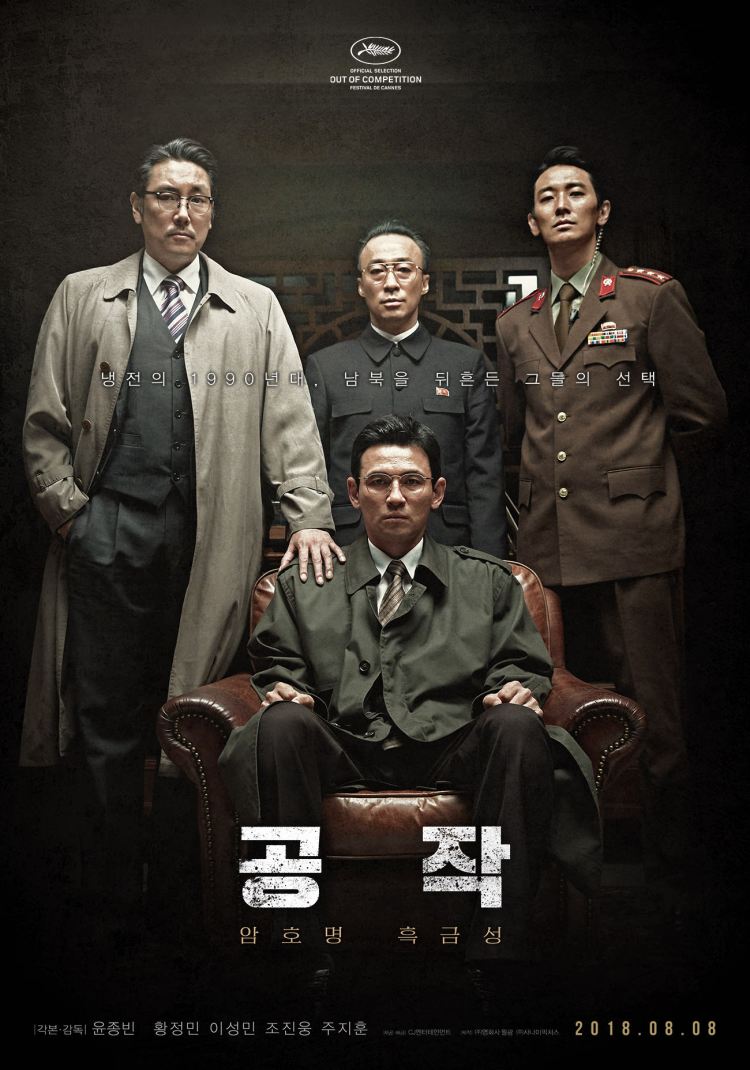
The Spy Gone North (공작, Yoon Jong-bin, 2018)

Spy gone north posterSome might say the first lesson of spying is not too ask too many questions. The hero of Yoon Jong-bin’s Spy Gone North (공작, Gongjak) may wish he’d heeded this advice as his ongoing mission to gain access to North Korea’s nuclear secrets by way of an unlikely advertising scheme sets him on a dark path towards the realisation that he might not be working for the good guys after all. In geopolitical terms, an enemy is sometimes more helpful than a friend – especially if your “enemy” is working on the same system and can be relied upon to play along when the occasion calls.

By the early ‘90s, South Korea has emerged from a lengthy period of military dictatorships into a fledgling democracy. Tensions with the North are running high as the nation has announced an intention to withdraw with from the Nuclear Proliferation Treaty on grounds of national security. Fearing that the North has already successfully developed nuclear weapons, the South decides to ramp up intelligence gathering activity which is where “Black Venus” comes in. Shedding his old identity by appearing to lose himself in drink and gambling, intelligence officer Park Suk-young (Hwang Jung-min) poses as a sleazy businessman with the intention of gaining access to the North Korean elite through their external trade commission operating out of Beijing.

Improbable though it seems, Park manages to engineer a genuine friendship with the cold and austere North Korean trade official Ri Myong-un (Lee Sung-min) with whom he eventually shares unexpected common ground. Strapped for cash after the South sets them up by getting them in hock to China over a mislabelled walnut scandal, the North needs money fast, which is why they’re prepared to talk to someone as shady as Park’s cover. Park sells them an unlikely solution which runs contrary to their core philosophies in exploiting the exoticism of the forgotten North to sell capitalistic decadence in the South through selling licenses to shoot commercials on North Korean soil (which also allows him to travel about the country with a camera), but he doesn’t quite see the added value of his mission even while almost forgetting about the need to get close to the site of the supposed nuclear research facility.

While Park finds himself an “honoured guest” of the Dear Leader (Gi Ju-bong) whose presence evokes both fear and awe, he is also faced with a pressing political crisis at home as the nation prepares for an upcoming presidential collection. Despite the democratic revolution, the same party has been in power for the last 30 years and the recent swing towards the liberal opposition party has many running scared, especially as taking a softer line towards the North is a prominent manifesto pledge – alongside a reform of the security services, which is obviously distressing news for Park’s bosses. In order to maintain the sense of fear which keeps the right-wingers in power, the security services have been secretly communicating with the North and bribing them to create disturbances at politically advantageous times to manipulate the outcome of elections. Park is not exactly a liberal, but he has to admit this is not a good look and if you’re just going to parrot the “for the people” line perhaps you’re not much better than the thing you claim to hate.

Meanwhile, Park is also witness to a side of North Korea outsiders don’t generally see filled with the starving and the destitute. Loyalists all, there are those among the North Korean elite who want to see conditions improve and worry that thanks to the intense stranglehold of the ruling regime they never will. As in everything, business interests trump all. Park and Ri are fighting for the same thing, aware their fledging enterprise is a subterfuge but also that it’s a huge and dangerous first step towards a happier future. After 40 years of mutual manipulations, however, not everyone is keen on abandoning the status quo especially as the two nations have developed an intensely symbiotic relationship founded on mutual demonisation and a friendly willingness to conspire in ensuring the survival of a useful evil. Still, the strangely fraternal relationship between Park and Ri – two fiercely patriotic men from opposing sides who each identify goodness in the other becomes the heart of the film, holding out hope for empathy and compromise when most prefer enmity and chaos.


Screened as part of the 2018 BFI London Film Festival.

International trailer (English subtitles)
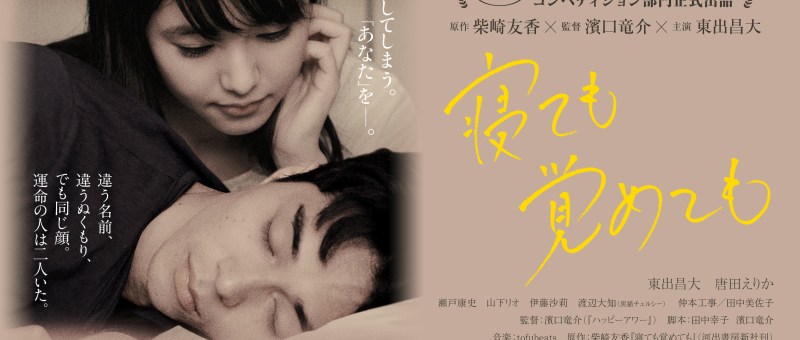
Asako I & II (寝ても覚めても, Ryusuke Hamaguchi, 2018)

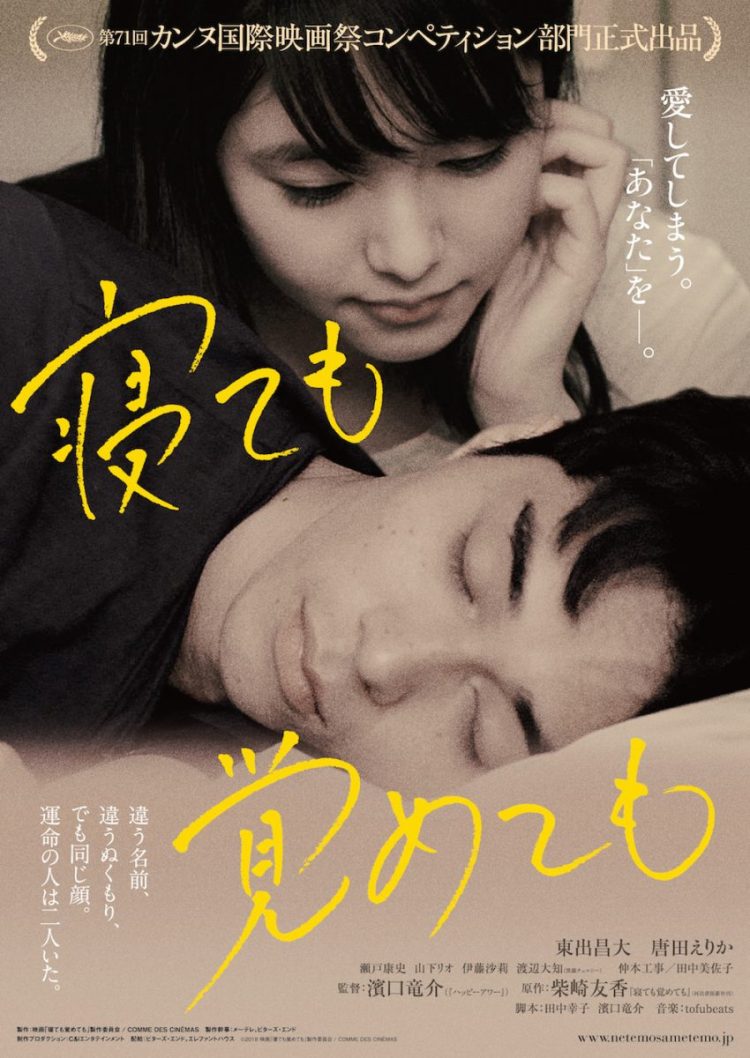
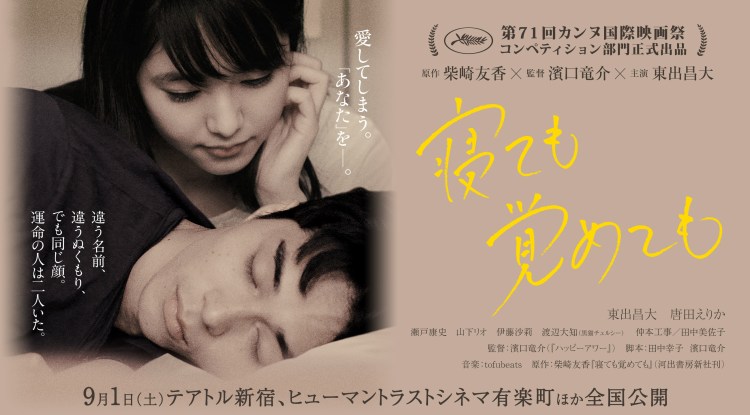
asako I & 2 posterDualities define the perpetually submerged worlds of Ryusuke Hamaguchi’s Happy Hour followup Asako I & II (寝ても覚めても, Netemo Sametemo). Waking and sleeping, fantasy and reality, past and present, presence and absence, love and sadness. Asako (Erika Karata), an ordinary young woman of the contemporary era, finds herself in a similar position to many of the heroines of contemporary Japanese literature in that she has no idea what she really wants out of life and is essentially torn between a series of idealised lives snatched from movies and magazines. Yet she is also haunted by a broken heart, arrested in a state of perpetual adolescence thanks to an early disappointment in love in which remains horribly unresolved.

As a university student in Osaka, Asako attends a photo exhibition dedicated to one of the few books put out by legendary Japanese photographer Shigeo Gocho titled “Self and Others”. Fascinated by an eerie picture of two little girls dressed identically, one slightly taller than the other, Asako’s attention is eventually caught by a striking young man. She leaves the exhibition and follows him until he eventually turns and faces her. Firecrackers some teenagers had been struggling to light suddenly explode around his feet. He strides over to her, asks for her name, and then leans in for a kiss – at least, that’s the way he later tells it to a disbelieving friend who points out that “no one meets like that”. An arty type in dungarees and shaggy hair, the young man’s name is “Baku” (Masahiro Higashide) – he uses the character for wheat (his dad was big into grains) but it’s also a homonym for explosion which a is key indication of the unpredictable excitement he comes to represent for Asako as her uni best friend Haruyo (Sairi Ito) attempts to warn her by insisting that Baku is the heartbreaking type and whatever she has with him is destined to end in tears.

Haruyo’s prediction comes to pass when Baku steps out one day to buy some shoes and never returns. A brokenhearted Asako makes her way to Tokyo and begins working a cafe but two and a bit years later, she is stunned to find “Baku” wearing a suit and working in an office. He doesn’t remember her and says his name’s Ryohei, but Asako can’t shake the association which is both attractive and repellent in equal measure. Ryohei is smitten, he felt the connection too, but Asako doesn’t quite know what to do with this unfortunate coincidence.

Events repeat themselves with only mild distortions – Asako and Ryohei attend another Gocho photo exhibition though this time with Asako’s Tokyo best friend, Maya (Rio Yamashita). Rather than a motorcycle accident, Ryohei and Asako find and comfort each other after the 2011 earthquake and eventually become a couple, move in together, and even get a cat. Asako begins to fall for Ryohei, but can’t be sure her love for him isn’t really love for Baku refracted through a different lens. Baku, a man with a wandering heart, once told her he would always return no matter how long it might take. There’s a part of Asako that’s always waiting, held back, afraid to move and unwilling to acknowledge the death of her younger self as immortalised in the image of herself with Baku.

When Haruyo runs into Asako and Ryohei unexpectedly in Tokyo, she gives us our first indication that Ryohei really does look like Baku and the association isn’t just a projection of Asako’s romantic anxieties. Haruyo’s first words to Asako are that she hasn’t changed – they’re intended as a compliment, but Asako bristles. She feels as if she’s moved forward, matured, is preparing to enter a comfortable middle age with Ryohei at her side but deep down she knows she hasn’t. She’s still the naive student pining for a lost love that never cared enough about her to resolve itself. She worries she’s been playacting and that her relationship with Ryohei isn’t “real” even if she cares about him enough to have her feeling guilty for this mild form of betrayal.

Later, offered another possibility, Asako feels as if her life with Ryohei has been like a dream, or perhaps the only waking moment of her life. When Ryohei introduces a work friend to Maya as an excuse to get close to Asako, they watch a video of her performing a scene from Chekhov’s Three Sisters – a play famously about self delusion in which the fierce belief in an impossible future becomes the only thing which makes life possible. The climactic earthquake hits just as Ryohei is preparing to watch Maya perform in Ibsen’s The Wild Duck – the play which lays bare the playwright’s key tenet, that if you take away a man’s life lie you take away his happiness. Ryohei’s friend Kushihashi (Koji Seto) might rip into Maya’s “narcissistic” acting, denigrating her for attention seeking rather than baring her soul on stage, but Asako admires her determination and absolute certainty in her chosen goal, things she herself lacks.

Talked down by the soothing tones of practiced de-escalator Ryohei, Kushihashi is prompted to confess that his outburst was mostly out of jealously, that having given up his dreams of the stage for a conventional salaryman life he resented seeing someone else embrace theirs. Asako can’t decide which “dream” she wants – a life of fireworks and unpredictability with Baku for all the heartbreak it might bring, or one of gentle happiness with the good and kind Ryohei. A series of crises prompt her into making a clear choice – seemingly her first, though it may be too late. Real love is messy, painful, and ugly, but it’s beautiful too once you learn to see through the miasma of self delusion and romantic fantasy.


Screened as part of the 2018 BFI London Film Festival.

Original trailer (no subtitles)

BFI London Film Festival Confirms Complete Programme for 2018

1272508_burning_924331The BFI London Film Festival returns for 2018 with a packed programme of the best in recent international cinema. As usual there are a fair few East Asian films on offer including the long awaited return from Lee Chang-dong, the latest from Jia Zhang-ke, and Bi Gan’s 3D followup to Kaili Blues.

Cambodia

the prey poster low res

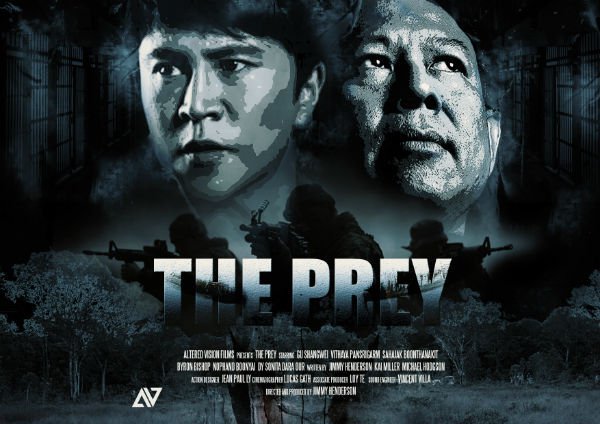
  • The Prey – Jimmy Henderson’s Jailbreak followup follows an undercover cop arrested during an operation who subsequently gets drawn into a corrupt prison warden’s sideline of sending prisoners out as targets for hunters while the Chinese military plan a rescue mission.

China

ashes08020203-r-c

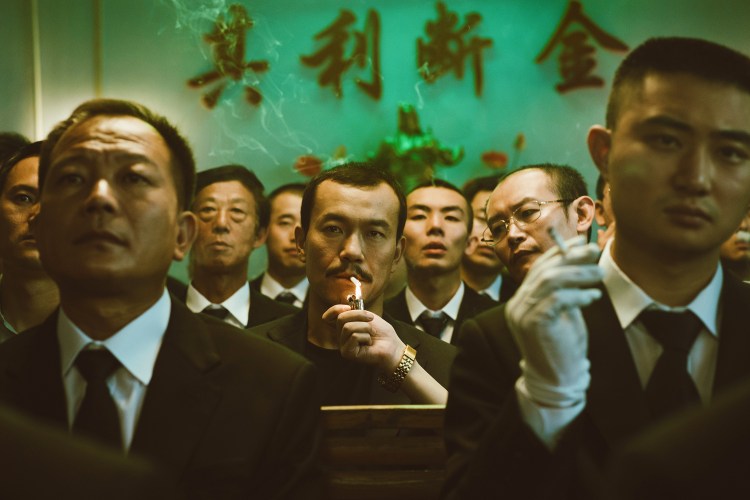
  • Ash is Purest White – in the latest from Jia Zhang-ke, Zhao Tao plays a gangster’s moll who goes to prison on his behalf only to find that her loyalty has not been valued.
  • Dead Pigs – Cathy Yan satirises the modern Chinese economy through the tales of a collection of people caught up in the machinations of a shady real estate conglomerate.
  • Long Day’s Journey into Night – a man returns to his home village after many years for his father’s funeral and to look for lost love in Bi Gan’s Kaili Blues followup.
  • Shadow – Zhang Yimou returns to the world of period epics with a tale of proxy war as a great general (Deng Chao) makes use of a double to combat palace intrigue.
  • Suburban Birds – an engineer finds a diary of a boy with the same name giving way to a tale of adventure when one of the boy’s friends goes missing in Qiu Sheng’s debut feature.

Hong Kong

Family Tour still 1

  • A Family Tour – A Chinese director living in exile in Hong Kong travels to Taipei to present a controversial film banned in the Mainland, but also to see her mother who is travelling around the island on an old persons’ package tour. Not wanting to attract attention, she follows the coach around pretending to be a local.

Indonesia

May the devil take you still 1

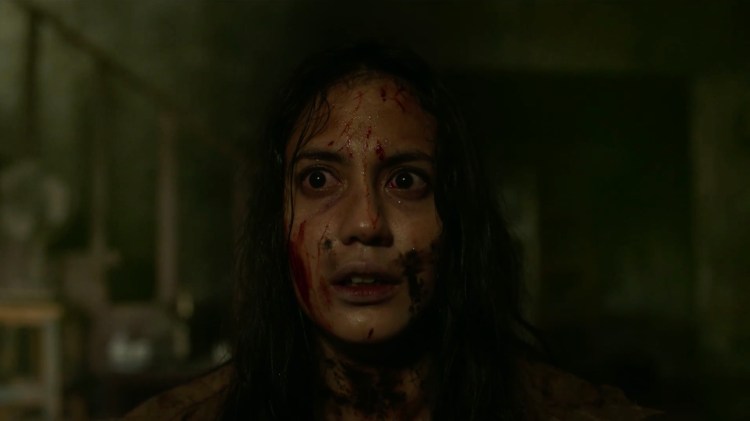
  • May the Devil Take You – a young woman pays a long overdue visit to her estranged father who is dying. With doctors unable to identify a cause for his condition, the supernatural begins to raise its head.

Japan

Aasako 1 & II

  • Asako I & II – Ryusuke Hamaguchi adapts Tomoka Shibasaki’s novel in which a young woman spots a man who looks exactly like her long absent lover in cafe, only he has a completely different personality.
  • Mirai – a little boy learns to cope with the arrival of his baby sister in the latest from Mamoru Hosoda.
  • Of Love & Law – Hikaru Toda reunites with Love Hotel’s Kazu and Fumi and explores their lives and work at an Osakan law firm specialising in minority issues. Review.

Korea

Last Child still 1

  • Believer – Lee Hae-young offers a Korean take on Johnnie To’s Drug War.
  • Burning – the long awaited return by Korean auteur Lee Chang-dong, Burning adapts a short story by Haruki Murakami and revolves around three people – a novelist, another man, and a fashion model, as they become embroiled in a strange incident.
  • Last Child – moving drama in which a bereaved family takes in the boy their son died saving only to discover all is not as it seems. Review.
  • Little Forest – gentle tale in which a wounded young woman retreats to her country home to figure things out. Review.
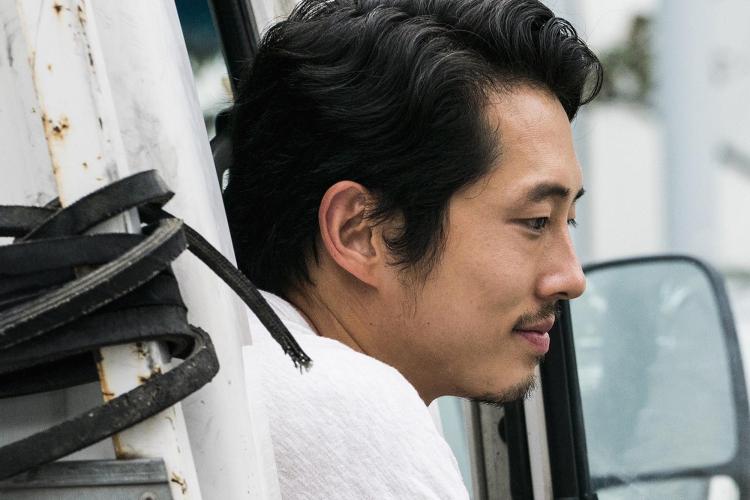
  • The Spy Gone North – Yoon Jong-bin’s thriller follows a South Korean spy on an infiltration mission in the North.

The festival will also be previewing the first two episodes of Park Chan-wook’s BBC TV series, The Little Drummer Girl.

Events

  • Lee Chang-dong screentalk – director Lee Chang-dong will be taking part in a screentalk at the BFI on 20th October, 12pm

The BFI London Film Festival takes place at various venues across the city from 10th – 21st October 2018. Full details for all the films as well as screening times and ticketing information are available via the official website. Priority booking opens for Patrons on 4th September, for Champions on 5th September, and Members 6th September, with general ticket sales available from 13th September. You can also keep up to date with all the latest news via the festival’s Facebook page, Twitter account, Instagram, and YouTube channels.