Schemes in Antiques (古董局中局, Derek Kwok, 2021)

Two very different men square off in the race to find a precious Buddha head and reclaim their family honour in an old-fashioned tomb raiding mystery from Derek Kwok, Schemes in Antiques (古董局中局, gǔdǒng jú zhōngjú). The key to the future seems to lie in the past as the heroes approach from opposing sides, one keen to expose a truth and the other seemingly to conceal it but both otherwise unable to escape a problematic family history and be rehabilitated as a member of one of the top five antiquing families in the China of 1992. 

Now a middle-aged drunkard, down on his luck Xu Yuan (Lei Jiayin) lays the blame for his present circumstances solely with his immediate forbears. A member of the Plum Blossom Five, five families who are the ultimate authorities on the authenticity of historical artefacts, Xu Yuan’s grandfather was executed as a traitor during the war for having gifted a precious Buddha head to the Japanese. In a fairly traumatic childhood, Yuan was abandoned by his his dad whom he believes to have been too badly damaged by seeing his grandfather die to be any sort of father while somehow even kids his own age called him scum in the streets because of the shame his grandfather’s transgression had placed on the family. Now running an electronics store which is in its way the opposite of antiques, Yuan has a fairly cynical view of the artefacts trade but is dragged back into it when the granddaughter of the Japanese soldier who received the Buddha head (Lili Matsumoto) insists on returning it to a direct descendent of the Xu family. 

Perhaps surprisingly, the issue isn’t really with the Japanese but the current status of the Buddha head which, after a duel of detection with well dressed rival Yao Buran (Li Xian) who is also trying to redeem his family honour, Yuan quickly realises is a fake suggesting his grandfather wasn’t really a traitor after all while giving rise to the question of what actually happened to the “real” one. When it comes to the antiques trade, perhaps there’s a question mark over the degree to which “authenticity”, whatever that might mean, really matters and if all the Plum Blossom Five are really doing is attempting to assert their authority over an unruly market as the accusation that one head of family in particular has long been knowingly authenticating fakes when it suits them to do so bears out. In something of a plot hole, Yuan is revealed to be an antiques expert despite having been abandoned by his father at a young age but his ability is for some problematic even if admired by his main rival in its ability to expose the hidden truth or as the film later puts it the real within the fake. 

In any case, it’s true enough that the battles of the past are still being fought by the grandchildren of those who started what they couldn’t finish. Yuan is joined in his quest by the feisty granddaughter of another Plum Blossom family (Xin Zhilei) who is also battling her grandfather’s sexism in his refusal to trust her with anything important in the antiques trade. She and Yuan end up squaring off against Yao who is largely playing his own game as they embark on a good old-fashioned treasure hunt in which they solve a series of puzzles set down by Yuan’s father to lead them towards the truth.

Discovering another father figure along the way, Yuan learns to accept his complicated legacy while redeeming his family honour and along with it his self worth in outsmarting just about everyone else to solve the final mystery. There is something refreshingly innocent in these well constructed, defiantly analogue puzzles which rely on cultural knowledge and mental acumen along with a spirit of curiosity, while there’s also a fair amount of running away from bad guys and escaping from collapsing tombs filled with artefacts that might in a sense be cursed even if not quite literally. There are definitely a lot of schemes in antiques, something of which Yuan himself takes full advantage, but they’re also in their own way pieces of a puzzle in which the fakes are less red herrings than gentle pointers towards other truths some of them buried under layers of subterfuge and obfuscation only to be dragged into the light by those with dangerously curious minds.


Schemes in Antiques streams in the US Sept. 10 – 16 as part of the 15th season of Asian Pop-Up Cinema.

International trailer (English subtitles)

The Captain (中国机长, Andrew Lau, 2019)

The Captain poster 2Chinese cinema loves the miraculous, but it loves stories of ordinary heroism even more. Inspired by real events which occurred on 14th May 2018, not quite 18 months before the film’s release, The Captain (中国机长, Zhōngguó Jīzhǎng), is a classic story of everything going right after everything goes wrong. Implicitly praising the efficacy of a system which values military precision over individualistic handwringing, Lau’s dramatisation reserves its admiration for those who keep their cool and follow the rules in the midst of extremely difficult circumstances.

Beginning in true disaster movie fashion, Lau opens with a brief yet humanising sequence which sees the otherwise austere pilot Captain Liu (Zhang Hanyu) say goodbye to his little girl, promising he’ll be back in time for her birthday party that very evening. Thereafter, everything is super normal. The pilots and cabin crew arrive at the airport, get to know each other if they haven’t flown together before, and run through their drills. The cabin crew laugh through the “we’re professionally trained and are confident we can ensure your safety” mantra rehearsed in case of emergency hoping they’ll never actually have to say it, but disaster strikes a little way into the flight when the windscreen cracks, eventually shattering and sucking rookie co-pilot Liang Peng (Oho Ou) halfway out.

Of course, the story is already very well known so we can be sure that the plane will land safely with no one (seriously) hurt, but it’s still an incredibly tense time for all. As Liu explains to Liang Peng, everything in the cockpit must be done with the upmost precision. It’s when you get complacent that things will start to go wrong. A former air force pilot, Liu is not the most personable of captains with his permanently furrowed brow and serious demeanour, but he’s exactly the sort of person you need in a crisis, calmly and coolly making rational decisions under intense pressure. While he’s doing his best at the controls, the entirety of the Chinese air aviation authorities are springing into action to try and ensure the plane’s safe landing – airspace is cleared, the military monitor the situation, and the fire and ambulance services are already on standby in the hope that Liu can safely land at Chengdu airport.

Keeping the tension high, Lau resists the temptation to sink into melodrama, more or less abandoning a hinted at subplot about stoical cabin supervisor Nan’s (Quan Yuan) possibly unhappy home life while introducing a fairly random diversion in a group of aircraft enthusiasts furiously tracking the plane’s trajectory online and then heading out to the airport in the hope of witnessing a miracle. Before the potential catastrophe takes hold, the crew have to deal with unpleasant passengers intent on throwing their weight around, nervous flyers, and people travelling with small children, but do their best to provide service with a smile even in the most trying of circumstances. They are frightened too, but have to muster all of their professionalism in order to be strong for the passengers, keeping them calm and preventing them from creating additional problems while the guys in the cockpit try to find a solution that keeps everyone safe.

Released for National Day, The Captain’s brand of propagandistic patriotism is of the more subtle kind, only really rearing its head during the final moments during which awkward captain Liu suddenly starts singing a folksong in praise of the motherland while celebrating their lucky escape on its one year anniversary in the time honoured fashion of a group hot pot. Nevertheless, the point it’s making is in the virtues that Liu states after landing, valuing life and duty. Liu landed the plane because he followed procedure perfectly, kept his head, and made well-informed decisions. A master of understatement, his speech on landing is simply an apology to his passengers that he wasn’t able to take them safely to Lhasa. After waiting for the investigators, he thinks the passengers are hanging round outside the plane because they’re angry and want an explanation, little realising they are just overjoyed to be alive and wish to thank him for saving all their lives. A tense tale of selfless heroism aided by good training and immense professionalism, The Captain is a subtle endorsement of an authoritarian system but also of the importance of keeping cool in a crisis as the best weapon against catastrophe.


The Captain is currently on limited release in UK cinemas courtesy of Cine Asia, and in the US from Well Go USA.

Original trailer (English subtitles)

https://youtu.be/Vy3nA6VDGyw

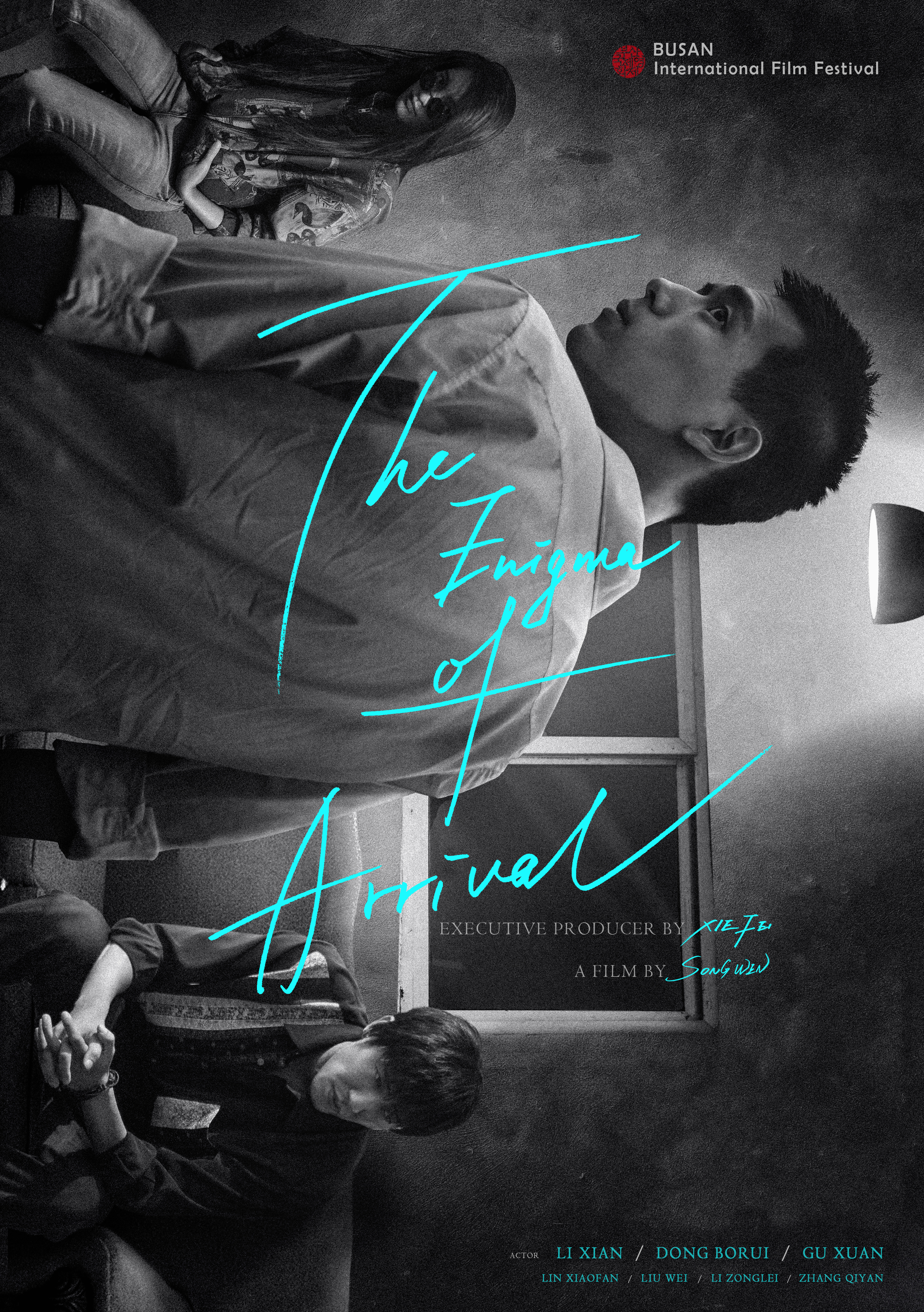
The Enigma of Arrival (抵达之谜, Song Wen, 2018)

The Enigma of the Arrival posterChinese cinema has always had a fondness for melancholy nostalgia. Perhaps its natural enough to romanticise one’s youth and long for a simpler time of possibility, though that same desire for “innocence” has often been read as a rebuke on the “soulless” modern economy and critique of Westernising individualism of a China some feel has lost its way since the economic reforms of the ‘80s and beyond. Song Wen’s The Enigma of Arrival (抵达之谜, Dǐ Zhī Mí), seemingly borrowing a title from the novel by VS Naipaul, seems more straightforwardly personal in its universality as it locates a single fracturing point in the lives of a collection of young people forced apart yet eternally connected by tragedy and disappointment.

Song begins in the present day with his 40-ish narrator, San Pi (Liu Wei), who tells us that he is looking forward to reuniting with his old friends with whom he has largely lost touch. Falling into a reverie, he takes us back to their harbourside hometown some 15 years or so previously when he used to hang out with three friends from school – Feng Yuan (Dong Borui), Xiaolong (Li Xian), and Da Si (Lin Xiaofan). Young men, they spent their time watching “cool” Hong Kong movies like Days of Being Wild and A Better Tomorrow, which were always followed by a blue movie watched incongruously in public. The trouble starts when the guys meet local beauty Dongdong (Gu Xuan) and are all instantly smitten. Hoping to get themselves a more impressive motorbike, they make a fateful decision to steal some diesel and sell it on, only the fuel they steal belongs to gangsters which lands them in a world of trouble they are ill-equipped to deal with despite their adolescent male posturing. Dongdong disappears without trace leaving the guys wounded and confused.

As San Pi tells us in his opening monologue, things are not always as they seem, “Life is floating between fiction and reality”. It’s a particularly apt comment from him because, as we later find out, he was present only for the single climactic events not for the ones which preceded and followed them. He didn’t go with the guys when they, mistakenly, tagged along with Dongdong to an athletics tournament to which she only intended to invite Xiaolong, and as he left soon after Dongdong disappeared his memories of those times are not first hand. He invites us to assume that each of the men has their own narrative which necessarily places themselves at the centre and offers a flattering portrait of their actions which attempts to absolve them of guilt for whatever they did or did not do to lose Dongdong.

A case in point, though it seems that Dongdong favoured Xiaolong who has spent the remainder of his life pining for her, Fang Yuan always thought she fancied him while Da Si was technically dating her friend Xiaomei (Zhang Qiyuan) but seems to have developed some kind of protective sympathy towards her which may have an edge of puritanical resentment. San Pi is the only one who does not seem to have engaged in sad romance, a perpetual outsider looking on from the edges. That might be why he seems to be the one eulogising their friendship, less hung up on what happened to Dongdong than on the effect it had on the later course of his life and that of his friends. Reuniting in a Japanese-style onsen, an ironic reminder of their youthful dreams to see Japan, he wonders if they might return to their teenage intimacy but discovers that youthful innocence cannot be reclaimed once lost, some secrets must stay secret, and some betrayals are too much to bear. They will never go to Japan together, or even catch a movie in a rundown theatre. It would be embarrassing; the moment has passed.

Song frames his tale in a mix of hazy images and black and white, neatly symbolising the patchwork quality of narrative assembled from memory and wishful thinking, coloured by a single perspective that lacks the composite whole of accepting the reality of others’ perceptions. In contrast to the longing for the old China that marks many a youth drama, Song’s young guys yearn for the world – they worship Hong Kong tough guys, listen to Western music, and dream of seeing Japan, but their present life is one of settled middle-aged disappointment marked by the unresolved tragedy of their pasts which both binds them together and forces them apart. “No one is flawless” Xiaolong is reminded, but somehow that only makes it worse. A melancholy ode to ruined friendship and the nostalgia of bygone adolescent possibility, Enigma of Arrival is a suitably abstract effort from the founder of the XINING FIRST International Film Festival and signals a bold new voice on the Chinese indie scene.


The Enigma of Arrival screens in Chicago on Sept. 19 as part of the ninth season of Asian Pop-Up Cinema where director Song Wen will be present for an intro and Q&A.

Original trailer (English subtitles)