Creation of the Gods I: Kingdom of Storms (封神第一部:朝歌风云, Wuershan, 2023)

A bad ruler, like a bad father, has only bad lessons to teach his sons and will receive the same in kind in Wuershan’s beautifully produced fantasy epic, Creation of the Gods 1: Kingdom of Storms (封神第一部:朝歌风云, Fēng Shén Dìyī Bù: Zhāogē Fēngyún). Inspired by the classic work of 16th century literature also known as Investiture of the Gods which serves as a kind of foundation myth, the film is the first of three and a 10-year labour of love from the director that began shooting in 2018 and took nearly four years to complete post-production. 

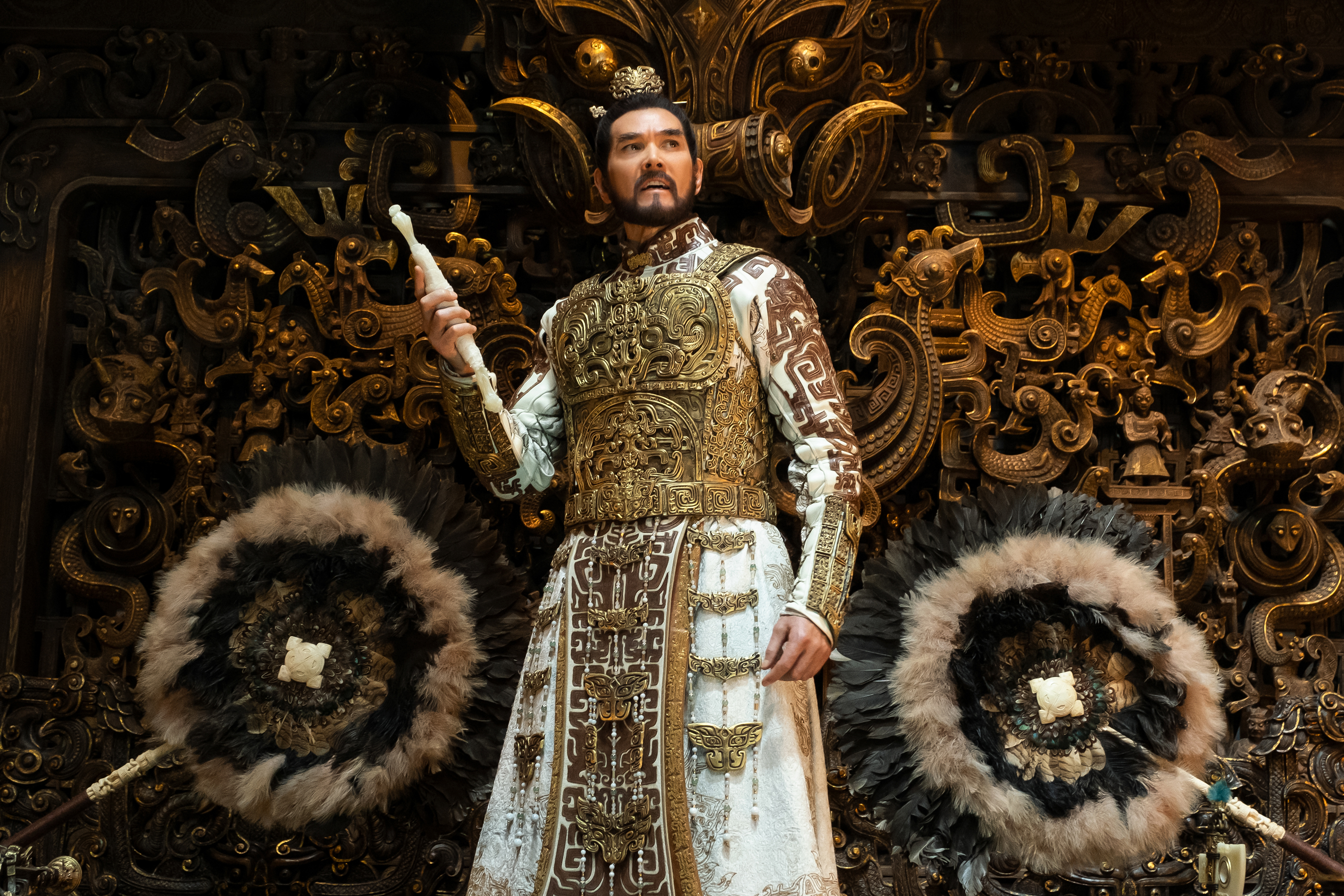
As the opening title card explains, the film focusses on the fall of the Shang dynasty at the hands of its last king and King of All the Realms Yin Shou (Fei Xiang), known posthumously as King Zhou. He is first introduced, however, through the eyes of the young man that is really the hero of the tale, Ji Fa (Yu Shi), who describes him as a hero of the kind he dreams of becoming. Yin Shou is charged with leading an attack on the compound of rebellious lord Su Hu who has refused to pay his taxes, taking with him the four hostage foster sons of the primary dukes along with that of Su Hu himself. The boy is sent to plead with him but gets no reply. In a show of what seems like kindness, Yin Shou asks him what sort of father his must be to give no reply and formally adopts the boy but only in the knowledge that honour dictates he now take his own life as proof of his loyalty to the Shang. 

These young men, Ji Fa included, are forced to ask themselves to whom they owe their loyalty, a man who gave them up and may long have forgotten them or Yin Shou who has in a sense raised them and demands their loyalty. Ji Fa is fiercely loyal to Yin Shou and thinks him everything a good father, a good commander and eventually king should be. Yet Yin Shou has extremely strong second son syndrome and resents his father and older brother for treating him as an also ran. Ji Fa meanwhile is still naive and egotistical, coming to the palace dreaming of becoming “a hero” with only a superficial understanding of what that would mean and easily swayed by Yin Shou’s majesty while Yin Shou in turn rejects his own son ironically fearful of him as a rival having watched the old king die at the hands of his brother while privately pleased that he will finally take his rightful place on the throne only to be told that the kingdom is in peril and the only way to save it is to commit public self-immolation. 

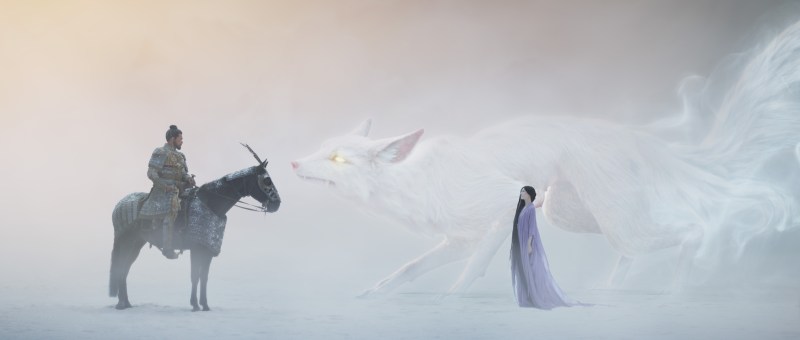
When the legendary heroes Jiang Ziya (Huang Bo), Nezha (Wu Yafan), and Yang Jian (Cisha) turn up with a magic scroll that can undo the Great Curse bearing down on the land, Yin Shou describes it as blessing on realising the talisman gains in power the more souls it receives. There may be something a little chilling the contemporary echoes of his paranoid authoritarianism as he actively begins to round up subversive elements even as he takes as a mistress the daughter of a man he beheaded who in reality took her own life and has been possessed by a fox spirit though it is also quite ironic that it is Su Daji (Narana Erdyneeva) who will bring down the Shang. 

In any case, Wuershan brings the classic tale to life with a sense of magic and wonder painstakingly recreating the fantasy world of feudal China with its beautiful landscapes marred by chaotic infighting and destabilised by dysfunctional filiality. In the end, Ji Fa will return to his true father and with him the path of righteousness which will overcome the Great Curse and begin to restore order laying the foundations for the Chinese society. Meanwhile, in this age of demons and strange creatures, interventions from the heavens and the mortal world in so much chaos that Nezha has been brought in to help, Wuershan discovers a kind of soulfulness embracing the timeless quality of this ancient mythological tale yet grounding it in a well honed sense of emotional reality.


Creation of the Gods I: Kingdom of Storms is in UK cinemas now courtesy of CineAsia.

Trailer (Simplified Chinese / English sutbtitles)

Never Stop (超越, Han Bowen, 2021)

“And what comes after the finish line?” an anxious novice asks of his mentor who has little answer for him, his singleminded pelt towards the end of the road later convincing him “running never leads anywhere” even as he continues to run away from his sense of shame and inadequacy. One of a number of sporting dramas emerging in the run up to the Tokyo Olympics, Han Bowen’s Never Stop (超越, Chāoyuè) ultimately suggests that in life there is no finish line while “winning” is perhaps more a state of mind than a medal and a podium. 

This is however a lesson former champion Hao Chaoyue (Zheng Kai) struggles to learn after his sprinting career comes to an abrupt halt. In 2009, he won gold in the Asian Games and publicly proposed to his reporter girlfriend in the middle of a packed stadium. 10 years on, however, he’s a washed up middle-aged man whose business is failing and marriage falling apart. His protege, Tianyi (Li Yunrui), is still flying high but approaching his late ‘20s is now also experiencing similar problems as Chaoyue had previously compounded by the fact he suffers from ADHD and is prevented from taking his medication because of anti-doping regulations which has left him mentally drained through overstimulation. 

Later, Chaoyue describes the athletes’ existence as like that of a lab rat forced to run around for little more reward than food and water. Nevertheless the source of all his problems is in his stubborn male pride, unable to accept the reality which is that he lost to nothing other than time in the perfectly natural decline of his ageing body which coupled with the extent of his injuries left him unable to maintain the peak physical performance of his earlier career. Petulantly quitting his original team, he tries an international super coach who refuses to sugarcoat the reality that Chaoyue has simply aged out of international athletics while throwing in a few racist micro-aggressions for good measure. Unable to move on, he attempts to trade on past glory but ironically continues to run away from his problems in refusing to accept he has no head for business while discouraging his young son from pursuing athletics despite his apparent love and aptitude for sports. 

Tianyi’s plight meanwhile highlights the external pressures placed on sporting idols in the internet age, his career suddenly on the rocks when he’s spotted taking pills and and damages his reputation losing his endorsement deals. Having idolised Chaoyue and essentially followed in his footsteps he now finds himself directionless and wondering what to do with the rest of his life. The appeal in running for him at least may have been in, as Chaoyue had described it, the intense focus and single-mindedness of the short distance sprinter in which everything except the runner and the finish line disappears, but without his medication Tianyi finds it increasingly difficult to concentrate often slow off the blocks in his initial confusion. 

The problem the runners face is ultimately one of self-confidence, motivated to give up on believing that they cannot fulfil the internalised ideal they have of a champion. Chaoyue remains unwilling to “lose”, running his business further into the ground and damaging his relationships with those around him out of stubbornness rather than making a strategic retreat or attempting to reorient himself in accepting he may need help with making his sneaker shop a conventional “success”. Feeling betrayed, he refuses to let his son run because running doesn’t lead anywhere but continues to run away from the humiliating spectre of failure rather than face it head on. Tianyi meanwhile looks for guidance and unable to find it struggles to find independent direction, but in confronting each other the two men begin to regain the confidence to keep going redefining their idea of success as striving for rather than reaching the finish line.

An unconventional sporting drama, Han’s inspirational tale nevertheless promotes perseverance and determination as the former champions overcome their self-doubt to realise that you don’t have to just give up if you feel you’ve lost your way and that there are always other ways of winning. There may be no finish line in life, but there are ways to go on living when your sporting life is over not least in supporting the sporting endeavours of others or as the post-credits coda less comfortably suggests monetising your name brand to build a sportswear empire that enriches both yourself and the nation. A late in the game slide towards a patriotic finale cannot however undo the genuine warmth extended to the struggling athletes as they resolve to keep on running no matter what hurdles lie in their way.


Never Stop streams in the US Sept. 15 to 21 as part of the 13th Season of Asian Pop-Up Cinema.

Original trailer (English subtitles)