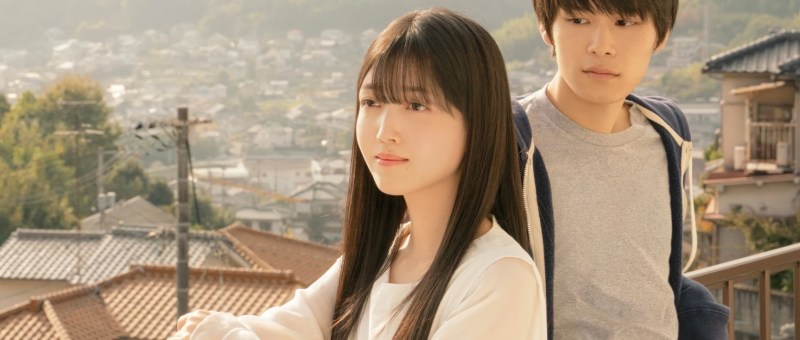
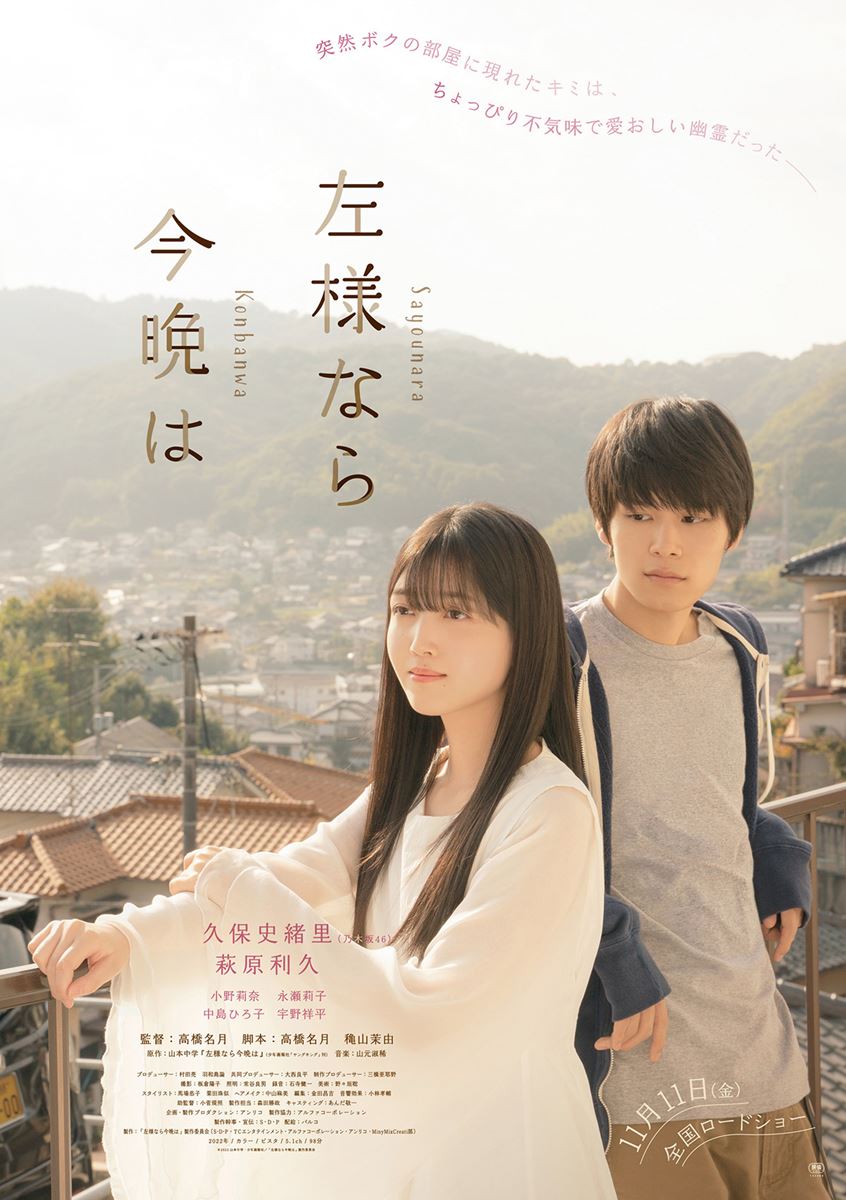
A Girl in My Room (左様なら今晩は, Natsuki Takahashi, 2022)

A young man reeling from a breakup is suddenly confronted by the literal ghost of lost love in Natsuki Takahashi’s supernaturally-inflected romantic drama A Girl in My Room (左様なら今晩は, Sayonara Konbanwa). Set in the peaceful town of Onomichi, the film finds its hero wasting away pining while wondering if falling in love with a ghost is all that bad only to later ask himself if any of it was real or just a fantasy of his lovelorn mind. 

As the film opens, Yohei’s (Riku Hagiwara) girlfriend of two years, Rena (Riko Nagase), moves out of their apartment apparently sick of his superficiality and inconsiderate nature. Soon after, Yohei becomes aware that a ghost has been living in their apartment with them the whole time only should she couldn’t manifest because Rena apparently had unusually strong spiritual energy. Though originally frightened by the new presence, Yohei soon warms to the woman he names “Aisuke” (Shiori Kubo) and becomes determined to find out who she was and how she died only no one will tell him. 

Of course, Aisuke could just be the symbolic ghost of Rena, a spectre of lost love confronting him with his romantic failure, but also seems to have an inner life of her own even if she can’t remember much about who she was when she was alive and how it was she came to die in the apartment. Fleeting memories seem to hint at a life of loneliness marked by romantic longing in which she wanted nothing more than a regular grown-up relationship though sadly it never happened for her. If she has unfinished business, then falling in love may be part of it but then it’s clear that any potential relationship between herself and Yohei is doomed to failure seeing as she is already dead. 

Aisuke chose Yohei because she thought he was a good boyfriend after seeing him with Rena, but even so agrees that though he seems nice on the surface he never really thinks about anything and responds to criticism by smoothing it over with an apology rather than reflecting on his actions or trying to better himself. Work colleague Kanan (Rina Ono), who also has a crush on him, conversely claims that Yohei shows his kindness too easily though also remarking that kindness in itself can also be problematic. In any case, as he bonds with Aisuke, Yohei does seem to engage more with his flaws and reflect on the mistakes he may have made in his relationship with Rena in order to become not just a better boyfriend but a better person. 

In these respects, Aisuke becomes a romantic mirror confronting him with the problematic aspects of his own personality but somehow gaining in corporeality as the relationship progresses as if love were bringing her back to life. But then Kanan also claims that that’s because Aisuke is unwittingly sucking the life out of him which is why he looks tired and gaunt. A picture she took of him on her phone has a dark aura over his face hinting at something malevolent at work that’s taking a toll on his health. But as much as he’s warned, Yohei determines to stay with Aisuke, slowly falling in love with her in the wake of his failed relationship.

Partly a fable about the dangers of remaining trapped by the ghost of lost love rather than resolving to move on, the film is also a poignant love story in which the pair must help each other overcome their mutual unfinished business while becoming aware that their liminal romance cannot continue forever. A side plot involving an estate agent and his endless calls from a confused older gentleman randomly asking him for legal and life advice hints at other kinds of living ghosts and urban loneliness but also at those willing to take care of them as perhaps the estate agent did with Yohei and Aisuke in a bit of supernatural matchmaking helping each of them to begin moving on with their lives on either side of the mortal divide. Charmingly quirky and comforting in its tranquil setting, Takahashi ends on a poignant, bittersweet note but also one of warmth in which the ghost of lost love doesn’t so much haunt as abide, a constant source of comfort in a lonely existence.


Original trailer (English subtitles)
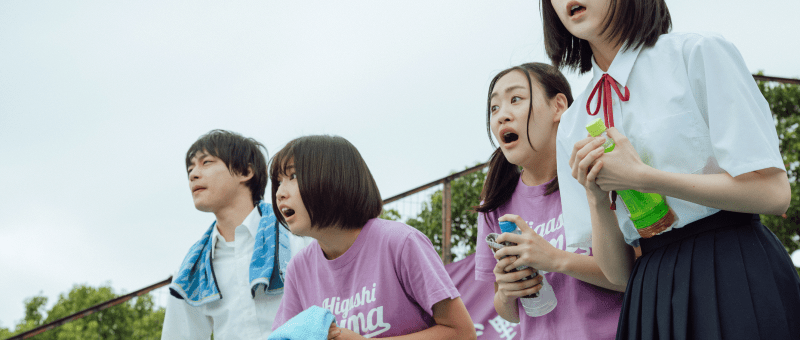
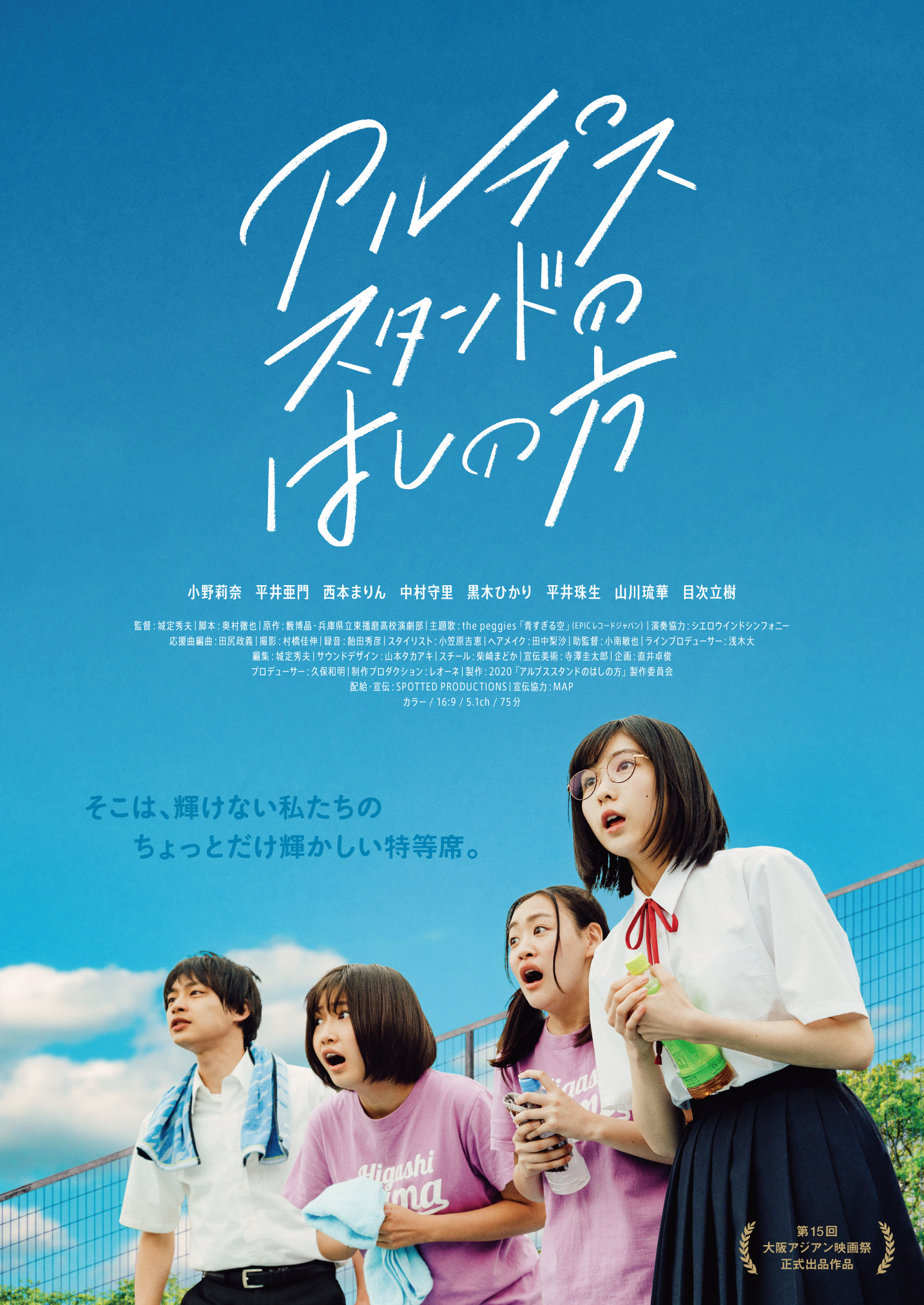
On the Edge of Their Seats (アルプススタンドのはしの方, Hideo Jojo, 2020)

It’s only natural to be a little anxious in the last year of high school but a collection of his school students are in danger of giving up before their lives have even started in Hideo Jojo’s zeitgeisty dramedy On the Edge of their Seats (アルプススタンドのはしの方, alps stand no hashi no kata). Adapted from a stage play written and performed by a high school drama club, the effortlessly witty dialogue has a lived-in quality while pregnant with its own anxieties as the teens each deal with their private disappointments while wondering if there’s any point in trying when all their efforts are doomed to failure. 

Best friends Asuha (Rina Ono) and Hikaru (Marin Nishimoto) for example are still dealing with the fallout from losing their place in a regional drama competition when one of them got sick and couldn’t perform. Fujino (Amon Hirai) quit the baseball team after realising he’d never be as good as the lead pitcher, and the shy Megumi (Shuri Nakamura) struggles with social interaction while unexpectedly having her thunder stolen by popular girl Tomoka (Hikari Kuroki) who not only beat her to first place in the last exams but is also dating her crush, Sonoda who is the star of the baseball team. 

None of them exactly wanted to come and watch their high school baseball team anyway which is why they’re way up in the bleachers. “Is the fabled last summer of high school meant to be so boring?” Asuha sighs, reflecting on the disappointing ordinariness of the end of her youth. It’s just one more thing she claims “can’t be helped” like the cancellation of the play or life’s myriad other disappointments. The ironic thing is that they’ve been bussed all the way into school in the middle of summer to watch their team lose, badly, to one that reached the national finals the year before. Perhaps you can’t blame them for their sense of futility. 

Yet it’s just this kind of defeatism that they end up facing, encouraged by their over-enthusiastic English teacher and the school band to shout their hearts out for their friends on the field. “Life is all about swinging and striking out” their teacher tells them, trying to reassure the teens that it’s worth taking the risk as they continue to meditate on disappointment and inertia. Fujino quit baseball because he thought it was pointless to continue when he’d always lose out to Sonoda, but his teammate Yano, who is objectively bad, stayed on and continued to train intensively despite his low prospects of ever being allowed on the field. He wonders who had the right idea, him or Yano, and whether it’s wiser to switch tracks when something doesn’t work for you or really it was just petulant resentment that led him to give up without putting up much of a fight. 

Though none of them were particularly invested in the game to begin with, when they talk about “baseball” they’re really talking about a lot of other things and gradually begin to rebel against the “can’t be helped” philosophy that led them to give in to disappointment. The shy and secretly lonely Megumi discovers that Tomoka doesn’t have it all that great either, eventually forging a spiritual bond in their shared desire to support Sonoda who after all is not having a great day on the mound. There’s something a little ironic in the choice of Sonoda’s favourite intro song, Train-Train by the Blue Hearts, which neatly reflects the teens’ internal anxiety along with the messages of living in the moment. 

What they learn is in essence that if you’ve done your best and it still doesn’t work out then that’s alright and there’s nothing to be afraid of so you might as well swing for the fences even if you miss. They remain “spectators” in one sense, but in becoming emotionally involved in the baseball game that we never see but only hear about the teens regain the courage and desire to take a more active part while gently bonding in their shared sense of solidarity and renewed hope for the future. Witty and warmhearted, Jojo’s innovatively lensed coming-of-age drama has a poignant quality of youthful nostalgia but also genuine heart in its gentle advocation for the art of perseverance. 


Original trailer (English subtitles)
Train-Train by the Blue Hearts