12 Weeks (Anna Isabelle Matutina, 2022)

“Not all women want to be mothers” according to the heroine of Anna Isabelle Matutina’s 12 Weeks, yet this is apparently largely what society expects of them. Faced with an unexpected pregnancy at 40, Alice decides on abortion though it is technically illegal in the fiercely Catholic Philippines and she finds herself having to offer justification for her choices while trying to process her complicated relationship with her own mother who often tells her that she too wanted an abortion but obviously did not go through with it and left shortly after Alice was born to become a domestic worker in Hong Kong. 

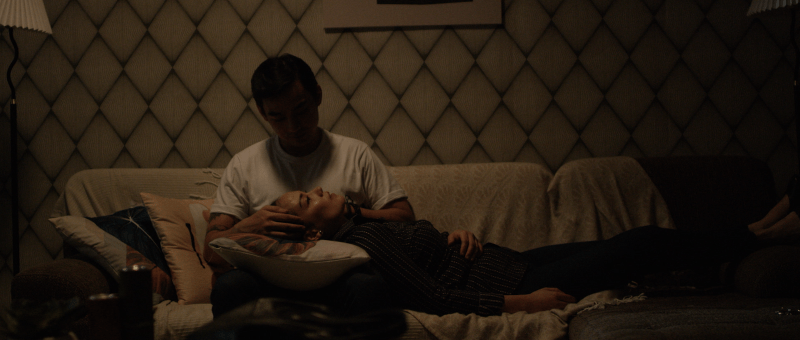
The irony is that Alice (Max Eigenmann) works for an NGO supporting people displaced by natural disaster or civil unrest but is to an extent displaced herself in her estrangement from her mother, Grace (Bing Pimentel). In a poignant moment after having been made aware of the pregnancy by Alice’s violet ex Ben (Vance Larena), Grace brings out a box of baby clothes that once belonged to Alice only she never got to wear them because her grandmother who was raising her told Grace not to send anything but money because she had no way of knowing what size her daughter was. Grace is excited about the prospect of becoming a grandmother because it gives her a second chance at the motherhood she was denied by economic circumstance especially as the implication is she could play a larger role in their upbringing while Alice continues with her career. 

But even considering the strained relationship between them, Grace is far from supportive more or less taking over booking doctor’s appointments on her daughter’s behalf without really consulting her. Aside from the awkwardness and upset of the situation, Alice cannot discuss the abortion with her mother because of its illegality and the risks it might cause to herself and those otherwise involved in it. To be able to access an abortion safely, she has to undergo a counselling session and is then told that her operation will take place at 11pm hinting at its illicitness that it must take place under cover of darkness. The counsellor is sympathetic and clear that she isn’t trying to change her mind even if some of the questions seem invasive or patriarchal. Asking if Alice has been subject to domestic violence she offers help making sure that she’s not being pressured into an abortion she might not want by violent partner or the necessity of escaping them. 

Ben is indeed violent and it’s a fact that if she changes her mind and keeps the baby it will become much more difficult to keep him out of her life. Slightly younger than she is, he is moody and insecure while financially supported by Alice and living in a home she owns. He is not a responsible person with whom to raise a child though places extreme pressure on her to have the baby and manipulatively leaks the pregnancy news to Grace knowing she’ll do the same. Alice discovers that in reality everyone else is making her decisions for her, including a colleague who suddenly cancels a trip she was supposed to make to a disaster area on the grounds that his own wife has recently had a miscarriage and in his opinion it’s not safe for her to go. 

Set during the imposition of martial law on Mindanao in 2017, the film implies that a kind of martial law already exists for women who are unable to make their own decisions about their reproductive health or exercise their own autonomy. Alice is repeatedly told that she should have the baby because she is already 40 and the chance won’t come again though little thought is given to whether she wanted the chance or not while her own thoughts surrounding motherhood are clouded by the relationship she has with Grace which was largely affected by the economic realities that forced her to become a migrant worker. In part she rejects becoming a mother out of anxiety worrying that she is not suited to it, but is also conflicted in its inextricable ties to Ben and with wider patriarchal violence in general depriving her of the ability to choose from all angles. In the end a choice is made for her in the cruellest of ways leaving her more or less powerless with only the small comfort of female solidarity. 


12 Weeks screened as part of this year’s New York Asian Film Festival

We Will Not Die Tonight (Richard V. Somes, 2018)

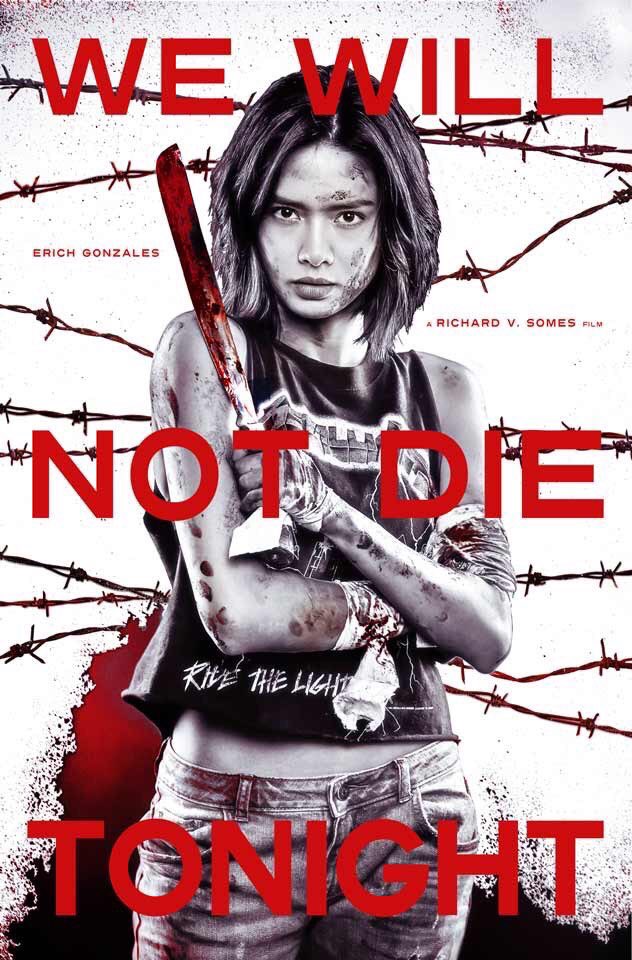
We Will not Die Tonight poster“Your moves are so old”, complains the director of a filmset towards the beginning of Richard V. Somes’ We Will Not Die Tonight, “it’s like the ‘80s”. An homage to The Warriors among other punk infused action classics of the 70s and beyond, We Will Not Die Tonight is as gritty and as grimy as they come following a pack of cornered desperados who unexpectedly find themselves to be the good guys when confronted by an evil unthinkable even on the streets of Duterte’s Philippines. Each in need of fast dough, a desperate gang of martial artists determines on the job to end all jobs, but it’s no surprise that they get a lot more than they bargained for just trying to survive in an unforgiving world.

Our heroine, Kray (Erich Gonzales), is a principled young woman who prides herself on her sense of justice, her good heart, and her ability to survive. Each of these qualities will stand her in good stead in the chaos that’s about to engulf her but for the moment they’re all that sustains her in her frustrating life as a stunt double for low budget movies. Berated by a director (Lehner Mendoza) who seems like he just wants to shout at someone while the “real” actress (Dani Baretto) blithely insists the stunt woman is an unnecessary waste of money, Kray can do little more than grin and bear it, unable even to make much of a fuss when she realises she’s only getting half pay on account of the director’s bad mood. She needs the money because her father (Baldo Marro) is ill and needs medical treatment, though he urges her to give up the stunt work which is dangerous and leaves her feeling humiliated to take a low paid but steady job working for a friend’s catering company.

Kray isn’t suspicious when a couple of her old friends turn up out of the blue, but quickly catches on when her ex, Ramil (Alex Medina), fetches up too. He wants to get the gang back together for one last hurrah. Having let them all down before, Ramil’s suggestion is not universally popular but as everyone is so desperate for money they eventually agree. Unfortunately, Ramil’s plan is once again a bust as it turns out the contacts he’s made are not into drug trafficking (itself a dangerous prospect given the current regime) but something far darker – snatching kids off the street for illegal organ trafficking. Now, our guys aren’t saints but they didn’t sign up for murdering children and even the slimy Ramil manages to suddenly develop enough of a backbone to firmly refuse and walk away. You can’t walk away from this sort of thing, however, and all hell breaks loose as they find themselves on the run with a little girl they save from the bad guys while they try to get to relative safety.

Unlike many similar genre examples, Kray and her friends aren’t hardened street gangsters or young punks, they’re way out of their depth in the murky Philippine underworld where drugs have become too much hassle while disappearing street children might even be viewed as a public service by the current regime. A bunch of martial arts experts with broken dreams and ruined hearts, all they want is to survive. Kray wants to help her dad, Cheche (Max Eigenmann) wants to move back to the country and open a shop, Jonesky (Thou Reyes) is just sick of being poor, and Reneboy (Nico Dans) is looking for a family seeing as his own has moved to Germany without him. Ramil, the slick pretty boy leader just wants to lead with a mild ulterior motive of using his friends to get rich and perhaps winning back the respect of old flame Kray. This world, however, is not going to let them have any of that – they are going to have to fight not only for their lives but also for what’s right if they want to survive.

Somes backgrounds an authoritarian regime as the enabler of such a dark and amoral world as it thinks nothing of gunning down “drug dealers” in the streets while turning a blind eye to other kinds of violence and horror which, in a strange way, perhaps play into its continuous propaganda machine. Yet as much as our heroes are essentially trying to fight their way out of inescapable poverty, Somes’ grime fuelled action picture is pure B-movie, filled with gritty street violence enacted with makeshift weapons and fierce ingenuity. The fighting is ugly, and real (not to mention bloody), but our heroes are fighting for more than just their lives, they’re fighting for the soul of the society in which they live. Desperate to survive, they would rather die fighting than give in to the darkness but the night is long and the battle only just beginning.


We Will Not Die Tonight was screened at the New York Asian Film Festival 2018.

Original trailer (dialogue free, English captions)