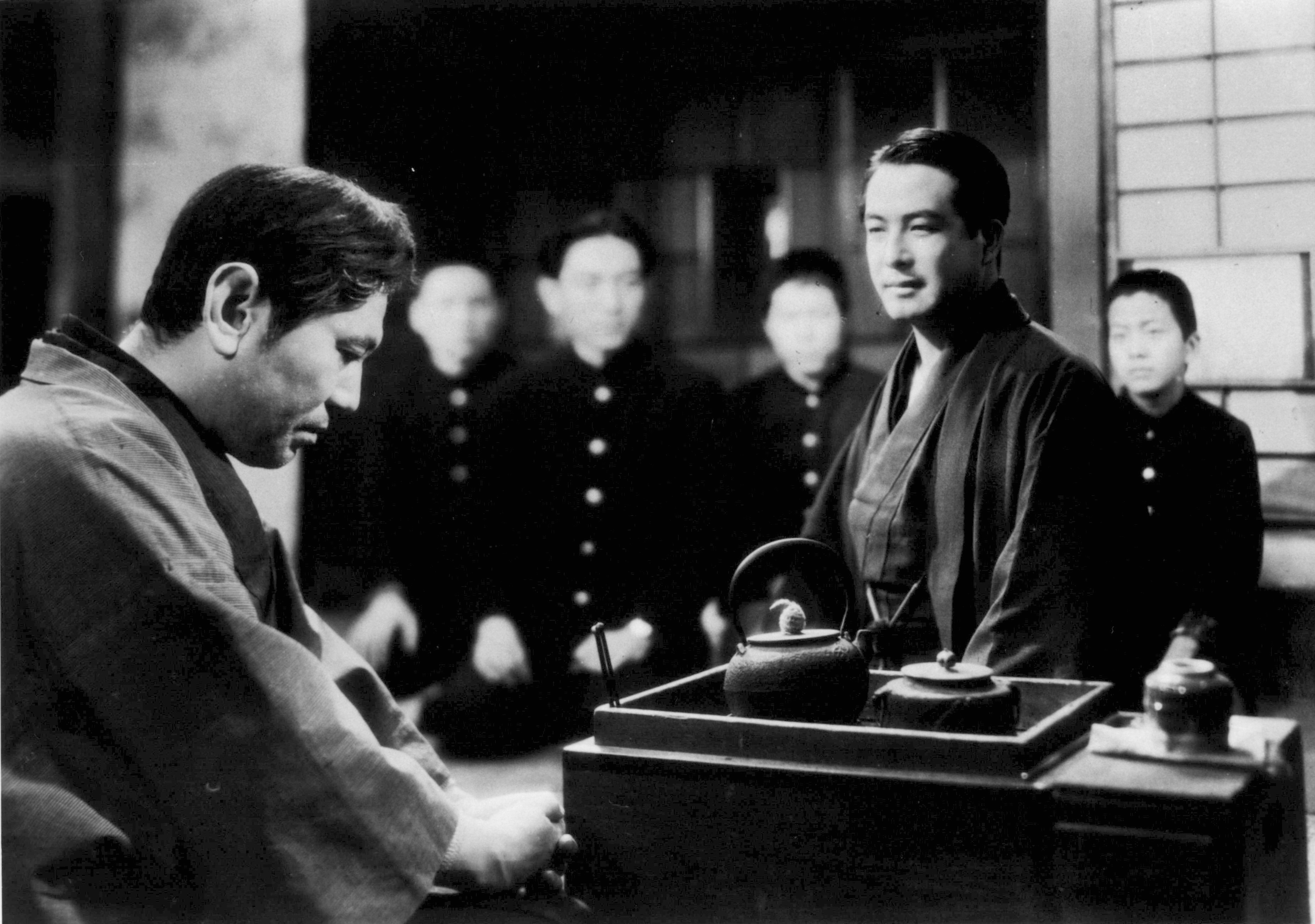
The Whole Family Works (はたらく一家, Mikio Naruse, 1939)

A young man becomes fed up with the constraints placed on his life and asks for the opportunity to improve his circumstances, but knows that to do so will leave his family at a disadvantage, at least in the short term. Is his request selfish, or are his parents selfish for exploiting the labour of their children and thereby impeding their progress in the world? As in many of Naruse’s films, the great enemy is poverty, but as the wise teacher Mr Washio says, the solution would be easy if Ishimura had a drinking problem or Kiichi were lazy but the situation is too complicated for such a simple adjudication.

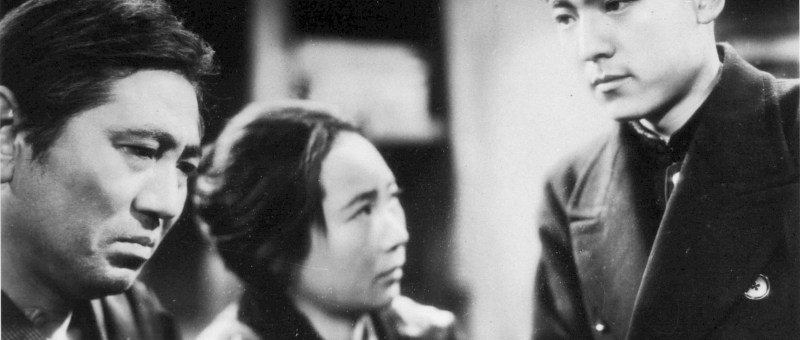
Ishimura (Musei Tokugawa) has a job, but his wages are low and he has nine children to support along with elderly parents who are also still working. Fourth son Eisaku (Takeshi Hirata) tells his mother (Noriko Honma) that he doesn’t want to go to the factory and would like to carry on to middle school with his friends, but she tells him he’s being selfish and childish and that all his brothers began working after primary school. Perhaps because the burden disproportionally falls on her, it’s the mother who is most acutely obsessed with money and the most controlling of her children. Ishimura is more of a soft touch and genuinely sorry that he can’t really agree to oldest son Kiichi’s (Akira Ubukata) request to take five years off to study because the family can’t survive without his wages.

But Kiichi’s problem is that he’s trapped in a dead-end job. There’s no possibility of advancement and his wages won’t ever change. He could work there 50 years and never be able to support a family of his own. His idea is that he wants to become an electrician which he believes will be a steady occupation that will pay enough to allow him to take care of his parents when they’re old and also get married. He thinks if he doesn’t do something now, he’ll be trapped in this life forever and never escape his parents’ yoke. Nevertheless, he worries about whether his desire is “filial” or not and feels a tremendous amount of guilt and frustration that sends him to drink.

Ishimura also knows that if he agrees to Kiichi’s request, he’ll have to say yes to the others too. All the boys have dreams of their own with young Noboru (Seikichi Minami) even hoping to become a lawyer, while Genji (Kaoru Ito) and his younger brother Kokichi (Seiichiro Bando) are intent on joining the armed forces which is perhaps a nod to the rising militarism of the age. Scenes of imagined warfare leave a less aspirational vision of the military, though there hints of it throughout the boys’ lives through magazines and children’s literature such as the book Mr Washio gives to Eisaku. The household becomes a kind of microcosm of a totalitarian regime that controls the boys’ lives and futures, causing them to form a conspiratorial faction talking over their mutual dissatisfaction in the coffeehouse opposite run by Genji’s old school friend Mitsuko (Sumie Tsubaki) who has a crush on Kiichi. Eisaku has been patiently saving his allowance, but his mother finds out and so he blows the whole lot taking his brothers out for dinner rather than allow her to “borrow” any more of his money to which she feels herself entitled.

It’s the entitlement that’s the point. The parents expect the children to work without giving them any choice and thereby deny them the opportunity of working towards their own futures. Kiichi sees the big picture and wants to improve his circumstances, but does so because he wants to work for his family. He doesn’t intend to abandon them and chase his own success, he just wants to be able to provide for himself and at least have enough to eat. Mr Washio says he won’t tell him what to do, but also that there’s no rush, which seems like an intrusion from the censor’s board to reinforce the importance of filial piety over individualistic desire but also doesn’t deny that Kiichi has a point and as a grown man a right to freedom and independence. Nevertheless, there’s a subversive tension in the confrontation scene as the family sits in silence as the clock ticks away on the wall and the rain beats down outside. The brothers roll around in exuberance upstairs, while their defeated parents can only look up in resignation to their broken authority as the children’s revolution begins to take hold.


The Whole Family Works screened at Metrograph as part of Mikio Naruse: The World Betrays Us – Part II.
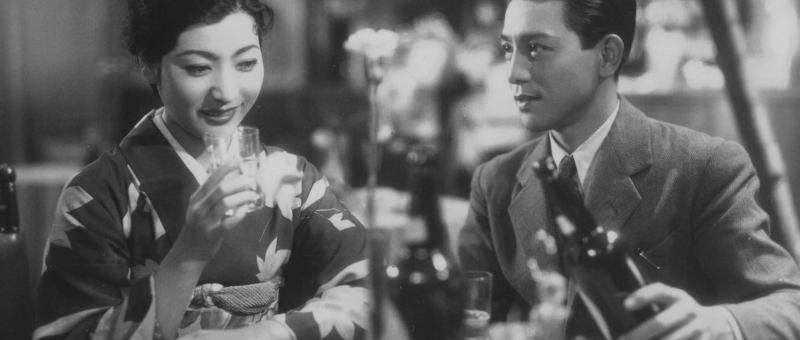
Morning’s Tree-Lined Street (朝の並木路, Mikio Naruse, 1936)

A country girl comes to the city in search of a more glamorous life but largely finds only disillusionment and disappointment in Naruse’s 1936 drama Morning’s Tree-lined Street (朝の並木路, Ashita no Namikimichi). Naruse depicts Chiyo’s (Sachiko Chiba) spiritual journey literally as she takes the bus from her rural hometown all wide-eyed wonder and then arrives in the city to be bothered by a homeless man and then walk into a less salubrious area of the city with only her friend’s address to go on. 

In her hometown, everyone thinks Hisako (Ranko Akagi) works in a big office in Marunouchi, but in reality she’s now working in a hostess bar under the name “Shigeko.” Nevertheless, despite a degree of shame in her circumstances, Hisako doesn’t reject Chiyo and isn’t angry that she’s come and found out her secret. She talks her landlady, Okada, into letting her stay but discourages her from working in the bar. The current economic depression is evident in the fact that the bar isn’t doing so well and never has many customers, yet the “help wanted’ sign keeps going up and down outside. There’s even a running gag that the cook makes a permanent version so they won’t waste so much paper, only he spells “hostess” wrong, so they have to take it down anyway. 

The help wanted sign is a harbinger of doom for Chiyo who, it seems, is being drawn towards this kind of life. As Hisako had told her, it’s impossible for a country girl to find a job when there are already so many “desperate” people in Tokyo, and at the grand old age of 22 Chiyo is worried that she’s simply too old to find employment. By the standards of the time, she may be considered on the older side not to be married, and indeed Hisako tells her she’d be better off to go home and find a husband, but Chiyo wants both more and to find a grand romance. She romanticises an idea of poverty believing that she could be happy with a man she truly loved even if they had no money. Hisako doesn’t disillusion her, but may be inwardly rolling her eyes at her naivety. She has a boyfriend already, but he’s no good. He keeps turning up and pestering her for money which might be one reason Hisako can’t escape the life of a bar girl.

It is indeed money that gets in the way everyone’s relationships. Hisako reads in the paper about a salaryman who embezzled money to spend at a hostess bar and then died in a double suicide with one of the women who worked there. The dark fantasy the bar represents echoes the wider despair in the society coloured by economic depression and broken dreams in which the fantasy version of Ogawa admits that his life was without hope or joy. Chiyo gets close to a nice young man who comes into the bar who tries but fails to find her a legit job in an office in attempt to save her from becoming a bar girl. In the end, she gives in and becomes one. Ogawa says he thinks no less of her, but begins coming to the bar more often and appears to be spending beyond his means even while Chiyo warns him not to waste his money. 

What happens next turns out to be a cinematic fantasy informed by Chiyo’s naive desires in which Ogawa agrees to marry her but has already ruined himself by embezzling public funds and later asks her to die with him while she pleads that as long as they have love poverty is nothing to fear. In many ways, the dream shatters her illusions and confronts her with the stark reality of her life in playing out a best/worst scenario in which Ogawa is so deeply in love with her that willingly walks to his destruction, which is at least preferable to the truth, which is as Hisako says that a man may seem honest and sincere but will turn out to be a coward or else he’ll cheat on you.

Unable to find employment nor rely on men, the women have only each other and the solidarity of those like Mrs Okada her running a small bar in this rundown corner of the city where dreams go to die. Chiyo takes to her new life a little more than to her liking. She turns to Hisako and asks if she looks like a bad girl, fearful that it’s already changed her and it’s no longer possible to go back to being the innocent country girl who wanted a bigger life in the city. Her conviction might be brought home to her by the fact that Ogawa is promoted and sent out of Tokyo but doesn’t ask her to come with him, only leave his address in case she ever feels like writing. But at the same time it spurs her into a flurry of false positivity, committing herself to the job search despite knowing that it’s almost certainly futile. Throwing his note into the river and letting it flow away, she both sees through the naivety of her dream of escape through romance and also resigns herself to the life of a bar girl, like Hisako with nowhere else to go and no possibility of return only the vague and far off hope of salvation through employment.


Morning’s Tree-Lined Street screens 21st June at New York’s Metrograph as part of Mikio Naruse: The World Betrays Us – Part II.
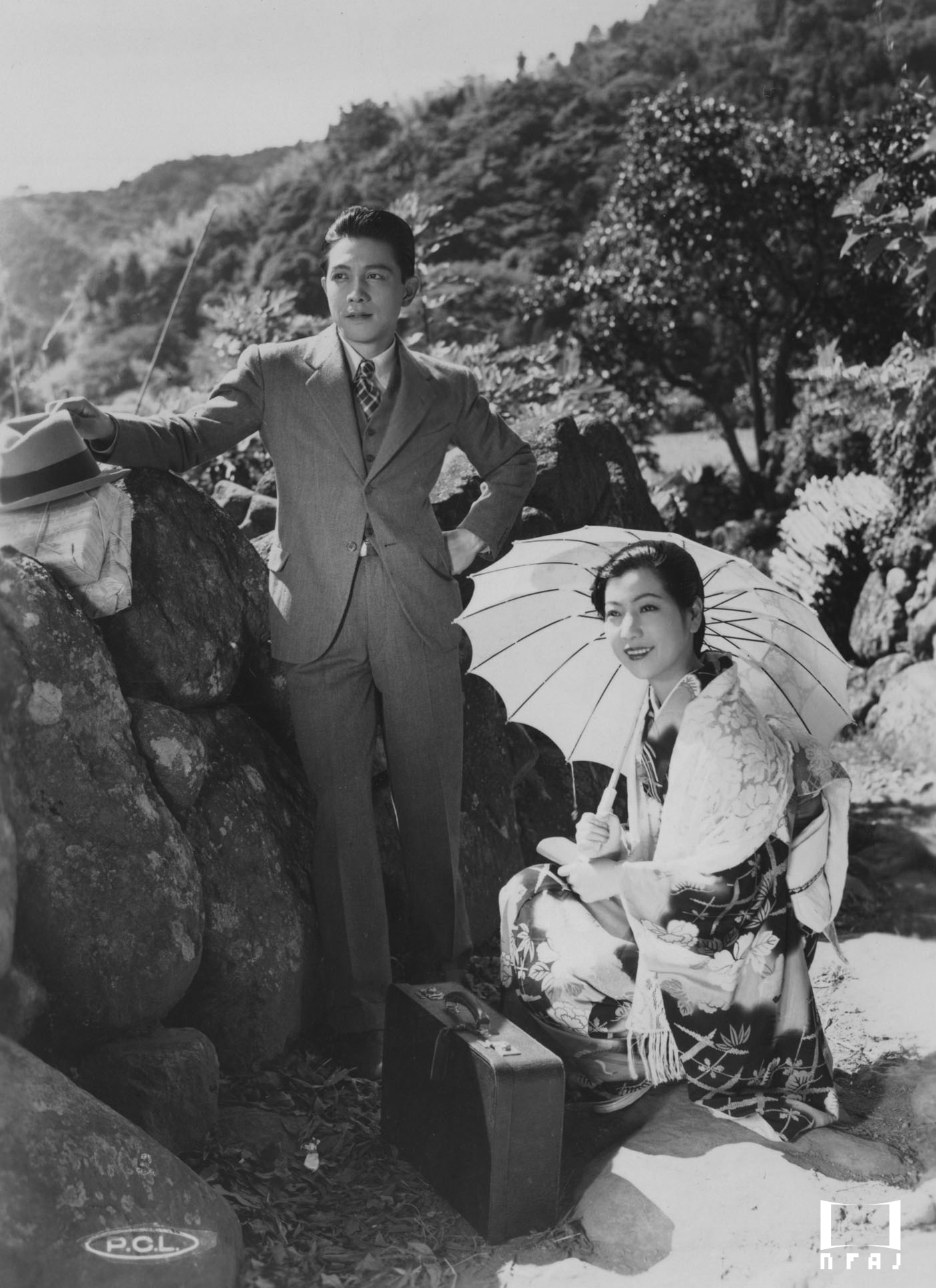
Images: Collection of National Film Archive of Japan.

Husband and Wife (夫婦, Mikio Naruse, 1953)

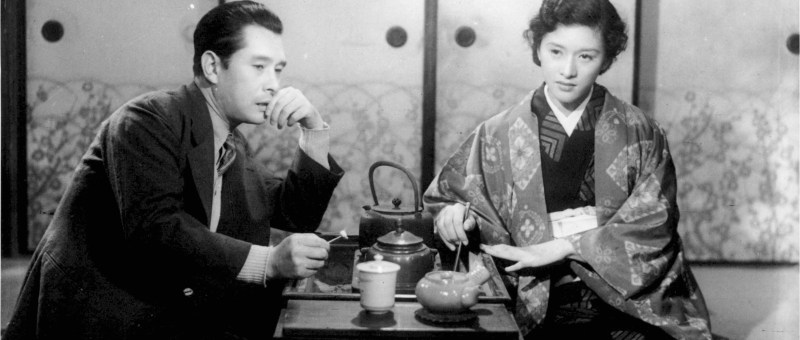
Kikuko (Yoko Sugi) climbs the stairs to the roof of a department store and pauses at the top looking down on her friends below, but they appear to be looking down on her. They’re disappointed. She looks so “provincial”, even though she has no children and therefore more time to spend on herself. They’re envious of her “freedom” to return home late while they have to get back to their husbands or in-laws, but Kikuno isn’t really free at all while trapped in a stifling marriage to the incredibly dull and petulant Isaku (Ken Uehara). 

One of a series of films about marriage and originally envisaged as a sequel to Repast until Setsuko Hara fell ill, Husband and Wife (夫婦, Fufu) paints a rather bleak picture of married life even by Naruse’s standards. The couple are quite literally but also spiritually “homeless” in that they cannot find a home to share, while the absence of a domestic space to call their own prevents them from solidifying their marriage. They’re pushed out of Kikuko’s parents’ home because her brother’s getting married and they need the space, but Isaku drags his feet over finding somewhere else and leaves much of the legwork to Kikuko alone. The main problem seems to be that Isaku can’t afford anything decent, which places a strain on his male pride, but in a repeated motif, rather than confront the situation, he ignores it completely and then crassly presses his recently widowed colleague to let them rent a room in his now much emptier house. 

It’s a mystery why Isaku has so many financial problems when he and Takemura (Rentaro Mikuni) work for the same company, save that Isaku had evidently spent some time working in the provinces, and his colleague had already bought a home with no apparent money worries, but it further sets the two men apart and fuels Isaku’s sense of inadequacy. Having returned from a leave of absence following his wife’s death, Takemura is grief-stricken and apparently uxorious. He complains that he’ll never find another woman like his late wife, all while Isaku won’t shut up about the house and others relentlessly encourage him to remarry. Nevertheless, after the couple move in with him, a natural connection arises between Kikuko and Takemura who is Isaku’s total opposite, both in his treatment of Kikuko and general personality. Where Isaku is sullen and resentful, Takemura is cheerful despite his grief and generous of spirit. Kikuko effectively becomes a wife to both men, taking care of each of them by cooking and cleaning, but while Takemura goes out of his way to thank her, all Isaku does is run her down and humiliate her in front of company.

Then again, having fallen in love with Kikuko precisely because she is a “proper wife,” Takemura then runs his own late wife down by complaining that she wasn’t very pretty and couldn’t cook. The only thing she had going for her was her health, and then she died. He says got a bum deal, and that Kikuko has shown him a different side of womanhood. When two colleagues come to the house and compliment Kikuko’s cooking but are surprised when she eats nothing herself (because they have no money), Isaku responds to their assertion that it’s difficult to be a housewife by replying that men work hard all day while women “only” have to look after the house. For her part, Kikuko says that she was happier when she was working. Men can fall in love several times, but once a woman’s married her romantic life is over. As her friend tells her, men soon get bored of their wives and hers has already taken a mistress at work. 

At several points and with the women in earshot, the men warn each other about the pitfalls of marriage. Irritated that Kikuko has returned to their home on New Year’s Eve after becoming fed up with Isaku, her father advises her brother that women show their true faces after six or seven years and it’s going to horrify him. Isaku tells him not to be too nice or obedient during the early days because his wife will get used to it, while Kikuko counters that men are overgrown children and as long as you make sure to cradle them like babies everything will be fine. Neither of them seem to have a very positive idea of what marriage should be and frame it almost in terms of a war in which they are continually at odds with each other. Isaku describes a husband and wife as a pair of scissors, intending it as a positive metaphor about how one half can’t cut alone, before reframing it as two knives coming together. He becomes unpleasant and chauvinistic, blaming Kikuko for everything by complaining that it’s her fault that he wears a torn up old coat that causes him some embarrassment in front of his boss and a tactless geisha, while criticising her for not having the bath ready when he comes home tired from working all day. Kikuko points out that men seem to assume they’re the only ones who get tired while her loved up brother swears he’ll be different and even if they’re in the honeymoon phase, they do seem much happier and more suited than the already resentful Kikuko and Isaku.

It’s the sister-in-law who throws them a lifeline by introducing them to a relative looking to rent a vacant room, allowing them a means to save their marriage by leaving Takemura’s house. Increasingly resentful of the growing attachment between Kikuko and Takemura, Isaku starts avoiding coming home and hanging out with a young woman at the office with, at least, the danger of a burgeoning affair for which he’s taken to task by Takemura. As Takemura says, it’s not much of a marriage if Isaku can’t trust his wife while Kikuko is eventually so sick of the cold shoulder and constant denigration that she considers leaving him. The new apartment finally gives them a domestic space they can call their own, but it comes with the caveat. The landlady doesn’t allow children because the tenant next door is an ikebana teacher who demands peace and quiet, but Kikuko is in fact already pregnant which might present another means of saving their marriage by becoming a family but Isaku immediately rejects it. He complains he doesn’t have any more money to move again and tells Kikuko to get an abortion, strong-arming her when she refuses. Kikuko can’t go through with it and the nicest thing Isaku says to her in the entire picture is that they can go home, he’s giving in and will raise the child even if it’s difficult. But even this bittersweet moment seems more like condemning them to marriage rather than repairing their relationship with Isaku only grudgingly accepting, most likely because he realises that his marriage is dead anyway if he forces Kikuko to give up their child against her wishes. Despite the changing season, the air between them remains frosty, and marriage is exposed for the prison that it is trapping each of them in loneliness and resentment rather than bringing them together in joy as they prepare to become a family rather than just husband and wife.


Husband and Wife  screened at Japan Society New York as part of Mikio Naruse: The World Betrays Us – Part I.

Sincerity (まごころ, Mikio Naruse, 1939)

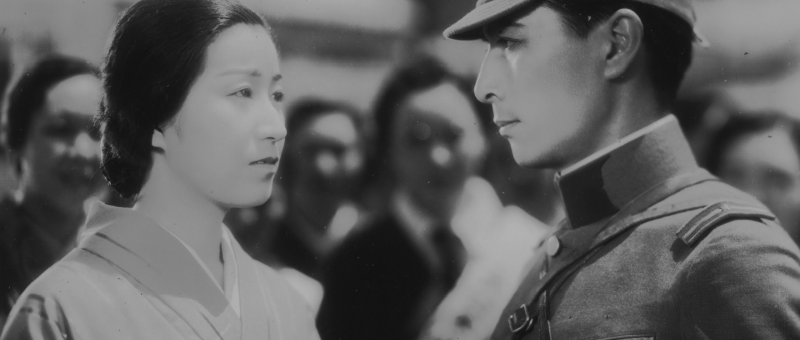
When the daughter of a poor family leapfrogs that of a rich one to be named top of the class, it exposes a series of hypocrisies and contradictions within the militarist order in Mikio Naruse’s 1939 drama, Sincerity (まごころ, Magokoro). The film opens, however, with a parade led by the Patriotic Women’s Association seeing young men off war. The group is led by Mrs Asada (Sachiko Murase), the mother of the rich girl, Nobuko (Etchan), who is busy giving orders to the other women regarding the air defence watch and sweet potato market which seems very forward thinking for the time period.

But in other ways it’s Mrs Asada who comes in for the greatest criticism as her bossiness and involvement with patriotic activity is depicted as a kind of displacement activity to mitigate her sense of uselessness and unhappiness in her marriage to arch militarist Kei (Minoru Takada) whom she fears is still hung up on his old girlfriend, Tsuta (Takako Irie), who is also the mother of Tomiko (Teruko Kato), the poor girl and apparent model student who has just displaced Nobuko as the cleverest girl in the class. Through Mrs Asada is rightly concerned that Nobuko has dropped a whole 10 places, Kei is not bothered by it at all because she is physically robust and healthy, which are the two most important qualities from a militarist perspective, leaving aside the fact that many wouldn’t regard a woman’s academic success as particularly important. Indeed, Kei is dismissive of his wife. Mrs Asada suggests that he finds her “stupid” and that their daughter is “stupid” by extension while Tsuta’s is clever and earnest because Tsuta is the same. He tells her that a child’s education is the mother’s responsibility and it’s probably her fault for busying herself outside of the home with her wartime activities with the implication that she’s been neglecting her child and that’s why her grades have fallen.

This point seems contradictory seeing that even at this stage, the nation expects women to serve their country in ways other than dedicating themselves to their families which is a responsibility secondary to that they owe to the emperor. Nevertheless, the implication remains that she’s doing it for the wrong reasons because what she enjoys is the status it gives her and the power of being in charge. Unlike Tsuta who has no husband, Mrs Asada’s family is wealthy with servants to take care of the domestic work so has nothing to do all day, while it’s also clear that the marriage is more or less dead and Kei does not particularly care for her, which he later admits, though partly because he has already rededicated himself to the nation in eagerly anticipating his call-up letter. When he’s first introduced, Kei is admiring a sword he’s having made ready for when he gets his papers to enlist as an officer. 

It’s a remark about Kei’s call-up that first sets alarm bells off in Tomiko in noticing the sadness it provokes in her mother, itself a little transgressive from a propaganda perspective. The grades situation doesn’t affect the girls’ friendship in the slightest, though this sudden reckoning with the past does begin to place a wedge between them not only in a growing awareness of their class differences but an awkwardness about the complicated situation between their parents which they are not well equipped to fully understand. Tsuta first tries to tell Nobuko the truth, but it upsets her so much that she lies instead and says that it’s true she knew Kei in the past but only as an acquaintance not a romantic partner. Nevertheless, the fact that she called him “Kei” rather than “Keikichi” or whatever his surname was before he married into Mrs Asada’s family suggests a great degree of intimacy which is something Tomiko seems to pick up on. 

There’s a persistent implication that Kei may be the father of both girls, which further reinforces the idea that their contrasting characters are a product of the way their mothers have raised them. Nobuko is described as self-involved and lazy, characteristics which reflect her privileged upbringing and sense of entitlement. Mrs Asada tries to talk to her new teacher, Mr Iwata, but his opinion is that Nobuko was most likely coasting and is struggling now because the work is more difficult and she hasn’t learned how to study or developed a consciousness that results are born of what you put into them. She, and her mother, simply expect to come top because it’s what a girl of her status deserves. Her displacement is a discomforting inversion of the social order. In this, the film both undercuts and reinforces militarist ideology in stressing the importance of hard work for all while doing so at the expense of a reverence for feudalistic ideas of class hierarchy. 

It’s this class divide that is transgressed when Kei sends the present of an expensive French doll to Tomiko after she and her mother come to Nobuko’s rescue when she cuts her foot on some sharp rocks while the girls’ are playing together at the river. The gift seems rather extravagant for the relatively minor act of kindness Tomiko and her mother performed which accidentally reunited Tsuta and Kei though neither of them say very much and while Tsuta seems to look at him longingly, Kei appears indifferent. Nevertheless, the grandmother suggests the doll reflects Kei’s sincere heart with the implication that it reflects his continuing attachment to Tsuta. Tsuta wants to refuse it, but realises she can’t because Mrs Asada likely doesn’t know and her finding out would just cause more trouble, though it’s a painful reminder of her romantic disappointment. 

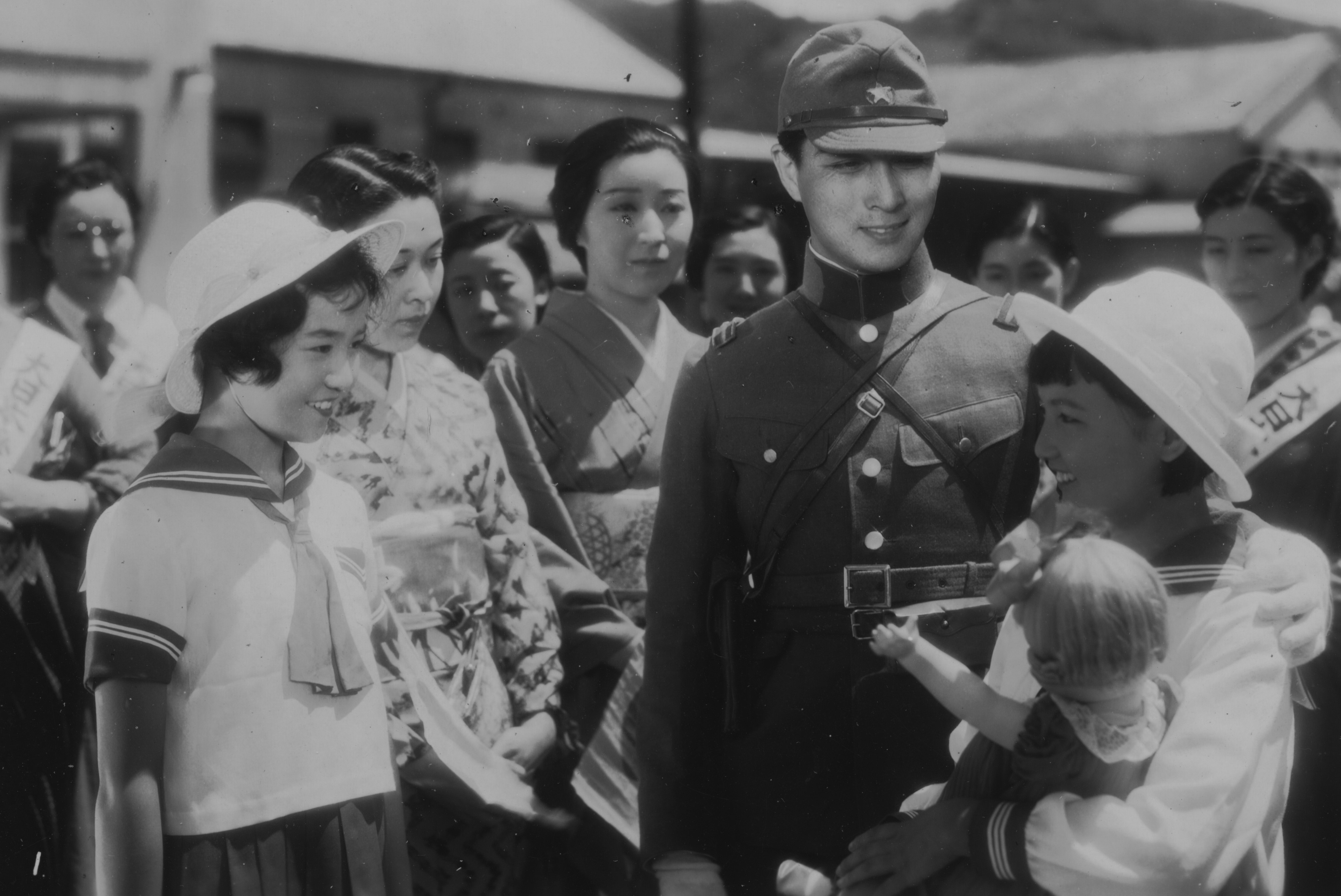
Tomiko ends up sending it back herself with a note for Nobuko explaining everything. Nobuko then limps off with her injured foot to return the doll to Tomiko and tell her none of that matters, she wants her to have the doll anyway. The doll then becomes a symbol of the sisterhood between the girls and the erasure of the class boundary between them. Tomiko can be seen holding the doll when they join the parade to send Kei off to war, while Tsuta and Mrs Asada also smooth out the misunderstandings between them to celebrate Kei’s mobilisation together. The message here is more that old differences must now be put aside so that everyone can serve the nation together rather than selfishly fixating on personal drama such as wounded pride or romantic heartbreak. Even so, Naruse slightly undercuts the patriotic conclusion with the hint of sadness on Tsuta’s face before she recomposes herself to smile at Mrs Asada and reinforce the sense of solidarity between them, while what we’re left with is the memories of the idyllic countryside setting and sense of pastoral serenity along with the sincerity of the relationship of the two girls which is rooted not in patriotism but genuine friendship that cares nothing for the divisions of social class or the rigidities of the adult world.


Sincerity screens at Japan Society New York May 10 as part of Mikio Naruse: The World Betrays Us – Part I.

Images: Collection of National Film Archive of Japan