
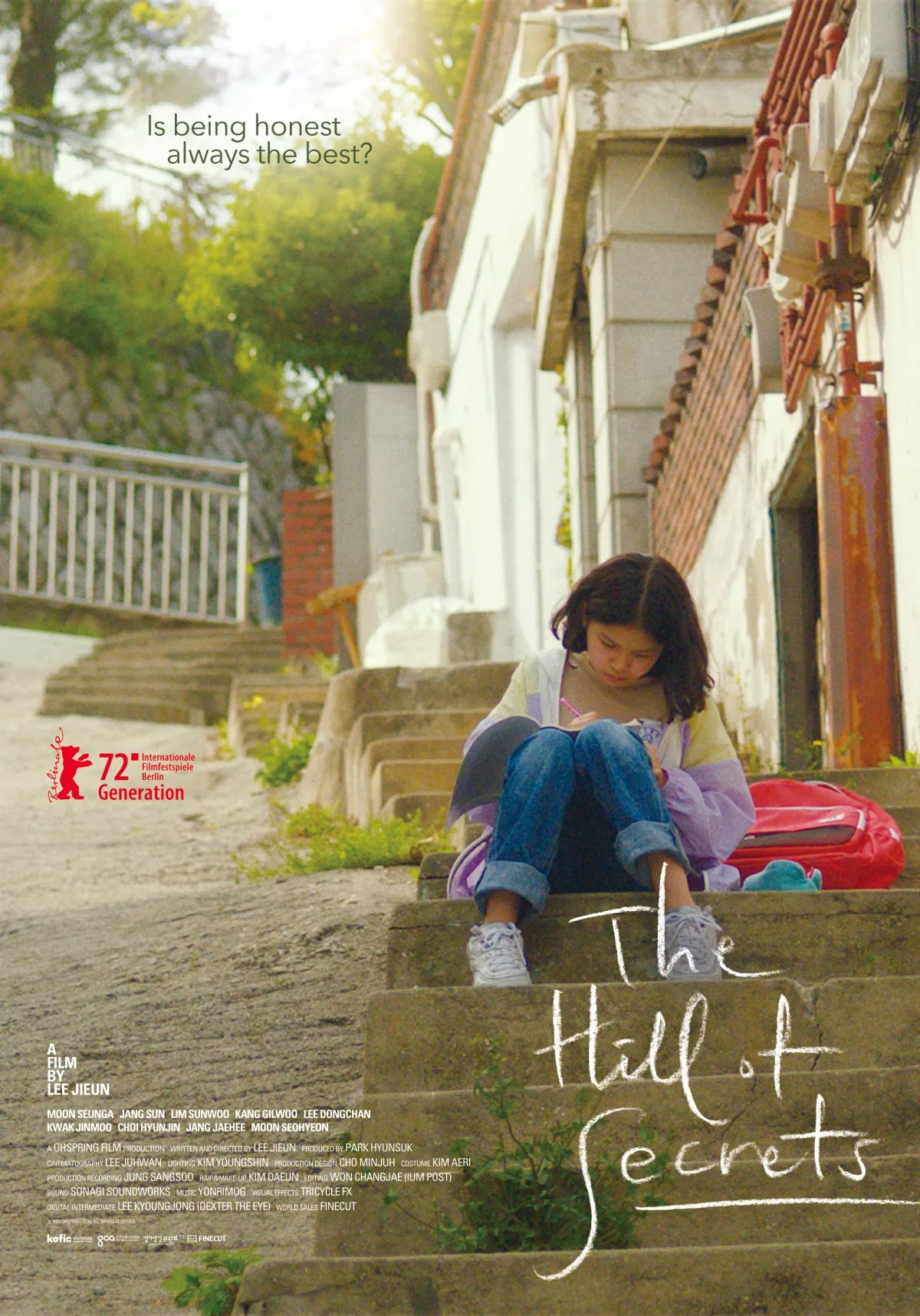
A little girl contends with the boundaries of social responsibility, the nature of the contemporary family, classism, and a deep desire to be accepted while confronted by the ambivalent “honesty” of adulthood in Lee Ji-eun’s charming coming-of-age tale, The Hill of Secrets (비밀의 언덕, Bimileui Eondeok). Set in 1996 and filled with nostalgia for simpler times, Lee’s tale of the painful lessons of adolescence is in its own way timeless as the heroine begins to reprocess her complicated relationships with her family while simultaneously preparing to step away from it.
12-year-old Myeung-eun’s (Moon Seung-ah) problem is that she’s a bit of a snob. Surrounded by children from wealthier families at her school, she feels ashamed of her background and looks down on her working class parents whom she brands “terrible people” for their every man for himself philosophy. When her brother asks their father what their family motto is for a homework assignment, he looks confused and answers that they don’t have one, but her mother jumps in with “give nothing, take nothing” having experienced a moment of outrage when Myeung-eun wanted to donate some money to a struggling family on the television. Her father had insisted that the family is only struggling because they’re lazy and aren’t trying hard enough, reminding her that their lives are hard too but they’ve made their way through buckling down and working without complaint. Myung-eun resents his explanation in part because she thinks he’s selfish and unkind, but also finds it hypocritical in that she sees her father as lazy and irresponsible while her mother is a workaholic who only cares about money and is indifferent to the suffering of those around her.
To demonstrate that she’s different from her family, Myung-eun has developed conservative social values with a strong aspiration to achieve conventional middle class success as symbolised by the incredibly prim dress she’s forever trying to get her mother to buy for her while she opts for something a little less particular that Myung-eun won’t grow out of too quickly. So ashamed of her family is she, that Myung-eun lies at school telling her teacher that her dad’s an office worker and her mum a housewife while making constant excuses as to why they can’t come to parents’ days. Challenged by her rival, rich kid Kyung-soo, she even goes so far as to bamboozle an executive at a nearby company into an “interview” for her “homework” taking a series of fake photographs while getting a friend’s mother to pose as her own as they cheerfully bake cookies together at home.
Wanting to knock Kyung-soo off her perch Myung-eun runs for class president and pulls off a shock victory but soon becomes drunk on her power and driven further into a narcissistic drive for approval from her harried teacher. She sets up a secret letterbox so her classmates can make anonymous suggestions, but is actually writing them all herself sometimes using her left hand, different coloured pens, and weird handwriting to cover up her crime. When she fears her brother is about to blow her cover, she gets into a physical fight with a friend accusing her of disrespecting the office of class president, and struggles to accept herself at her new status because of her internalised shame over her class background.
Yet confronted with the incredible cynicism of transfer student Hye-jin who matter of factly answers the teacher’s question about workers making people happy that her mum makes loads of people happy because she runs a brothel which is why Hye-jin has had to change schools so often, Myung-eun begins to reconsider her notions of honesty and deceit. Hye-jin is tired of hiding her background and really doesn’t care what anyone thinks anymore, while Myung-eun is desperate to keep up an image of conventional respectability rather than admit that her parents sell salted fish at the market. As her teacher later tells her, honesty is not necessarily the best policy and sometimes you might have to lie to protect someone’s feelings but that’s really the opposite of what Myung-eun has been doing. Her lies are all about protecting herself and told out of fear of rejection ironically because she feels rejected by her family who appear disinterested in her successes and indifferent to her feelings.
But then as her brother tried to remind her, her mother works hard to support their family while crafting a sketchbook of the ideal home she’ll probably never be able to afford. Myung-eun decamps to stay with her mother’s step father and brother who are much more stereotypically respectable than her parents, living in a nicer flat which belonged to her grandmother and outwardly religious. But then again her uncle has the same internalised shame as she does, a failed artist working part-time in construction but putting on a suit and carrying a briefcase when he picks her up from school so that people will assume he’s a middle-class office worker. Her grandfather berates her uncle for not having a proper job while he later reveals that Myung-eun’s rmother’s resentment stems from the fact she’s been supporting both families financially even though her mother has passed away and they aren’t related by blood. Myung-eun’s father complains about his domineering wife, but as his friend points out he’d be lost without her.
An exercise in rigorous honesty confronts Myung-eun with her true feelings surrounding her family but also with the consequences of her actions as she realises an autobiographically-themed prize-winning essay may end up hurting their feelings while she herself would not necessarily come out of it looking very good. Through her friendship with Hye-jin and her sister, Myung-eun comes to a better understanding of emotional authenticity edging away from her snooty social group who as Hye-jin points out enforce hierarchy by taking turns leaving each other out and beginning to accept herself no longer so desperately in need of external approval having understood a little of the way she fits in to her family. A gentle, nostalgic coming-of-age tale, Lee’s charming debut feature is both a mild critique of deeply ingrained classism and an empathetic contemplation of what it is that “family” really means.
The Hill of Secrets screened as part of this year’s London Korean Film Festival.
Clip (English subtitles)
 Windows on Worlds